
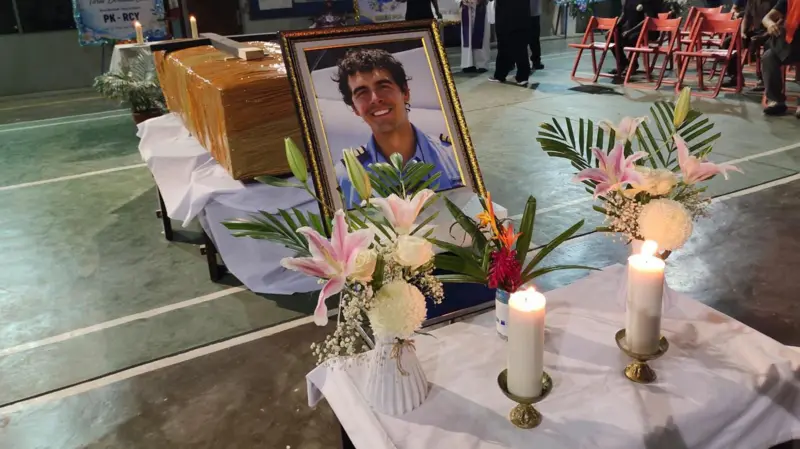
The international community has strongly condemned the shooting death of Captain Nicholas F. Goselin, an American pilot employed by Associated Mission Aviation (AMA), who was killed and whose aircraft was set on fire by the West Papua National Liberation Army (TPNPB) under Elkius Kobak linked to the Free Papua Movement (OPM) shortly after landing at Ipdeheik Airstrip in Balinggama Village, Sobaham District, Yahukimo Regency, Papua Pegunungan (Papua Highlands), on 2 July 2026. Authorities in Indonesia said all seven Papuan civilian passengers on the plane were unharmed in the attack as investigators continue to examine the circumstances surrounding the incident.
Responses to the attack quickly extended beyond Indonesia. The killing alarmed United States officials, senior Catholic bishops in Papua, the Communion of Churches in Indonesia (PGI), Amnesty International Indonesia, Komnas HAM, and the Indonesian Pilots Association (Ikatan Pilot Indonesia/IPI), who issued statements emphasizing the need to protect civilians and civilian aviation operating in conflict-affected areas.
The incident has reignited debate over aviation safety, humanitarian access, and the protections afforded to civilian personnel under international humanitarian norms following a series of earlier attacks on civilian aircraft in Papua.
Washington Responds to the Death of an American Citizen
The United States government has been in close contact with the Indonesian authorities since the attack and has been immediately concerned at the death of Captain Goselin.
According to Indonesian and international media reports, the U.S. Embassy in Jakarta assisted in repatriating Captain Goselin’s remains after Indonesian security forces successfully evacuated his body from the remote airstrip. The embassy has made arrangements for the pilot. PT Associated Mission Aviation reported that the embassy has arranged for the pilot’s return to the United States. PT Associated Mission Aviation announced that the United States will receive the pilot’s remains.
The shooting also got widespread coverage from major international news organizations, an indication of the seriousness with which the killing of an American civilian abroad was being treated. International reports said the aircraft was a civilian mission flight with seven Papuan passengers and quoted Indonesian authorities as rejecting claims the aircraft was carrying military personnel.
Officials have provided no evidence to back up the claims that the flight was carrying military forces. AMA President Director Bob Kayadu said the organization has been servicing remote communities in Papua for decades, providing civilian transport and humanitarian access to isolated areas that are not accessible by road. He said AMA aircraft do not transport Indonesian military or police personnel.
Catholic Bishops Describe the Attack as a Blow to Humanitarian Mission
Religious leaders in Papua were among the first domestic voices to condemn the attack. Bishop Yanuarius Teofilus Matopai You of the Catholic Diocese of Jayapura described the killing as an attack that extended beyond the loss of one individual, arguing that violence against humanitarian aviation also disrupted church missions and community services reaching isolated populations.
According to Bishop Yanuarius, missionary aviation has long played an essential role in transporting healthcare workers, teachers, humanitarian personnel, logistics, and local residents throughout Papua’s mountainous interior. Violence directed against civilian aircraft therefore affects broader humanitarian activities that depend upon safe air transportation.
His concerns were echoed by Bishop Bernardus Bofitwos Baru, OSA, of the Catholic Diocese of Timika, who likewise condemned the burning of the aircraft and the killing of its pilot while calling for greater protection of civilians operating in conflict areas.
Both bishops urged all parties to avoid further violence and emphasized that humanitarian and civilian services should never become targets during armed conflict. Their statements reflected longstanding concern among church organizations regarding the humanitarian impact of violence on communities living in remote areas of Papua.
Protestant Churches Call for Peace and the Rule of Law
The Communion of Churches in Indonesia (Persekutuan Gereja-gereja di Indonesia/PGI) also responded by expressing concern over the continuing escalation of violence in Papua.
PGI leaders denounced attacks endangering civilians and reiterated their calls for peaceful dialogue and uniform application of the law. Recurrent violence endangers human life, undermines public confidence, and disrupts education, health care, religious services, and humanitarian assistance in the communities affected, the organization said.
Representatives of the church called on all actors involved in the long-running conflict in Papua to prioritize the safety of civilians and to find peaceful ways to de-escalate the violence and prevent further killings.
Despite different views about the broader conflict, the different church groups were united in one important principle: civilians and humanitarian services were to be protected under any political or security changes.
Amnesty International Calls for Independent Investigation
One of the strongest responses was from Amnesty International Indonesia, an international human rights organization.
Executive Director Usman Hamid called the killing of Captain Goselin “a tragic and profound violation of human rights.” He said the deliberate killing of a civilian pilot and destruction of a civilian airplane were a serious deterioration of civilian protection in Papua.
“Deliberate attacks on civilians are a violation of the basic right to life and are never justified under humanitarian principles,” said Amnesty. The organization called for a prompt, thorough, independent, and impartial investigation, urging authorities to ensure accountability for those responsible.
Survivors and families of victims need clear information about what happened, who was responsible, and what legal action will follow, Usman Hamid also underlined. Amnesty also urged all parties to the conflict in Papua, including armed groups (TPNPB OPM) and state security institutions, to respect international humanitarian standards and avoid illegal attacks on civilians.
But Amnesty’s statement was based largely on the protection of civilians and accountability under international human rights principles, not political commentary about the conflict itself.
Komnas HAM Urges Accountability and Civilian Protection
The Indonesian National Commission on Human Rights (Komnas HAM) also weighed in on the incident, stressing the need for a thorough investigation and accountability for attacks that cause civilian casualties.
Frits Ramandey, head of the Komnas HAM representative office in Papua, expressed his deep concern over the increase in violence against civilians in Papua. “All civilian loss of life incidents must be investigated, regardless of who is responsible, in a transparent and professional manner,” he said.
Ramandey also emphasized the need to protect humanitarian activities, including civilian aviation, which remains a vital lifeline for isolated communities across Papua Pegunungan. In many mountain districts, aircraft transport not only passengers but also food supplies, medicines, teachers, health workers, humanitarian personnel, and essential logistics that cannot be transported by road.
Komnas HAM reiterated that protection of civilians must remain a fundamental priority and urged all parties involved in the conflict to respect humanitarian principles while preventing further violence against non-combatants.
Human rights observers have long stressed the need to improve civilian protection to lower humanitarian risks and ensure access to basic public services in remote areas.
Indonesian Pilots Association Condemns the Attack
The Indonesian aviation community also reacted strongly to the killing of Captain Nicholas F. Goselin.
The Indonesian Pilots Association (Ikatan Pilot Indonesia/IPI) issued a statement condemning the attack and expressing solidarity with the victim’s family, colleagues, and the humanitarian aviation community operating throughout Papua.
“We condemn this incident as an unacceptable act of violence against civilian aviation,” said IPI Chairman Capt. Denon Prawiraatmadja. “The work of pilots serving remote regions is an essential humanitarian function connecting isolated communities with healthcare, education, emergency assistance, and economic activities.”
Capt. Denon said pilots in Papua routinely deal with difficult terrain, unpredictable weather, and a lack of aviation infrastructure. The threat of violence against civilian aircraft is a much greater risk to operations and jeopardizes the continuity of critical transportation services that thousands of residents depend on.
The association called for improved protection for civilian aviation personnel working in conflict-affected areas and urged all sides to abide by internationally recognized principles that protect civilian aircraft.
Aviation safety experts also note that attacks on civil aviation have implications far beyond the immediate loss of life and can impact humanitarian supply chains, medical emergency evacuations, education services, and economic lifelines for entire communities.
Civilian Aviation Remains Protected Under International Humanitarian Principles
The attack has reignited international debate about the protection of civilian aircraft in conflict zones.
Civilians and civilian objects Internationally recognized humanitarian principles protect civilians and civilian objects from deliberate attacks. Civilians and civilian objects Internationally recognized humanitarian principles protect civilians and civilian objects from deliberate attacks. from deliberate attacks under internationally recognized humanitarian principles. Aircraft engaged in humanitarian, missionary, medical, or commercial transportation typically qualify as civilian infrastructure, unless they directly participate in hostilities.
In Papua, small aircraft are especially important, as many highland communities still lack access to regular road networks. Commercial operators, missionary aviation organizations, and humanitarian flights frequently carry food supplies, medicines, teachers, health workers, government officials, construction materials, and local residents between isolated mountain airstrips.
Security analysts say repeated attacks on civilian aircraft could have broader humanitarian implications by deterring aviation services that remote communities rely on for their daily livelihoods.
Already, several other incidents involving civilian pilots and aircraft have increased operational risks across Papua. The murder of Captain Goselin has raised the awareness of the international community with regard to aviation security and to the protection of civilians in the region.
International Attention Continues to Grow
The killing of an American citizen performing civilian aviation duties attracted significant international media and diplomatic attention.
The incident was widely reported by major international media organizations such as Reuters, BBC, Associated Press, ABC Australia, Nikkei Asia, NBC News, Anadolu Agency, and many other international media outlets and raises increasing concerns about security conditions affecting civilian aviation in Papua.
The widespread international coverage also highlighted the strategic role of humanitarian air transport across Indonesia’s far-flung eastern provinces, where flying is often the only way to connect isolated communities to health, education, government services, and emergency relief.
International observers generally stated that while there are different political views on Papua, attacks on civilian aircraft are always met with widespread concern as they directly affect humanitarian access and civilian safety.
The incident has thus reinforced broader debates regarding the protection of humanitarian operations in conflict-affected environments worldwide.
Looking Ahead
The killing of Captain Nicholas F. Goselin is expected to continue to be closely scrutinized both at home and abroad as Indonesian officials continue to investigate. The responses from the United States, religious leaders, human rights organizations, Komnas HAM, and Indonesia’s aviation community demonstrate a broad consensus on one fundamental principle: Civilian lives and humanitarian aviation Regardless of the security situation, we must protect civilian lives and humanitarian aviation. regardless of the security situation. Ongoing efforts to enhance aviation security, provide accountability through lawful investigation, and maintain humanitarian access will be important to help support stability and protect communities that rely heavily on air transportation across Papua Pegunungan.
Conclusion
The deadly shooting death of Captain Nicholas F. Goselin has become more than just a criminal investigation. Governments, religious bodies, human rights groups, and aviation professionals concerned about the safety of civilians operating in conflict-affected areas have taken notice. Statements from the United States, Catholic Church leaders, PGI, Amnesty International Indonesia, Komnas HAM, and the Indonesian Pilots Association all consistently emphasized the need to protect civilian aviation, adhere to humanitarian principles, and pursue accountability through lawful investigation. Papua continues to face complex security challenges, and ensuring the safety of humanitarian transport and civilian lives is key to guaranteeing public services, supporting isolated communities, and fostering long-term regional stability.

