
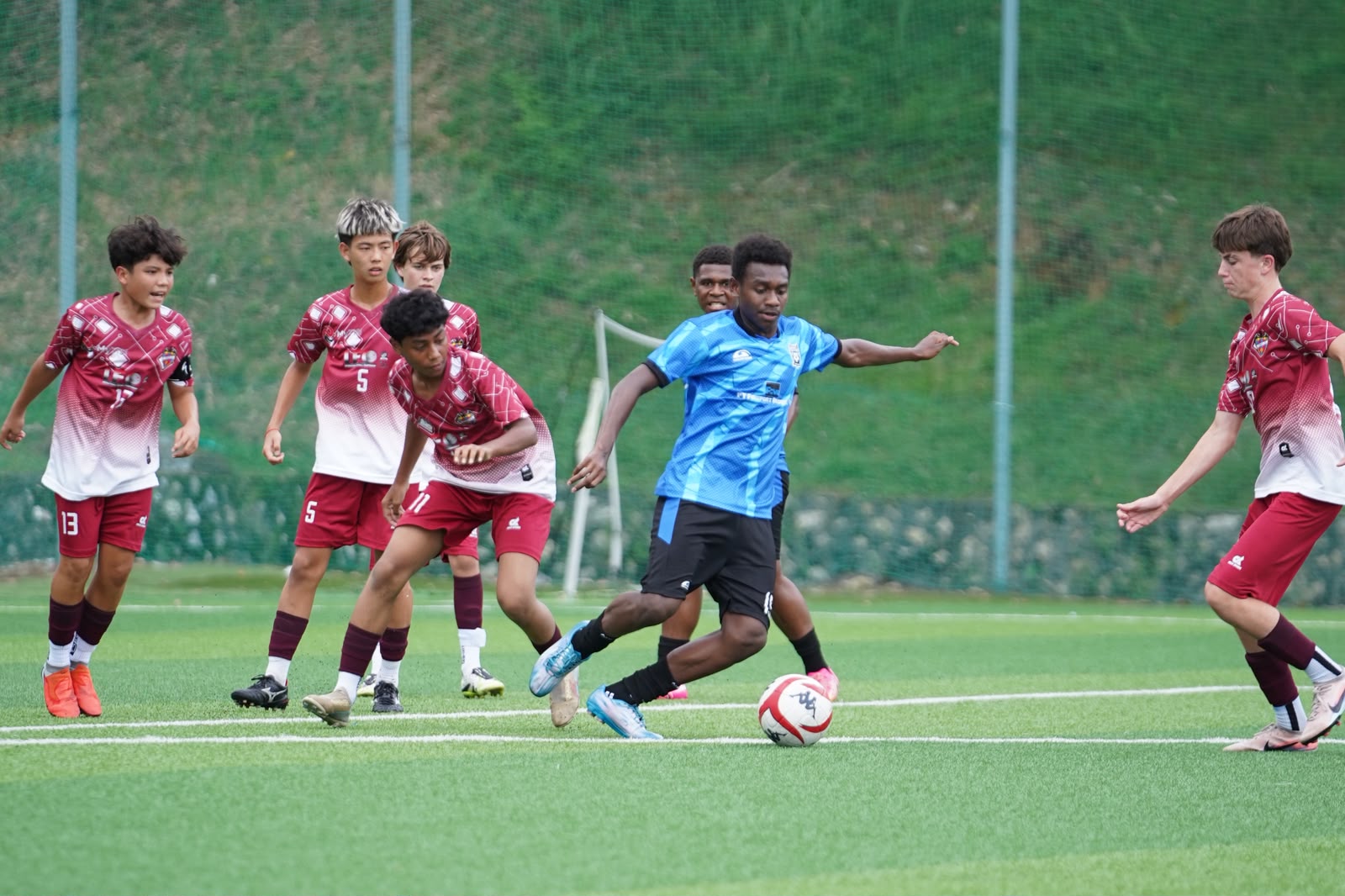
For three young footballers from Papua, the next step in their development will take them far from home.
Three Papua Football Academy (PFA) players have been called up to Indonesia’s U-16 national team training camp, giving Alfa Christiano Sawaki, Daniel Febrianto, and Dicky Carthensz Marani an opportunity to compete for places among some of the country’s most promising young players.
The training camp is scheduled to take place in Surakarta, Central Java, from September 12 to October 11, 2026. Alfa comes from Nabire, Daniel from Merauke, and Dicky from Jayapura, giving the selection a distinctly eastern Indonesian character.
For Papua, the significance extends beyond three names on a national-team list.
Their selection offers another visible example of the football potential emerging from the region and of the pathways being created for young Papuan players to move from structured academy development into the national football system.
It is also a reminder that Papua’s contribution to Indonesian sport is not limited to its historical reputation for producing talented athletes. With structured training, education, and character development, young players from the region are increasingly being given opportunities to test themselves at the national level.
Three Players, Three Papuan Hometowns
The three selected players represent different parts of Papua.
Alfa Christiano Sawaki was born in Nabire, Daniel Febrianto comes from Merauke, and Dicky Carthensz Marani is from Jayapura. Their selection places young footballers from three geographically distinct parts of Papua into the same national development pathway.
That geographical diversity matters.
Papua is not a single football environment. Its communities are spread across a vast territory, with urban centers, highlands, coastal areas, and remote settlements facing very different access to sports infrastructure and organized competition.
For talented young players, finding a consistent route into professional football can therefore be difficult.
The Papua Football Academy has sought to address that challenge through a structured development system combining football training with education and character formation.
The latest national-team call-up suggests that this pathway is producing players who are attracting attention beyond Papua.
The three players will now have to compete for their places during the training camp. Selection for the camp is an opportunity, not a guarantee of a final national-team position. Their performance in Surakarta will determine the next stage of their development.
That competitive element is important.
At the youth level, development is not simply about being selected once. Players must demonstrate that they can adapt to higher standards, respond to coaching, maintain physical condition, and compete with other promising footballers from across Indonesia.
A Fourth PFA Call-Up in 2026
The latest selection is particularly notable because it represents the fourth time in 2026 that PFA students have been called to an Indonesia U-16 national-team training camp, according to Claus Wamafma, Director and Executive Vice President of Sustainable Development at PT Freeport Indonesia.
For the academy, repeated call-ups are an important indicator that its players are being noticed within the country’s youth football system.
Wamafma said the academy’s continuing development program, including technical preparation, character development, and mindset, has contributed to the attention received by young players from eastern Indonesia, particularly those at PFA.
But he also emphasized an important point: the objective is not simply to increase the number of players receiving national-team invitations.
Quality remains the central measure.
The academy wants its players to be capable of competing alongside the best young footballers produced by other academies throughout Indonesia.
That distinction gives the latest call-up a broader meaning.
A successful youth academy is not judged only by how many players it sends to a trial or training camp. Its longer-term value is measured by whether those players can continue progressing after they leave the academy environment.
For PFA, the current group is therefore part of a continuing development process rather than an isolated achievement.
Why Structured Development Matters
Football talent can appear almost anywhere. Turning that talent into a competitive player is another matter.
Young footballers need regular training, coaching, competition, physical preparation, and an environment that encourages discipline. They also need education and support outside the pitch.
The PFA model described in the reports combines structured football training with formal education and character building. The intention is to prepare students not only to play better football but also to develop as young people.
That approach is particularly relevant in Papua.
The region has a strong football culture and a long tradition of producing players with natural athletic ability and technical potential. Yet potential alone cannot guarantee a professional career.
Players need access to coaches, facilities, competition, and a pathway that connects local talent with higher levels of the national game.
An academy can help bridge that gap.
For Alfa, Daniel, and Dicky, the national-team camp represents precisely that kind of bridge. They will move from an academy environment in Papua into a national training environment where expectations are likely to be higher and competition more intense.
The experience itself can become valuable, regardless of whether each player ultimately remains in the national-team setup.
Surakarta Becomes the Next Test
The training camp in Surakarta will run for roughly one month.
For the three PFA students, that period will provide an opportunity to improve several areas of their game, including technical ability, tactical understanding, physical condition, and mental readiness.
Those elements become increasingly important as young players move toward elite competition.
At the youth level, physical ability can distinguish a player. At higher levels, however, coaches also expect players to understand positioning, make decisions quickly, respond to tactical instructions, and maintain concentration throughout matches and training sessions.
Mental preparation is equally important.
A young player arriving at a national training camp is suddenly surrounded by other footballers who have also been identified as promising talents. The environment can be demanding, and players must learn how to handle competition without losing confidence.
For Alfa, Daniel, and Dicky, the experience will therefore be about more than wearing national team training gear.
It will be an examination of how far their development has progressed and what they need to improve next.
A Pathway Beyond the Three Players
The impact of the call-up could extend beyond the three selected players.
Young footballers currently studying at PFA will be watching what happens to their seniors.
That is one of the important functions of a sports academy. Success creates a visible pathway.
A student who sees another player from the same academy reach a national training camp can more easily imagine the possibility of doing the same.
PFA has said the latest call-up should motivate its other students to continue their development and pursue opportunities to represent Papua and Indonesia through football.
This creates a cycle.
Training produces competition. Competition produces stronger players. Stronger players attract attention from higher-level programs. Their progress then becomes an example for younger athletes coming through behind them.
For Papua, such a cycle could be particularly valuable because football is deeply embedded in the sporting culture of many communities.
Jasshen Sokoy Shows the Pathway Can Continue
The three national-team call-ups are not the only example of PFA players continuing their development beyond the academy.
Jasshen Janeiro Sokoy, an alumnus born in 2011, is now continuing his football development at Persebaya Academy.
His progression illustrates another potential route for academy graduates.
The objective of youth development is ultimately to give players options. Some may progress into national-team programs, others into professional club academies, while others may continue competing at different levels of Indonesian football.
A strong academy does not need every graduate to follow exactly the same path.
What matters is whether players leave with better technical skills, stronger discipline, greater tactical understanding, and the educational foundation to continue developing.
Papua’s Contribution to Indonesian Football
The latest selection also contributes to a broader story about Papua’s place within Indonesian sport.
Papua has produced generations of footballers who have played at the national level. The region’s athletic culture and enthusiasm for football have long made it an important source of talent.
The challenge is to create sustainable systems that allow that talent to develop.
The PFA pathway provides one example of such an effort.
Wolfgang Pikal, Director of Papua Football Academy, welcomed the latest call-up and expressed confidence that the academy’s students could contribute to the Indonesian national team. He also said the selection demonstrates that Papua and eastern Indonesia have considerable young talent capable of being developed and competing at the national level.
The significance of that statement is not that every young Papuan footballer will become a national player.
Rather, it is that the pool of talent is large enough to justify sustained investment in identification and development.
The more opportunities young players receive, the greater the possibility that talented athletes will not be overlooked simply because they come from distant parts of the country.
Football As a Bridge Between Regions
Sport can create connections that extend beyond competition.
A national football camp brings players from different provinces into one environment. They train together, compete for positions, and learn to operate as a team.
For young Papuan players, joining such an environment can provide valuable experience of life outside their home region. At the same time, their presence introduces teammates and coaches from other parts of Indonesia to Papua’s football culture.
That exchange can be meaningful.
Indonesia is geographically diverse, and its football community reflects that diversity. National youth teams can provide a space where differences in language, geography, and local sporting traditions become part of a shared national sporting identity.
For Alfa, Daniel, and Dicky, the immediate task remains simple: train well, compete fairly, and show what they can do.
But their presence at the camp carries a wider message about the role of Papua within Indonesian football.
The Development Agenda Behind the Football Story
The selection also has relevance beyond sport.
Youth development is closely connected to education, discipline, health, and opportunity. A structured football program can provide young people with a routine that combines physical activity with learning and personal development.
This is particularly relevant when considering sport as part of Papua’s broader human development agenda.
Football academies cannot solve every social or economic challenge. They can, however, provide practical opportunities for young people to develop skills and pursue goals.
The PFA model places education and character development alongside football training. That combination gives the program a wider purpose than simply producing competitive players.
The national-team call-up therefore becomes a visible outcome of a process that begins much earlier.
Before a player arrives at a national training camp, there are years of training, schooling, coaching, and personal development behind that moment.
What the Next Month Could Bring
The four-week training camp in Surakarta will now become the immediate focus for Alfa, Daniel, and Dicky.
They will have to adjust to a new environment, compete against other selected players, and demonstrate their readiness for higher-level football.
The outcome should not be measured only by whether all three eventually make the final national squad.
The experience can provide important lessons regardless of the final selection.
A player may discover areas of weakness, learn new tactical concepts, or gain confidence from competing with stronger opponents. Coaches can also gain a clearer understanding of the qualities that each player needs to develop.
For young footballers, those lessons can influence their careers for years.
The academy has encouraged the three players to make the most of the opportunity, continue showing positive development, and contribute as strongly as possible during the camp.
A Wider Signal for Young Papuan Athletes
The story of Alfa, Daniel, and Dicky is ultimately larger than one training camp.
Their selection sends a signal to other young athletes in Papua that geographical distance does not have to determine the limits of their sporting ambitions.
Opportunities at the national level remain competitive, but structured development can create a pathway toward them.
For Papua, that is an important message.
The region’s sporting potential is not simply something to celebrate during major competitions. It requires investment in coaching, education, facilities, competition, and long-term athlete development.
The three PFA students are now taking another step along that pathway.
Their progress will be watched not only by their coaches and families but also by younger players who may one day hope to follow them.
Conclusion
The selection of three Papua Football Academy players for Indonesia’s U-16 training camp is a significant moment for Alfa Christiano Sawaki of Nabire, Daniel Febrianto of Merauke, and Dicky Carthensz Marani of Jayapura.
Their call-up for the September 12 to October 11 camp in Surakarta represents the fourth PFA call-up to an Indonesia U-16 training camp during 2026, according to PT Freeport Indonesia’s Claus Wamafma.
More importantly, it demonstrates the potential of structured youth development to connect young Papuan talent with the national sporting system.
The three players now face a demanding month. They must compete with other promising footballers, adapt to a new environment, and demonstrate that their technical, tactical, physical, and mental development is ready for the next level.
Their journey also highlights the broader contribution of Papua to Indonesian football.
From Nabire to Merauke and Jayapura, the three players represent different parts of a region with a deep football culture. Their opportunity at the national level can inspire other young athletes to take training, education, and character development seriously.
The story does not end with the call-up.
For the players, it is another test. For Papua Football Academy, it is another measure of its development pathway. For young footballers across Papua, this serves as another reminder that talent can travel far when supported by opportunity, discipline, and sustained development.
As Indonesian football continues to build its next generation, the emergence of young players from Papua and eastern Indonesia will remain an important part of that national story.
Read Also
Persipura Targets Liga 1 Return with New Era
Papua Football Academy Sends Four Talents to Indonesian U-17 National Team
Two Papuan Students Join Indonesia Rugby Team in Japan
Gauri Rumbiak, Young Papuan Silat Champion Inspires Indonesia

