
The Papua Tengah (Central Papua) specialist doctor scholarships are emerging as an important part of efforts to strengthen healthcare services across the province, as the regional government works with Indonesia’s Ministry of Health to expand access to advanced medical education for local doctors.
The initiative comes amid growing recognition that improving healthcare in Papua Tengah requires more than hospital buildings, medical equipment, and expanded facilities. The province also needs a stronger supply of qualified doctors, particularly specialists who can provide treatment that is currently unavailable in many local healthcare facilities.
A key indication of the challenge came from the Papua Tengah Regional Legislative Council (DPR Papua Tengah). Its Special Autonomy faction cited approximately 42 Indigenous Papuan doctors distributed across the province’s eight regencies, noting that some were still general practitioners who had not continued to specialist training.
The legislators urged the provincial government to consider financing specialist education through Special Autonomy funds, with a clear requirement that doctors receiving public support return to serve communities in Papua Tengah.
The discussion gained further momentum on November 12, 2026, when the provincial Health Office highlighted opportunities provided by the Ministry of Health during the 62nd National Health Day commemoration in Nabire. The government is encouraging local doctors to take advantage of scholarships and hospital-based specialist education pathways as part of a longer-term strategy to improve medical services.
Together, these developments point to a shared policy objective: developing more specialist doctors from the region while making healthcare services more accessible to people living across Papua Tengah.
A Shortage of Specialists Remains a Healthcare Challenge
The availability of specialist doctors is a central issue in efforts to improve healthcare across Indonesia, particularly in provinces where geographical conditions and limited medical infrastructure can make access to treatment difficult.
In Papua Tengah, residents in remote communities may face long journeys when they need specialist consultations or procedures that are not available at their nearest health facility. Depending on the condition, patients may need referral services to larger hospitals, sometimes outside their home regency or province.
Such journeys can add transport expenses, create logistical difficulties for families, and delay access to treatment. Strengthening the medical workforce in regional hospitals could help reduce some of these pressures over time.
The issue was raised by the Special Autonomy faction of DPR Papua Tengah during discussions concerning the province’s draft regional health regulation, known as a Perdasi.
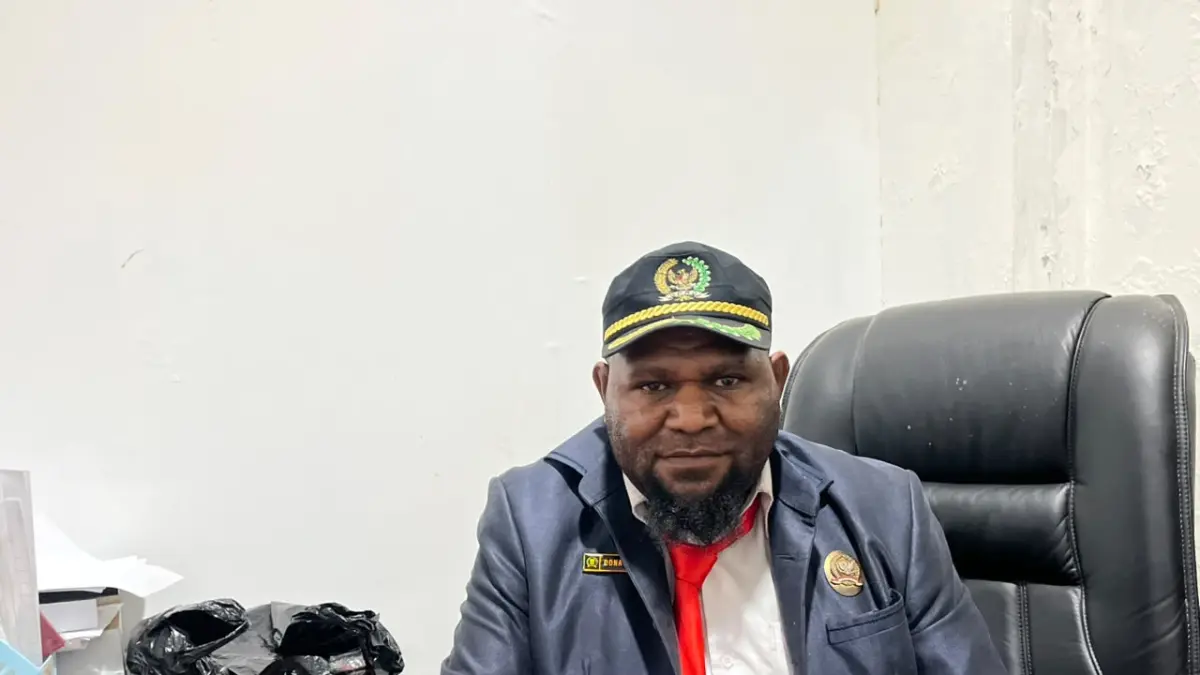
Donatus Mote, chairman of the faction, said information received by the legislative group indicated that around 42 Indigenous Papuan doctors were spread across the province’s eight regencies. Some of them remained general practitioners and had not yet pursued specialist qualifications.
Mote argued that the draft health regulation should include a provision allowing Special Autonomy funding to support specialist education for Indigenous Papuan doctors.
He said the regulation should establish a mechanism through which public funds could finance their specialist training, with the expectation that graduates would return to Papua Tengah and provide medical services to local communities.
The proposal is significant because it places specialist education within a broader discussion about how special autonomy resources can support long-term human development. Rather than focusing exclusively on short-term operational needs, the legislators want regional funding to contribute to building a sustainable pool of qualified medical professionals.
However, the proposal remains a legislative recommendation. Its inclusion in the final regulation, the availability of funding, and the implementation arrangements will depend on the provincial government’s policy decisions and the legislative process.
Provincial Government and Health Ministry Open New Education Pathways
The provincial government is also seeking to expand opportunities through cooperation with the Ministry of Health.
The issue was highlighted during the 62nd National Health Day ceremony organized by the Papua Tengah Provincial Health Office at its headquarters on Jalan Merdeka in Nabire on November 12, 2026.
The ceremony was attended by administrative and supervisory officials, civil servants, non-civil-service employees, and partner organizations working with the provincial health administration.
Papua Tengah Health Office Head Dr. Agus, M.Kes., Sp.KKLP, read a written address from the Minister of Health emphasizing that qualified human resources are essential to the success of healthcare development.
The message underlined a basic principle: investment in hospitals and modern medical equipment will not deliver its full benefits unless facilities are supported by sufficient numbers of trained doctors and other healthcare professionals.
The national situation illustrates the challenge. According to figures presented in the minister’s address, only 34 of 66 newly built Class C Regional General Hospitals had a complete complement of the seven basic specialist medical disciplines.
The gap highlights why expanding medical education has become an important part of the government’s healthcare agenda.
One of the pathways introduced by the Ministry of Health is the Hospital-Based Specialist Medical Education Provider Programme, known as Rumah Sakit Pendidikan Penyelenggara Utama, or RSPPU.
Under this model, doctors can pursue specialist education through designated teaching hospitals. The program is intended to expand training opportunities while maintaining national and international standards of quality and accreditation.
For 2026, the Ministry of Health set a target of opening 61 specialist study programs covering 17 disciplines across 55 RSPPU hospitals. At the time of the National Health Day address, 31 programs had received operational permits, while 221 doctors had started specialist training through this pathway.
The program gives priority to candidates from their respective regions, particularly areas that continue to experience shortages of specialist doctors. The objective is to encourage graduates to return to their home regions and contribute to local healthcare services.
For Papua Tengah, the pathway offers another opportunity to develop medical professionals whose training can be linked to the province’s healthcare requirements.
Kristianus Tebai: Local Doctors Should Return to Serve Their Communities
Following the National Health Day ceremony, Kristianus Tebai, Head of the Health Resources Division at the Papua Tengah Provincial Health Office, said the Ministry of Health’s policy was consistent with the provincial government’s priority of developing local healthcare personnel.
He described cooperation between the provincial administration and the central government as a strategic opportunity for young doctors from Papua Tengah to improve their qualifications through scholarships and hospital-based specialist education.
“With the support for human resource development prepared by the Governor of Papua Tengah and the opening of access to specialist education by the Ministry of Health, it is hoped that more local sons and daughters will be able to complete specialist medical training,” Kristianus said.
He also expressed the hope that doctors who complete their education would return to their home region and serve communities across the province.
The expectation is important for a region where the distribution of healthcare personnel can be as significant as the overall number of doctors. A specialist based in a regional hospital may help patients obtain treatment closer to home and strengthen the hospital’s ability to manage more complex medical conditions.
However, the long-term impact will depend on whether graduates can be placed in facilities that have the equipment, supporting staff, and infrastructure necessary for their specialist disciplines.
The provincial government’s approach, therefore, involves more than encouraging doctors to enroll in further education. It also requires planning for their eventual return, professional placement, and retention within the regional healthcare system.
From Provincial Scholarships to National Training Opportunities
The latest announcement builds on earlier steps taken by the Papua Tengah government during 2026.
In August, the provincial government announced an allocation of scholarships for 35 prospective doctors from Indigenous Papuan communities. According to information provided by the Health Resources Division, the allocation consisted of 20 places for general medical doctors and dentists, 10 for specialist doctors and five for subspecialist doctors.
Kristianus Tebai said the government had identified the need for these different categories of medical professionals. Candidates could pursue admission through public universities, including Gadjah Mada University, Hasanuddin University, the University of Indonesia, and Cenderawasih University.
The process was designed to link scholarship support with confirmed admission. After candidates passed university selection, the Health Office would verify their admission status before forwarding validated information to the provincial Education Office for funding arrangements.
At that time, three general medical doctors had already been accepted and were undertaking their studies at Cenderawasih University. The provincial government also encouraged the eight regency administrations to develop their own medical education programs so that the responsibility for building the future workforce would not rest solely with the provincial administration.
The subsequent recruitment figures showed both interest in medical education and the continuing need to expand specialist training.
In September, the Papua Tengah Health Office reported that 89 Indigenous Papuan candidates had registered for the provincial scholarship program for general medical education, for which 20 places had been prepared. The office also reported that 10 specialist scholarship places had been prepared, although only two doctors had registered for that particular pathway at the time.
These figures relate to different education categories. The 89 applicants were candidates for general medical education, while the 10 places and two applicants concerned specialist education.
The distinction matters because Papua Tengah needs to strengthen its medical workforce at several levels. Increasing the number of general practitioners is important for primary healthcare, while specialist and subspecialist training is needed to expand the range of treatment available at referral hospitals.
Selection Rules Aim to Protect Healthcare Services
The provincial scholarship program also faces a practical challenge: doctors who leave their current positions to undertake specialist education must be replaced so that healthcare services do not suffer.
Kristianus previously explained that the provincial government had established 18 eligibility criteria for prospective scholarship recipients.
Among the requirements, doctors must obtain approval from the relevant regency’s Regional Personnel Agency, or Badan Kepegawaian Daerah (BKD). The local administration must also identify a replacement health worker to maintain services while the doctor is studying.
The Health Office verifies documents after candidates have secured admission to a university or training program. This is intended to ensure that scholarship funds are directed to eligible applicants whose educational status can be officially confirmed.
Such requirements are important in a province where the availability of medical personnel remains uneven. Supporting a doctor to become a specialist should not create an immediate staffing gap at the health center or hospital where that doctor currently works.
The selection process therefore needs to balance two priorities: investing in advanced medical qualifications and maintaining essential healthcare services during the period of study.
The involvement of regency governments is particularly important. Local administrations understand the staffing conditions of their health facilities and are responsible for helping ensure that replacement personnel are available.
The provincial health office has also encouraged all eight regencies to develop their own medical workforce planning and scholarship initiatives. A coordinated approach could help create a more consistent pipeline of doctors from general medical education through specialist and subspecialist training.
Special Autonomy Funding and the Case for Long-Term Investment
The proposal from the DPR Papua Tengah Special Autonomy faction adds a further dimension to the scholarship initiative: how regional development funds can be used to address the province’s shortage of specialist doctors.
Special Autonomy funding has an important role in supporting development priorities in Papua. The legislators’ proposal seeks to direct part of those resources towards specialist medical education for Indigenous Papuan doctors.
Mote argued that the draft regional health regulation should provide a clear legal basis for financing such education. He also stressed that doctors who receive public support should return to Papua Tengah after completing their specialist qualifications.
This proposed arrangement would connect public investment in education with a direct regional healthcare objective. It would also provide a framework for accountability, allowing the government to establish expectations concerning study completion and post-graduation service.
The proposal is not yet evidence that a dedicated specialist scholarship fund has been formally approved under the draft regulation. Nevertheless, it provides a policy direction that provincial authorities can consider alongside existing scholarship allocations and national Ministry of Health programs.
A sustainable funding model would have to cover tuition and other eligible education costs, choose candidates, and keep an eye on them while they are studying and after they graduate. It would also have to make sure that the specialist fields it supports meet the real needs of hospitals in the province.
Without such planning, scholarship programs risk producing graduates whose qualifications are not matched by available positions or appropriate medical facilities.
A Wider National Effort to Improve Healthcare Access
Papua Tengah’s initiative is taking place within a broader national program to improve the distribution of medical personnel.
The Ministry of Health’s National Health Day address referred to the deployment of more than 3,600 medical and healthcare workers through special assignments to community health centers in remote areas. It also cited more than 4,500 scholarships provided since 2024 to support healthcare human resource development.
These measures address different parts of the healthcare system. Special assignments can help fill immediate staffing needs in remote facilities, while scholarships and specialist education are intended to expand the supply of qualified professionals over the longer term.
For Papua Tengah, both approaches are relevant. Community health centers need general practitioners and other health workers to provide essential services, while regional hospitals require specialists who can manage more complex cases and support referral systems.
The availability of specialists alone cannot resolve every barrier to healthcare access. Patients also need reliable transport, functioning referral services, medical equipment, and adequate support staff.
The provincial government’s cooperation with the Ministry of Health should therefore be understood as one element of a wider healthcare development strategy. Its effectiveness will depend on whether improvements in education are matched by investments in the facilities where graduates are expected to work.
Building a Local Medical Workforce for the Future
The opportunity to pursue specialist education offers Papua Tengah a chance to strengthen its healthcare system through local human resource development.
The figure of approximately 42 Indigenous Papuan doctors cited by the DPR Papua Tengah Special Autonomy faction provides a useful starting point for discussion, although it does not establish how many of those doctors are eligible for specialist scholarships or which disciplines they may pursue.
The provincial government’s earlier scholarship allocations, the Ministry of Health’s hospital-based education pathway, and the legislators’ proposal to use Special Autonomy funding represent complementary approaches to the same challenge.
The next stage will require practical coordination. Provincial and regency governments need to identify priority specialist disciplines, establish transparent selection procedures, support doctors during training, and prepare suitable positions for graduates when they return.
Equally important is the need to maintain healthcare services while doctors are studying. Replacement staffing arrangements and coordination with local health facilities will be essential to avoid creating new gaps in the short term.
For residents across Papua Tengah, the ultimate objective is straightforward: more complete healthcare services closer to home, with fewer patients having to travel long distances for specialist treatment.
If implemented consistently, the cooperation between the provincial government and the Ministry of Health could help turn medical education into a lasting investment in regional development. The success of the initiative will not be measured simply by the number of scholarships announced but by how many doctors complete their training and return to serve and improve the quality of healthcare available to communities throughout the province.
Conclusion
The partnership between the Papua Tengah Provincial Government and Indonesia’s Ministry of Health offers an important opportunity to strengthen regional healthcare by investing in local medical talent. With around 42 Indigenous Papuan doctors identified by legislators as a potential pool for further development, expanding access to specialist education could help address the province’s shortage of qualified medical professionals.
The next priority is to turn these opportunities into a sustainable program through transparent scholarship selection, adequate funding, strong coordination with regency governments, and clear commitments from graduates to serve in Papua Tengah. The proposal to utilize Special Autonomy funds could also provide an additional policy framework, subject to the legislative process and formal budget approval.
Ultimately, the success of this initiative should be measured by its impact on communities: more specialist doctors in regional hospitals, better access to treatment, and fewer patients having to travel outside the province for essential medical services. Developing local specialists is not merely an investment in education. It is a long-term commitment to building a stronger, more accessible, and more sustainable healthcare system for the people of Papua Tengah.
Read Also
Jayapura Regional Hospital Becomes Medical Training Center to Address Specialist Doctor Shortage in Papua
Universitas Cenderawasih Launches First Anesthesiology Residency Program to Address Specialist Doctor Shortage in Papua

