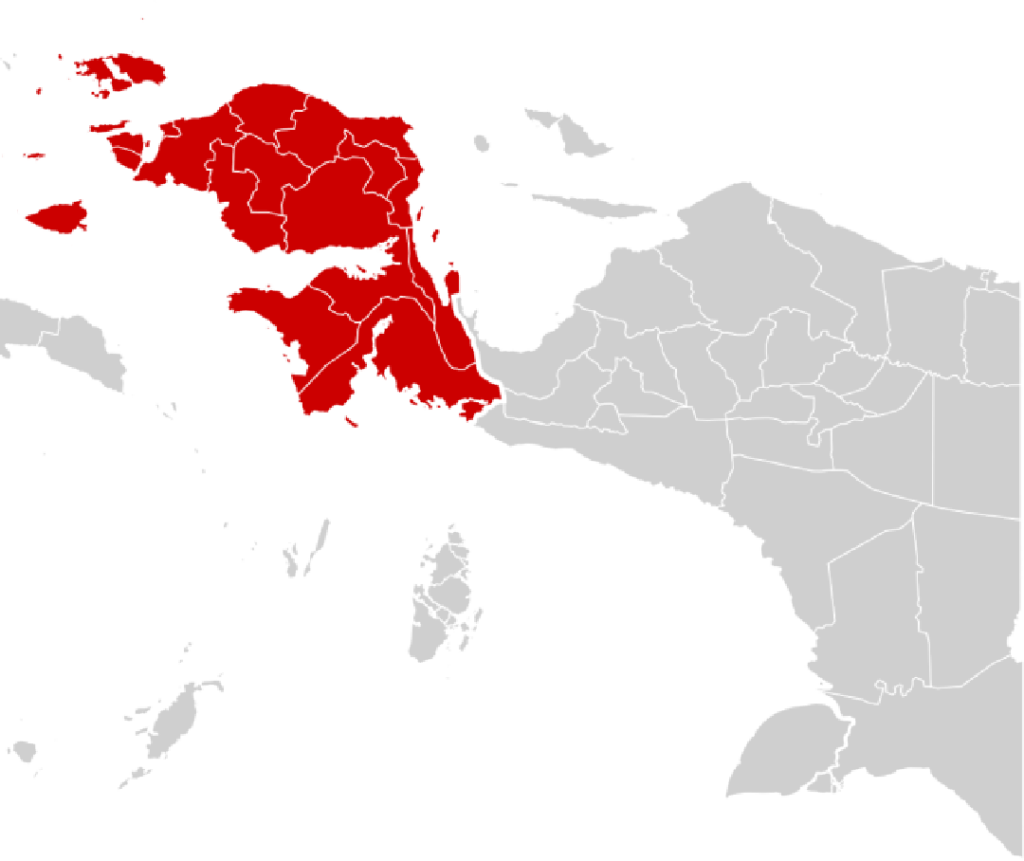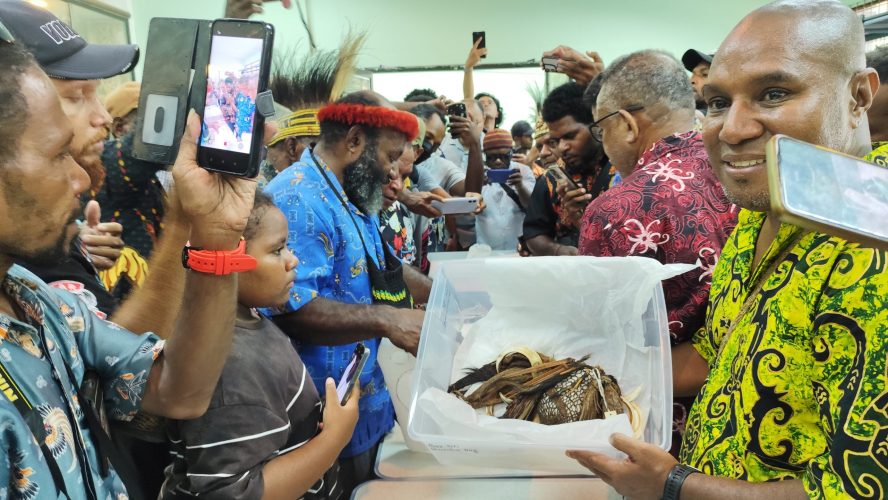
More than 1,200 cultural artifacts originating from Papua have officially returned to Indonesia following a landmark repatriation process from the United States, representing one of the most significant recoveries of Papuan cultural heritage in recent decades. The collection, which had previously left its place of origin and later became the subject of international recovery efforts, is now being preserved in Papua, where it will support research, education, and cultural conservation for future generations.
The repatriation has been widely welcomed by cultural leaders, museum professionals, academics, and Indigenous communities, who regard the return of the collection as more than the movement of historical objects. For many observers, it represents the restoration of an important part of Papua’s collective memory and cultural identity.
The recovery also demonstrates the growing importance of international cooperation in combating the illicit trade of cultural property. Working across jurisdictions, Indonesian institutions and international partners collaborated to ensure that artifacts with deep historical and cultural significance could be returned to their rightful cultural context.
Officials involved in the process noted that the repatriation reflects a broader global movement encouraging museums, governments, and law enforcement agencies to work together in protecting cultural heritage from illegal trafficking and unauthorized export.
More Than 1,200 Cultural Artifacts Return Home
The returned collection consists of more than 1,200 cultural objects originating from various Indigenous communities across Papua.
According to reports surrounding the repatriation, the artifacts include traditional ceremonial objects, carvings, household items, and cultural materials that reflect the extraordinary diversity of Papuan civilizations.
Many of these objects were created not simply for artistic purposes but as integral components of community life, customary ceremonies, spiritual traditions, and social identity.
Their historical value extends beyond craftsmanship.
Each artifact offers an understanding of the knowledge systems, artistic traditions, belief structures, and cultural practices developed by Indigenous Papuan societies over generations.
Historians note that such collections help document the richness of Papua’s cultural landscape while providing valuable material for anthropological and archaeological research.
Following their return, the artifacts have been entrusted to Cenderawasih University Museum (Museum UNCEN), where they are expected to undergo documentation, conservation, cataloguing, and academic study.
Museum officials have emphasized that careful preservation will ensure the collection remains accessible for future educational and research purposes while respecting its cultural significance.
The return of such a substantial collection also provides opportunities for universities, researchers, students, and local communities to study Papuan heritage directly within the region rather than relying exclusively on overseas collections.
International Cooperation Protects Cultural Heritage
The successful repatriation reflects extensive cooperation between Indonesian institutions and international partners involved in cultural heritage protection.
According to previous reporting, the recovery process involved collaboration with United States authorities as part of efforts to identify cultural objects believed to have been removed from Papua through unlawful channels.
The case illustrates how international legal cooperation has become increasingly important in addressing the global trafficking of cultural property.
Over recent decades, many countries have intensified efforts to recover historically significant artifacts that were illegally exported or acquired through unauthorized means.
International conventions, museum ethics standards, and cross-border law enforcement cooperation have contributed to growing momentum behind cultural repatriation initiatives.
For Indonesia, the return of Papuan artifacts demonstrates the country’s continuing commitment to protecting cultural heritage while strengthening collaboration with international partners on heritage preservation.
Officials also highlighted that successful repatriation requires close coordination among government agencies, museums, legal experts, academic institutions, and cultural representatives.
Such cooperation ensures that recovered artifacts are preserved according to professional conservation standards while remaining connected to the communities from which they originated.
Cultural Heritage Beyond Museum Collections
Although museums play an essential role in preserving historical objects, cultural experts emphasize that the significance of the repatriated collection extends far beyond exhibition halls.
Traditional carvings, ceremonial objects, musical instruments, ritual items, and household artifacts embody generations of Indigenous knowledge passed down through communities across Papua.
For many customary leaders, these objects represent living cultural traditions rather than simply historical collections.
Their preservation therefore contributes not only to historical research but also to intergenerational cultural transmission.
The repatriation allows younger generations to gain direct access to important elements of their own cultural heritage while supporting educational initiatives focused on Papuan history and identity.
Academics similarly view the returned collection as a valuable resource for expanding research into Indigenous societies, traditional craftsmanship, language diversity, customary law, and regional history.
As documentation and conservation work continue, the collection is expected to strengthen Papua’s position as an important center for cultural scholarship within eastern Indonesia.
Repatriation Reflects Growing Global Awareness
The Papua case also mirrors broader international developments concerning the protection of cultural heritage.
Around the world, museums and governments have increasingly reviewed the provenance of historical collections, particularly objects removed during earlier periods without proper authorization or documentation.
These discussions have encouraged greater transparency regarding museum collections while promoting constructive dialogue between source communities and collecting institutions.
The successful return of more than 1,200 Papuan artifacts therefore represents not only a significant achievement for Papua itself but also an example of how international cooperation can contribute to preserving shared human heritage.
By returning culturally significant objects to their communities of origin, heritage institutions help strengthen historical understanding while promoting respectful collaboration across national boundaries.
Museums Become Gateways to Cultural Knowledge
The return of more than 1,200 Papuan cultural artifacts represents not only a successful repatriation effort but also the beginning of a new chapter in preserving and sharing Papua’s rich cultural heritage.
Following their arrival in Papua, the collection has been entrusted to the Cenderawasih University Museum (Museum UNCEN), where museum professionals, academics, and conservation specialists will undertake documentation, cataloguing, preservation, and research. These efforts aim to protect every object while ensuring that every object is carefully protected while remaining accessible for educational and scholarly purposes.
For universities and researchers, the collection offers an unprecedented opportunity to study Papuan civilizations using original cultural materials located within the region itself. Students of archaeology, anthropology, history, ethnography, and museum studies will be able to conduct research directly on artifacts that previously remained outside Indonesia.
Museum experts also note that preserving cultural objects requires more than secure storage. Each artifact must be accompanied by historical documentation, information about its cultural context, and, whenever possible, knowledge shared by Indigenous communities that have maintained these traditions across generations.
This process helps ensure that future generations understand not only the physical characteristics of each object but also the stories, customs, and values associated with it.
Equally important, the repatriation creates opportunities for schools, universities, and cultural institutions throughout Papua to develop educational programs introducing young people to the diversity of Indigenous Papuan heritage.
By strengthening access to authentic historical collections, museums can become active centers for learning, dialogue, and cultural appreciation rather than serving solely as exhibition spaces.
Repatriation Reinforces Papua’s Cultural Identity
Observers have described the return of the collection as an important contribution to preserving Papua’s cultural identity at a time when many countries are seeking to recover historically significant heritage held abroad.
For Indigenous communities, cultural objects often carry meanings extending beyond their artistic or historical value.
Traditional carvings, ceremonial items, ritual objects, and household artifacts frequently represent ancestral knowledge, customary law, spiritual traditions, and social relationships that have been maintained over centuries.
The return of these collections therefore strengthens opportunities for communities to reconnect with elements of their own cultural history while encouraging continued preservation of traditional knowledge.
During the handover process, cultural representatives emphasized that repatriation should be viewed not simply as the movement of museum collections but as the restoration of cultural connections between historical objects and the communities from which they originated.
Such perspectives reflect a broader international understanding that cultural heritage plays an important role in strengthening identity, promoting intercultural understanding, and preserving historical memory.
For Indonesia, the successful repatriation also demonstrates the country’s continuing commitment to protecting cultural heritage through cooperation with international partners and law enforcement institutions responsible for combating the illicit trafficking of cultural property.
The case illustrates how constructive collaboration among governments, museums, universities, legal experts, and cultural organizations can contribute to safeguarding heritage that holds significance not only for Papua but also for global cultural history.
Looking Ahead
The successful return of more than 1,200 Papuan artifacts is expected to encourage further cooperation in documenting, preserving, and, where appropriate, repatriating additional cultural heritage connected to Papua.
Museum professionals anticipate that the collection will support new exhibitions, academic publications, conservation projects, and educational initiatives that introduce both domestic and international audiences to Papua’s remarkable cultural diversity.
At the same time, the experience reinforces the importance of continued international collaboration against the illegal trafficking of cultural property.
As museums and governments increasingly review the provenance of historical collections, cooperative solutions grounded in dialogue, legal frameworks, and professional museum standards are becoming an increasingly important part of global heritage protection.
For Papua, the repatriation represents an opportunity to strengthen cultural institutions while ensuring that future generations can engage directly with important elements of their own historical legacy.
Conclusion
The return of more than 1,200 Papuan cultural artifacts from the United States marks one of the most significant heritage repatriation achievements in Papua’s recent history.
Through cooperation involving Indonesian institutions, international partners, cultural experts, and museum professionals, objects of profound historical and cultural significance have been returned to the communities and region from which they originated.
Their placement at the Cenderawasih University Museum provides a foundation for continued conservation, academic research, and public education while ensuring that these artifacts remain accessible for future generations.
Beyond recovering physical objects, the repatriation reflects a broader commitment to protecting cultural heritage, strengthening historical understanding, and promoting respectful international cooperation.
As Papua continues preserving its diverse cultural traditions, the successful recovery of these artifacts stands as an important reminder that safeguarding heritage contributes not only to historical scholarship but also to the continuity of cultural identity and shared human history.