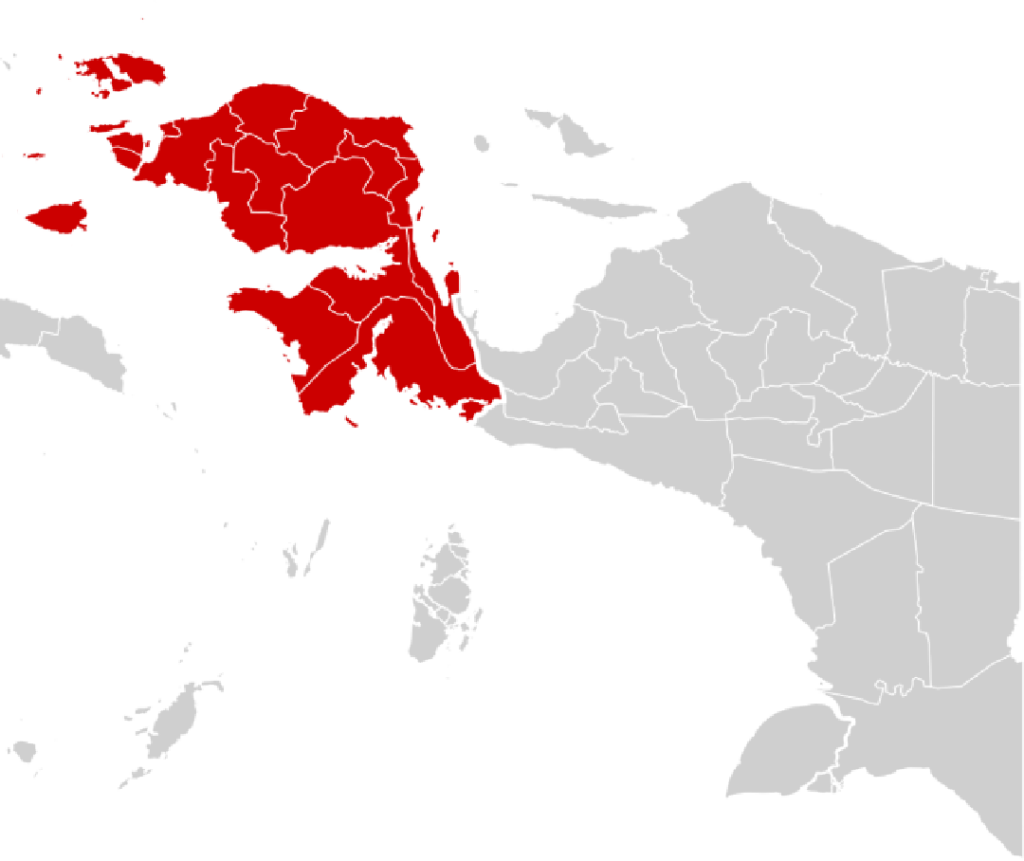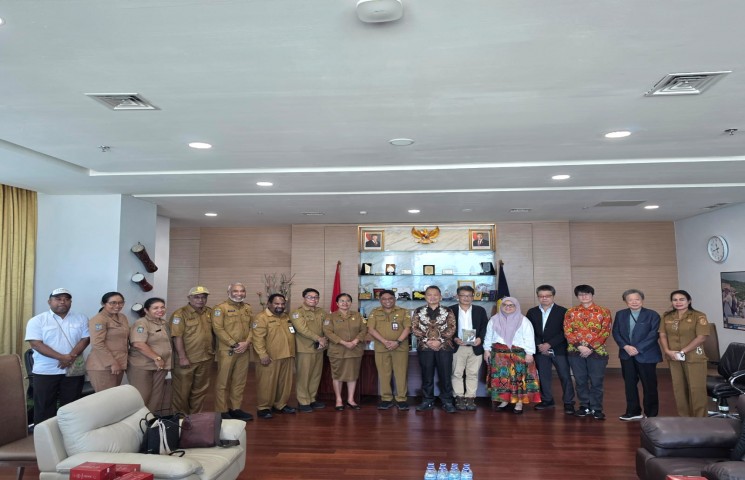
More than eighty years after fierce battles reshaped the Pacific during the Second World War, Papua World War II heritage continues to foster international cooperation rooted in humanitarian values and historical reconciliation. The Government of Papua Province recently reaffirmed its support for collaboration between Indonesia and Japan in facilitating the repatriation of the remains of Japanese soldiers who lost their lives during the Pacific War, reflecting a shared commitment to preserving historical dignity while strengthening bilateral relations.
The initiative represents more than a humanitarian mission. It also highlights Papua’s unique position in world history as one of the most strategically important battlefields during the Pacific campaign between Allied and Japanese forces. From the northern coast of Papua to its surrounding islands, remnants of wartime infrastructure, military equipment, and memorial sites continue to remind visitors that the region played a significant role in one of the twentieth century’s defining global conflicts.
Provincial officials emphasized that the cooperation reflects Indonesia’s broader commitment to humanitarian principles and international friendship. By facilitating the dignified return of war victims’ remains, Papua contributes to historical reconciliation while preserving an important chapter of shared international history.
Papua and Japan Strengthen Humanitarian Cooperation
The cooperation between the Government of Papua Province and Japanese authorities focuses on supporting the humanitarian process of identifying and repatriating the remains of Japanese military personnel who died during the Pacific War.
According to Papua Provincial Government officials, the initiative reflects respect for universal humanitarian values that transcend historical conflict. Families who have waited decades for information regarding relatives lost during wartime may finally receive an opportunity for proper remembrance and burial.
Provincial authorities explained that Papua remains one of several locations in Indonesia where the remains of Japanese soldiers are still occasionally discovered because of the intensity of military operations conducted during World War II.
The repatriation process therefore requires close coordination involving Indonesian government institutions, Japanese representatives, local authorities, historians, archaeologists, and community leaders.
Officials emphasized that the cooperation does not alter the historical realities of the conflict itself.
Instead, it demonstrates how former wartime adversaries can build partnerships based on mutual respect, humanitarian responsibility, and shared commitment to preserving historical memory.
Such collaboration also reflects the strong diplomatic relationship that Indonesia and Japan have developed during the decades following the Second World War.
Today, the two countries cooperate extensively in trade, investment, education, infrastructure, disaster management, and cultural exchange.
The humanitarian mission in Papua adds another dimension to this bilateral partnership by emphasizing compassion, historical responsibility, and reconciliation.
Returning the Remains of World War II Victims
Recovering and repatriating wartime remains is often a lengthy and technically demanding process.
Many battle sites lie within remote forests, mountainous terrain, or coastal areas that have changed considerably over the past eight decades.
Specialists conducting recovery missions must carefully combine historical records, archival research, archaeological techniques, and local knowledge to identify possible burial locations.
Papua’s geographical diversity presents additional logistical challenges.
Dense tropical forests, isolated coastlines, and changing landscapes require careful planning before any recovery operation can begin.
For this reason, cooperation with provincial authorities and local communities remains essential throughout the process.
Government representatives noted that local residents frequently possess valuable historical knowledge passed down through generations.
Oral histories sometimes provide important clues regarding former battlefields, abandoned military positions, or locations where wartime casualties were buried.
Such community participation illustrates how historical preservation benefits from collaboration between professional researchers and local populations.
Officials also stressed that all recovery activities are conducted in accordance with Indonesian laws while respecting local customs, cultural traditions, and community interests.
This balanced approach seeks to preserve historical integrity while ensuring that humanitarian objectives remain the central priority.
Papua’s Strategic Role in the Pacific War
Although widely recognized today for its extraordinary biodiversity and cultural diversity, Papua also occupies a prominent place in twentieth century military history.
During World War II, Papua became one of the most strategically significant regions within the Pacific Theater, where Allied and Japanese forces fought for control of key transportation routes and military positions.
Several major military operations occurred across Papua and neighboring islands during 1942 to 1945.
The region’s airfields, coastlines, and natural harbors were considered strategically valuable because they supported military logistics and broader operations throughout the Southwest Pacific.
Areas such as Jayapura, formerly known as Hollandia, became important operational centers during the Allied campaign.
Historical records indicate that numerous military installations, defensive positions, aircraft wrecks, tunnels, bunkers, and other wartime relics remain scattered across Papua today.
These sites provide valuable evidence of the scale and complexity of the Pacific War while attracting historians, archaeologists, researchers, and heritage enthusiasts from around the world.
For Papua itself, this historical legacy represents an important cultural asset.
Beyond preserving memories of conflict, wartime heritage contributes to historical education by helping younger generations understand how global events shaped the region’s past.
It also demonstrates Papua’s longstanding connection with international history, illustrating that developments within the province have influenced events extending far beyond Indonesia.
Preserving Historical Memory for Future Generations
Provincial officials emphasized that cooperation with Japan also contributes to broader efforts aimed at preserving Papua’s historical heritage.
Documenting wartime sites, protecting archaeological remains, and encouraging responsible historical research all support public understanding of Papua’s role during the Pacific War.
Educational institutions increasingly recognize the value of integrating local history into broader discussions about international relations, peace, humanitarian values, and reconciliation.
Rather than allowing wartime memories to fade, preservation initiatives help transform historical experience into opportunities for learning and international cooperation.
Papua’s wartime legacy therefore extends beyond military history alone.
It also tells a story of resilience, reconciliation, and the ability of nations once separated by conflict to work together in pursuit of shared humanitarian goals.
Historical Cooperation Strengthens Indonesia and Japan Relations
The humanitarian cooperation between Papua Province and Japan reflects how former battlefields can evolve into platforms for international friendship and mutual respect.
More than eight decades after the Pacific War ended, Indonesia and Japan today enjoy one of Asia’s strongest strategic partnerships, cooperating across trade, infrastructure, education, technology, disaster management, and cultural exchange. The initiative to facilitate the repatriation of Japanese soldiers’ remains adds an important humanitarian dimension to this relationship.
Officials from the Papua Provincial Government emphasized that supporting the recovery and repatriation process represents Indonesia’s commitment to universal humanitarian principles. Regardless of nationality, every individual deserves dignity in death, while families deserve the opportunity to know the fate of relatives who never returned home after the war.
Such cooperation also demonstrates how historical wounds can gradually be transformed into opportunities for reconciliation.
Rather than allowing the legacy of conflict to divide nations indefinitely, humanitarian initiatives encourage mutual understanding while honoring historical truth.
For Indonesia, including Papua, this approach aligns with broader efforts to preserve historical heritage while strengthening constructive international partnerships.
For Japan, recovering the remains of soldiers lost during World War II continues to carry profound cultural and emotional significance for surviving families and descendants.
The collaboration therefore benefits both countries through shared respect for history and humanitarian responsibility.
Papua’s World War II Heritage Offers Global Historical Value
Beyond the repatriation effort itself, Papua possesses one of Southeast Asia’s richest collections of World War II historical sites.
Throughout northern Papua, visitors can still find remnants of military airfields, coastal defenses, underground tunnels, aircraft wreckage, bunkers, ammunition storage areas, and wartime logistics facilities dating back to the Pacific campaign.
Many of these historical locations remain relatively well preserved because of Papua’s unique geography and limited urban development in certain areas.
Jayapura, formerly known as Hollandia, served as one of General Douglas MacArthur’s most important operational headquarters after Allied forces secured the area in 1944.
The city subsequently became a major logistics center supporting Allied operations across the Southwest Pacific.
Nearby regions also witnessed significant military activity involving both Allied and Japanese forces.
Today, historians, archaeologists, military researchers, university scholars, and heritage enthusiasts continue visiting Papua to study these historical landscapes.
The province therefore possesses considerable potential to develop responsible historical tourism alongside environmental and cultural tourism.
Provincial authorities have emphasized that preserving these historical sites should remain closely connected with education and conservation.
Rather than promoting war itself, the objective is to help future generations understand the human consequences of global conflict while appreciating the importance of peace and international cooperation.
Historical interpretation can also strengthen local awareness regarding Papua’s significant contribution to world history.
Although often associated internationally with its biodiversity and Indigenous cultures, Papua also occupies a distinguished place within the broader history of the Pacific War.
Preserving History While Supporting Local Communities
The preservation of wartime heritage also offers opportunities to benefit local communities.
Responsible heritage management can encourage educational tourism, academic research, museum development, and cultural interpretation programs that generate local economic opportunities while protecting historical resources.
Community participation remains essential.
Many wartime locations are situated near villages whose residents have safeguarded local historical knowledge for generations.
Their oral traditions, family histories, and customary understanding of the landscape frequently complement official archives and archaeological research.
Government officials therefore encourage collaboration among historians, universities, local governments, customary leaders, museums, and international partners to document historical resources while respecting local cultural values.
Such cooperation helps ensure that preservation efforts benefit both historical scholarship and surrounding communities.
At the same time, careful conservation protects fragile historical evidence from deterioration caused by natural processes or unregulated development.
Maintaining these sites allows future researchers and visitors to continue learning about Papua’s important role during one of the twentieth century’s defining global conflicts.
Looking Ahead
The humanitarian cooperation between Papua Province and Japan is expected to continue strengthening through close coordination among government institutions, diplomatic representatives, researchers, and local communities.
Beyond the recovery of wartime remains, similar partnerships may encourage broader collaboration in historical documentation, archaeological research, museum development, educational exchanges, and heritage conservation.
For Papua, preserving World War II history represents an opportunity to introduce international audiences to another dimension of the province’s identity.
Alongside its remarkable biodiversity, cultural richness, and Indigenous traditions, Papua also possesses historical assets of global significance that continue attracting scholarly interest.
Future initiatives integrating historical preservation with education and sustainable tourism could further enhance Papua’s international profile while ensuring that valuable heritage remains protected for future generations.
Conclusion
The cooperation between the Government of Papua Province and Japan in facilitating the repatriation of World War II soldiers’ remains demonstrates how humanitarian values can strengthen international partnerships decades after armed conflict has ended.
The initiative reflects Indonesia’s commitment to respecting human dignity while supporting historical reconciliation through constructive bilateral cooperation.
It also reminds the international community that Papua occupies an important place in the history of the Pacific War.
Its battlefields, military installations, archaeological remains, and historical landscapes continue serving as valuable educational resources that connect local history with broader global events.
As Papua continues developing socially and economically, preserving this historical heritage offers opportunities to strengthen education, promote responsible historical tourism, support academic research, and deepen international cooperation.
By safeguarding both humanitarian values and historical memory, Papua contributes not only to Indonesia’s national heritage but also to a shared chapter of world history that continues to offer lessons about reconciliation, peace, and international understanding.