
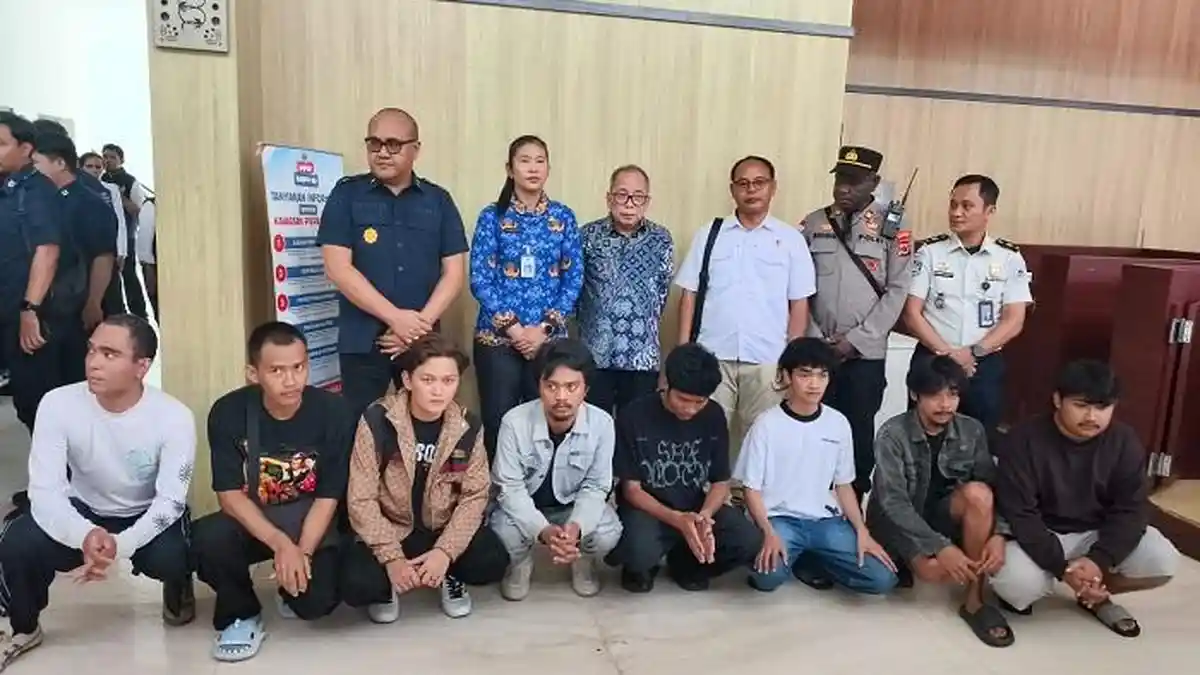
The Indonesian government’s efforts to protect its citizens overseas have entered a new phase following the rescue of dozens of Indonesians allegedly exploited by an online scam network in Papua New Guinea (PNG). Nine of the affected citizens have returned to Indonesia, while others remain in the neighboring Pacific country as authorities work through the procedures required to secure their release and arrange their safe journey home.
The case has drawn attention to the growing reach of transnational cybercrime and human trafficking networks, which increasingly use attractive job advertisements on social media to recruit workers across international borders. For Indonesia, the situation is not only a consular challenge but also a reminder of the government’s responsibility to protect citizens who become vulnerable to exploitation abroad.
The developments follow a police operation in Port Moresby in September 2026, when PNG authorities discovered 39 Indonesian nationals inside a residential property suspected of being used as an online scam centre. According to the report published by Tribun Papua Tengah, nine Indonesians have since completed their return to Indonesia, while several others remain in PNG awaiting further arrangements.
The ongoing process demonstrates that bringing victims home can involve more than securing their release from an alleged criminal operation. Immigration procedures, identity verification, investigations, and coordination between the two governments may all affect how quickly individuals can return.
From Job Offers to an Alleged Scam Operation
The September police raid in Port Moresby
The case came to wider public attention on September 22, 2026, when the Royal Papua New Guinea Constabulary announced that its officers had disrupted an alleged international human trafficking operation in Port Moresby.
According to information released by PNG police and reported internationally on September 23, investigators from the Transnational Crime Directorate conducted an operation at a residential property in the capital. Officers discovered 39 Indonesian nationals, comprising 34 men and five women, inside a three-bedroom house.
Initial police findings indicated that the Indonesians had allegedly been recruited through social media with promises of employment. However, investigators suspected that the individuals were subsequently held against their will and forced to operate online scams.
The discovery raised serious concerns about the use of residential properties as locations for organized cybercrime operations. Rather than operating from conventional office buildings, criminal networks can use private houses to conceal their activities, restrict workers’ movements, and make detection more difficult.
PNG police detained four Chinese nationals in connection with the suspected operation. Investigators were examining whether those detained had links to a wider trafficking network operating between Southeast Asia and the Pacific.
PNG Police Commissioner David Manning described human trafficking as a serious crime that exploits vulnerable people for financial gain. He said investigators were tracing the movements and connections of suspected traffickers, including individuals who might be operating within PNG and overseas.
“There will be no leniency for those who traffic and exploit people,” Manning said, according to reporting by ABC News.
The police commissioner also emphasized that the safety, welfare, and dignity of the Indonesians found at the property were immediate priorities.
The investigation represented an important development for law enforcement in PNG, where authorities were confronting allegations of an international trafficking operation involving foreign nationals recruited to conduct online fraud.
Why the discovery matters
The case was particularly significant because it exposed how cybercrime and human trafficking can operate together.
Online scams are often discussed as financial crimes involving fraudulent investment schemes, impersonation, romance scams, or other forms of digital deception. However, behind some of these operations are individuals who may themselves have been deceived, coerced, or threatened into carrying out fraudulent activities.
The distinction is important. People who knowingly participate in criminal networks and those who are forced to work under coercive conditions should not automatically be treated as having the same legal status. Investigators must establish each person’s circumstances and involvement through proper procedures.
In the Port Moresby case, PNG authorities reported that the Indonesians were allegedly held against their will. Their individual circumstances therefore required assessment as part of the investigation and subsequent protection process.
The authorities also faced practical challenges in conducting interviews, including language barriers. ABC News reported that PNG police were seeking cooperation with Indonesian officials to assist investigators in communicating with the affected citizens.
This made diplomatic coordination particularly important. The Indonesian Embassy in Port Moresby was supporting the Indonesians, while PNG authorities remained responsible for the local investigation and relevant legal procedures.
Indonesia Moves to Bring Its Citizens Home
Nine Indonesians have returned
Following the initial rescue, attention shifted to the process of returning the affected citizens to Indonesia.
According to the report published by Tribun Papua Tengah, nine Indonesians have completed their return home, while others remain in Papua PNG awaiting further arrangements.
The development represents progress in the government’s efforts to ensure that Indonesian citizens affected by the suspected operation are not left without assistance overseas.
However, the return of nine people does not necessarily mean that the entire case has been resolved. Those who remain in PNG may still need to complete different administrative or legal procedures before they can travel.
The distinction between rescue and repatriation is especially important in cases involving suspected human trafficking. A person may have been removed from an exploitative environment but still be unable to leave the country immediately because of immigration status, identity documentation, investigative requirements, or travel arrangements.
For Indonesian diplomatic representatives, the task is therefore not limited to facilitating transportation. It also involves identifying the individuals, understanding their circumstances, coordinating with local authorities, and ensuring that their rights and welfare are considered.
The Indonesian government has established mechanisms through its Ministry of Foreign Affairs and overseas diplomatic missions to assist citizens facing emergencies abroad. These include consular assistance, communication with local authorities, documentation support, and facilitation of return when the relevant requirements have been met.
The Port Moresby case illustrates why these diplomatic channels matter, particularly when citizens become involved in situations that cross national borders.
Coordination with PNG authorities
Repatriation requires cooperation between the country of origin and the country where the affected individuals are located.
In this case, the Indonesian Embassy in Port Moresby has been involved in supporting the affected citizens while PNG authorities continue their investigation.
The two governments have different but complementary responsibilities. PNG authorities must establish the facts surrounding the alleged trafficking operation, investigate suspected offenders, and apply their domestic laws. Indonesian officials, meanwhile, must assist their citizens through consular channels and coordinate the necessary arrangements for their return.
The process can become complicated when individuals are considered witnesses or potential sources of information in an ongoing criminal investigation. Authorities may need to complete interviews and establish relevant details before allowing them to depart.
Immigration documentation can also affect the process. Individuals whose travel documents are unavailable or whose immigration status requires clarification may need additional assistance before they can travel internationally.
These procedures help explain why the return of affected citizens may take place in stages rather than through one simultaneous operation.
For the Indonesian government, the immediate priority remains ensuring that citizens who require assistance receive appropriate support and that their return is carried out safely and in coordination with the relevant authorities.
A Wider Challenge of Transnational Human Trafficking
Social media recruitment as an entry point
The alleged recruitment method in Port Moresby reflects a wider pattern seen in several international online scam cases.
Criminal networks frequently use social media platforms and messaging applications to advertise employment opportunities. The advertisements may promise attractive salaries, administrative positions, customer service work, or computer-related jobs.
For people seeking employment, particularly those facing limited opportunities at home, such offers can appear convincing. Recruiters may use professional-looking company profiles, online interviews, and travel arrangements to create the impression of legitimate employment.
The risk often becomes apparent only after workers arrive at their destination. Some discover that the promised job does not exist. Others may have their passports or personal documents withheld, face restrictions on movement, or be pressured into performing activities that were never explained during recruitment.
The Port Moresby investigation has raised concerns about precisely this type of exploitation. PNG police said the Indonesians were allegedly recruited through social media before being held and forced to participate in online scam activities.
The case also highlights the international nature of the problem. Recruitment may take place in one country, transportation may cross several jurisdictions, and the fraudulent activities may target victims located around the world.
This means that a single national law enforcement agency cannot always address the entire network. Cooperation between police forces, immigration authorities, diplomatic missions, and international partners is essential.
Indonesia’s experience with overseas online scam cases
The case in PNG is part of a broader challenge faced by Indonesia in protecting citizens from fraudulent overseas employment schemes.
The Indonesian Ministry of Foreign Affairs has previously documented thousands of cases involving Indonesian nationals connected to online scam operations in several countries.
Its report covering the period from 2020 to December 2024 recorded 6,782 cases related to online scams handled by Indonesian diplomatic missions. The majority were reported in Southeast Asia, particularly Cambodia, the Philippines, Laos, Thailand, and Myanmar.
The ministry’s findings also identified cases involving suspected human trafficking, demonstrating that online fraud operations can be linked to wider forms of labor exploitation.
The scale of these cases has encouraged Indonesian authorities to strengthen public awareness, improve consular coordination, and work more closely with law enforcement agencies in destination countries.
In March 2026, the Indonesian National Police reported that thousands of Indonesians had sought assistance to leave online scam operations in Cambodia. The cases demonstrated how rapidly recruitment networks can expand and how difficult it can be to secure the return of large numbers of citizens.
The experience also provides an important lesson for the response to the Port Moresby case. Repatriation is an immediate priority, but long-term protection requires action against the recruitment networks themselves.
Protecting Indonesian Citizens Beyond National Borders
Diplomacy and law enforcement must work together
The government’s response to the situation in PNG illustrates the importance of consular diplomacy in protecting Indonesian citizens abroad.
An overseas citizen facing exploitation may be unfamiliar with local laws, unable to communicate effectively with authorities or reluctant to seek assistance because of fear of retaliation. Access to an Indonesian diplomatic mission can provide an important channel for reporting the situation and requesting help.
The Indonesian Embassy in Port Moresby plays a significant role in this process by maintaining communication with PNG authorities and assisting affected citizens.
At the same time, the investigation must continue through the appropriate legal channels. Identifying the individuals responsible for recruitment, transportation, and alleged exploitation is necessary to prevent similar incidents from recurring.
PNG Police Commissioner David Manning’s statement that there would be no leniency for human traffickers reflects the seriousness with which PNG authorities have approached the case.
The detention of four Chinese nationals was an initial development, but investigators also indicated that the suspected network could extend beyond the individuals initially detained. Any further legal action will depend on the evidence gathered and the outcome of the investigation.
For Indonesia, cooperation with PNG is important not only for the immediate repatriation process but also for identifying possible recruitment channels and preventing further exploitation of Indonesian citizens.
Public awareness is the primary means of prevention
Government assistance abroad is essential, but prevention begins before a person accepts an overseas job offer.
Prospective migrant workers should verify the identity of employers, recruitment agencies, and companies before agreeing to travel. They should also ensure that employment contracts, work permits, salaries, and job descriptions are clear and legally valid.
Treat offers that promise unusually high salaries without clear qualifications, request payment through unofficial channels, or require workers to surrender personal documents with caution.
Applicants should also share their travel plans and employment information with family members and retain copies of their passports, visas, contracts, and other important documents.
When an overseas job offer appears suspicious, prospective workers should seek verification through official government channels before making travel arrangements.
These precautions are especially relevant in the digital era, when recruitment can occur through social media accounts that appear professional but may conceal criminal networks.
The Port Moresby case demonstrates that the consequences of accepting an unverified offer can extend far beyond financial loss. Individuals may find themselves in unfamiliar countries, separated from their families and exposed to coercion or exploitation.
Repatriation Is Only the Beginning
The return of nine Indonesians from PNG is an important step in addressing the case, but the situation remains unfinished while other affected citizens are still awaiting their return.
The next priority is to ensure that those who remain in PNG receive the necessary assistance and that their individual circumstances are resolved through coordination between Indonesian and PNG authorities.
The investigation into the suspected trafficking network must also continue. Identifying recruiters, facilitators, and other individuals potentially involved is essential to preventing similar operations from emerging elsewhere in the Pacific.
For Indonesia, the case demonstrates that protecting citizens abroad requires more than responding after an incident has occurred. It requires active diplomacy, cooperation with foreign governments, effective law enforcement, and sustained public education about the risks of fraudulent employment offers.
Ultimately, the government’s responsibility does not end when an Indonesian citizen is rescued. Safe repatriation, appropriate assistance after arrival, and efforts to prevent renewed exploitation are equally important.
The nine citizens who have returned represent progress. Ensuring that the remaining Indonesians can also return safely, while bringing those responsible for exploitation to justice, will be the more complete measure of success.
As cybercrime networks continue to cross borders and adapt their recruitment methods, Indonesia and PNG have a shared interest in strengthening cooperation. The protection of vulnerable workers and the disruption of transnational criminal networks must remain central to that partnership.
Conclusion
The repatriation of nine Indonesians from PNG demonstrates the Indonesian government’s commitment to protecting its citizens from transnational crime and exploitation abroad. However, the continued presence of other affected individuals in PNG emphasizes the necessity of sustained diplomatic coordination, consular assistance, and law enforcement cooperation. Beyond bringing the victims home, Indonesia and PNG must strengthen efforts to dismantle human trafficking networks, prevent fraudulent overseas recruitment, and ensure that vulnerable workers receive adequate protection. Ultimately, the success of this operation will be measured not only by the number of Indonesians safely repatriated but also by the effectiveness of measures to prevent similar cases in the future.
Read Also
Drug Raid Operation Arrests 10 Suspects, 6 From PNG in Jayapura
Five Former TPNPB OPM Members Return from PNG

