
In Papua’s highland interior, where geography can make access to markets and business support difficult, the Papua creative economy is receiving a new push from the provincial government. Papua Pegunungan (Highland Papua) has allocated approximately Rp4 billion in special autonomy funds to support creative economy entrepreneurs across its eight districts.
The initiative is being accompanied by a broader effort to identify businesses that have not yet entered the government’s official database. Provincial authorities currently have records for around 300 creative economy entrepreneurs, but officials believe the actual number could eventually reach 1,000.
The policy reflects a growing recognition that large infrastructure projects and extractive industries do not solely drive economic development in Papua. Small businesses built around coffee, handicrafts, food products, and locally sourced materials can also contribute to household incomes, employment, and the development of local value chains.
For the provincial administration, the immediate challenge is to turn financial support into sustainable businesses capable of competing beyond their immediate communities.
A Rp4 Billion Commitment to Creative Entrepreneurs
The Papua Pegunungan provincial government, through its Tourism and Creative Economy Office, has earmarked approximately Rp4 billion from special autonomy funds for the 2026 fiscal year to support creative economy businesses in eight districts.
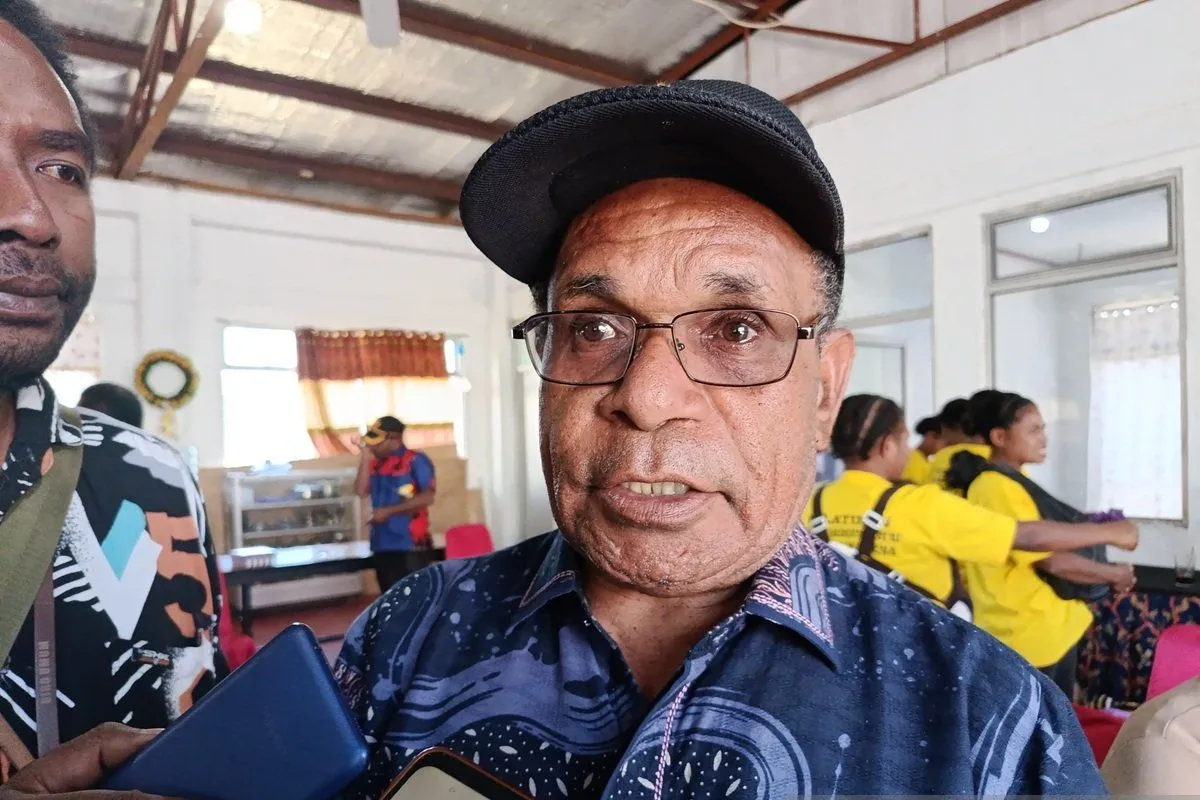
The allocation was confirmed by Hulu Bahabol, Acting Head of the Papua Pegunungan Tourism and Creative Economy Office, in Wamena. He said the funds were intended to help the growth of creative economy businesses owned by indigenous Papuans across the province.
The planned assistance is not designed to cover every entrepreneur currently registered with the government.
Instead, the provincial administration plans to initially provide business capital or equipment assistance to 50 of the approximately 300 creative economy entrepreneurs currently recorded in its database. The distribution is expected to take place in August or September 2026, with the governor expected to be directly involved in the handover.
The distinction is important.
A Rp4 billion allocation may appear substantial, but it must serve a wide geographic area and a diverse group of businesses. The government therefore faces the practical task of determining which enterprises are ready to use the assistance productively and which forms of support will produce the greatest long-term impact.
From Funding to Productive Capital
Government assistance can be particularly useful for small businesses that struggle to obtain conventional financing.
In Papua Pegunungan, the support could take the form of working capital or equipment, according to the provincial government.
For a coffee producer, equipment may improve processing and packaging. Better tools could boost production capacity for an artisan. For a food business, appropriate equipment could improve hygiene, consistency, and output.
Such interventions may appear modest compared with large infrastructure projects, but their economic effect can be more immediate at the household level.
The real measure of success, however, will not be the number of beneficiaries receiving assistance. It will be whether those businesses survive, increase production, create employment, and gain access to wider markets.
Mapping 300 Businesses Across Eight Districts
One of the most significant aspects of the policy is taking place before all the funding is distributed: the government is building a clearer picture of Papua Pegunungan’s creative economy.
As of August 2026, provincial authorities had recorded approximately 300 creative economy entrepreneurs across the region’s eight districts.
Hulu Bahabol said the businesses cover several fields, including coffee processing, handicrafts, and food products made from locally sourced tubers.
The coffee sector offers a particularly useful example of how local resources can be transformed into higher-value products.
According to the provincial government, communities in the eight districts are already processing locally produced coffee beans into products that have market value.
This represents an important shift from simply selling raw commodities toward developing local processing capacity.
The same principle applies to handicrafts and food products. When local entrepreneurs process, package, and market products themselves, a larger portion of the economic value can potentially remain within the region.
Why Better Data Matters
The government also acknowledges that its current database is incomplete.
Bahabol said the number of creative economy entrepreneurs could rise from around 300 to approximately 1,000 once a comprehensive re-registration process is completed. The provincial administration believes many businesses are already operating but have not yet been recorded.
That observation points to a wider challenge facing local economic policy in remote regions.
A business that is invisible in official records is harder to reach with government programs. It may not receive information about training, financing, market opportunities, or regulatory assistance.
A reliable database therefore becomes more than an administrative exercise. It can become the foundation for designing better economic policy.
For Papua Pegunungan, the planned data collection could eventually provide information about where businesses are located, what products they make, what equipment they need, and what obstacles prevent them from expanding.
That information could help the government move from broad assistance programs toward more targeted interventions.
Local Products as Drivers of Economic Development
The creative economy has a particular relevance to Papua because it can connect economic development with resources and skills already present in local communities.
Coffee is one example.
Instead of exporting or selling beans in an early stage of production, entrepreneurs can potentially create additional value through roasting, grinding, packaging, branding, and direct marketing. Each stage can create new opportunities for labor and entrepreneurship.
The same logic can be applied to local food.
Papua Pegunungan has a strong agricultural base, and locally grown tubers can become ingredients for packaged food products. Turning agricultural output into commercially branded products can help diversify household income while creating a stronger connection between farming and the consumer market.
Handicrafts offer another pathway.
Traditional skills and local materials can become part of a modern creative industry when combined with product design, quality control, packaging, marketing, and access to consumers outside the region.
This is where government support can have a catalytic role.
Rather than replacing private initiative, public funding can help entrepreneurs overcome the early barriers that prevent small businesses from reaching the next stage of development.
The Role of Special Autonomy Funds
The use of special autonomy funds adds another dimension to the program.
Special autonomy, or Otsus, provides a framework for supporting development priorities in Papua. In this case, the Papua Pegunungan provincial administration is directing approximately Rp4 billion managed by the Tourism and Creative Economy Office toward the growth of creative businesses.
The stated focus on businesses owned by indigenous Papuans also gives the program a social and economic inclusion dimension.
The objective is not simply to increase the number of businesses. It is to help local communities participate more actively in economic activity and capture greater value from their skills and resources.
That approach is consistent with a broader development challenge in Papua: ensuring that economic growth translates into opportunities for local populations.
However, funding alone cannot guarantee that outcome.
Entrepreneurs also need knowledge, market access, financial literacy, digital marketing skills, reliable logistics, and, in some cases, formal business registration.
The provincial government will therefore need to consider how its financial assistance can be connected with other forms of support.
From Traditional Skills to Modern Markets
The next stage of Papua Pegunungan’s creative economy could increasingly depend on digital access.
A coffee producer in the highlands no longer needs to rely exclusively on customers who physically visit the region. With adequate connectivity, packaging, and logistics, products can potentially be promoted to consumers in Jayapura, other Indonesian cities, and eventually international markets.
The same applies to handicrafts.
Digital platforms can give artisans an opportunity to display their work to customers well beyond their immediate communities. Social media can function as a low-cost marketing tool, while e-commerce can provide a route to customers who would otherwise have no access to local products.
This shift does not mean every entrepreneur will immediately become an online seller. Many businesses first need basic training in photography, branding, pricing, inventory management, and customer service.
That is why the government’s data collection could become particularly valuable.
Once officials know the characteristics of the businesses they are trying to support, training and equipment programs can be designed around actual needs rather than assumptions.
A Broader Economic Opportunity for the Highlands
The creative economy also offers Papua Pegunungan an opportunity to diversify its regional economy.
Wamena and other highland communities have long been associated with agriculture and local trade. Developing creative industries could add another layer to that economic base.
Coffee processing, handicrafts, and food production are relatively accessible entry points for small entrepreneurs. They can involve families, community groups, and young people while creating opportunities for skills development.
Over time, successful businesses could also create demand for supporting services.
A growing coffee business may need packaging suppliers, transport providers, graphic designers, marketing services, and additional workers. A successful handicraft producer may require logistics, photography, digital marketing, and retail partnerships.
This process is how a small enterprise can gradually become part of a wider local economic ecosystem.
The government, therefore, has an opportunity to view the Rp4 billion program not simply as a grant scheme but as an investment in an emerging business network.
The Challenge of Reaching Eight Districts
Geography remains one of the biggest practical challenges.
The program covers eight districts, meaning government support must operate across a large and difficult terrain. Businesses located far from administrative centers may face higher transportation expenses and limited access to markets.
This situation indicates that distributing equipment and capital is merely the initial step.
Entrepreneurs also need to be able to purchase raw materials, transport finished products, and communicate with buyers. Without reliable logistics and connectivity, financial assistance may have a smaller economic impact than intended.
For this reason, the creative economy program should ideally develop alongside improvements in transportation, telecommunications, and tourism infrastructure.
The relationship is mutually reinforcing.
Better connectivity allows products to reach markets. Stronger businesses create demand for better connectivity. Tourism can create new customers for local products, while creative industries can provide visitors additional reasons to engage with local communities.
Building a Sustainable Creative Economy
There is also a question of sustainability.
Government assistance can provide an important initial push, but businesses ultimately need to become commercially viable.
This means entrepreneurs should gradually be able to generate sufficient revenue to purchase their equipment, pay workers, and reinvest in production.
The provincial government appears to recognize that the first group of 50 beneficiaries is only an initial stage. Its planned re-registration of creative businesses suggests an intention to broaden the program as more entrepreneurs are identified.
The potential expansion from 300 identified businesses to as many as 1,000 would significantly change the scale of the creative economy landscape in Papua Pegunungan.
But expansion should be accompanied by careful evaluation.
Authorities will need to determine which forms of assistance generate measurable improvements in production, revenue, and employment. This can help ensure that future Otsus allocations are directed toward programs with lasting economic benefits.
Supporting Young Entrepreneurs
Young people could become another important part of this transformation.
Creative industries tend to have relatively low entry barriers compared with capital-intensive sectors. Photography, design, food processing, digital marketing, fashion, music, and handicrafts can all become sources of income when supported by skills and market access.
For Papua Pegunungan, encouraging young entrepreneurs could also help create economic opportunities closer to home.
The province does not need every young person to enter the same profession. A diverse entrepreneurial ecosystem can provide different pathways based on local resources, individual skills, and market demand.
This is particularly relevant as the region seeks to strengthen human resources alongside physical infrastructure.
Conclusion
The Papua Pegunungan provincial government’s Rp4 billion allocation from special autonomy funds marks a significant step in recognizing the creative economy as part of regional development.
The immediate program will support 50 of approximately 300 creative economy entrepreneurs currently recorded across eight districts through business capital or equipment assistance. At the same time, the government plans to conduct another round of data collection because officials believe the real number of creative entrepreneurs could reach around 1,000.
The significance of the program, therefore, extends beyond the Rp4 billion allocation.
It is also about identifying economic potential that already exists in communities, helping local entrepreneurs add value to products such as coffee and agricultural foods, strengthening handicraft businesses, and creating pathways into wider markets.
For the program to deliver lasting results, financial support will need to be matched by training, market access, digital capabilities, logistics, and transparent evaluation.
If those elements develop together, Papua Pegunungan’s creative economy could become more than a collection of small businesses receiving government assistance. It could evolve into a broader local economic ecosystem in which indigenous entrepreneurs transform local resources and cultural skills into competitive products.
That would make the program’s greatest achievement not the amount of money distributed but the number of businesses capable of standing on their own and contributing to the economic future of Papua Pegunungan.

