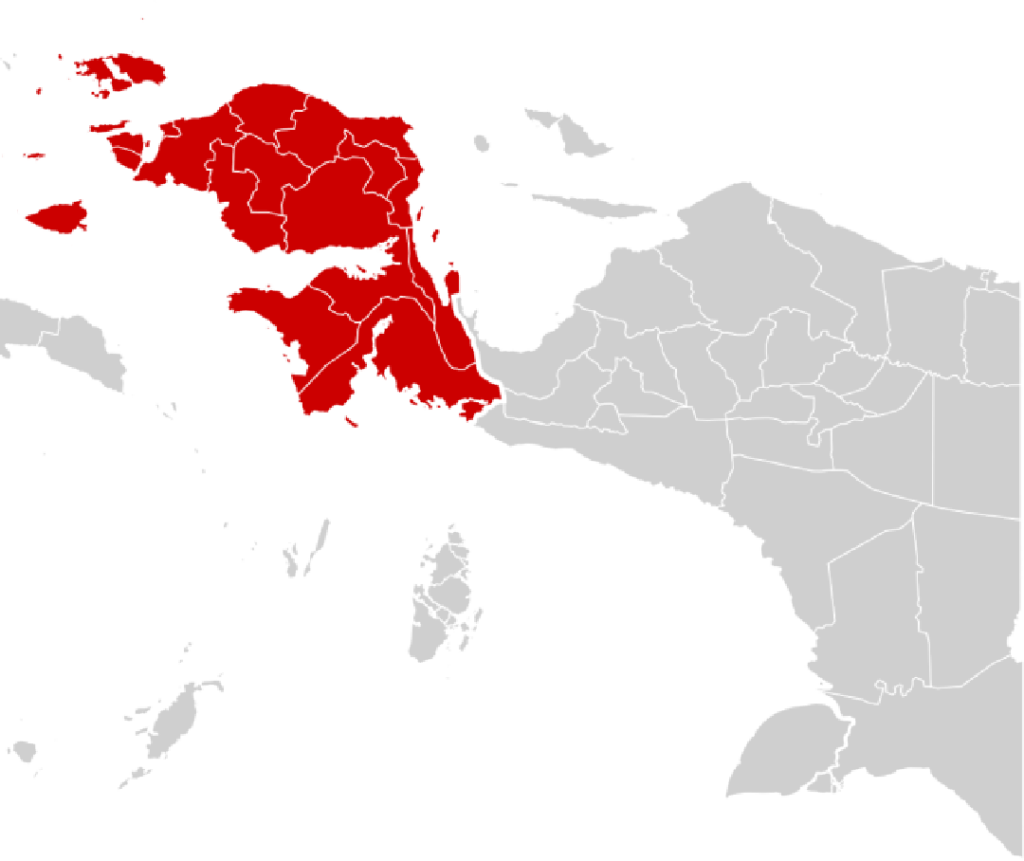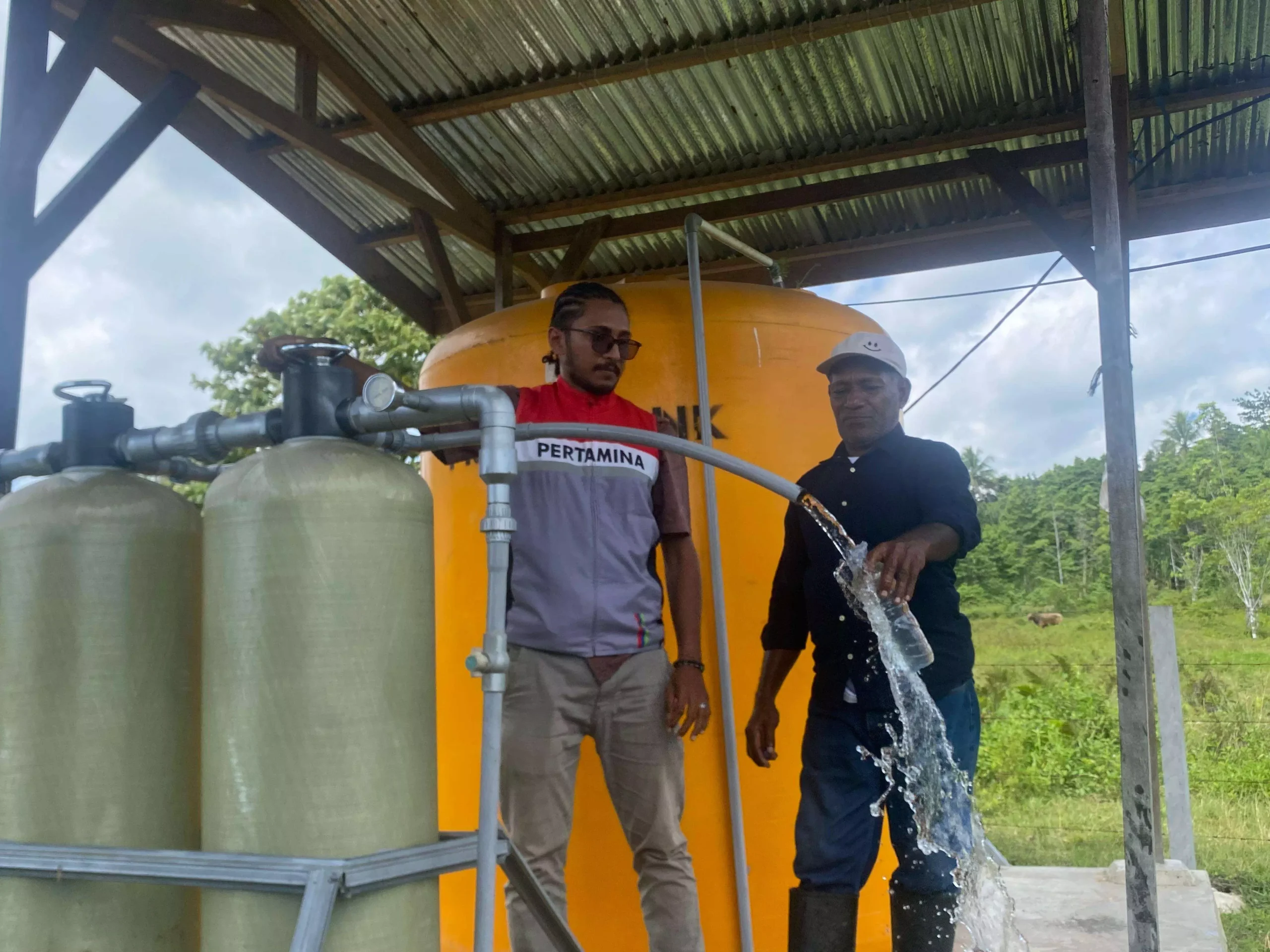
Access to clean water remains one of the most fundamental requirements for improving public health and supporting sustainable development. In Papua Barat Daya (Southwest Papua), PT Pertamina EP Papua Field has taken another step toward addressing this challenge by expanding clean water access to three villages in Sorong Regency through its community empowerment initiative. The program reflects how collaboration between the energy sector, local communities, and regional stakeholders can contribute to improving basic public services while supporting long-term social and economic development.
The initiative forms part of PERI Berdaya, a corporate social responsibility program developed by Pertamina EP Papua Field to improve community welfare through sustainable infrastructure. By utilizing an innovative portable Water Treatment Plant (WTP), the company seeks to accelerate clean water distribution to villages that have historically experienced limited access to safe drinking water.
Officials involved in the program emphasized that clean water availability influences nearly every aspect of daily life, from public health and education to household productivity and local economic activities. Reliable access to safe water also contributes to reducing waterborne diseases while improving sanitation standards in rural communities.
For residents of the beneficiary villages, the project represents more than the installation of new infrastructure. It provides greater certainty that households, schools, and community facilities will have access to cleaner and safer water while strengthening the foundations for sustainable village development.
Addressing One of Rural Papua’s Basic Development Priorities
Although Papua possesses abundant natural water resources, many rural communities continue facing practical challenges in accessing water that is safe for daily consumption.
Remote geography, dispersed settlements, limited infrastructure, and seasonal environmental conditions can complicate water distribution systems, particularly in villages located far from urban service centers.
As a result, residents often rely on untreated water sources that may not consistently meet health standards.
Recognizing these challenges, PT Pertamina EP Papua Field designed the clean water initiative to provide practical solutions that can be implemented efficiently while remaining appropriate for local conditions.
According to program officials, expanding access to clean water aligns with broader national efforts to improve community welfare through better basic services, particularly in eastern Indonesia.
The initiative also complements ongoing government investments in healthcare, education, sanitation, and village infrastructure that seek to improve living standards throughout Papua.
Development experts consistently identify access to clean water as one of the most effective investments for improving human development indicators because it directly affects health, education, productivity, and poverty reduction.
For many households, easier access to clean water also reduces the time traditionally spent collecting water from distant sources, allowing families to devote more time to education, work, and other productive activities.
Portable Water Treatment Technology Improves Efficiency
One of the distinguishing features of the program is the introduction of a portable Water Treatment Plant (WTP) capable of producing clean water more efficiently than conventional systems.
Unlike permanent large-scale treatment facilities that often require extensive construction and significant investment, portable systems can be deployed more quickly while remaining adaptable to different geographical conditions.
Pertamina EP Papua Field developed this technology to respond to the practical challenges often encountered in remote communities where conventional infrastructure may require longer implementation periods.
Officials explained that the portable WTP processes raw water through filtration and treatment stages designed to improve water quality before distribution to local residents.
Its mobility also allows the system to be relocated or expanded if community needs change over time.
This flexibility becomes particularly valuable in Papua, where diverse terrain and scattered settlements require infrastructure capable of adapting to local environmental conditions.
Technology specialists involved in community infrastructure projects increasingly recognize portable treatment systems as practical solutions for improving clean water access in remote regions.
By reducing implementation time while maintaining reliable treatment capacity, such systems help accelerate the delivery of essential public services.
Community Empowerment Through PERI Berdaya
The clean water initiative forms part of PERI Berdaya, Pertamina EP Papua Field’s broader commitment to community empowerment.
Rather than focusing solely on infrastructure development, the program encourages active participation by local communities throughout implementation and long-term operation.
Community members are involved in supporting the installation, maintenance, and sustainable management of the facilities to help ensure that the infrastructure continues operating effectively after project completion.
Officials have emphasized that successful community development depends not only on constructing physical facilities but also on strengthening local capacity to manage and maintain those assets independently.
This participatory approach encourages local ownership while improving the long-term sustainability of development programs.
Corporate social responsibility initiatives increasingly adopt similar models by combining infrastructure investment with community capacity building, environmental awareness, and institutional strengthening.
For the villages participating in PERI Berdaya, the clean water project therefore represents both an infrastructure improvement and an opportunity to strengthen community resilience through cooperation and shared responsibility.
Clean Water Improves Health and Quality of Life
Reliable access to clean water produces benefits that extend well beyond household consumption.
Public health experts consistently identify safe water as one of the most important factors in preventing waterborne diseases and improving overall community health.
Clean water supports better sanitation, safer food preparation, improved personal hygiene, and healthier learning environments for children attending local schools.
Healthcare providers frequently observe that communities with improved water access experience lower risks associated with preventable diseases linked to unsafe water sources.
Improved sanitation also contributes to better maternal and child health while supporting broader public health objectives.
Education outcomes may likewise improve when schools possess reliable access to clean water for students and teachers.
Children spend less time collecting water and more time participating in classroom activities, while schools can maintain healthier sanitation facilities.
For households, easier access to safe water reduces daily burdens while improving comfort and supporting small-scale economic activities that require reliable water supplies.
These cumulative benefits demonstrate why clean water infrastructure remains one of the most impactful forms of community development investment.
Corporate and Community Collaboration Supports Sustainable Development
The implementation of the clean water program illustrates the growing role of partnerships between private companies, local governments, and communities in advancing sustainable development across Papua.
While government institutions remain responsible for expanding public services, collaboration with the private sector enables additional resources, technical expertise, and innovation to reach communities more efficiently.
Pertamina EP Papua Field’s initiative demonstrates how corporate social responsibility can complement public development priorities by addressing local needs through practical and sustainable solutions.
Such partnerships contribute to broader development objectives by strengthening basic infrastructure while encouraging community participation and local capacity building.
As Papua continues pursuing inclusive development, collaborative initiatives are expected to remain an important mechanism for improving essential public services in remote areas.
Clean Water as a Foundation for Sustainable Rural Development
The expansion of clean water services to three villages in Sorong Regency demonstrates how access to basic infrastructure can become a catalyst for broader rural development. While roads, electricity, and telecommunications often receive significant attention, reliable access to safe water remains equally important in improving living standards and supporting long term economic progress.
Development specialists frequently describe clean water as one of the most effective public investments because its benefits extend across multiple sectors simultaneously. Families with dependable access to safe water generally experience improved health, lower household expenses associated with preventable illnesses, and greater opportunities to participate in productive economic activities.
For rural communities in Papua Barat Daya, improved water infrastructure can also encourage the growth of agriculture, fisheries, and small household enterprises that depend on a consistent water supply. Local businesses involved in food processing, livestock farming, and community services all benefit when clean water becomes more readily available.
Officials involved in the program noted that investments in basic infrastructure create conditions that allow communities to pursue broader development opportunities. As access to essential services improves, villages become better positioned to strengthen education, healthcare, local entrepreneurship, and overall social welfare.
The initiative therefore represents more than the delivery of clean water. It illustrates an integrated approach to community development in which essential public services contribute directly to long term economic resilience.
Supporting the Sustainable Development Goals
The clean water initiative also aligns with Indonesia’s commitment to achieving the United Nations Sustainable Development Goals (SDGs), particularly Goal 6, which seeks to ensure the availability and sustainable management of water and sanitation for all.
Improving access to clean water contributes not only to better health outcomes but also supports progress in education, poverty reduction, gender equality, and environmental sustainability. These interconnected objectives demonstrate why water infrastructure remains a central component of sustainable development strategies worldwide.
Pertamina EP Papua Field’s community empowerment program reflects the growing role of corporate social responsibility in supporting national development priorities. Through collaboration with local governments and communities, private sector investment can complement public programs while addressing practical challenges faced by remote villages.
Development practitioners increasingly emphasize that successful sustainability initiatives require cooperation among government institutions, businesses, and local communities. By combining technical expertise, financial resources, and community participation, projects become more resilient and better adapted to local conditions.
The experience in Sorong Regency illustrates how such partnerships can deliver practical benefits while strengthening public confidence in collaborative development efforts.
Innovation Drives Community Resilience
Innovation has become an increasingly important component of infrastructure development, particularly in geographically diverse regions such as Papua.
The portable Water Treatment Plant introduced through the PERI Berdaya program demonstrates how technological innovation can provide practical solutions for communities where conventional infrastructure may be more difficult or time consuming to construct.
Because the system is portable, it offers flexibility that allows it to respond to changing community needs and environmental conditions. This adaptability is particularly valuable in rural Papua, where settlements are often dispersed across challenging terrain.
Beyond the technology itself, innovation also includes new approaches to community engagement. By involving local residents in operating and maintaining the facilities, the program helps develop technical knowledge within the villages while encouraging long term ownership of the infrastructure.
Officials believe that community participation remains essential to ensuring that development investments continue providing benefits well beyond the completion of construction.
The combination of appropriate technology, local participation, and institutional cooperation creates a stronger foundation for sustainable public services capable of supporting future generations.
Strengthening Public Health and Human Development
Reliable access to clean water directly supports improvements in human development across multiple dimensions.
Healthcare professionals consistently recognize safe water as a critical factor in preventing diseases associated with contaminated water sources. Better sanitation contributes to healthier households, while schools equipped with reliable water supplies provide safer learning environments for students.
Women and children often benefit significantly from improved water infrastructure because shorter distances to water sources reduce the time spent on daily collection activities. This additional time can instead be devoted to education, household enterprises, or other productive activities that contribute to family welfare.
Improved public health also reduces pressure on local healthcare services while supporting greater workforce productivity throughout rural communities.
For Papua Barat Daya, investments in clean water therefore contribute not only to infrastructure development but also to strengthening human capital, an essential element of long term regional development.
Looking Ahead
PT Pertamina EP Papua Field is expected to continue expanding community empowerment initiatives that combine technological innovation with sustainable development principles. Future programs are likely to focus on strengthening clean water infrastructure, enhancing community capacity to manage public facilities, and supporting collaborative partnerships with regional governments and local residents. As Papua Barat Daya continues pursuing inclusive development, initiatives that improve access to essential public services are expected to play an increasingly important role in enhancing quality of life and building resilient rural communities.
Conclusion
The expansion of clean water access to three villages in Sorong Regency demonstrates PT Pertamina EP Papua Field’s commitment to supporting sustainable development through practical and community centered solutions. By introducing portable water treatment technology while encouraging local participation through the PERI Berdaya program, the initiative strengthens public health, improves sanitation, and enhances the quality of life for rural communities in Papua Barat Daya. Beyond addressing immediate infrastructure needs, the project reflects how collaboration between the private sector, government institutions, and local communities can contribute to broader development goals. As Papua continues investing in inclusive growth, similar initiatives are expected to strengthen community resilience, improve human development outcomes, and support sustainable progress across the region.