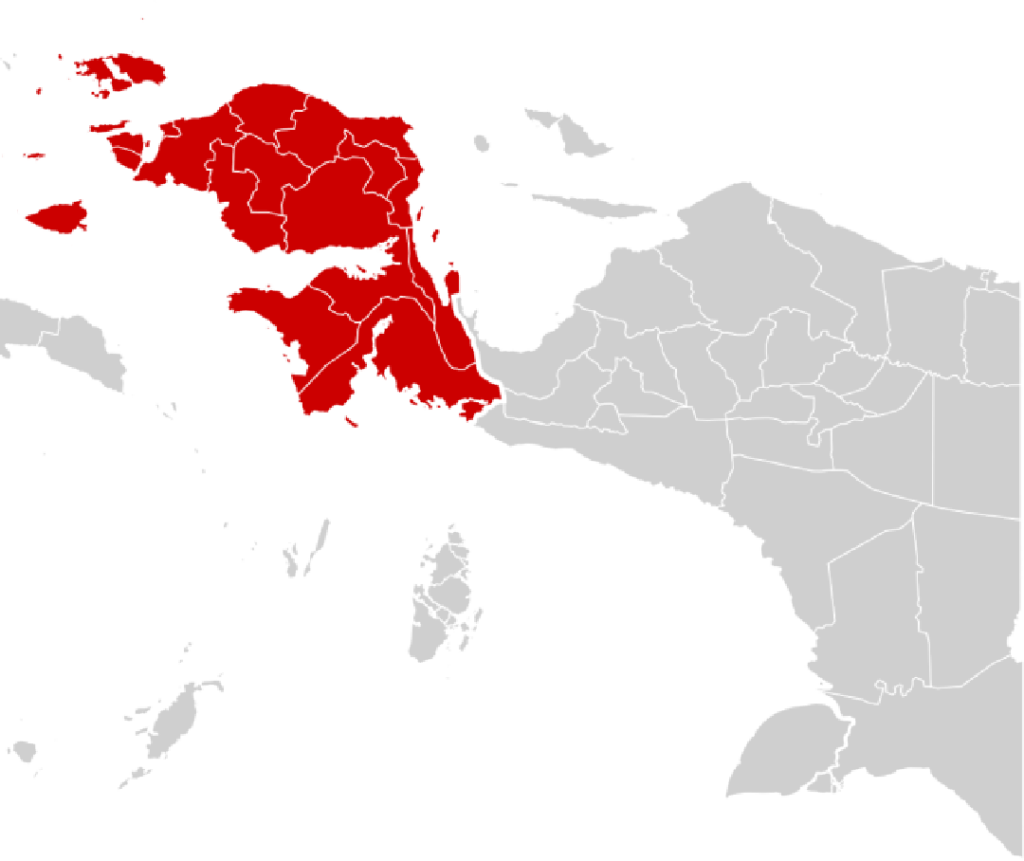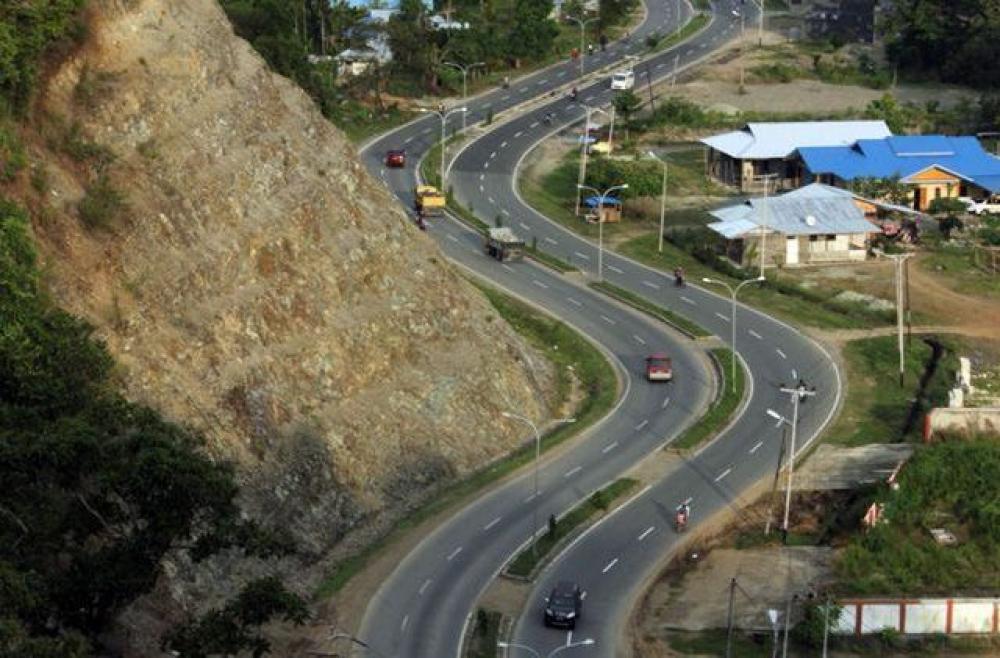
The Papua’s Budget (APBN) 2026 picture is showing a significant expansion of government expenditure, with state spending across the Papua region reaching Rp24.50 trillion by June 30, 2026, according to Indonesia’s Directorate General of Treasury, or DJPb.
The figure represents 41.54 percent of the Rp58.99 trillion state spending allocation for Papua in the 2026 budget year. At the same time, state revenue collected in the region reached Rp2.90 trillion, equivalent to 42.78 percent of the annual target.
The numbers provide an important snapshot of the role of Indonesia’s national budget in Papua.
The region’s fiscal story is not simply about how much revenue is generated locally. A large share of development financing comes through national government expenditure and transfers to regional administrations.
That makes the APBN a major instrument for maintaining public services, financing infrastructure, and supporting regional economic activity.
For Papua, where geography creates substantial costs for transportation, public service delivery, and infrastructure construction, the effectiveness of that spending is particularly important.
The first half of 2026 therefore offers an early indication of how public finances are being translated into development activity across the region.
Rp24.50 Trillion in State Spending
The Rp24.50 trillion realization consists of two major components.
The 2026 state spending allocation for Papua stands at Rp58.99 trillion, comprising Rp20.76 trillion in central government expenditure and Rp38.23 trillion in transfers to regional governments.
By the end of June, central government spending had reached Rp7.50 trillion.
That represented a substantial increase of 56.24 percent compared with the same period in 2025. Overall state spending, meanwhile, was up 4.96 percent year on year.
The acceleration is significant because government expenditure has a direct connection to economic activity.
When public agencies purchase goods and services, construct infrastructure, or deliver public programs, money circulates through local economies.
Contractors employ workers. Suppliers receive orders. Transportation providers move materials. Local businesses serve workers and communities.
The effects vary by sector and location, but public expenditure can become an important source of economic activity in regions where private investment remains uneven.
Where the Money Is Going
A substantial portion of the first half’s spending has flowed through transfers to regional governments.
By the end of June, Transfer to Regions, or TKD, had reached Rp17 trillion. The transfers included Rp671.15 billion in Revenue Sharing Funds, Rp11.36 trillion in General Allocation Funds, and Rp1.66 trillion in Special Allocation Funds.
The Special Allocation Funds consisted of Rp27.77 billion in physical DAK and Rp1.63 trillion in nonphysical DAK.
These mechanisms are important because regional governments are responsible for many services that residents encounter directly.
Healthcare facilities, schools, local infrastructure, and administrative services often depend on regional budgets.
National transfers therefore provide an important fiscal foundation for provincial and district governments.
For Papua, the importance is magnified by the geographical scale of the region.
Public services cannot be concentrated only in Jayapura or other major urban centers. Communities across districts require access to government services, and funding has to reach those areas.
Otsus Remains Part of the Fiscal Framework
The Special Autonomy Fund, known as Dana Otonomi Khusus or Otsus, is one of the most politically and economically important components of Papua’s public finances.
By the end of June 2026, the government had distributed Rp2.30 trillion in Special Autonomy funding to regional governments across Papua.
The presence of Otsus funding within the broader APBN framework is significant.
Special autonomy provides Papua with a distinctive fiscal mechanism intended to support development and improve the welfare of communities.
The effectiveness of that mechanism ultimately depends on how funds are planned, allocated, and implemented.
Earlier in 2026, the Ministry of Home Affairs emphasized the importance of transparent management of Otsus funding so that its use can be understood and monitored by the public.
That emphasis is important because large budgets require equally strong accountability.
Public confidence in development spending depends not only on the size of the allocation but also on whether citizens can see meaningful results.
Nearly Rp1 Trillion for Village Development
Another component of the first-half fiscal flow was the Village Fund.
By June, approximately Rp997.42 billion had been distributed to village governments across Papua.
Village funding is particularly relevant in a region where many communities are located far from provincial capitals and major urban centers.
At the village level, relatively small investments can have practical consequences.
Funding can support local infrastructure, community programs, and economic initiatives, depending on local priorities and applicable regulations.
The importance of village financing also lies in its potential to support development closer to where people live.
If properly managed, village-level spending can complement larger provincial and national infrastructure projects.
It can also provide space for communities to identify their development priorities.
State Revenue Reaches Rp2.90 Trillion
While expenditure has attracted considerable attention, Papua is also contributing to national government revenue.
By June 30, state revenue collected in Papua had reached Rp2.90 trillion, representing 42.78 percent of the annual target. The 2026 target is reported at approximately Rp6.78 trillion.
Domestic taxation remains the largest contributor.
According to DJPb data cited by Fajar Papua and Cenderawasih Pos, domestic tax revenue reached Rp1.71 trillion during the first half of the year.
The increase was associated with stronger receipts from non-oil and gas income tax as well as value-added tax and luxury goods sales tax.
Officials attributed the improvement partly to greater taxpayer compliance, stronger tax supervision through the Coretax system, and improved management of tax refunds.
This provides another perspective on Papua’s fiscal position.
The region is not simply a recipient of public expenditure. Economic activity in Papua also contributes to Indonesia’s national revenue base.
Non-Tax Revenue Outperforms Its Target
One of the more notable developments in the first half of 2026 was the performance of Non-Tax State Revenue, or PNBP.
By June, PNBP had reached approximately Rp1.07 trillion, equivalent to 130.51 percent of its annual target, according to data reported by Fajar Papua.
The figure was driven by other non-tax receipts of Rp894.13 billion and revenue from public service agencies, known in Indonesia as BLU, of Rp179.65 billion.
Exceeding an annual target halfway through the year is notable, although it should not automatically be interpreted as a guarantee that the full year’s revenue performance will continue at the same pace.
Revenue can fluctuate according to economic conditions, commodity activity, government services, and other factors.
Nevertheless, the first-half figure suggests that PNBP has become an important contributor to Papua’s fiscal performance in 2026.
Tax Administration and the Digital Shift
The improvement in tax receipts also points to a broader transformation in Indonesia’s tax administration.
The introduction of Coretax is intended to strengthen tax administration through greater integration and digital oversight.
For taxpayers and government agencies, digital systems can potentially improve data management and make it easier to identify discrepancies.
In Papua, the effect is particularly relevant because the government is seeking to improve both revenue collection and fiscal governance while continuing to expand public services.
Better tax administration can support the state’s ability to collect revenue without relying solely on higher tax rates.
Instead, improving compliance and reducing administrative inefficiencies can broaden the effective tax base.
The first half of 2026 figures suggest that this process is already contributing to revenue performance, although its longer-term effect will require continued monitoring.
Why Spending Matters More Than the Headline
The Rp24.50 trillion figure is large, but the real test lies in what the money produces.
Public spending is meaningful when it results in better roads, functioning schools, stronger health services, reliable government facilities, productive local economies, and improved access to essential services.
DJPb Papua itself has linked the acceleration of spending to the government’s commitment to speeding up development across Papua. Head of the Papua DJPb Regional Office Izharul Haq said the agency would continue to monitor budget implementation so that the benefits of government spending could be felt through infrastructure, public services, and welfare improvements.
This emphasis on outcomes is important.
A high absorption rate does not guarantee effective budget utilization.
The quality of expenditure matters just as much as the quantity.
Projects need to be completed properly. Procurement must remain accountable. Programs need measurable objectives. Public services need to reach their intended beneficiaries.
For Papua, those principles are particularly important given the scale of public resources involved.
The Challenge of Geography
Papua’s geography makes public spending more complex than a simple comparison of budget numbers.
Mountainous terrain, forests, islands, and long distances can make construction and logistics considerably more expensive.
A road project in Papua may require different logistical arrangements from an equivalent project in Java.
Moving construction materials can involve ships, aircraft, and long road journeys.
Medical supplies may need to reach remote communities through complex transportation networks.
Teachers, doctors, and other public servants may need additional support to work in isolated areas.
These realities indicate that we cannot measure fiscal effectiveness in Papua solely by cost per unit.
It must also consider the geographical conditions under which public services are delivered.
That is one reason why national and regional budget coordination remains important.
Connecting APBN Spending With Special Autonomy
The relationship between the APBN and Papua’s Special Autonomy framework is another important part of the development picture.
National spending provides resources through central government programs and transfers.
Special autonomy provides additional fiscal support intended to address Papua’s specific development needs.
Together, these mechanisms form part of a wider public financing system.
The challenge is ensuring that different funding streams complement rather than duplicate each other.
For example, a national infrastructure program should ideally connect with regional development plans.
Similarly, education and healthcare spending should be coordinated across national and provincial institutions.
Good fiscal planning can therefore make the same amount of money more effective.
Public Finance and Local Economic Activity
Government expenditure also has a wider economic role.
The Rp24.50 trillion spent during the first half of 2026 represents demand for goods, services, labor, and infrastructure across Papua.
That demand can create opportunities for local businesses.
Small and medium enterprises may supply food, transportation, accommodation, construction materials, and other services.
Workers employed through public projects can spend their earnings in local communities.
Regional governments can also use transfers to finance programs that support agriculture, fisheries, education, and other productive sectors.
The economic effect is therefore broader than the government’s direct spending.
Public expenditure can create a multiplier effect when funds circulate through local supply chains.
The size of that multiplier depends on how much procurement and employment can be sourced locally.
This is one area where Papua can potentially gain more from its public investment.
A Fiscal Picture That Requires Continued Monitoring
The first-half figures should be seen as a progress report rather than a final assessment.
With only six months of the fiscal year completed, the government still has substantial spending and revenue targets ahead.
The state has realized 41.54 percent of its Rp58.99 trillion spending allocation. That leaves significant room for further implementation during the second half of 2026.
The challenge will be maintaining the pace without compromising quality.
Rapid spending can be positive when it reflects the timely implementation of well-prepared programs.
But acceleration should not come at the expense of procurement standards, oversight, or project quality.
The second half of the year will therefore provide a more complete picture of whether the early momentum can be maintained.
What the Numbers Mean for Papua’s Development
The figures collectively convey a more comprehensive narrative.
Papua generated Rp2.90 trillion in state revenue by June while receiving Rp24.50 trillion in realized state expenditure.
That difference should not be interpreted simply as a financial imbalance.
The APBN is a national fiscal instrument designed to distribute resources across Indonesia according to government priorities and public needs.
Regions with high development costs and significant infrastructure gaps may receive expenditure that exceeds locally collected state revenue.
In Papua’s case, national expenditure supports a wide range of responsibilities, while special autonomy and regional transfers provide additional resources for local governments.
The important question is whether those resources translate into tangible improvements in people’s lives.
Looking Toward the Second Half of 2026
The second half of the year will be important for Papua’s fiscal performance.
Government agencies will need to accelerate programs that are ready for implementation while maintaining financial discipline.
Regional governments will also need to ensure that transfers reach priority programs efficiently.
DJPb’s role will remain important in monitoring budget execution and encouraging better absorption.
The government has already indicated that it wants the acceleration of spending to maintain development momentum, strengthen public services, and support more evenly distributed economic growth.
For communities, however, the most important measure will remain practical.
Will roads become more accessible?
Will health services improve?
Will schools receive better support?
Will economic opportunities expand?
Will infrastructure reduce the cost of moving people and goods?
These are the outcomes that ultimately provide meaning to a multi trillion rupiah budget.
Conclusion
The first half of 2026 has produced a substantial fiscal footprint in Papua.
By June 30, the region had recorded Rp2.90 trillion in state revenue, while Rp24.50 trillion in state spending had been realized, equivalent to 41.54 percent of the annual spending allocation.
The spending consisted of central government expenditure and transfers to regional governments, including general allocation funds, special allocation funds, special autonomy funding, and village funds.
The figures demonstrate the scale of the national government’s fiscal role in Papua’s development.
They also show why budget execution matters.
The central government has allocated Rp58.99 trillion in state spending for Papua in 2026, including Rp20.76 trillion in central government expenditure and Rp38.23 trillion in transfers to regional governments.
Meanwhile, Rp17 trillion in regional transfers had been distributed by the end of June, including Rp2.30 trillion in special autonomy funds and nearly Rp1 trillion in village funds.
For Papua, the next challenge is to convert those resources into durable improvements.
Infrastructure needs to remain functional after construction. Public services need to reach communities outside major cities. Economic programs need to create opportunities for local businesses and workers. Special autonomy resources need to be managed transparently and effectively.
The revenue figures also underline Papua’s contribution to Indonesia’s national fiscal system, with taxation and non-tax receipts providing an important source of state income.
Ultimately, the significance of the Rp24.50 trillion spending figure will not be determined by the number alone.
Its real value will be measured in roads that shorten journeys, health services that reach more people, schools that improve human capital, businesses that find new markets, and communities that experience tangible improvements in living standards.
As Papua enters the second half of 2026, the focus will increasingly shift from how much has been spent to how effectively that spending is turning into development.