The waiting room at RSUD (Regional Public Hospital) Merauke was already filling up when the morning rain started outside.
A woman from a village near the border sat quietly beside her husband, who had been coughing for weeks. Across from them, a mother tried to calm a child wrapped in a thin blanket after traveling overnight by boat and road. Nurses moved between patients while hospital staff called names one by one from behind a crowded registration desk.
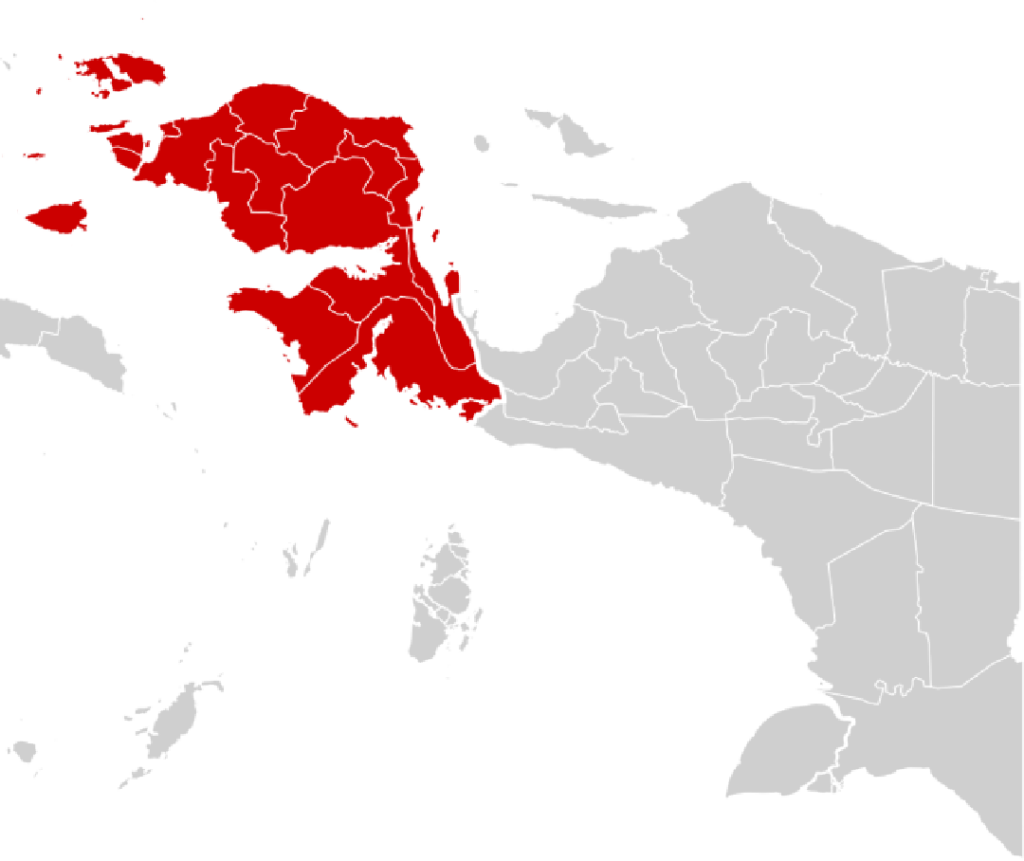
Scenes like this are ordinary in Papua Selatan (South Papua) Province.
People here often travel far for treatment. Some spend hours crossing rivers. Others leave home before sunrise because transportation from remote districts is unpredictable. For families facing serious illness, the journey itself can become part of the struggle.
That reality is why many residents are paying attention to the expansion of RSUD Merauke health services, as the hospital prepares treatment capacity for 11 national priority diseases under Indonesia’s broader healthcare strengthening program.
For officials, it is about improving regional medical services.
For many families, it is something more personal.
The possibility that treatment might finally become closer to home.
In Papua Selatan, Distance Still Shapes Healthcare
In much of Papua Selatan, geography affects almost everything, including healthcare.
Villages are spread across wetlands, forests, and river systems that can make travel exhausting even in good weather. In districts such as Asmat and Mappi, reaching a hospital sometimes means combining boats, motorcycles, and long stretches of road.
People often delay treatment because the process feels too expensive or physically difficult.
Doctors in Merauke say patients frequently arrive after illnesses have already become serious.
Not because they ignored symptoms.
But because access itself remains complicated.
The Hospital Is Preparing for 11 Priority Diseases
More Than Administrative Targets
Indonesia’s Health Ministry has encouraged hospitals across the country to improve readiness for 11 priority disease categories considered critical to public health.
The areas include heart disease, stroke, cancer, kidney disorders, maternal and child health services, tuberculosis, and infectious diseases that still affect many communities nationwide.
At RSUD Merauke, preparations are now underway to strengthen those treatment services step by step.
Hospital workers say the effort is not simply about meeting government targets.
It is about reducing the number of patients forced to seek advanced treatment outside Papua.
National Teams Recently Visited Merauke
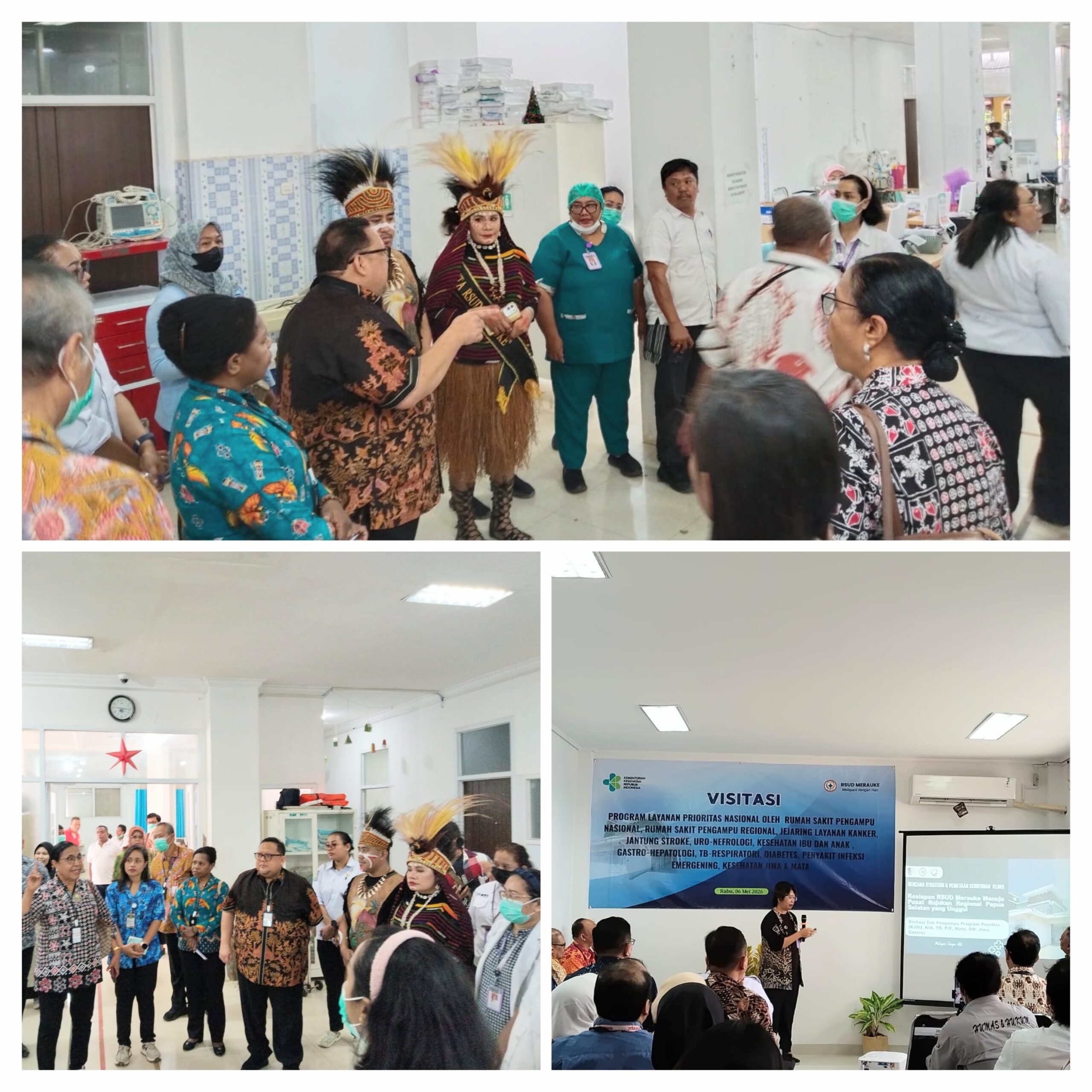
Recently, teams connected to the Ministry of Health and several partner hospitals visited Merauke to assess facilities and discuss what still needs improvement.
The atmosphere during the visit was practical rather than ceremonial.
Doctors reviewed treatment rooms.
Medical staff discussed shortages openly.
Equipment needs were examined carefully.
According to hospital personnel, the discussions focused heavily on what Papua Selatan actually needs, not only what looks good on paper.
Families Often Carry the Hidden Cost
For many Papuan families, illness affects more than health.
It affects household finances.
When treatment is unavailable locally, relatives sometimes need to accompany patients to other cities for weeks or months. Transportation, accommodation, and food costs quickly become overwhelming.
A father waiting outside the hospital said he once sold part of his fishing equipment to pay for travel related to medical treatment.
Stories like that are common enough in Papua that people rarely describe them dramatically anymore.
They simply call it reality.
That is one reason local officials believe improving hospital services inside Papua could ease pressure on vulnerable families.
Merauke Is Slowly Becoming a Regional Medical Center
A Larger Role Since Papua Selatan Was Formed
Since the creation of Papua Selatan as a separate province, expectations surrounding Merauke have changed.
The city is no longer viewed only as a local administrative center.
Increasingly, it is expected to function as a regional service hub, including for healthcare.
Patients from nearby districts are already being referred there more frequently.
That growing role has placed additional pressure on hospitals and medical workers.
Healthcare Workers Still Face Limitations
Doctors and nurses acknowledge that challenges remain serious.
Specialist doctors are still limited.
Certain medical equipment remains unavailable or insufficient.
Recruiting healthcare professionals willing to stay long term in remote regions continues to be difficult.
Still, many staff members say conditions today are gradually improving compared to previous years.
Inclusive Healthcare Has Become a Bigger Conversation
Government officials in Papua increasingly use the phrase “inclusive healthcare.”
The meaning behind it is relatively simple.
People in remote regions should not receive lower quality healthcare simply because of where they live.
That idea has become more prominent as Papua continues balancing infrastructure development with social services.
Roads and airports matter.
But local leaders now speak more openly about healthcare and education as equally important indicators of development.
Building Trust Matters as Much as Buildings
Some Communities Still Hesitate to Seek Treatment
Healthcare workers in Papua say improving facilities alone is not enough.
Some communities remain hesitant about hospitals because of past experiences, cultural concerns, or limited information about available services.
That means trust building is becoming part of healthcare policy too.
Medical outreach programs and public education campaigns have started appearing more frequently across Papua Selatan.
Early Treatment Remains a Challenge
Doctors say many diseases become more dangerous because patients arrive too late.
In remote areas, symptoms are sometimes tolerated for weeks before families decide to travel for treatment.
By then, conditions may already be severe.
Hospital administrators believe stronger regional services could gradually encourage earlier medical care.
Papua’s Development Priorities Are Changing
For years, conversations about Papua often focused on roads, security, and connectivity.
Those issues remain important.
But healthcare is increasingly becoming part of the public conversation in a different way.
People are starting to ask not only whether development projects exist, but whether ordinary families can actually feel the benefits in daily life.
In Merauke, healthcare workers say that question appears regularly in conversations with patients.
Conclusion
The expansion of RSUD Merauke health services will not immediately erase the healthcare challenges facing Papua Selatan.
People in remote districts will still travel long distances.
Hospitals will still face shortages.
Medical workers will still operate under pressure.
But inside the corridors of RSUD Merauke, there is a sense that something gradual is changing.
A little more equipment.
A few more specialist services.
Stronger coordination with national hospitals.
For families arriving from distant villages carrying bags, documents, and quiet worries about loved ones, those changes may sound technical from the outside.
But for them, they can mean fewer journeys, lower costs, and a better chance of receiving treatment without leaving Papua behind.