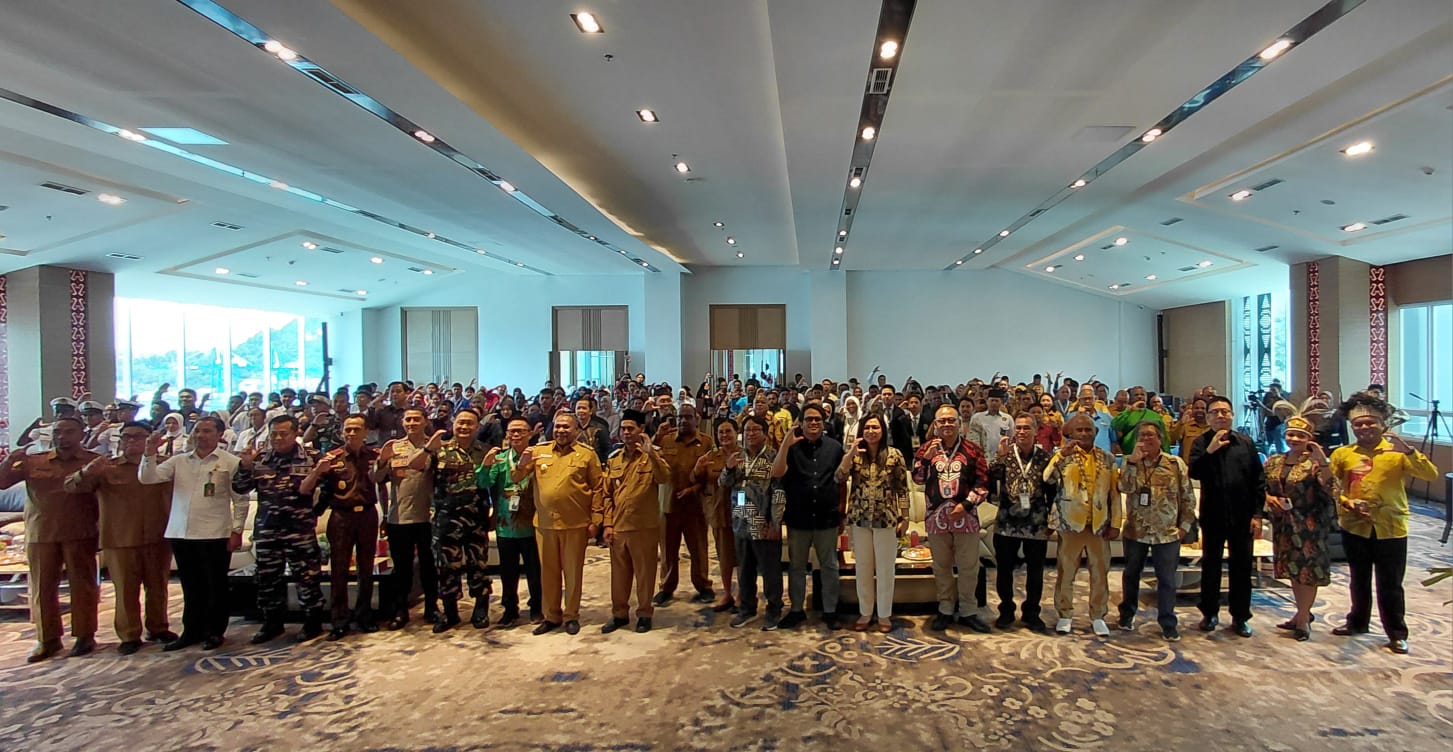
By the time the session began, most seats were already taken.
Inside a modest hall in Jayapura, people kept arriving in small groups, some still checking their phones, others greeting colleagues they had not seen in a while. There was no rush, but there was focus. The World Press Freedom Day (WPFD) Papua 2026 event, held on May 4 and 5, 2026, did not try to feel grand. It unfolded slowly, almost conversationally.
And maybe that was the point.
Why Jayapura Matters This Time
Holding the event in Papua was not treated as a coincidence.
For years, discussions about media in Indonesia have often centered on larger cities. Bringing the conversation to Jayapura shifted that pattern, even if only briefly.
It allowed people to talk about press freedom in a place where the realities are different.
Distances are longer.
Access can be uneven.
Stories do not always move as quickly as they do elsewhere.
That context shaped how the event was received.
A Theme That Sounded Simple, But Was Not
“Quality Journalism” in Everyday Terms
The theme “quality journalism for a peaceful and just Indonesia”, was repeated several times.
But it did not stay abstract for long.
Speakers kept bringing it back to daily work.
Checking facts.
Avoiding assumptions.
Taking time before publishing.
It sounded basic.
But in practice, it rarely is.
Journalism and Stability
Some discussions moved toward a broader idea.
That journalism, when done carefully, can reduce tension rather than amplify it.
In Papua, where information can quickly shape perception, that role becomes more visible.
Participants did not argue this point strongly.
They spoke about it almost as a shared understanding.
Government Support, Without Much Formality
During the opening session, Deputy Governor Aryoko Rumaropen spoke in a way that felt measured.
He did not use complicated language.
He talked about the importance of media in keeping society connected.
He also mentioned that journalism should help maintain harmony, especially in regions with diverse communities.
The message was not framed as instruction.
More like a reminder.
Security and the Press
Representatives from local security institutions also took part.
They emphasized that journalists should be able to work safely.
At the same time, they spoke about responsibility.
Accuracy.
Balance.
Respect for legal boundaries.
There was no tension in how this was presented.
It sounded like something both sides already understood.
Conversations That Happened Between Sessions
Small Groups, Short Exchanges
Some of the most interesting discussions did not happen on stage.
They happened outside the main sessions.
In small groups.
Over coffee.
In brief conversations that ended quickly but stayed in mind.
People compared experiences.
Talked about challenges.
Shared small details that would not appear in official remarks.
Younger Voices Asking Practical Questions
Students and early career journalists were present too.
Their questions were more direct.
How to deal with misinformation.
How to stay independent.
How to work in areas where access is limited.
These were not theoretical concerns.
They were practical.
Papua’s Place in the Media Landscape
Papua has often been part of national news.
But not always as the one shaping the narrative.
Events like this create a different space.
One where local voices are part of the discussion about journalism itself.
That shift may seem small.
But it changes perspective.
A Broader View of Press Freedom in Indonesia
Indonesia’s press environment has developed over time.
There is more space now than in previous decades.
But challenges remain.
Access.
Verification.
Digital pressure.
Events like World Press Freedom Day do not resolve those issues.
They make them visible.
The Atmosphere Stayed Calm
There were no strong disagreements during the sessions.
No dramatic debates.
Discussions moved steadily.
People listened more than they spoke.
At times, it felt closer to reflection than argument.
That tone carried through both days.
After the Event Ended
When the sessions closed, people did not leave immediately.
Some stayed behind.
Continued conversations.
Exchanged contacts.
Others left quietly, returning to their routines.
The event did not end sharply.
It faded out.
Conclusion
The World Press Freedom Day Papua 2026 event in Papua was not defined by large statements.
It was shaped by small moments.
Brief conversations.
Simple reminders about how journalism works in practice.
In Jayapura, the discussion felt grounded.
Not distant.
And in that setting, the idea of press freedom did not appear as something abstract.
It felt closer to everyday work.