At first, nothing about the boat seemed unusual.
It had just arrived at the port in Juwana, Bajomulyo Village, Pati Regency, Jawa Tengah (Central Java) Province, blending in with others that come and go every day. Fishermen were unloading their catch nearby. The air carried the usual mix of salt and diesel. Then officers moved closer to inspect part of the cargo, and the situation shifted.
Inside, they found cages.
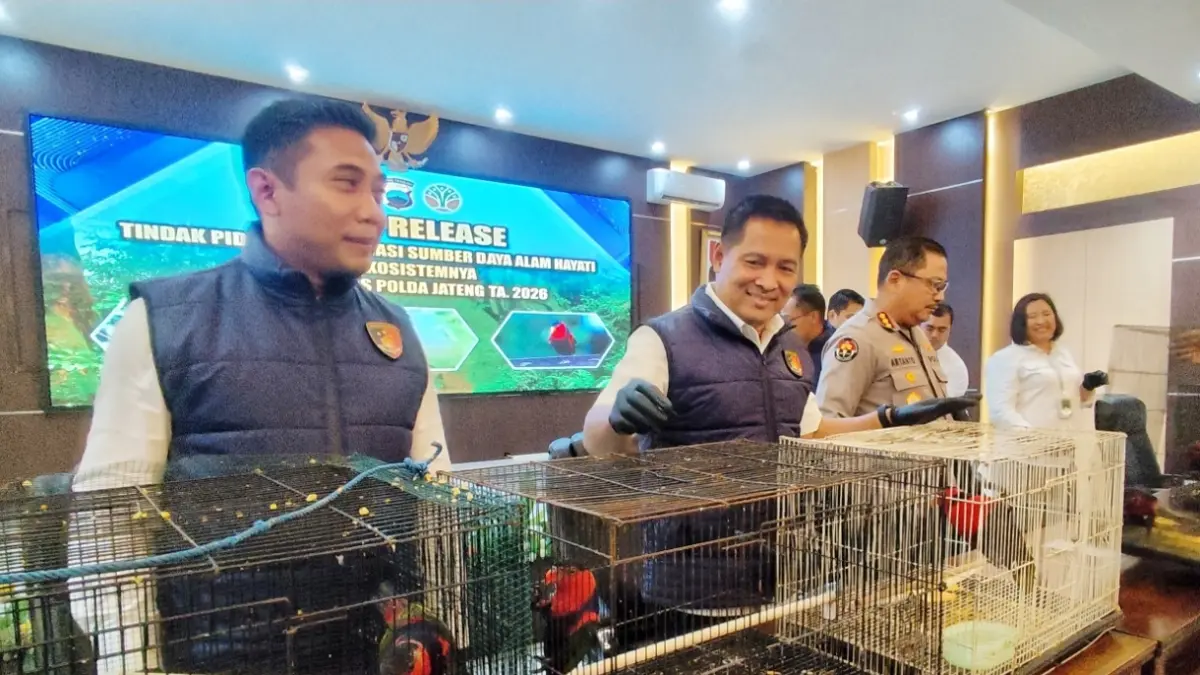
And inside those cages, 18 birds from Papua.
The Papua bird smuggling case 2026 had reached Java quietly, almost unnoticed, before it was finally stopped.
What Officers Found at the Port
The birds were identified as black-capped lories, a species known for its bright coloring and limited habitat.
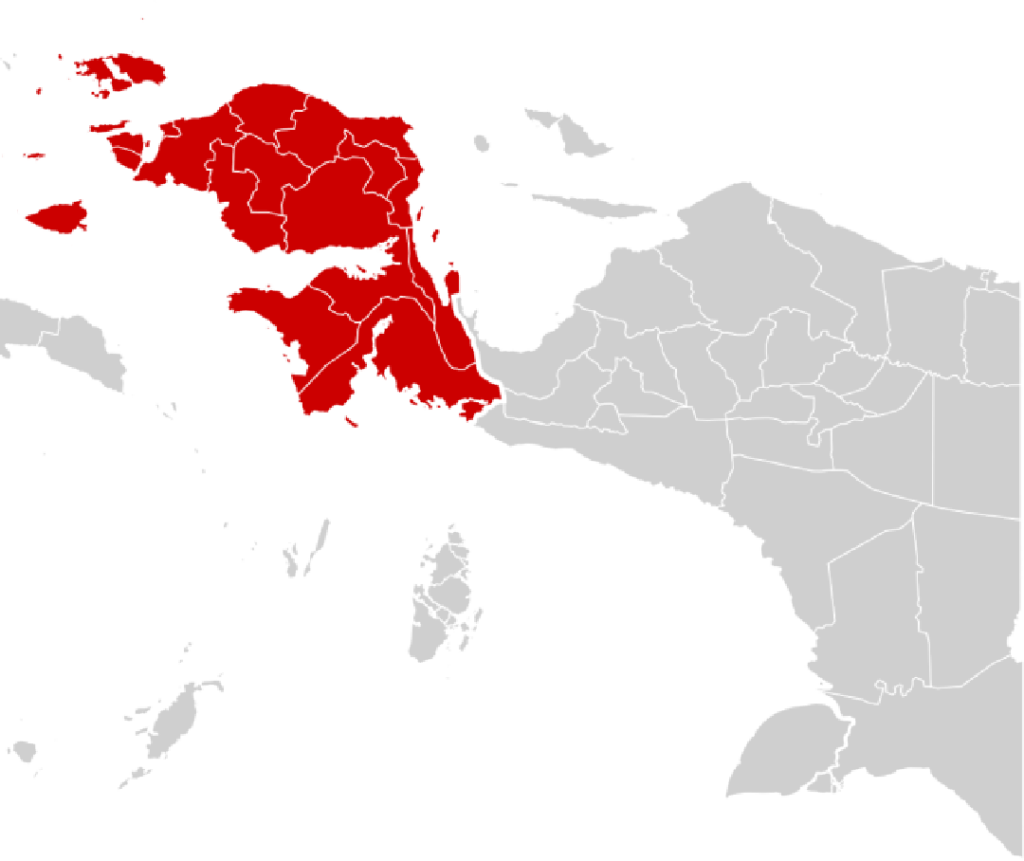
They had been transported over a long distance, reportedly from Manokwari.
Three men were detained at the scene.
Their initials were given as EDP, 25, BS, 26, and G, 39.
All three were said to work as fishermen.
That detail did not surprise investigators.
Fishing vessels, they explained, are often used because they do not stand out.
A Shipment That Tried to Stay Hidden
Blending Into Routine Activity
At ports like Juwana, activity rarely stops.
Boats arrive.
Goods are moved.
People come and go without much pause.
That constant movement can make it easier to conceal something unusual.
In this case, the cages were placed among ordinary cargo.
At a glance, nothing seemed out of place.
When Something Feels Slightly Off
Officers later described how the inspection began.
Not because of a dramatic signal, but because something did not feel right.
That is often how these cases start.
A small inconsistency.
A detail that does not match.
It leads to a closer look.
And sometimes, like here, to a discovery.
The Birds Themselves
Native to Papua’s Forests
Black-capped lories are not common outside Papua.
They are part of a wider ecosystem that includes many species found nowhere else.
That uniqueness makes them valuable.
It also makes them vulnerable.
The Condition After the Journey
The birds had been confined during transport.
Some appeared stressed.
Long journeys without proper care can affect wildlife quickly.
Officers moved them into safer handling as soon as possible.
From there, conservation authorities would take over.
Why Papua Keeps Appearing in These Cases
Papua’s biodiversity is often described as one of Indonesia’s richest.
Forests remain relatively intact in many areas.
Species diversity is high.
But that same richness attracts illegal trade.
Rare animals are seen as commodities.
Demand comes from collectors and markets beyond Papua.
The Route From Papua to Java
Using Sea Transport
Moving wildlife by sea allows traffickers to cover long distances.
Fishing boats are part of daily activity.
They carry different types of cargo.
That flexibility creates opportunities to hide illegal goods.
A Long Journey With Multiple Stages
From Papua to Central Java, the route is not direct.
There are stops.
Transfers.
Moments where the cargo changes hands.
Each step increases the chance of detection.
But it also shows that the activity is organized.
Law Enforcement Response
Police in Central Java described the interception as part of broader monitoring efforts.
Wildlife trafficking is not treated as an isolated issue.
It is linked to patterns.
Repeated routes.
Similar methods.
By identifying those patterns, authorities can act earlier.
More Than Just One Case
The Papua bird smuggling case 2026 is one example, but not the only one.
Similar cases have appeared in different regions.
Each case reveals part of a larger network.
Stopping one shipment does not end the activity.
But it disrupts it.
The Human Side of the Case
Livelihood and Risk
The suspects were fishermen.
That detail points to a broader issue.
In some situations, individuals become involved in illegal trade as an extension of their work.
Additional income.
Opportunity.
At times, pressure.
Understanding this does not excuse the act.
But it helps explain how these networks operate.
Communities and Awareness
In areas connected to trafficking routes, awareness becomes important.
People notice patterns.
They see changes.
Cooperation between communities and authorities can help reduce illegal activity.
Indonesia’s Broader Commitment
The government has continued to emphasize biodiversity protection.
This includes enforcement actions like this one, but also conservation programs.
Protecting wildlife in Papua is not only about stopping trade.
It is about preserving ecosystems.
What Happens After the Seizure
The legal process for the suspects will continue.
Meanwhile, the birds will be handled by conservation agencies.
Rehabilitation is often required before any possible release.
Each step takes time.
Conclusion
What happened at Juwana might have looked small from the outside.
A routine inspection.
A quiet discovery.
But the Papua bird smuggling case 2026 reflects something larger.
In Papua, wildlife remains both a strength and a vulnerability.
Protecting it does not happen in one place alone.
It happens along routes, at ports, and in moments when someone decides to take a closer look.
This time, that was enough to stop the journey.