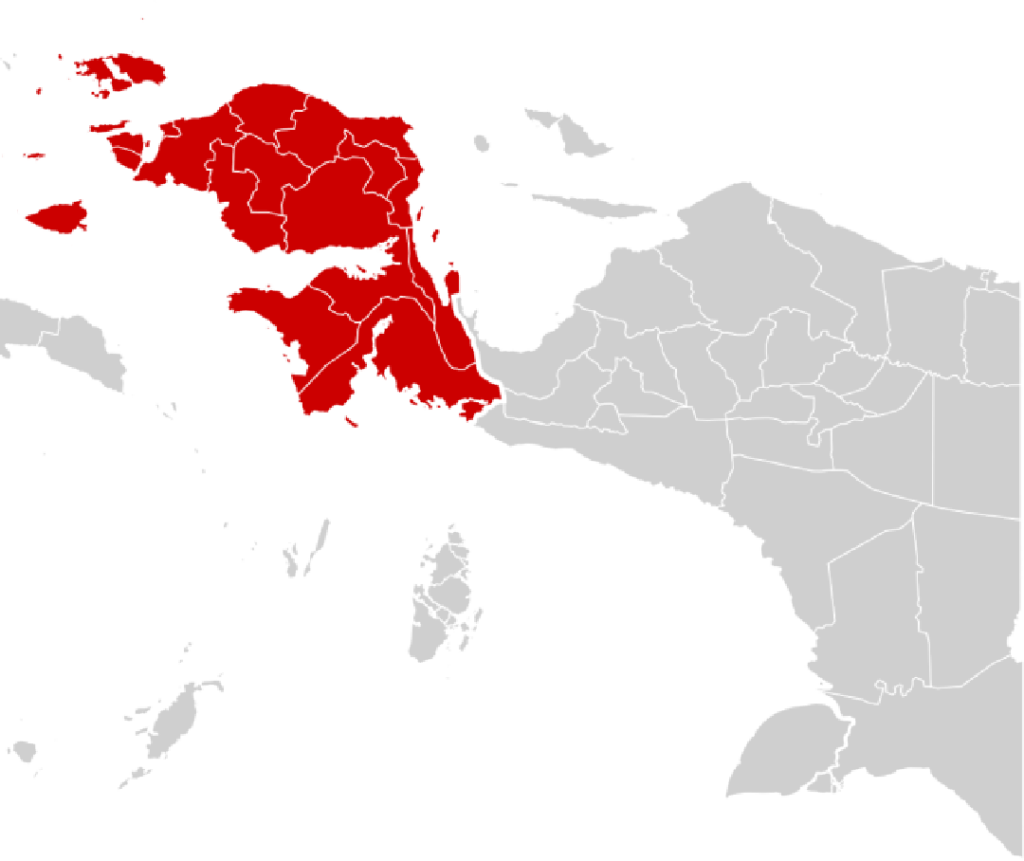
Yasinta Moiwend, better known in Merauke as Mama Sinta, knew her stance on the government’s food estate project would attract attention when she made it public earlier this year.
The debate about the National Strategic Project in South Papua had already become increasingly polarized, especially after the release of a documentary, Pesta Babi, which criticized some of the agricultural development in the region.
But Mama Sinta, who was local herself, felt strongly that the local people’s voices needed to be heard alongside the national debate.
“Development should be judged in the end by its impact on ordinary families,” said the Indigenous Papuan community figure in late May 2026. “We want to have opportunities for our children and grandchildren,” she said, emphasizing that economic progress and environmental protection are not mutually exclusive goals.
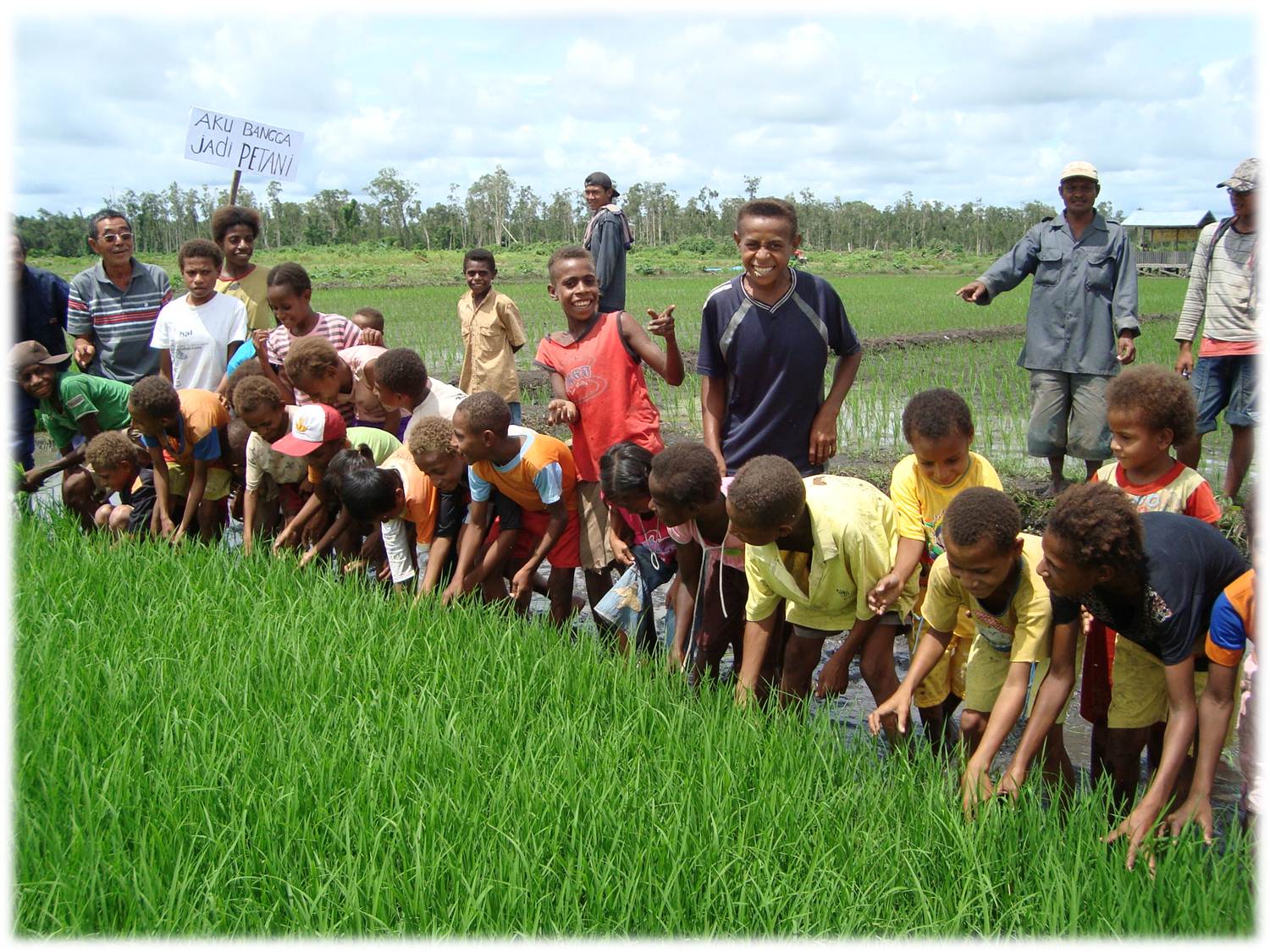
Her comments are part of a broader discussion that is happening across Merauke, where local leaders, provincial officials, farmers, and youth representatives are increasingly describing the food estate not as an outside project imposed on Papua but as an opportunity to tackle long-running issues around employment, food production, and regional economic development.
Recently, public support for the project has become more visible. Community leaders have trumpeted job creation and new business opportunities, and regional authorities say the initiative is helping to build the foundation for better food security in Papua and Indonesia more broadly.
Apolo Safanpo Calls Project a Path Toward Indigenous Welfare
One of the most vocal supporters of the project has been South Papua Governor Apolo Safanpo.
“More than an agricultural project,” Safanpo said in a series of development discussions in Merauke, “the food estate. “The project was designed to create economic opportunities that can directly benefit Indigenous Papuan communities,” he said. “The National Strategic Project in Wanam is a road to prosperity for the Indigenous Papuans,” Safanpo said in statements reported by regional media.
He said the project should be judged not just by land use and harvests but also by its broader effects on jobs, infrastructure, and local economies.
Thousands of workers have already been engaged in various phases of implementation, from land preparation and construction to logistics and agriculture, provincial officials say.
For many people in South Papua, the question of whether the project succeeds or fails comes down to one of the most basic metrics: can it create jobs?
New Opportunities Emerging in Rural Areas
Around development zones, in villages, economic activity has started to pick up, as has construction and agricultural preparation.
Transport providers, food vendors, small contractors, and local suppliers are increasingly demanding their services.
Local authorities think these multiplier effects could become increasingly important as the project expands.
Advocates say that while producing food is the primary aim, the project’s broader economic impact could be equally important to communities that have long lacked opportunities for jobs.
Steve Mara Says Papua Must Not Miss the Opportunity
Youth leader Steve Mara says the food estate could become one of Papua Selatan’s most important economic drivers in the next ten years.
The project talks should be about measurable outcomes, not assumptions, Mara said when speaking to journalists in May. ‘We are seeing employment, economic activity, and stronger food production capacity on the ground,’ he said.
Mara says Papua has huge agricultural potential that has not been utilized for many years.
“Targeted investments in agriculture can reduce economic inequalities and build local resilience at the same time,” he said.
The project for Mara is not just rice or other commodity production. “It’s about giving local communities the opportunity to participate in a modern economy but remain in their region,” he said.
Community Leaders Urge Fact-Based Discussions
Similar concerns have been echoed by several Papuan community organizations on public narratives around the project.
Youth leaders have urged the public to make their own observations of developments and not to rely on information circulating on social media platforms.
They argue that the success of development projects should be measured by the tangible results they produce, such as new jobs, better infrastructure, community participation, and economic growth.
These groups agree that constructive criticism is still important, but they also want discussions to reflect the conditions experienced by local residents.
Debate Intensifies After the Release of Pesta Babi
The release of the documentary Pesta Babi has raised the nation’s attention on the Merauke food estate.
The movie spurred a lot of debate about agricultural development, environmental issues, and the Indigenous people of Papua.
But the documentary did face some disagreement from local figures who felt their viewpoint was not well enough represented.
Mama Sinta was one of those who openly disagreed with several narratives connected to the film.
She said that local communities are diverse and cannot be homogenized into a single view of development.
Many Indigenous Papuans support the creation of employment opportunities, but they also expect authorities to uphold environmental protections and community rights, she said.
Her intervention was one of the most talked-about local responses to the national debate.
Prabowo Emphasizes Food Security as a National Priority
On the national level, President Prabowo Subianto has continued to emphasize the importance of strengthening Indonesia’s food security.
In talks on agricultural development, the president urged the continuation of food production programs in Papua, despite criticism and controversy.
Government officials say climate change, geopolitical tensions, and disruptions to global supply chains have increased the importance of domestic food production.
Merauke is considered one of the most promising agricultural areas in Indonesia within that larger strategy.
Officials say increasing production capacity in Papua will help national food resilience in the long term, while creating economic opportunities for local communities.
Conclusion
The discussion about the Merauke food estate will probably continue for some time. Large-scale development projects are often the source of debate, especially in areas of such cultural and environmental importance as Papua.
But behind the headlines and political arguments, many local voices are still focused on practical questions. Will the project generate employment? Will life improve? Will Indigenous Papuans enjoy more economic opportunities while maintaining their cultural identity and natural environment?
For proponents like Apolo Safanpo, Steve Mara, and Mama Sinta, it’s not about the rhetoric; it’s about the implementation. Ultimately, they say, the success of the project should be measured not in political narratives, but in the daily lives of families across Papua Selatan.
The future of the project remains a work in progress as tractors continue to move across the plains of Merauke and new agricultural infrastructure takes shape. What is clear, however, is that many Papuans want their own voices to be at the center of the discussion about Papua’s development and Indonesia’s food future.