
Gibran’s Papua development legacy is reflected in five major working visits across the region between September 2025 and June 2026, during which he inspected public services, met local leaders, engaged with students and reviewed the implementation of national development programmes.
The visits took him from Merauke and Jayapura in 2025 to Biak Numfor, Jayawijaya, Nabire, Mimika, Yahukimo, Sorong, Raja Ampat, Manokwari Selatan, Manokwari and Asmat in 2026. Across these destinations, the agenda repeatedly returned to a common question: how can government policies and public investment translate into better opportunities for Indigenous Papuans and communities living in some of Indonesia’s most geographically challenging areas?
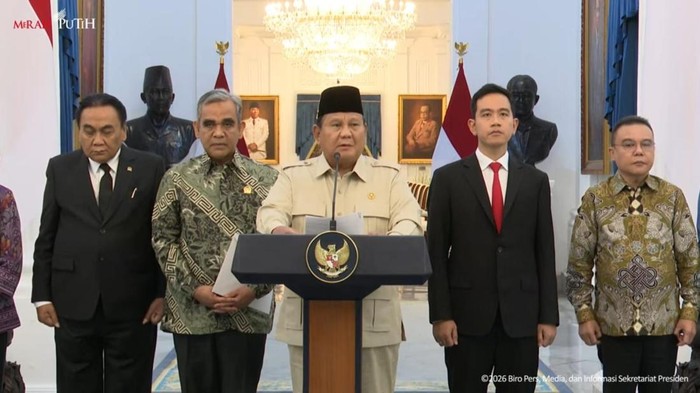
Gibran’s final visit to Papua as vice president took place in June 2026. On November 12, he formally submitted his resignation from the vice presidency, which President Prabowo Subianto said he accepted. His departure from office makes it timely to examine the development priorities highlighted during those five visits, as well as the responsibility now facing the Prabowo administration to maintain continuity.
The significance of the visits lies not simply in the number of locations covered. They offered opportunities to review programmes in education, nutrition, healthcare, infrastructure, agriculture, fisheries and village-level economic development. They also reinforced the role of Papua’s Special Autonomy framework in directing development towards local needs and improving the welfare of Orang Asli Papua (OAP), or Indigenous Papuans.
Continuing the Development Agenda from Jokowi to Prabowo
Papua’s development has been a recurring priority in Indonesia’s national agenda, particularly during the administration of former President Joko Widodo, commonly known as Jokowi.
Between 2014 and 2024, Jokowi made repeated visits to Papua and oversaw major infrastructure initiatives, including the Trans-Papua Road network, bridges, airports, ports and telecommunications projects. The wider objective was to improve connectivity, reduce geographical barriers and expand access to public services and economic opportunities.
His administration also promoted programmes aimed at strengthening education, entrepreneurship and youth participation, including the Papua Youth Creative Hub.
When Prabowo Subianto took office in October 2024, the challenge was to continue addressing these structural needs while ensuring that development programmes delivered measurable benefits to local communities. Gibran, as vice president, was assigned a role in monitoring the implementation of government programmes in the regions.
In a statement reported by Detik on November 12, 2026, Prabowo explained that he had asked Gibran to visit regional and remote areas to check whether government programmes were reaching the public. The president said he had concentrated on national policy formulation while the vice president had been tasked with direct field monitoring.
Prabowo said: “From the beginning of my administration, I asked him to go directly to the regions, to remote areas, to check the implementation of government programmes.”
The division of responsibilities provides an important context for understanding Gibran’s repeated visits to Papua. They were part of a wider presidential approach to monitoring national programmes beyond Jakarta and assessing how policies were implemented in different regions.
First Visit: Merauke and Jayapura, September 2025
Gibran’s first major Papua working visit in this sequence took place from September 16 to 18, 2025, covering Merauke in Papua Selatan (South Papua) and Jayapura Regency in Papua Province.
The Merauke agenda focused on several areas of public service delivery. On September 16, Gibran visited SMP Negeri Gudang Arang to observe the implementation of the Free Nutritious Meals Programme, known nationally as Makan Bergizi Gratis (MBG).
He also inspected the development of the Papua Selatan provincial government office complex near the Transmigration Independent Area of Harapan Makmur in Kurik District, Merauke. The project was part of the development of administrative infrastructure for the newly established province.
Another important stop was Merauke Regional General Hospital (RSUD Merauke). There, Gibran reviewed healthcare facilities, spoke with doctors and medical personnel about the hospital’s conditions and challenges, and visited patients, including Indigenous Papuans.
The visit was an opportunity to hear directly from healthcare workers about the practical requirements of delivering medical services in the region. It also brought attention to the importance of ensuring that infrastructure investment is accompanied by adequate facilities and personnel.
On September 17, Gibran visited Wamanggu Market in Merauke before continuing to Jayapura Regency. In Sentani, he inspected the MBG programme at SMP Negeri 2 Sentani.
The itinerary connected several dimensions of regional development: nutrition and education, healthcare services, local markets and the infrastructure needed to support provincial administration.
Second Visit: Manokwari and the Special Autonomy Agenda, November 2025
The second visit took place on November 4 and 5, 2025 in Manokwari, the capital of Papua Barat (West Papua) Province. This trip placed particular emphasis on the implementation of Papua’s Special Autonomy framework and the coordination of development priorities between central and regional governments.
On November 4, Gibran chaired a plenary meeting of the Papua Special Autonomy Development Acceleration Steering Agency, known as BP3OKP, at the Kasuari Hall of the State Finance Building in Manokwari.
The meeting followed President Prabowo’s direction to accelerate development across Papua and ensure that public spending produced tangible benefits for local communities.
Gibran called for development to move faster and for greater innovation in implementing programmes. He also emphasised the importance of setting clear priorities for regional budgets so that spending could be directed towards areas with the greatest impact.
The vice president subsequently met community, customary and religious leaders, as well as representatives of regional governments from across Papua Barat. During the meeting, he encouraged stakeholders to supervise the use of Special Autonomy funds to ensure that allocations were efficient, transparent and properly targeted.
This was an important element of the visit because Special Autonomy is not simply a funding mechanism. It is also a framework intended to support the development and welfare of Indigenous Papuans, including through improvements in education, healthcare, economic opportunities and public services.
Gibran called for community leaders to take part in monitoring how the funds were used, reinforcing the principle that public accountability should involve both government institutions and local stakeholders.
His second day in Manokwari included visits to Wosi Market and Wosi Community Health Centre, where he reviewed public services and the implementation of the Free Health Check Programme. He also observed the distribution of digital devices and the MBG programme at SMP Negeri 14 Nuni.
Education was another focus. Gibran visited SMP YPK 1 and SMP YPK 2 to observe the GASING mathematics learning method, an approach designed to make mathematics easier and more engaging for students.
The visit also included informal engagement with young people. He played football with children from a local football school and met orphans during a shopping activity.
The combination of policy meetings and public service inspections reflected the government’s intention to connect Special Autonomy planning with the everyday needs of residents.
Third Visit: Biak Numfor and Jayawijaya, January 2026
Gibran returned to Papua in January 2026, travelling to Biak Numfor and Jayawijaya. The official visit began on January 13, and continued into January 14. Although the wider schedule was associated with the January period 12-14, the official itinerary records his arrival in Papua on January 13.
In Biak Numfor, he visited the Senior People’s School (Sekolah Rakyat Menengah Atas) 41 and Fandoi Fish Market.
At the school, the visit focused on the implementation of educational and social support programmes. The official account of the visit also recorded an inspection of the Free Nutritious Meals Programme at the school, including attention to food quality, hygiene and the facilities used by students.
The fish market visit highlighted the importance of fisheries and local economic activity in Biak, an island regency where coastal livelihoods play a significant role.
Gibran then travelled to Wamena in Jayawijaya Regency, Papua Pegunungan. His activities included meeting coffee entrepreneurs and creative economy practitioners at Café Dik’s, playing football with children from a local football school and meeting regional leaders, customary figures, religious leaders and community representatives.
On January 14, he visited Potikelek Market and inspected the MBG programme at SMA Negeri 1 Wamena.
These activities brought together education, food security, fisheries, agriculture-related enterprise and youth development. The meeting with coffee entrepreneurs was particularly relevant to efforts to expand local economic opportunities by connecting regional products with wider markets.
The January visit had originally been expected to include Yahukimo, but that part of the programme was postponed because of an urgent state agenda in Jakarta. Gibran later returned to the regency in April.
The January itinerary therefore demonstrated both the reach and the practical limitations of high-level visits to remote areas, where schedules can be affected by national duties, travel conditions and local circumstances.
Fourth Visit: Nabire, Mimika, Yahukimo, Sorong and Raja Ampat, April 2026
The fourth visit, conducted from April 20 to 22, 2026, was one of the most geographically extensive. Gibran travelled through five regencies and cities across Papua Tengah (Central Papua), Papua Pegunungan (Highland Papua), and Papua Barat Daya (Southwest Papua): Nabire, Mimika, Yahukimo, Sorong and Raja Ampat.
The first stop was Nabire, where he inspected the development of Douw Aturure Airport. The visit reflected the importance of air connectivity for a province whose communities and economic centres are separated by considerable distances.
In Mimika, Gibran visited the Education Centre area and the Mimika Command Centre at the regent’s office. He also inspected the MBG programme at SMA Negeri 4 Mimika. During the trip, he accompanied 60 orphaned children to purchase school supplies at a stationery shop.
The programme then continued to Yahukimo, where the vice president visited Koramil 1715/06 Dekai and Sekolah Kristen Yahukimo. He also reviewed the implementation of the MBG programme and met with members of the military community.
The Yahukimo visit carried particular significance because an earlier plan to visit the regency had been postponed. On April 21, Gibran thanked the Indonesian National Armed Forces (TNI) and National Police for maintaining security in the area, saying that the earlier postponement had made it important to return when the visit could proceed.
“I would like to thank our TNI and Police colleagues for their hard work in maintaining security. I hope the situation remains safe,” he said, according to the Vice Presidential Secretariat.
The visit illustrated the relationship between security and development in remote areas. Reliable public services, education and economic programmes require conditions in which residents and service providers can carry out their activities safely.
Sorong and Raja Ampat: Health, Fisheries and Local Livelihoods
The April itinerary continued to Sorong and Raja Ampat in Papua Barat Daya.
In Sorong, Gibran visited SAGA Supermarket and Department Store, where he invited local women to shop together, and later inspected fish trading activities at the DKP Klademak Fish Market.
The market visit brought attention to the role of fisheries and trade in the local economy. It also provided an opportunity to observe the activities of traders and the movement of local products.
In Raja Ampat, Gibran inspected the implementation of the MBG programme at SD Negeri 2 Waisai and visited the new building of the Raja Ampat Regional Hospital.
The visit also included attention to the Red and White Fishermen’s Village programme, which is intended to improve housing and supporting facilities while strengthening the economic position of fishing communities.
Back in Sorong Regency, he visited RSUD JP Wanane. The hospital’s development plans included improvements to cardiac services, an issue with practical implications for patients who might otherwise need to travel long distances to obtain specialised treatment.
In a statement reported by ANTARA on April 22, Gibran said the purpose of the three-day visit was to ensure that national priority programmes had a direct impact on the community. The delegation included Coordinating Minister for Political and Security Affairs Djamari Chaniago and Deputy Home Affairs Minister Ribka Haluk.
The five-regency and city itinerary brought together infrastructure, education, health, fisheries, nutrition and local economic development.
Fifth Visit: Manokwari Selatan, Manokwari and Asmat, June 2026
Gibran’s fifth major Papua visit in this sequence took place during the June 18-21, 2026 working tour of eastern Indonesia. His Papua-related activities on June 20 and 21, covered Manokwari Selatan, Manokwari and Asmat.
In Manokwari Selatan, he visited a cocoa plantation operated by PT Ebier Suth Cokran and planted selected cocoa seedlings. The activity pointed out the potential of agricultural commodities to support local economic development and diversification.
In Manokwari, Gibran opened the 14th National Church Choir Festival, known as Pesparawi Nasional XIV. The event brought together church choirs and participants from different parts of Indonesia, making it both a national cultural gathering and an opportunity to highlight the role of religious and community institutions.
The visit then continued to Asmat in Papua Selatan on June 21. There, Gibran reviewed the progress of construction of the Holy Cross Cathedral in Agats and visited the Sago Field School run by the Agats Diocese in Yepem Village.
Asmat’s sago-based agricultural and cultural traditions made the field school a relevant example of how local knowledge can be connected with education and economic activity.
The visit also focused on the government’s Free Nutritious Meals Programme and the Red and White Village Cooperatives. Gibran emphasised that national programmes needed to be adapted to Papua’s geographical and social conditions.
He called for collaboration with churches, schools, local communities and community kitchens to ensure that children in remote villages could benefit from nutrition programmes.
“The programme should consider Papua’s special geographical conditions and social structure,” he said, according to West Papua Voice’s coverage of the visit.
The June itinerary brought together agriculture, religious culture, education, nutrition and rural economic empowerment. It also reinforced the importance of working with institutions that already have strong connections with local communities.
What the Five Visits Reveal About Papua’s Development Priorities
Taken together, the five visits reveal several recurring priorities in the government’s approach to Papua.
The first is human development. School inspections, the MBG programme, digital learning support and visits to community health facilities all point to the importance of improving access to education, nutrition and healthcare.
The second is economic participation. Visits to markets, fishery centres, coffee entrepreneurs, cocoa plantations and village economic projects show an interest in strengthening livelihoods and creating more opportunities for local producers.
The third is infrastructure and connectivity. Airport inspections, hospital development and public facility reviews reflect the need to address the geographical barriers that affect service delivery across Papua.
The fourth is the governance of Special Autonomy. Gibran’s November 2025 meeting with BP3OKP and local leaders placed emphasis on transparent, accountable and targeted use of Otsus funds. This is particularly important because public spending must translate into measurable improvements for Indigenous Papuans and other residents.
These priorities are consistent with the wider development agenda pursued during Jokowi’s presidency and continued under Prabowo. However, continuity should not be measured solely through official visits or policy announcements. It also requires effective budget implementation, strong local institutions, community participation and measurable improvements in living conditions.
Prabowo’s Commitment to Continue Papua’s Development
Gibran’s departure from the vice presidency on November 12, 2026 raises a broader question about the continuation of the development agenda he helped monitor.
President Prabowo publicly accepted Gibran’s resignation and expressed appreciation for his contribution during their two years in office. According to Detik’s report on the president’s remarks, Prabowo said Gibran had helped him from the election campaign through the implementation of government programmes.
Prabowo also explained that he had assigned Gibran to visit regions and remote communities while the president concentrated on national policy formulation and institutional reform.
The president’s statement provides a clear basis for understanding the field-monitoring role Gibran performed. It also makes clear that the responsibility for continuing the programmes does not rest with a former vice president alone. It remains with the current government, the relevant ministries, provincial administrations and regency governments.
Papua’s Special Autonomy framework provides an established institutional and financial basis for continuing development initiatives. The challenge is to ensure that its resources are managed transparently, that Indigenous Papuans participate meaningfully in decision-making and that programmes respond to local conditions.
The resignation does not, by itself, determine the future of policies already adopted or projects already under way. Their continuation will depend on government decisions, budget allocations and the performance of institutions responsible for implementation.
Conclusion
Gibran Rakabuming Raka’s five working visits to Papua between September 2025 and June 2026 created a record of direct engagement with communities, local governments and public institutions across the region. From school nutrition and healthcare to fisheries, agriculture, infrastructure and Special Autonomy oversight, the visits highlighted the range of issues that shape development in Papua.
His most lasting contribution will not be determined simply by the number of places he visited or the programmes he inspected. It will depend on whether the priorities raised during those visits continue to receive attention, funding and effective implementation after his departure from office.
For President Prabowo Subianto and his administration, the task is to maintain the development momentum established under Jokowi and carried forward during the Prabowo-Gibran period, while ensuring that the needs and aspirations of Indigenous Papuans remain central to policy decisions.
Ultimately, Papua’s development legacy must be measured through improvements that people can experience in their daily lives: better schools, accessible healthcare, stronger local businesses, reliable infrastructure, accountable public spending and greater opportunities for young Papuans.
The five visits provide a record of commitments and priorities. The enduring test will be whether those commitments become sustained improvements in welfare and inclusive development throughout Papua.
Read Also
Vice President Gibran’s Papua Mandate Signals Continuity of Jokowi’s Development Legacy
One Year In: How the Prabowo–Gibran Presidency Is Changing Papua’s Trajectory
Papua’s New Chapter: How Prabowo Subianto and Gibran Rakabuming Raka’s First Year in Office Resonates in Indonesia’s Eastern Frontier

