
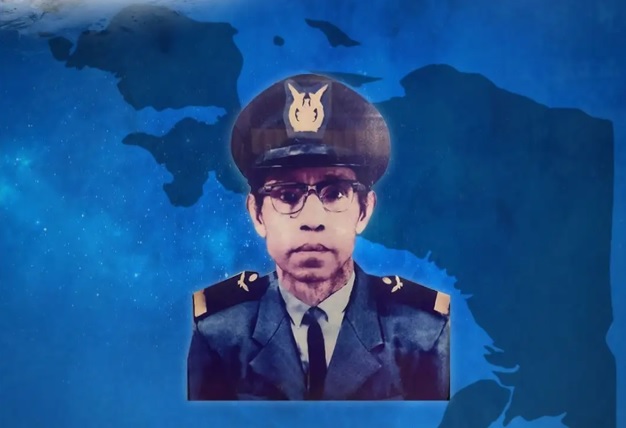
Long before Papua became part of the modern Indonesian political landscape, a group of Papuan leaders were already debating the region’s future, organising political networks and challenging Dutch colonial authority. Among them was Corinus Marselus Koreri Krey, a Biak-born figure whose contribution to the movement for Papua’s integration into the Republic of Indonesia has received renewed attention recently.
Known as Corinus Krey, he was a political organiser, an associate of prominent Papuan nationalist Marthen Indey, and one of the figures involved in adopting the name “Irian” in 1945. His activities included organising through the Komite Indonesia Merdeka (KIM), working alongside other pro-Indonesian activists and enduring four periods of imprisonment under Dutch administration, including seven years in Digul.
His story is also closely connected to the emergence of a generation of Papuan leaders who supported Indonesia’s independence movement and sought to challenge continued Dutch colonial control over the territory. After years of political activity, Krey received an honorary military rank of Titular Air Major and served as a member of Indonesia’s Provisional People’s Consultative Assembly (MPRS) from 1964 to 1968.
Yet, despite these contributions, his name remained relatively unfamiliar to many Indonesians. In February 2021, the Indonesian Air Force’s Silas Papare Air Base in Jayapura began efforts to promote greater recognition of his historical role, including a proposal to nominate him as a National Hero.
Krey’s life offers a perspective on Papua’s history through the experiences of Papuan figures who participated in the movement for Indonesian independence and integration. His political activities, imprisonment and later public service form part of a wider story of local involvement in the region’s changing political future.
Early Life and the Rise of Papuan Nationalism
Corinus Marselus Koreri Krey was born in Biak in 1920. Before becoming known as a political activist, he worked as a medical assistant, or mantri kesehatan. He also served as an aide to Soegoro Atmoprasodjo, the head of a Bestuur school, an institution associated with local administrative and civil-service education in Jayapura.
Soegoro was among the figures who encouraged nationalist ideas among young Papuans during the final years of Dutch colonial rule. His circle included Frans Kaisiepo, who studied at the school, and Krey, who worked as his aide.
The relationship placed Krey within a network of young Papuans who discussed political identity, the future of their homeland and the position of Papua in the emerging Indonesian independence movement.
According to accounts published by ANTARA, the Indonesian Air Force and other Indonesian media, Soegoro proposed a change in the name used for Papua on 1 April 1945. The discussion reflected a desire among some Papuan nationalists to use a name rooted in local history and cultural understanding rather than an external designation.
The discussions subsequently involved Krey and Frans Kaisiepo, whose contribution would become particularly visible at a major political gathering in Sulawesi the following year.
The Birth of the Name Irian
One of the most frequently cited aspects of Krey’s legacy is his role in the emergence of the name “Irian”.
On 1 May 1945, Krey and Frans Kaisiepo discussed the possibility of adopting a different name for Papua. Their discussion drew on local historical and cultural references, including the Hikayat Koreri tradition associated with Biak.
The word Irian was taken from the Biak language, where it was understood to mean “hot” or “heat”. The explanation was connected to Papua’s geographical position as a land where the sun rises.
The name also acquired a political interpretation within the nationalist movement. According to accounts preserved by Krey’s family and reported by ANTARA, he repeatedly explained the word to his children and grandchildren through the phrase “Ikut Republik Indonesia Anti-Netherland”, meaning “Join the Republic of Indonesia against the Netherlands”.
These explanations became part of the historical account of how the name developed. The linguistic meaning and the political interpretation should be understood as related but distinct elements of the story.
The name was subsequently promoted among Papuan traditional leaders. Kaisiepo carried the proposal into the political arena when he represented Papuan youth at the Malino Conference on 18 July 1946.
The conference was an important gathering in the Dutch-sponsored political discussions concerning the future of the Indonesian archipelago. Kaisiepo’s use of the name Irian gave the term a wider political audience.
For Krey, the initiative was more than a naming exercise. It reflected an effort by Papuan nationalists to articulate their identity and political aspirations in their own terms during a period of competing colonial and nationalist projects.
The episode also illustrates the contributions of Papuan figures who were active in political discussions before the formal conclusion of Indonesia’s struggle for independence.
Organising Through the Komite Indonesia Merdeka
Krey’s political activities became more structured in 1947, when he joined the Komite Indonesia Merdeka (KIM), or Indonesian Independence Committee.
He served as the organisation’s second secretary under Dr. Gerungan. Marthen Indey held the position of First Commissioner, and the two men became close associates in the movement.
KIM functioned as a political organisation opposing the continued Dutch colonial authority in Papua. Its members supported the Indonesian independence cause and sought to strengthen the movement through local networks and political organisations.
When Dutch authorities became aware of the organisation’s activities, Dr Gerungan was sent back to Ambon, according to historical accounts reported by ANTARA and detikNews. KIM’s activities in Papua were subsequently carried forward by Krey and Marthen Indey.
Their work took place in a difficult political environment. Dutch authorities continued to exercise control over the territory, while Indonesian nationalists were seeking to extend the reach of the independence movement to regions that remained under Dutch administration.
Krey’s position within KIM placed him among the organisers who helped sustain the pro-Indonesian political movement in Papua. His association with Indey also connected him to a wider network of Papuan activists whose contributions would later be recognised in Indonesia’s national history.
The political struggle was not limited to public speeches or symbolic gestures. It involved organising people, maintaining communication and sustaining networks under colonial surveillance.
Four Periods of Imprisonment Under Dutch Rule
Krey’s political activities came at considerable personal cost. Historical accounts based on documents left by his family and testimonies from relatives state that he was imprisoned by Dutch authorities on four separate occasions.
According to ANTARA’s 18 February 2021 profile, the first period of imprisonment took place at Kota Nica Prison in Jayapura from 1 to 7 December 1945.
He was detained again at Abepura Prison in Jayapura from 7 March to 7 August 1947. His third period of imprisonment was at Biak Prison from 7 December 1949 to 7 June 1950.
The longest period was at Digul Prison, where he was held for seven years, from 7 June 1950 until 7 August 1957.
The repeated detentions illustrate the pressure faced by activists involved in political opposition to Dutch rule. Krey’s imprisonment also became part of the documentary record of his involvement in the independence movement.
According to ANTARA, several documents confirming his periods of imprisonment were signed or initialled by Marthen Indey, who had also been imprisoned alongside him.
A Family Account of Severe Treatment
One of the most disturbing accounts of Krey’s imprisonment concerns the treatment he reportedly experienced at Digul.
His second son, Max Krey, told ANTARA that his father had described being buried in a pit from the waist down, with cement applied around his lower body until it hardened. According to the family account, the experience left the affected area bruised and discoloured for a prolonged period.
The account was passed down by Krey to his family and later reported through interviews with his wife, Martina Krey, and their children.
It is important to distinguish this testimony from independently documented official records of the incident. The story is presented in the available reporting as a recollection shared by Krey with his family, supported by the broader documentary record of his imprisonment.
Nevertheless, the account offers a personal dimension to the history of political detention in colonial Papua. It shows how the consequences of political activism extended beyond the public sphere and into the lives of the activists and their families.
Recognition Through the Indonesian Air Force
Following years of political involvement and imprisonment, Krey later became associated with the Indonesian Air Force.
From 1967 to 1975, he held the honorary rank of Titular Air Major. The honorary military status was awarded to Papuan figures recognised for their contributions to the struggle against Dutch colonial rule.
He was among several Papuan leaders who received honorary military ranks. Marthen Indey also held the honorary rank of Major, while Abraham Dimara received the honorary rank of Major in the Indonesian Army.
Krey also served as an officer at Jayapura Air Base. His later public responsibilities extended beyond military service: he became a member of the Provisional People’s Consultative Assembly (MPRS) for the 1964 to 1968 period and received the Indonesian Veteran Star.
These roles reflected his transition from a political organiser during the colonial period to a public figure within Indonesia’s post-independence institutions.
His recognition by the state also formed part of a broader effort to acknowledge the contribution of Papuan leaders to Indonesia’s independence and the country’s subsequent political development.
Rediscovery of His Legacy in 2021
Although Krey’s contribution was known to his family and fellow activists, his story received wider public attention in February 2021 following an initiative by the Indonesian Air Force’s Silas Papare Air Base in Jayapura.
The process began when Air Base Commander Air Vice Marshal Budhi Achmadi visited the family of Marthen Indey, a Papuan National Hero.
During the visit, he met Aksamina Talapessy, widely known as Mama Aca, a granddaughter of Indey who had cared for him until his death. She conveyed her grandfather’s message about Krey’s contribution to Papua and Indonesia.
Mama Aca argued that Krey deserved national recognition comparable to that received by Indey. She also asked the air base commander to meet Krey’s family and ensure that his contribution was not overlooked.
In an interview reported by ANTARA, she said:
“Corinus Krey’s contribution to Indonesia and Papua was very significant. Whatever recognition the state gives to my grandfather, Corinus Krey also deserves it.”
She also explained that Krey had helped her grandfather in intelligence-related activities during their political struggle.
The account prompted Budhi Achmadi to contact Krey’s family. Through discussions with his wife, Martina Krey, and his children, the airbase gathered additional information about his life and activities.
The documents included records left by Krey and testimonies bearing the initials of Marthen Indey. These materials helped provide a basis for renewed efforts to document his historical contribution.
Proposal for National Hero Recognition
Following the meetings with Krey’s family, the Silas Papare Air Base announced plans in February 2021 to propose him as a national hero from Papua.
Budhi Achmadi told ANTARA that the proposal would require a formal process involving the regional government, the collection of historical documents, public seminars and verification of testimonies.
He cautioned that the process would take time because the historical evidence needed to be examined and confirmed.
“The process requires many things to be prepared, checked and proven,” Budhi said, explaining that the nomination would involve several stages.
The initiative received support from the Papua Provincial Government at the time. Muhammad Musaad, then Assistant for Economic and People’s Welfare Affairs at the provincial administration, said the contributions of Papuan figures to the nation’s history deserved recognition.
He said the government was prepared to support the process, noting that the recognition of more Papuan figures would also enrich Indonesia’s national history.
Ribka Haluk, then head of the provincial Social Affairs Agency, also said that authentic historical evidence would be essential. She explained that a special team from the central or provincial government would normally examine documents and obtain testimony from people connected to the historical events.
The proposal was an important step towards wider recognition, but it should not be confused with an official declaration of National Hero status. The sources cited here document the proposal and the preparation process, not a final presidential decision granting the title.
Preserving Papua’s Contribution to Indonesia’s History
Krey’s story is part of a wider history of Papuan participation in the Indonesian independence movement. His activities alongside Frans Kaisiepo and Marthen Indey demonstrate that Papuan political figures played active roles in shaping debates over the territory’s future.
Their contributions also show that the history of Papua’s relationship with Indonesia cannot be understood solely through events that occurred after the colonial period. Political organising, cultural identity and debates about national affiliation were already taking place among Papuan leaders during the 1940s.
The name Irian, the activities of KIM and the experiences of activists imprisoned by Dutch authorities all form part of that historical record.
For younger generations, documenting these stories is important not only for understanding national history but also for recognising the individuals and communities who participated in major political changes.
The involvement of the Indonesian Air Force, the provincial government and Krey’s family in efforts to preserve his legacy illustrates the role that public institutions and families can play in historical research and remembrance.
Conclusion
Corinus Marselus Koreri Krey’s life connects several important chapters in Papua’s modern history: the emergence of Papuan nationalism, the adoption of the name Irian, political organising through the Komite Indonesia Merdeka, imprisonment under Dutch rule and later service within Indonesian institutions.
His experience demonstrates the contribution of Papuan figures who supported the Indonesian independence movement and worked alongside leaders such as Frans Kaisiepo and Marthen Indey. His four periods of imprisonment, including seven years in Digul, also reflect the personal risks faced by activists opposing colonial authority.
The renewed effort to document his life in 2021 offered an opportunity to bring his contribution to a wider audience. The proposal for National Hero recognition also highlighted the importance of preserving historical documents, family testimony and accounts from fellow activists.
For Indonesia, recognising the contributions of Papuan figures such as Krey helps present a fuller account of the country’s history of independence. For Papua, his story is a reminder that local leaders were active participants in the political decisions and movements that shaped the region’s modern identity.
His legacy deserves continued historical study, careful documentation and recognition based on verified evidence. Remembering Corinus Krey is not simply about recalling one man’s political journey; it is also about acknowledging the place of Papuan people in the broader history of Indonesia.
Read Also
Sultan Nuku and Papua’s Mambri Against Dutch Colonialism
Machmud Singgirei Rumagesan: The Papuan King Who United His People with the Republic of Indonesia
Marthen Indey: The Papuan Hero Who Fought for Integration with Indonesia
Johannes Abraham Dimara: The Papuan Hero Who Embodied Indonesia’s Unbreakable Unity
Zainal Abidin Syah: The Sultan of Tidore Who United Papua with Indonesia
Silas Papare: The Papuan Hero Who Bridged Papua and Indonesia
Frans Kaisiepo: Papuan Patriot and Architect of Unity on Indonesia’s Rp 10,000 Note

