
The Biak Cultural Festival is preparing to take a broader international stage this October, as Papua seeks to use music, traditional culture, and regional participation to introduce the richness of Indonesian culture to audiences across the Pacific.
The event, now officially called the Biak Melanesian Cultural Festival, will take place in Biak Numfor from October 17 to 21, 2026. Unlike previous editions that focused primarily on Biak culture, this year’s program has been expanded to include cultural representatives from across Papua, several other Indonesian regions, and countries in the Pacific.
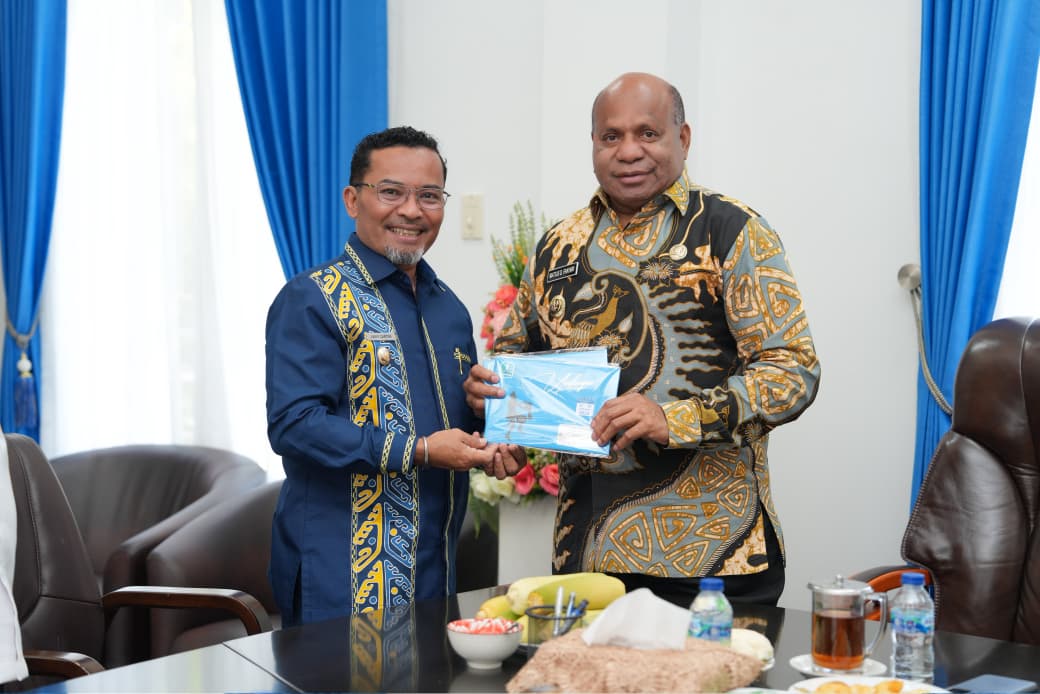
The preparations gained momentum on October 1, when Papua Governor Matius D. Fakhiri handed over 500 ukuleles to support the festival’s opening program. The instruments are intended for schoolchildren who will take part in a mass musical performance, turning what might otherwise be a ceremonial contribution into an opportunity for young Papuans to participate directly in presenting their cultural identity.
For Papua’s provincial government and the Biak Numfor administration, the festival is intended to be more than a local celebration. It is being developed as a meeting point for cultures within Papua and Indonesia while creating a channel for cultural exchange with neighboring Pacific communities.
From Biak Cultural Festival to Biak Melanesian Festival
A Wider Vision for 2026
The decision to add “Melanesian” to the festival’s name reflects the expansion of its scope.
According to Biak Numfor Deputy Regent Jimmy Carter Rumbarar Kapissa, the event in 2024 and 2025 was still known as the Biak Cultural Festival. For the 2026 edition, the organizers broadened both the geographical reach and the cultural content, leading to the adoption of the name Biak Melanesian Cultural Festival.
The change is significant because it places Biak in a wider cultural conversation.
Rather than presenting Biak as an isolated cultural destination, the organizers want the island to become a place where people can encounter traditions from across Papua and the broader Pacific.
Jimmy said the festival would bring together representatives from Papua Raya as well as several Indonesian regions, including West Nusa Tenggara, East Nusa Tenggara, Maluku, and North Maluku. Pacific countries are also scheduled to participate.
“This is not only about Biak,” Jimmy said, explaining the wider scope of the event. He said the festival would bring together communities from across Papua, other Melanesian areas, and Pacific countries.
The expanded format gives the festival a different character from previous editions. It remains rooted in Biak culture, but its purpose has become broader: to create a space where different cultural traditions can be presented side by side.
Governor Fakhiri backs the preparations.
500 Ukuleles for the Opening
The preparations moved forward following Jimmy’s meeting with Governor Matius D. Fakhiri at the State Building in Jayapura on October 1.
During the meeting, the governor confirmed his willingness to attend the festival’s opening on October 17. The provincial government also provided 500 ukuleles for the event.
Fakhiri described the assistance as a form of provincial government support for an event involving cultural representatives from across Papua.
He said the festival should not be viewed simply as a showcase for Biak. Instead, it could bring together cultures from Papua Raya, other parts of Indonesia, and Pacific countries.
The decision to provide musical instruments also gives the opening ceremony a strong youth dimension.
Schoolchildren will use the 500 ukuleles during the opening program. RRI reported that the number of children involved in the performance was expected to reach around 1,500, with the possibility of further increases as preparations continue.
For Jimmy, the support represents attention from the provincial government not only to the festival itself but also to the students who will become part of its presentation.
“On behalf of the Biak Numfor Regency Government and the people, especially the students, we express our gratitude to the Governor of Papua for providing 500 ukuleles,” Jimmy said.
The gesture also illustrates one of the festival’s central ideas: cultural preservation is most sustainable when younger generations are directly involved.
Preparing 1,300 Players for Ukulele Performance
Turning Music into a Cultural Statement
The ukulele performance is expected to become one of the most distinctive features of this year’s festival.
As of late September, reports indicated that preparations for the event had reached approximately 90 percent completion. Turbey Onny Dangeubun, head of the Biak Numfor Tourism Office, said invitations, communication, and coordination with ministries, institutions, and regional governments had been carried out, alongside preparations for participants.
Infrastructure preparation was scheduled to begin in the first week of October, with organizers aiming to complete the venues one week before the festival.
At the same time, rehearsals and coordination meetings were continuing.
The organizers have set a target of around 1,300 ukulele players, drawn from students, communities, and participants of different ages. The performance is being developed under the concept of “Simfoni Biak,” or “Biak Numfor Sings.” Organizers hope it could set a record recognized by the Indonesian Museum of Records, or MURI, for the largest ukulele performance.
The performance is significant beyond its potential record.
It turns an instrument into a bridge between generations. Children and young people will not simply watch traditional performances. They will take an active role in presenting the musical identity associated with Biak and Papua.
That is particularly relevant as the festival expands internationally.
For visitors from the Pacific, a mass performance involving hundreds of young Papuans offers an accessible introduction to the cultural character of Biak.
Biak as a Meeting Point for Papua
Bringing the Archipelago Together
The festival’s geographical ambition is perhaps its most important development.
Jimmy said the event would allow visitors to encounter representatives from Jayapura, Serui, Sorong, Timika, Wamena, and Merauke in one location.
That means the festival can function as a cultural meeting point for Indonesia’s eastern regions.
The participation of West Nusa Tenggara, East Nusa Tenggara, Maluku, and North Maluku adds another layer. These regions have their own cultural traditions and historical connections within eastern Indonesia.
By bringing them together in Biak, organizers are creating a broader picture of Indonesia’s cultural diversity.
At the same time, the participation of Pacific countries gives the event an international dimension.
For Papua, the event is particularly relevant because Biak is geographically positioned within the wider Pacific region. The island can therefore serve as a natural venue for cultural exchange between Indonesian communities and neighboring Pacific societies.
The organizers are not presenting culture as a competition between identities. Instead, the festival aims to create a space for encountering diverse traditions through performance, music, and cultural interaction.
Cultural Diplomacy through the Pacific
From Local Celebration to International Engagement
The festival is also being positioned as an instrument of cultural diplomacy.
RRI reported that the event is expected not only to advance culture but also to strengthen cultural diplomacy, build cooperation, and encourage regional economic development.
The distinction is important.
Diplomacy does not take place only through government meetings or formal agreements. Cultural events can also create opportunities for people to meet, exchange experiences, and develop familiarity with one another.
In this context, the participation of Pacific countries gives Biak a chance to introduce Indonesian culture through direct human interaction.
The approach is consistent with the broader concept of people-to-people engagement, where artists, students, cultural communities, and local governments can become part of international relations.
For international visitors, the festival offers an opportunity to see Papua through its music, dance, traditional practices, and local communities.
For Indonesian participants, it creates an opportunity to understand neighboring Pacific cultures.
That two-way interaction can become one of the festival’s most valuable long-term outcomes.
Government Support Expands the Festival’s Reach
The preparations have involved several layers of government.
According to Jimmy, the festival has received support from the Ministry of Foreign Affairs and the Ministry of Tourism and Creative Economy. The DPD RI and DPR RI have also been mentioned as supporting the event.
Such support reflects the fact that the event is gradually moving beyond the scale of a purely local festival.
The provincial government is providing practical support through the ukuleles and the governor’s planned attendance. The Biak Numfor administration is responsible for organizing the event and coordinating local participation. National institutions are contributing to its broader cultural and international dimension.
The combination allows the festival to operate at several levels simultaneously.
For Biak Numfor, it is a local tourism and cultural event.
For Papua, it is a platform for presenting the diversity of cultures across the province and Papua Raya.
For Indonesia, it provides an opportunity to showcase eastern Indonesian cultural traditions to domestic and international visitors.
For Pacific participants, it offers a venue for regional cultural exchange.
A Platform for the Next Generation
Students Move to the Center of the Celebration
One of the most striking elements of the preparations is the emphasis on children and students.
The 500 ukuleles supplied by the provincial government are intended specifically to support the schoolchildren’s performance during the opening. Meanwhile, the broader target of approximately 1,300 players includes students alongside community members.
This creates a connection between cultural preservation and education.
Cultural traditions survive not simply because they are displayed at festivals, but because younger generations learn them, practice them, and eventually carry them forward.
The Biak festival’s approach places young people visibly within the program.
They become performers rather than spectators.
That may prove especially important as the festival seeks to establish itself as a recurring international cultural event.
A festival that gives young people a central role can create a sense of ownership that extends beyond a single five-day program.
Economic Opportunities Alongside Cultural Promotion
Culture and economic development are also being brought together.
The Tourism Office has prepared creative economy space for coffee businesses from Papua, particularly those located in the Saireri region. The planned pavilions will use traditional design elements and an atmosphere inspired by the natural environment.
This adds a commercial dimension to the cultural program.
Visitors arriving for performances can also discover local products. Producers and creative economy businesses gain an opportunity to introduce their work to audiences from outside Biak.
The approach reflects a growing understanding of cultural tourism in which heritage is not treated simply as something to be watched.
It can become part of a local economic ecosystem involving food, handicrafts, coffee, music, tourism services, and creative industries.
If maintained beyond the festival itself, such opportunities could help cultural activities generate longer-term economic benefits for communities.
What Biak Wants the World to See
The organizers’ message to prospective visitors is straightforward.
Jimmy has invited people who want to understand Papua and its Melanesian cultural character to come to Biak rather than viewing the region only through distant images or secondhand descriptions.
That invitation reflects the festival’s central ambition.
Biak is being presented as a place where visitors can encounter Papua through its people and cultural expressions.
The event will not represent every aspect of Papua, nor can a five-day festival capture the full complexity of the region. But it can provide a window into traditions that are part of Indonesia’s broader cultural landscape.
The presence of Pacific participants adds another layer, allowing the festival to move from a regional celebration toward a platform for cultural dialogue.
Conclusion
The Biak Melanesian Cultural Festival 2026 is entering its final preparation stage with a much larger ambition than its earlier editions.
Scheduled for October 17 to 21, the festival has expanded from a celebration centered on Biak into a meeting point for cultures from across Papua, Indonesia, and the Pacific. The addition of “Melanesian” to its name reflects that change.
The provincial government’s contribution of 500 ukuleles, the planned participation of around 1,300 players, and the expected involvement of about 1,500 children in the opening performance illustrate the scale of the preparations.
Yet the festival’s most important legacy may not be a record or the number of international visitors.
Its lasting value could come from creating a space where young Papuans learn to value their cultural heritage, where communities from different parts of Indonesia meet, and where Pacific visitors encounter Papua through direct cultural exchange.
For Indonesia, the festival provides an opportunity to present its eastern cultural landscape to an international audience in a setting shaped by local communities.
For Papua, Biak can become a gateway through which the richness of its traditions reaches a wider audience.
And for the Pacific, the festival offers another opportunity to build connections through the universal language of music, performance, and culture.
As the first ukuleles are prepared for the hands of young performers, the message behind the festival is becoming clear: Biak is preparing not merely to host a cultural event but to open a wider window between Papua, Indonesia, and the Pacific.
Read Also
Festival Kali Maro IV Celebrates Papua’s Heritage
Festival Danau Sentani XV 2026 Showcases Papua Culture

