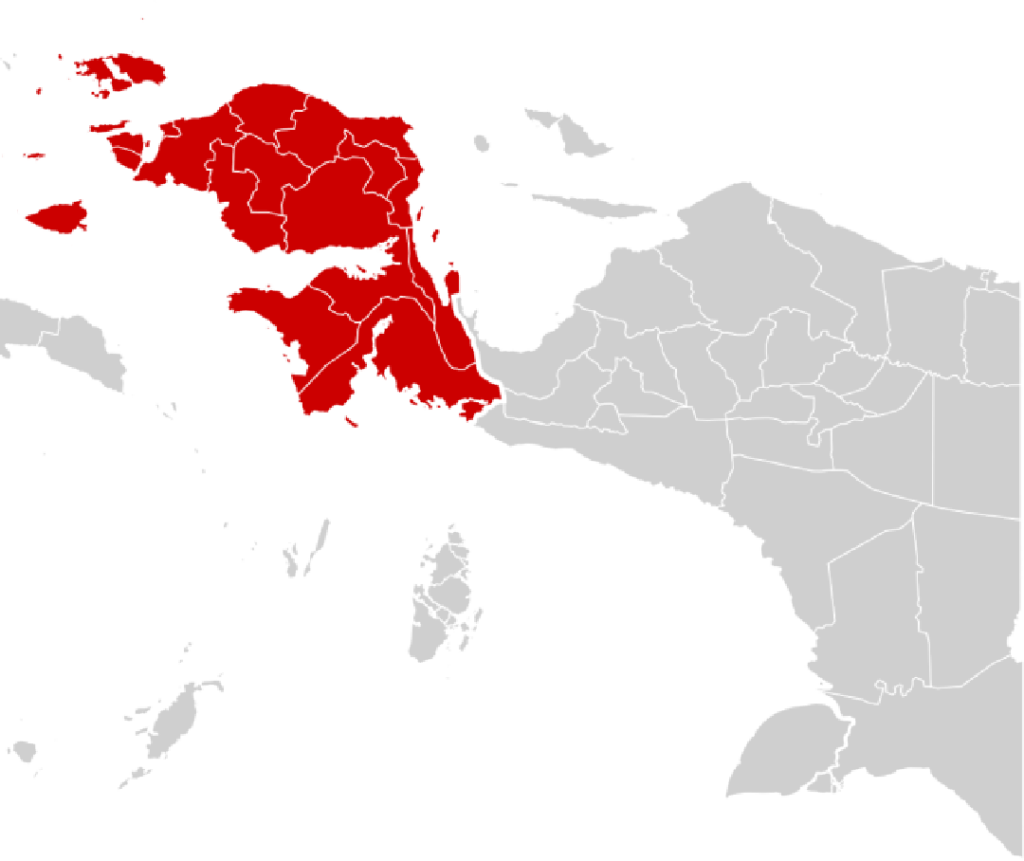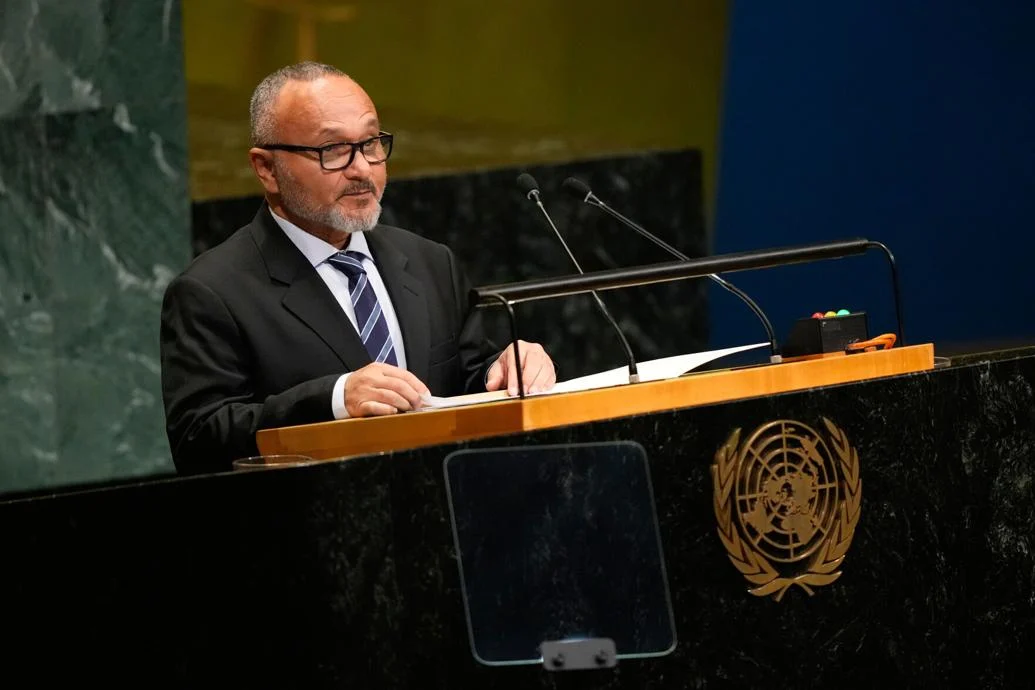
The Solomon Islands speech on Papua at the 81st United Nations General Assembly has prompted a sharp response from Indonesian lawmakers, reopening a sensitive debate over human rights, civilian security, and national sovereignty in the Pacific. Prime Minister Matthew Cooper Wale raised concerns about reported human rights violations in Papua and called for independent verification, including a long-awaited visit by the UN High Commissioner for Human Rights.
His remarks during the General Debate in New York on September 24, 2026, drew criticism from members of the Indonesia’s House of Representatives (DPR RI) Commission I and chairman of the DPR’s Inter-Parliamentary Cooperation Agency (BKSAP), which oversees foreign affairs and defense matters. Deputy Chairman of Commission I of the DPR RI Sukamta, commission I member Abraham Sridjaja, and chairman of the DPR’s BKSAP, Syahrul Aidi Maazat questioned what they described as an imbalance in the speech, arguing that attention to alleged abuses by Indonesian authorities should also include violence against civilians attributed to the West Papua National Liberation Army from the Free Papua Movement (TPNPB OPM).
The disagreement illustrates the competing priorities shaping the Papua issue internationally. The Solomon Islands has framed its position around human rights and regional solidarity, while Indonesian lawmakers have stressed sovereignty, the need for verifiable information, and the protection of civilians from armed violence.
What Wale Said at the UN
Calls for Verification and International Attention
Wale addressed the Papua issue during the UN General Debate, part of the annual gathering of world leaders in New York. According to Suara Papua, he said reports of human rights violations in Papua should not be ignored or left unresolved. He called for independent verification and urged Indonesia to facilitate a visit by the UN High Commissioner for Human Rights.
The remarks placed Papua within a broader international discussion about human rights and the responsibilities of states. For the Solomon Islands, a Pacific country with close cultural and regional connections to Melanesian communities, the issue has long carried diplomatic significance.
The speech also followed earlier public statements by Wale about Papua. A July 2026 report by Suara Papua described his call for dialogue between Indonesia and people in Papua. That earlier position provides context for his remarks in New York: the September address was part of an ongoing diplomatic interest, rather than an isolated intervention.
The available reporting, however, does not provide a full transcript of Wale’s speech or a detailed account of every issue he addressed. It is therefore important to distinguish the specific points reported by media outlets from broader interpretations of his intentions.
Indonesian Lawmakers Challenge the Framing
Abraham Sridjaja Questions the Evidence
Abraham Sridjaja, a member of Commission I from the Golkar Party, criticized Wale’s remarks in a statement issued in Jakarta on September 26. He contended that clear information about the sources, authorship, and verification of allegations raised at an international forum should accompany them.
“A head of government stands at the UN podium and makes accusations against a friendly country but does not explain where the reports came from, who prepared them, or how they were verified,” Abraham said, according to ANTARA. He described the situation as a double standard, given the emphasis on transparency directed at Indonesia.
Abraham also argued that a discussion of human rights in Papua should include the experiences of civilians affected by armed violence. He questioned why the Solomon Islands’ appeal for Melanesian solidarity did not, in his view, give comparable attention to people who had been shot, abducted, threatened, or killed by TPNPB OPM.
His criticism was accompanied by a list of incidents from 2025 and 2026. The cases he cited included the killing of three civil servants in Jayawijaya on September 9, 2026, and other reported attacks involving civilians, teachers, and health workers. These examples formed part of his argument that civilian protection should be central to any international discussion of Papua.
The figures and incident descriptions in Abraham’s statement should be understood as claims and information he presented in his capacity as a legislator. Each incident has its own evidentiary record and should be assessed through the relevant investigations and reporting.
Sukamta’s Concern Over Sovereignty
Sukamta, Deputy Chairman of Commission I, was also identified in the debate over Wale’s remarks. The central concern associated with the lawmakers’ response was that a foreign leader’s intervention on Papua could be viewed as crossing into a sensitive matter of Indonesia’s sovereignty, particularly if allegations were presented without sufficient context or verification.
The distinction is important. States regularly raise human rights issues in multilateral forums, and the UN General Assembly provides a platform for governments to discuss matters they consider internationally significant. At the same time, Indonesia’s lawmakers assert that such discussions must respect the country’s territorial integrity and rely on verifiable information.
The available search results provide more detailed, direct quotations from Abraham than from Sukamta. Accordingly, this article does not attribute a specific quotation or additional factual claim to Sukamta beyond his reported involvement and the sovereignty concern described in the coverage.
BKSAP Chairman Warns Against Politicising Papua at the UN
Syahrul Aidi Maazat, chairman of the DPR’s BKSAP, criticised the Solomon Islands prime minister’s decision to raise Papua at the 81st UN General Assembly, arguing that the issue should not become a political commodity. He said bringing Papua into an international political forum without sufficient context risked turning a sensitive matter into an instrument of political pressure against Indonesia. His remarks added a parliamentary diplomacy dimension to the response from Commission I lawmakers, reinforcing calls for discussions grounded in evidence, respect for national sovereignty and constructive engagement. The debate, he suggested, should not displace the need to address Papua’s real challenges.
Civilian Casualties Become Central to the Debate
The September 9 Killings in Jayawijaya
One of the most prominent incidents cited by Abraham was the September 9 shooting in Muliama, Jayawijaya, in which three civil servants were killed. The victims were identified as Aprida Rapi, Alfonsius Albinus Mehan, and Willi Mbuik. Abraham said they were carrying out duties related to distributing assistance to the community when they were attacked.
He further cited information attributed to Indonesia’s National Commission on Human Rights (Komnas HAM) and the Amnesty International Indonesia, that the victims had been accused of being intelligence personnel before they were killed. The case has particular relevance to the debate because it involved public employees engaged, according to the account, in a civilian service activity.
The deaths underline the risks that violence can pose to the delivery of public services. Attacks on civil servants can have consequences that extend beyond their families and colleagues, impacting the communities that rely on government programs. The incident also raises questions about how authorities can protect workers and civilians while maintaining access to essential services.
Other Incidents Cited by Abraham
Abraham also referred to an August 18, 2026, incident in the Jila district, Mimika, in which a woman, Neregingget Magai, was reportedly shot dead after refusing to be taken hostage. He cited reports of another person being thrown into a ravine and injured, as well as the abduction of nine women, including schoolchildren and a pregnant teenager.
He also mentioned the reported killing of Aris Sanda, an immigrant driver on the Wamena-Mbua route on September 15, 2026; the killing of PT Associated Mission Aviation’s pilot Captain Nicholas F. Goselin (US citizen) and burning of an aircraft associated with a humanitarian mission on July 2, 2026; and several attacks and arson on school facilities. In addition, he referred to killings of gold miners in Yahukimo in April 2025 and violence against teachers and health workers in Anggruk in March of that year.
These examples broaden the discussion from the conduct of state authorities to the security of civilians facing armed threats. They do not, on their own, resolve the allegations Wale raised. Rather, they show why a comprehensive assessment of human rights in Papua must consider different kinds of harm, the identity of alleged perpetrators, and the evidence available in each case.
Sovereignty, Human Rights, and the Limits of Diplomatic Criticism
The dispute reflects a tension that frequently appears in international relations: how governments can raise concerns about human rights while respecting the sovereignty of other states. Indonesia’s lawmakers have argued that Wale’s remarks were one-sided and risked undermining bilateral relations. The Solomon Islands, as represented in the reporting on Wale’s speech, has emphasized the need for attention to alleged abuses and independent verification.
These positions are not necessarily mutually exclusive in principle. Respect for sovereignty does not remove human rights from international discussion, just as international concern does not automatically establish the truth of every allegation. The practical question is how claims are documented, how affected people are heard, and how governments respond to requests for scrutiny.
Abraham said Indonesia has domestic institutions, including Komnas HAM, that address human rights concerns. He also described the government’s approach in Papua as involving development, welfare, protection, and law enforcement. He called for Indonesia’s Foreign Ministry to respond through diplomacy based on data and verifiable information, while strengthening engagement with Pacific countries.
For Indonesia, the challenge is to communicate its position clearly while demonstrating that civilian protection and accountability remain part of its responsibilities. For the Solomon Islands, the challenge is to ensure that its public statements are supported by transparent sourcing and contribute to constructive engagement rather than deepening diplomatic friction.
The Pacific Dimension
The Solomon Islands’ intervention also reflects the regional importance of Papua within Melanesian and Pacific diplomacy. Wale’s appeal drew on a language of regional concern and solidarity, while Indonesian lawmakers have urged that relations with Pacific countries be built through dialogue.
The Pacific is not a single political bloc with one position on Papua. Governments have their priorities, relationships, and approaches to international affairs. The presence of Papua in regional debate therefore creates a diplomatic challenge for Indonesia: maintaining constructive partnerships while responding to criticism about conditions in its easternmost provinces.
Abraham’s call for a data-based diplomatic response points to one possible avenue. Indonesia can use bilateral discussions and multilateral forums to present information about security incidents, institutional responses, and development programs while addressing specific concerns through appropriate channels. Such engagement can help clarify disagreements, although it cannot substitute for credible investigations or effective protection on the ground.
The debate also carries implications for communities in Papua. International attention can bring visibility to reported abuses, while disagreements between governments can sometimes overshadow the experiences of civilians themselves. A sustainable discussion should keep their safety, rights, and access to public services at its center.
Conclusion
The response by Sukamta, Abraham Sridjaja, and Syahrul Aidi Maazat to Matthew Cooper Wale’s speech has brought Papua back into a prominent diplomatic conversation. Wale called for attention to reported human rights violations and independent verification, while Indonesian lawmakers challenged the framing of his remarks and argued that violence against civilians by TPNPB OPM should receive equal consideration.
The disagreement is also a reminder that sovereignty and human rights are both important elements of the debate. A foreign government’s criticism can prompt diplomatic disagreement, but the credibility of any position depends on the quality of its evidence and the willingness of those involved to engage with substantiated concerns.
For Indonesia, the next phase will involve communicating its position to Pacific partners, responding to specific allegations through appropriate institutions, and continuing efforts to protect civilians. For the Solomon Islands, constructive engagement will depend on transparent information and a willingness to discuss the full range of security and human rights concerns.
Ultimately, Papua’s future cannot be reduced to a contest of statements at the United Nations. The more consequential measure will be whether diplomacy, law enforcement, and public institutions contribute to safer communities, accountability, and sustained public services. A fact-based dialogue offers a way to address differences without allowing them to replace the needs and experiences of the people directly affected.
Read Also
Amnesty International Condemns Civilian Killings by TPNPB OPM in Papua
PIF Communiqué Affirms Indonesia’s Sovereignty in Papua
Why ULMWP Remains an MSG Observer