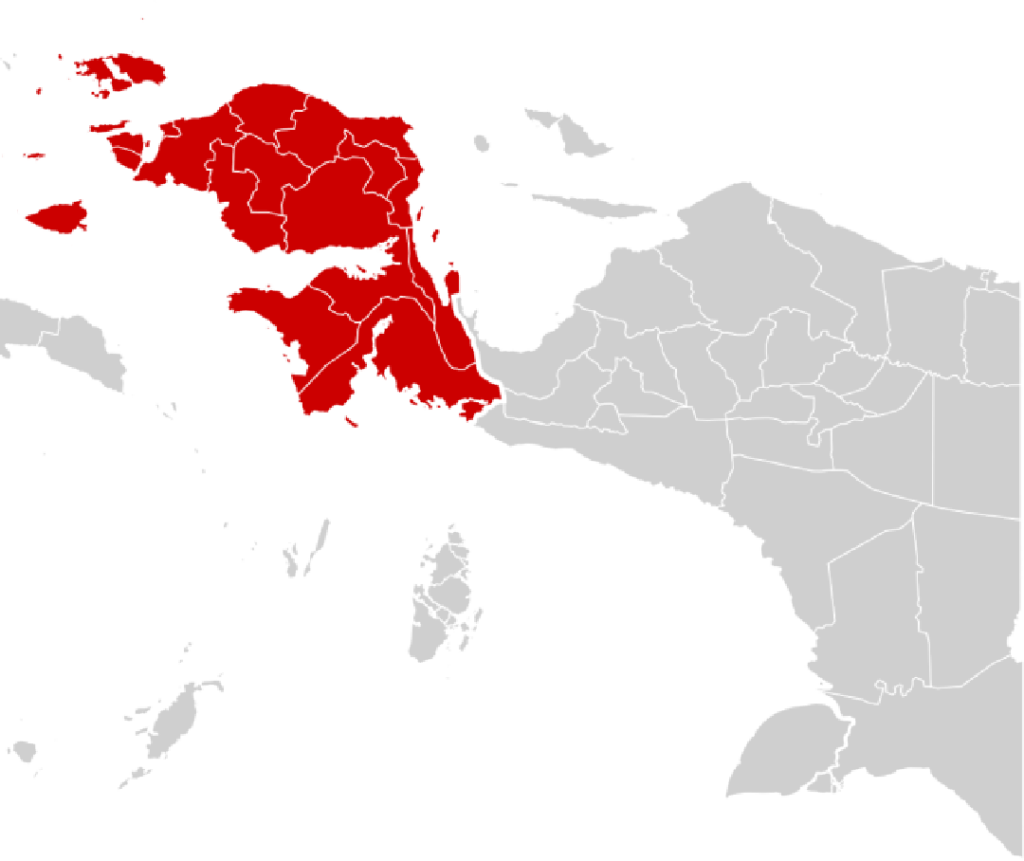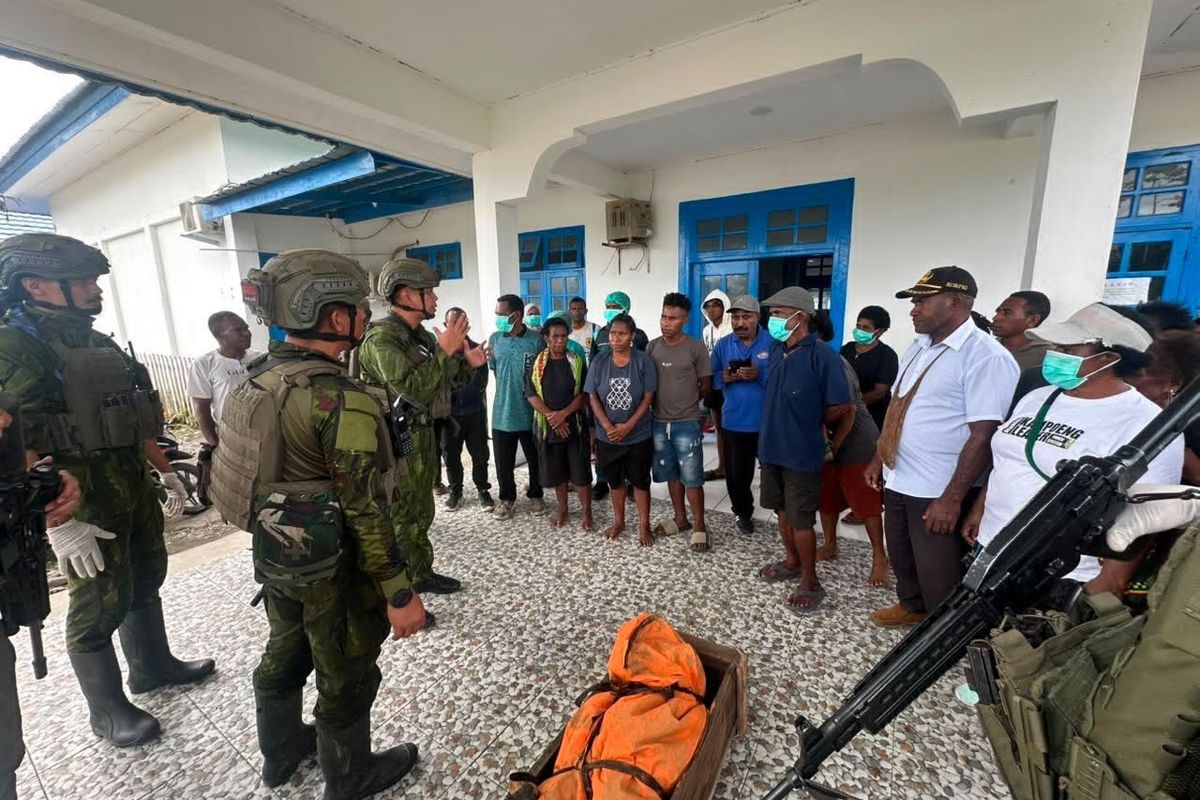
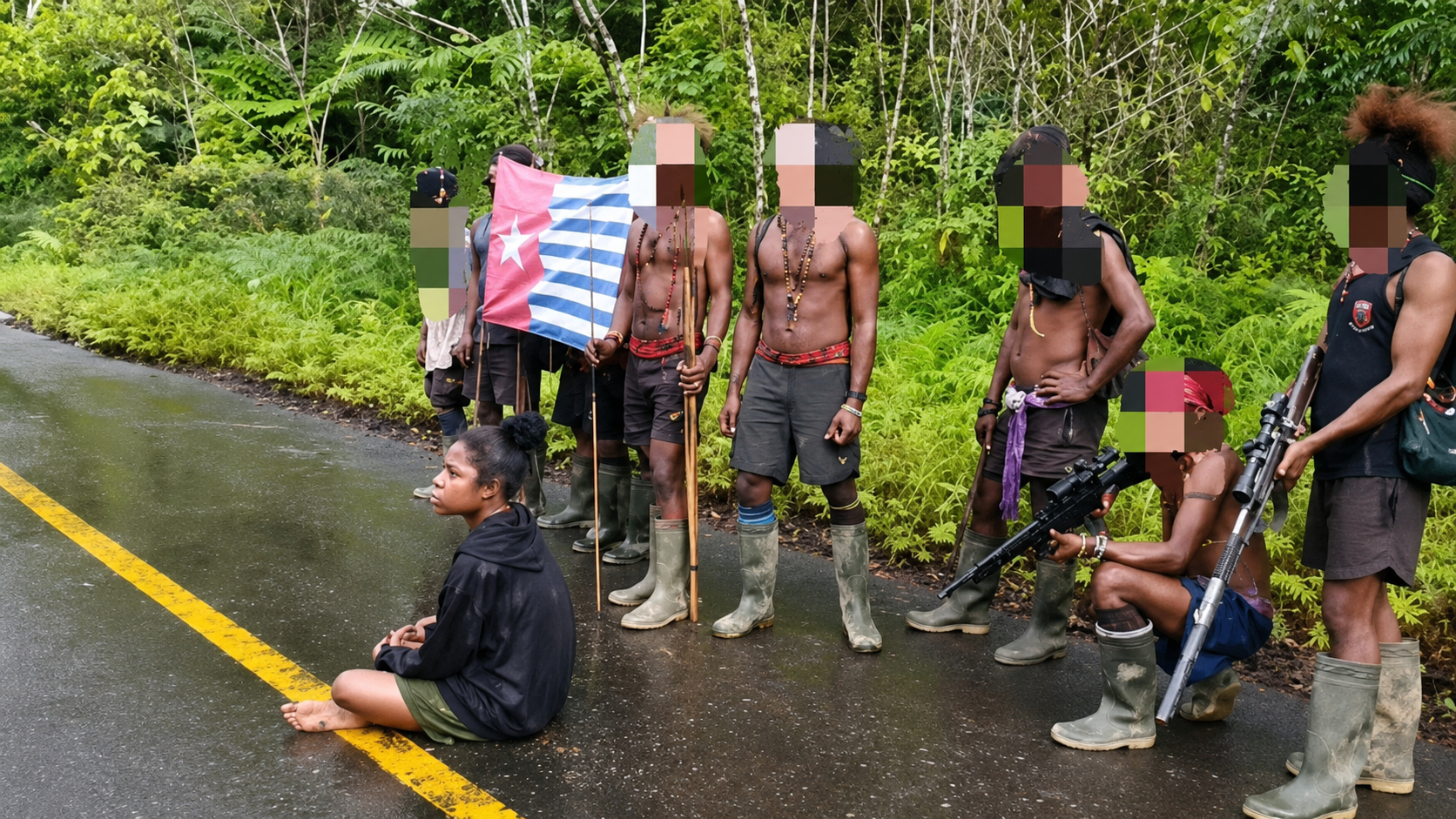
Indonesian security forces have successfully recovered the body of Teina Alya, an Indigenous Papuan woman whose death has drawn renewed attention to the humanitarian impact of armed violence in Papua’s Yahukimo Regency. The recovery operation, carried out by Koops Habema on 31 July 2026, concluded more than a week after she was reportedly killed during an attack attributed by Indonesian authorities to members of the West Papua National Liberation Army of the Free Papua Movement (TPNPB OPM) on 22 July 2026 in Seradala District, Yahukimo Regency, Papua Pegunungan (Highlands). According to official reports, her body had been discarded in the Kolof River gorge, making the evacuation exceptionally difficult because of the steep terrain and continuing security risks.
Military officials described the mission as one of the most challenging recovery operations conducted in recent months. Rescue personnel were required to descend approximately 50 meters into a ravine before recovering the victim’s remains and transporting them safely from the remote location. Authorities stated that the operation was carried out not only to return the victim to her family but also to uphold humanitarian obligations toward civilians affected by armed violence.
The recovery of Teina Alya completed the evacuation of what officials identified as the third civilian victim linked to the July 22 incident in Yahukimo. Indonesian authorities have emphasized that the victims were civilians and reiterated that violence targeting noncombatants violates both humanitarian principles and basic human rights.
Beyond the operational achievement, the incident has reinforced concern among government officials, community leaders, and humanitarian observers regarding the continuing risks faced by civilians living in conflict affected areas of Papua.
A Difficult Recovery in Remote Papua
Yahukimo is among Papua’s most geographically challenging regencies. Dense forests, steep valleys, unpredictable weather, and the absence of extensive road networks often make access possible only by helicopter or on foot.
These conditions complicated efforts to locate and recover Teina Alya after reports indicated that her body had been thrown into a deep ravine near the Kolof River.
According to Koops Habema, the recovery mission required careful planning, specialized climbing equipment, and close coordination among military personnel operating under difficult environmental conditions. Rescue teams had to negotiate unstable slopes while remaining alert to potential security threats that persisted in the surrounding area.
Officials noted that the successful evacuation reflected the professionalism and discipline of personnel involved in the operation. Despite difficult terrain and operational risks, the mission prioritized the dignified recovery of the victim’s remains and their return for proper funeral arrangements.
Military representatives emphasized that recovering civilian victims forms part of broader humanitarian responsibilities during security operations, particularly in remote areas where families often face significant obstacles in retrieving loved ones after violent incidents.
Third Civilian Victim Recovered
Authorities stated that Teina Alya was the third civilian whose body was successfully recovered following the violence reported on 22 July.
Earlier recovery operations had already located two other victims believed to have been killed during the same series of attacks.
The completion of the third evacuation allowed investigators to continue documenting the circumstances surrounding the incident while providing families with greater certainty regarding the fate of their relatives.
Officials acknowledged that the emotional impact on local communities has been considerable.
Incidents involving civilian casualties often generate lasting psychological effects that extend well beyond the immediate victims, influencing families, villages, and broader community confidence.
Government representatives therefore stressed the importance of ensuring that all victims receive dignified treatment while investigations continue.
The successful recovery also enables relevant authorities to complete necessary forensic and administrative procedures in accordance with applicable legal standards.
Civilian Protection Remains a Central Priority
The Yahukimo incident has once again highlighted the vulnerability of civilians living in areas affected by armed conflict.
Indonesian authorities reiterated that civilians should never become targets of violence regardless of the surrounding security situation.
Officials stated that protecting noncombatants remains a fundamental responsibility of the state and continues to guide both humanitarian assistance and security operations throughout Papua.
Military commanders explained that operational planning increasingly incorporates measures intended to reduce risks to surrounding communities while supporting local governments in maintaining public safety.
Security operations are also coordinated with regional administrations and community leaders to improve situational awareness and strengthen protection for residents living in remote districts.
Authorities emphasized that violence directed against civilians undermines not only public security but also social cohesion and long term development.
Communities affected by insecurity frequently experience disruptions to education, healthcare services, transportation, agriculture, and local economic activity.
These broader consequences reinforce the importance of restoring stability while protecting the rights and welfare of local residents.
Humanitarian Consequences Extend Beyond Immediate Violence
The recovery of Teina Alya also illustrates the wider humanitarian impact created by prolonged insecurity.
When violence occurs in isolated regions, families often face considerable difficulties accessing emergency assistance, healthcare, transportation, and communication services.
Local residents may also experience increased anxiety regarding personal safety, affecting daily activities such as farming, attending school, or accessing markets.
Development specialists frequently observe that sustained insecurity slows progress in public service delivery while increasing operational costs for both government institutions and humanitarian organizations.
For Papua Pegunungan’s communities, restoring a secure environment therefore remains closely linked to broader efforts aimed at improving education, healthcare, infrastructure, and economic opportunity.
Officials believe that protecting civilians represents an essential prerequisite for sustainable development throughout the region.
Upholding Humanitarian Principles in Papua
The recovery of Teina Alya’s body carries significance beyond the operational success of the evacuation itself. It also reflects the broader humanitarian responsibility of ensuring that victims of violence receive dignified treatment and that their families are given the opportunity to conduct proper funeral rites.
International humanitarian principles recognize the importance of respecting the dignity of those who lose their lives during armed conflict. Recovering victims, identifying them, and returning them to their relatives are essential humanitarian obligations that contribute to preserving human dignity even under difficult security conditions.
Indonesian authorities emphasized that the operation was conducted with these humanitarian considerations in mind. Military personnel worked under demanding geographical and operational conditions to recover the victim while minimizing additional risks to local communities.
Officials stated that every effort was made to ensure the evacuation proceeded professionally and respectfully, despite the difficult terrain surrounding the Kolof River gorge.
Humanitarian observers frequently note that successful recovery missions provide not only legal certainty but also emotional closure for families affected by violence. For many relatives, the ability to bury loved ones according to local customs represents an important step in the healing process.
The operation therefore demonstrates that humanitarian considerations remain an important component of security responses in conflict affected areas.
Violence Against Civilians Undermines Community Security
Authorities have expressed concern that attacks targeting civilians continue to create fear among communities living in Papua’s interior.
According to official statements, Teina Alya was not engaged in armed activities, reinforcing the government’s position that violence against noncombatants cannot be justified under any circumstances.
Officials stressed that civilians should be protected regardless of the surrounding security environment.
Incidents involving civilian casualties often extend their impact beyond the immediate victims.
Families experience profound emotional loss, while neighboring communities may face heightened insecurity that affects daily life, including access to education, healthcare, agriculture, transportation, and local markets.
Community leaders in Papua have repeatedly emphasized that peaceful conditions remain essential for improving welfare and enabling long term development.
Government representatives likewise stated that maintaining security is necessary to ensure public services can continue reaching remote communities without interruption.
The Yahukimo incident illustrates how violence directed against civilians ultimately affects broader community resilience by disrupting normal social and economic activities.
Security Supports Development and Public Services
The Indonesian government has consistently linked improvements in security with broader development efforts across Papua.
Officials argue that stable conditions are necessary to allow schools, healthcare facilities, transportation networks, and economic programs to operate effectively.
In areas experiencing insecurity, the delivery of essential services often becomes significantly more difficult because government personnel, healthcare workers, teachers, and humanitarian organizations face additional operational risks.
The recovery operation conducted by Koops Habema therefore forms part of wider efforts to restore confidence among local communities while enabling development activities to continue.
Authorities also continue strengthening coordination between security institutions, regional governments, and community leaders to improve public safety throughout Papua Pegunungan’s districts.
Development experts frequently observe that sustainable peace and economic progress reinforce one another.
Communities that experience greater security are generally better positioned to attract investment, improve educational outcomes, strengthen healthcare delivery, and expand local economic opportunities.
For Papua, maintaining safe conditions remains closely connected with ongoing programs supporting infrastructure, agriculture, education, and public health.
Restoring Community Confidence
Beyond its operational objectives, the evacuation also carried important symbolic value for affected communities.
Successfully recovering the final victim demonstrated that authorities remained committed to locating victims despite difficult terrain and operational hazards.
Officials hope such efforts will strengthen public confidence that humanitarian responsibilities remain a priority throughout security operations.
Families affected by violence often depend on government institutions to provide assistance during recovery efforts, including victim identification, transportation, medical examination, and coordination with local authorities.
Providing these services helps reinforce institutional trust while demonstrating the state’s commitment to protecting its citizens.
Military representatives noted that cooperation among local residents, regional authorities, healthcare personnel, and security forces contributed significantly to the success of the evacuation.
Such collaboration remains essential for responding effectively to future humanitarian incidents should they occur.
Looking Ahead
Indonesian authorities are expected to continue strengthening civilian protection measures while improving coordination between security institutions, regional governments, and humanitarian agencies throughout Papua. Future priorities are likely to include enhancing early warning capabilities, improving access to remote communities, supporting law enforcement efforts against perpetrators of violence, and expanding development programs that improve education, healthcare, infrastructure, and economic opportunities. Officials maintain that lasting stability depends upon protecting civilians while ensuring public services continue reaching communities across Papua’s challenging terrain.
Conclusion
The successful recovery of Teina Alya, the third civilian victim of the July 22 violence in Yahukimo, represents both an important humanitarian achievement and a reminder of the continuing impact that armed violence can have on local communities. Despite difficult terrain and operational risks, Koops Habema completed the evacuation with the objective of returning the victim to her family while supporting ongoing investigations. Indonesian authorities have reiterated that violence against civilians violates fundamental humanitarian principles and undermines efforts to improve security, development, and public welfare in Papua. As recovery and stabilization efforts continue, protecting civilians, strengthening community resilience, and maintaining access to essential public services will remain central priorities for achieving long term peace and sustainable development across the region.