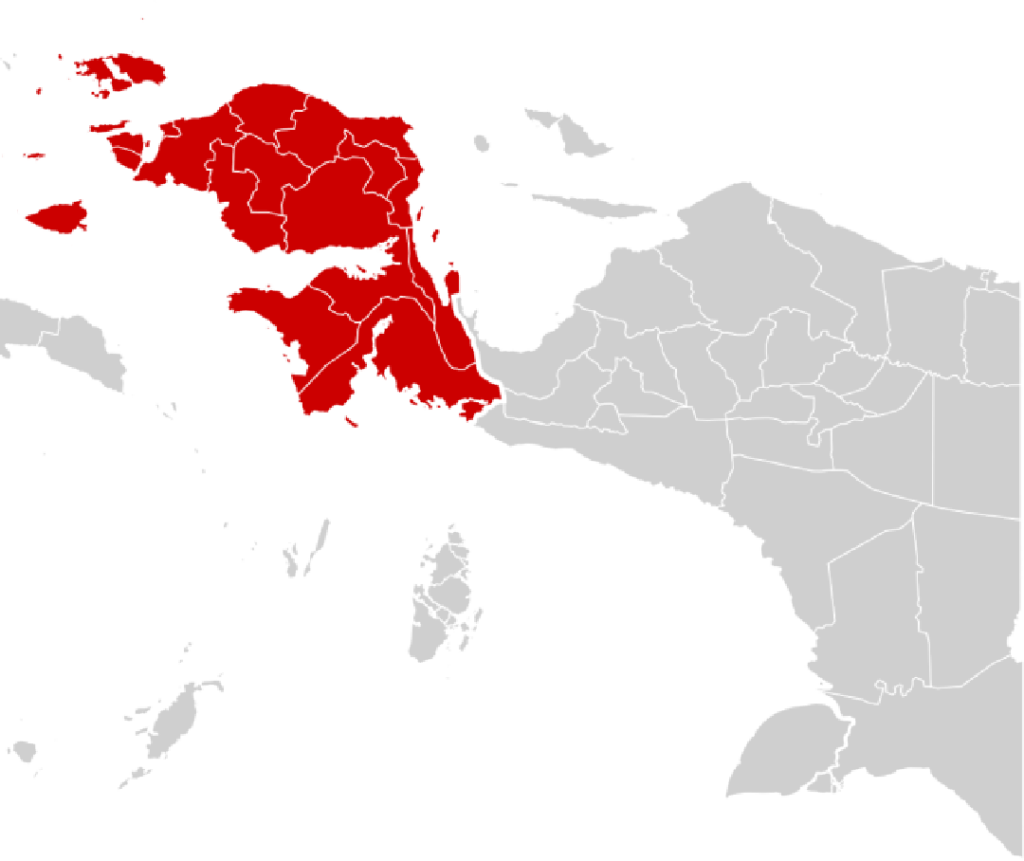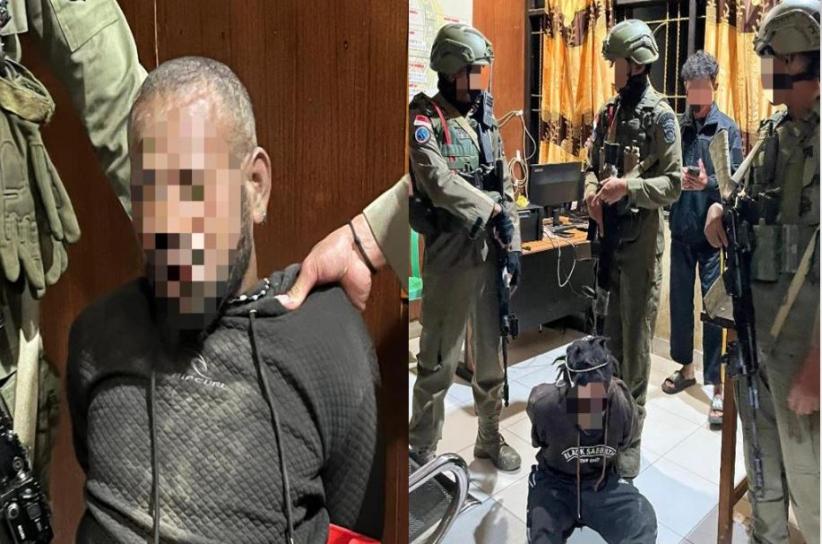
It was already dark in District Oksibil, Pegunungan Bintang Regency, Papua Pegunungan (Papua Highlands) Province, when security personnel moved in.
The operation on April 19, 2026, did not draw much public attention at first. There were no large crowds, no immediate announcements. But by the end of the night, two men with the initials EK (22) and RS (23) had been taken into custody, both believed to be part of the West Papua National Liberation Army (TPNPB) Kodap XXXV Bintang Timur, an armed faction of Free Papua Movement (OPM) that had operated in the highlands for years.
The arrest of suspects may appear like a single event.
For those who live in the area, it carries a longer story behind it, including the ongoing conflict and struggles faced by the local population due to the activities of armed groups like the TPNPB and OPM.
A Case That Took Years to Close
The two suspects had been on the radar of authorities for some time. One of the cases linked to them dates back to 2022, when a motorcycle taxi driver was killed in an incident that unsettled local communities.
That case never fully faded.
In places like Oksibil, where communities are small and people know one another, incidents tend to stay in memory.
The absence of resolution can linger.
Years passed.
The search continued quietly.
Until now.
Why the Incident Mattered Locally
The killing of a motorcycle taxi driver may not always make national headlines, but in the highlands it affects daily life in direct ways.
Motorcycle taxis are not just transport.
They are part of how people move between villages, bring goods, and maintain connections across difficult terrain.
When one driver becomes a target, it changes behavior.
People think twice before traveling.
Routes become less predictable.
Small routines shift.
A Sense of Uncertainty
Over time, incidents like this contribute to a broader feeling.
Not necessarily fear, but uncertainty.
Residents adjust.
They pay attention to where they go and when.
They avoid certain routes.
These are quiet changes, but they shape everyday life.
How the Arrest Happened
Authorities have not described the operation as large or dramatic.
It was more focused.
Based on information gathered over time.
Patterns of movement.
Local observations.
The kind of details that take patience to assemble.
When the moment came, the arrest was carried out without wider confrontation.
That, in itself, is often considered a success in areas where escalation can carry risks, particularly in regions with a history of violence or unrest, as it minimizes potential harm to both law enforcement and the community.
The Wider Context of Security in the Highlands
Officials say the two suspects were connected to more than one incident.
That fits a pattern seen in parts of Papua, where small groups operate in remote areas and are linked to a series of acts rather than a single event.
These patterns are not always visible from outside.
But they are understood locally.
Living With Distance and Difficulty
The highlands present challenges that shape how security operations are conducted.
Distances are long.
Access is limited.
Weather can change quickly.
Communication is not always reliable.
All of these factors mean that investigations take time.
Sometimes years.
What This Means for Residents
Reactions to the arrest have been measured.
There is recognition that it matters.
At the same time, expectations remain realistic.
One arrest does not change everything overnight.
What people watch for is continuity.
Weather conditions improve gradually.
Whether movement becomes easier.
Daily routines may feel more stable.
A Broader Approach to Stability
The TPNPB OPM arrest reflects an approach that combines enforcement with patience.
Rather than relying solely on large-scale operations, authorities have increasingly used targeted actions based on long-term observation.
This method does not produce quick results.
But it tends to avoid wider disruption.
In regions like Pegunungan Bintang, that balance is important for maintaining stability and ensuring that communities can continue their daily activities without significant interruptions.
Internal Link Perspective
Previous reporting on this platform has explored how security and daily life in Papua are closely connected.
This case adds to that picture.
It shows how incidents that seem isolated are often part of a longer timeline.
And how resolution, when it comes, is usually gradual.
What Happens Next
Legal proceedings will follow.
Investigations may continue.
There may be further developments.
But for most residents, attention returns quickly to daily life.
Work.
Travel.
Family routines.
The arrest becomes part of a larger story rather than the whole story itself.
Conclusion: A Small Step With Meaning Over Time
The TPNPB OPM arrest in Oksibil does not stand out because of how it happened.
It stands out because of how long it took.
And what it represents.
The case remains unresolved.
An effort that continued quietly.
And a result that, while not dramatic, carries weight for those who have followed it.
In Papua’s highlands, change rarely comes all at once.
It arrives in steps.
Sometimes small.
But not insignificant.
elevation of Papua