
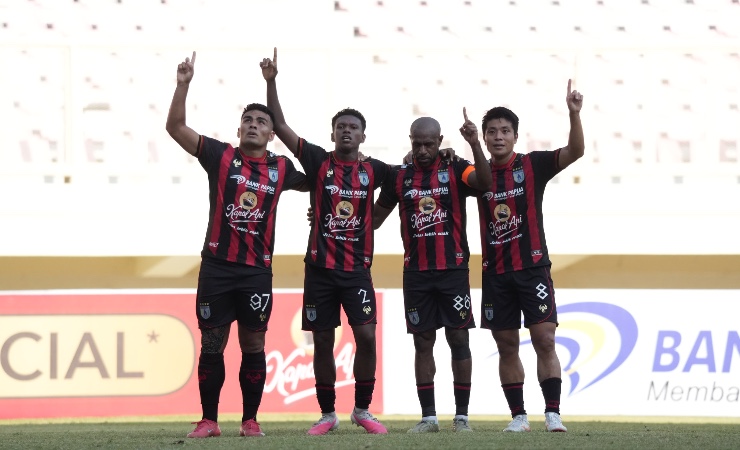
Persipura Jayapura revived their promotion campaign with a convincing 2-0 victory over fellow Papua club PSBS Biak in the Pegadaian Championship 2026/2027 on Sunday, November 29. Playing at the Lukas Enembe Stadium in Jayapura Regency, Persipura delivered the result their supporters had been waiting for, with goals from Michael Kambu and Tonci Ramandei securing three valuable points in front of the home crowd.
The result was more than a local derby victory. It marked Persipura’s return to playing before their supporters after a period of having to play away from their regular home ground. For a club whose identity is closely connected to the people of Papua, the occasion carried emotional significance as well as competitive importance.
Persipura’s performance also strengthened the belief that the four-time Indonesian league champions can still challenge for a return to the country’s highest division. Club chairman Benhur Tomi Mano and head coach Regi Aditya have both expressed confidence that promotion remains achievable, provided the team maintains consistency throughout the remaining fixtures.
The 2-0 result, following Persipura’s earlier 6-1 victory over PSBS in October, further underlined the Jayapura side’s advantage in this season’s meetings between the two clubs.
A Papua Derby with More at Stake
The encounter at the Lukas Enembe Stadium brought together two clubs with strong connections to Papua’s football culture. Persipura, widely known as the Black Pearls, represent Jayapura and have a long record in Indonesian football. PSBS Biak, nicknamed the Pacific Storm, carries the sporting identity of Biak and has also experienced the excitement of competing at the highest level.
Although both clubs share a regional football heritage, the match was important for different reasons. Persipura needed points to strengthen their position in the race for promotion, while PSBS were looking for a result that could help them recover from a difficult run of performances.
Persipura entered the fixture after a 2-1 defeat against RANS Nusantara FC. That loss made the home match particularly important for Regi Aditya’s team, which could not afford to let another opportunity to collect points slip away.
The return to Jayapura also provided a different atmosphere from the team’s previous fixtures away from home. Cenderawasih Pos reported that Persipura had spent a period playing as a travelling side following unrest that affected the club and the use of its home venue. The club’s preparations therefore placed considerable importance on welcoming supporters back and ensuring that the match could take place in a positive atmosphere.
Before the game, Regi urged supporters to give the team their backing while avoiding behavior that could result in further disciplinary consequences for the club. The message reflected a practical reality in professional football: strong home support can help a team, but maintaining order is equally important if a club wants to protect its opportunity to play in front of its fans.
Persipura Take Control in the First Half
Persipura began the match with greater initiative, seeking to establish control rather than allowing PSBS to settle into their defensive structure.
The home side created pressure through several attacking players, including Tonci Ramandei, Michael Kambu, Ian Kabes, and Ramai Rumakiek. Their movement and combination play repeatedly tested the visiting defense.
The breakthrough arrived in the 26th minute. Michael Kambu found the net to put Persipura ahead, giving the home side an important advantage and rewarding their early attacking effort.
The goal also changed the rhythm of the contest. With the lead secured, Persipura were able to maintain pressure and search for opportunities to extend their advantage. PSBS, meanwhile, had to consider how to respond without leaving too much space behind their defensive line.
The visitors attempted to build attacks through players including Samuel Gwijangge and Alfan Wardyansyah. However, Persipura’s defensive organization made it difficult for them to create clear opportunities.
Despite the home side’s continued pressure, the first half ended with Persipura leading 1-0. The scoreline reflected their advantage, although the hosts still needed another goal to make the result more secure.
Ramandei Seals the Victory
The second half presented a different challenge for Persipura. Holding a narrow lead in a derby can create pressure, particularly when the opposing team is searching for an equalizer.
PSBS attempted to remain organized and limit Persipura’s attacking options. The visiting side sought to prevent the home team from extending its advantage while looking for opportunities to create a more dangerous attacking threat.
Persipura, however, continued to control much of the match. Their second goal arrived in the 72nd minute when Tonci Ramandei scored to make it 2-0.
The goal provided the decisive moment of the contest. It gave Persipura a more comfortable margin and made it increasingly difficult for PSBS to return to the match.
With two goals separating the sides, Persipura could manage the closing stages with greater confidence. The home team continued to look for attacking opportunities, while PSBS struggled to produce the sustained pressure required to change the outcome.
When the final whistle arrived, Persipura had secured a 2-0 victory and three important points.
Match statistics published by Liga.id also illustrated the home side’s control. Persipura recorded 68 per cent possession and 26 attempts, including 12 on target. PSBS managed five attempts, with only one reaching the target. The figures reflected the difference in attacking activity and the home team’s ability to dictate the contest.
Returning Home Gives the Team a Lift
The significance of the victory was closely connected to Persipura’s return to the Lukas Enembe Stadium.
For supporters, watching the team play in Jayapura is an important part of the relationship between the club and its community. Persipura’s identity has been built over decades through the loyalty of fans across Papua, and home matches provide an opportunity for that connection to be expressed directly.
The return also mattered from a sporting perspective. Players can draw additional motivation from familiar surroundings and the encouragement of supporters. For a team trying to recover its position in a competitive league, that atmosphere can help build confidence.
However, the club’s management and supporters also have a shared responsibility to protect the opportunity to play at home. Any incident that leads to sanctions or a loss of home advantage can affect preparations, finances, and the team’s competitive prospects.
The derby therefore offered more than a football result. It was an opportunity for the club and its supporters to demonstrate that enthusiasm for Persipura could be channelled into positive support, respect for opponents, and responsible conduct inside the stadium.
Regi Aditya’s Preparation: Recovery Before Tactics
Persipura’s victory came after a demanding period of travel and a congested fixture schedule.
Before the PSBS match, the team had travelled from Malang to Parepare before returning to Jayapura. The journey followed their previous fixture against RANS Nusantara FC and preparations for another demanding match.
Regi Aditya said the coaching staff had prioritized the players’ physical recovery. Rather than concentrating exclusively on tactical training, the team needed to restore fitness after travelling long distances and playing matches close together.
In comments published by the official Persipura website, Regi explained that the schedule had been particularly demanding because of the flights between cities.
He said his main concern was ensuring that players could recover properly before the next match. Training sessions continued, but the emphasis was on restoring physical condition rather than adding an intensive tactical workload.
The coach also acknowledged that Persipura had several players dealing with injuries. Before the derby, around six players were reported to be undergoing recovery, including Jeam Kelly Sroyer, Bima Ragil, Ricardo Lima, Ruben Sanadi, Reno Salampessy, and Gunansar Mandowen.
The situation required the coaching staff to consider the available squad carefully. Regi said he remained confident that other players could contribute, pointing to performances from members of the squad who had stepped up in previous matches.
His approach highlighted an important aspect of a long league campaign. Promotion is not determined by one strong performance alone. It requires squad depth, careful management of player fitness, and the ability to maintain standards even when key individuals are unavailable.
Benhur Tomi Mano Remains Confident About Promotion
Persipura’s ambitions extend beyond winning individual matches. The club’s central objective is to return to Indonesia’s top division, now known as the BRI Super League.
Club chairman Benhur Tomi Mano, widely known as BTM, has insisted that the promotion opportunity remains open despite the team’s inconsistent start to the season.
Speaking to Cenderawasih Pos before the PSBS fixture, Benhur said Persipura still had a realistic opportunity to secure a promotion place. He called on the players to approach their remaining matches with seriousness and determination, particularly when playing at home.
He emphasized that the team needed to give its maximum effort if it wanted to return to the highest level of Indonesian football.
Regi Aditya shared that confidence. The coach pointed out that Persipura still had 17 matches remaining at the time of his comments, providing the team with opportunities to recover lost ground.
He said the remaining fixtures had to be approached responsibly and consistently. In his view, the team still had enough time to pursue promotion, but the outcome would depend on its commitment from one match to the next.
The victory over PSBS was therefore an important step in translating those statements into results. Three points do not guarantee promotion, but they help restore momentum and reduce the pressure created by previous setbacks.
The Challenge of Consistency in the Promotion Race
Persipura’s ambitions remain demanding. The club is competing in a league in which every dropped point can influence the final standings and the path towards promotion.
Earlier in the season, Persipura experienced an uneven run of results. The club had also faced the challenge of playing away from Jayapura, managing injuries and dealing with a demanding travel schedule.
These factors help explain why the 2-0 victory matters. It provides evidence that the team can still perform strongly while managing difficult circumstances.
Nevertheless, the club must now build on the result. The next fixtures will test whether Persipura can maintain the same level of concentration, attacking efficiency and defensive discipline.
The team also needs to manage its squad carefully. Injuries and fatigue can become increasingly influential as the season progresses, especially when long-distance travel is part of the competition.
For Regi, the challenge is to ensure that the players remain focused on the immediate task rather than becoming distracted by the scale of the promotion objective. The club’s leadership can maintain its ambition, but the players must translate it into consistent performances on the pitch.
Football’s Wider Importance for Papua
Persipura’s success has significance beyond the league table. Football remains one of the most visible forms of community identity and shared entertainment in Papua.
The club has long provided a platform for Papuan players to demonstrate their abilities in national competitions. Its history has helped shape the region’s sporting reputation and has inspired generations of young footballers.
A return to the top division would offer opportunities for greater exposure, stronger competition, and renewed attention from national football audiences. It could also help create commercial opportunities for the club, its partners, and businesses connected to matchday activities.
Home matches can support local economic activity through transport, food vendors, accommodation, and other services. A strong football culture also creates opportunities for youth development, coaching programs, and the discovery of emerging talent.
These benefits depend on sound club management and continued cooperation among supporters, local stakeholders, and football authorities. Maintaining stadium standards, ensuring security, and encouraging responsible fan behavior are all part of building a sustainable football environment.
The Persipura-PSBS derby showed that Papua’s football rivalry can attract attention while bringing communities together through sport. The competitive nature of the match did not diminish the shared regional connection between the two clubs.
Conclusion
Persipura Jayapura’s 2-0 victory over PSBS Biak was an important result in the club’s effort to return to Indonesia’s top division. Michael Kambu’s first-half goal and Tonci Ramandei’s second-half finish gave the Black Pearls a deserved victory and strengthened the team’s confidence in front of its home supporters.
The return to the Lukas Enembe Stadium added further meaning to the occasion. It offered players and fans an opportunity to reconnect after a period of playing away from home, while reminding the club of the importance of maintaining a safe and positive stadium environment.
For Benhur Tomi Mano and Regi Aditya, the promotion objective remains firmly within reach. The victory provides encouragement, but the decisive test will be whether Persipura can maintain consistency across the remaining fixtures.
Papua’s football supporters have reason to be optimistic, but the road back to the top flight will demand discipline, resilience, and collective effort. If Persipura can turn the energy of its homecoming into a sustained run of results, the dream of returning to the BRI Super League could become a realistic achievement rather than simply an aspiration.
For now, the message from Jayapura is clear: Persipura are still fighting, and their pursuit of a place among Indonesia’s elite is very much alive.
Read Also
Persipura Beat Deltras 2-1 to End First Round
Persipura Jayapura Crush PSBS Biak 6-1 in Papua Derby

