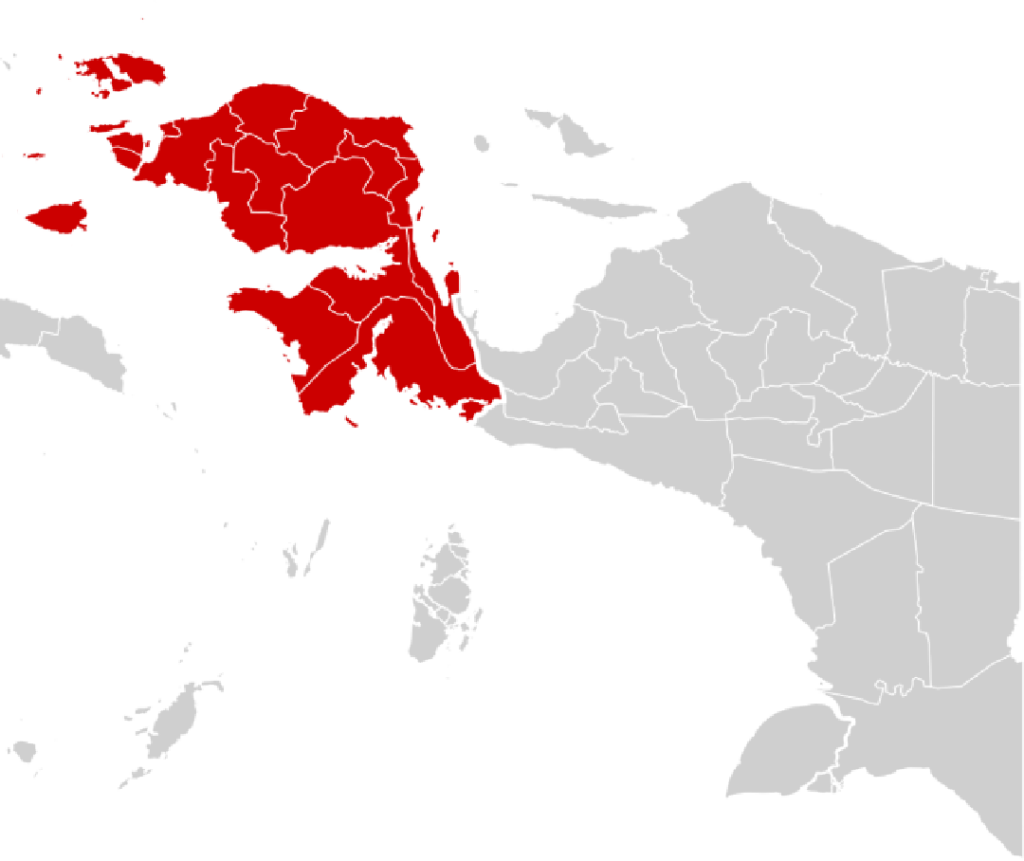
Terrors of the West Papua National Liberation Army from the Free Papua Movement (TPNPB OPM) in Papua have again come under scrutiny after a firefight in Jila District, Mimika Regency, Papua Tengah (Central Papua), left one Indonesian soldier dead and two others wounded on 17 August 2026, while a separate shooting in Tolikara Regency, Papua Pegunungan (Papua Highlands), the previous day left a civilian injured. The incidents occurred as Indonesia celebrated the 81st anniversary of its independence, prompting heightened security attention across several parts of Papua.
The Mimika incident took place in Jila, where personnel from the Jila Military Subdistrict Command, or Posramil Jila Kodim 1710/Mimika, together with personnel from the Pam Obvit Task Force of Infantry Battalion 133, came into contact with members of an armed group identified by Indonesian military authorities as TPNPB OPM Pok III Puncak. The group was reportedly believed to be led by Pemne Kogoya.
According to the XVII/Cenderawasih Military Command, the exchange of fire resulted in three TNI personnel becoming casualties. One died, while two others suffered injuries and were receiving medical treatment. Security personnel were subsequently deployed to pursue those responsible.
The available reports cited for this article do not disclose the full names or ranks of the three TNI casualties. For accuracy, their identities should therefore not be inferred or published as confirmed facts until officially released by the TNI or the relevant authorities.
That distinction is important when reporting a rapidly developing security incident, particularly in a region where conflicting narratives can spread quickly through social media and local information networks.
What Happened in Jila, Mimika?
Contact between TNI Personnel and TPNPB OPM Members
The firefight was reported on Monday, 17 August, in Jila District, an area located in the mountainous interior of Mimika Regency. The incident involved personnel stationed at Posramil Jila and members of the security task force responsible for protecting strategic assets.
The Indonesian military described the opposing group as TPNPB OPM Pok III Puncak. Authorities said the group was believed to be under the leadership of Pemne Kogoya. Following the exchange, security forces began pursuing members of the group who were believed to have withdrawn from the area.
The timing was particularly sensitive. 17 August is Indonesia’s Independence Day, and celebrations were taking place throughout Papua, including in Mimika. National ceremonies, flag-raising events, and community gatherings were held in different parts of the region.
The terror in Jila therefore added a serious security dimension to an otherwise symbolic national occasion.
At the same time, it is important to distinguish between what has been officially established and what remains an assessment. The reports available at the time of publication establish that a firefight occurred and that TNI personnel were killed and wounded. They also identify the opposing force according to the military’s account. They do not, however, provide independently verified evidence sufficient to establish every detail of the confrontation.
The Human Cost for Security Personnel
The death of one soldier illustrates the continuing risks faced by security personnel operating in Papua’s remote and mountainous districts.
Jila presents significant logistical challenges. Its geography makes movement difficult, while access to emergency medical services can be considerably more complicated than in urban centers such as Timika or Jayapura. In such circumstances, even injuries that might be manageable in a major hospital can present serious operational challenges.
The two wounded soldiers were receiving medical treatment following the incident, according to the military. Authorities also initiated pursuit operations against the suspected attackers.
For the families of the personnel involved, however, the incident was not simply another security report. It became a day of mourning that coincided with one of Indonesia’s most important national celebrations.
Civilian Shot in Tolikara
A separate incident occurred one day earlier in Tolikara Regency, Papua Pegunungan.
According to ANTARA, a civilian identified by the initials AS was shot while inside his home in the Pertamina Lama Complex, Wenam District, Tolikara, on Sunday, August 16. The shooting reportedly struck his leg. Indonesian security authorities attributed the attack to individuals believed to be associated with an armed group under Botak Wanimbo.
AS was evacuated to the Kout Post of the Yonif 511/DY Task Force for medical treatment. Authorities said his condition was stable after receiving medical attention. A joint security team involving personnel from Kodim 1716/Tolikara, Yonif 511/DY, and the Rajawali V Task Force was subsequently deployed to pursue the suspected perpetrators.
The reports cited here identify the civilian only by the initials AS. His full identity has not been published in the cited authoritative report, so it would be inappropriate to speculate about his name.
The Tolikara shooting demonstrates another dimension of Papua’s security challenge: civilians can become victims even when they are not directly involved in political or armed disputes.
For local communities, such incidents can have consequences beyond the immediate physical injuries. Fear can affect mobility, access to markets, schooling, health services, and the willingness of residents to travel between villages.
Why the Timing Matters
The two incidents occurred immediately before and during Indonesia’s 81st Independence Day celebrations. That timing has inevitably attracted political and security attention.
Indonesia’s Independence Day is celebrated across the archipelago, including Papua, with official ceremonies, community events, and cultural activities. In many communities, the occasion is also used to highlight local achievements, public infrastructure, education, and social development.
The occurrence of armed violence during the same period can create an atmosphere of uncertainty, particularly in remote districts where security incidents can quickly affect civilian movement.
The Indonesian authorities have previously warned about the possibility of armed groups attempting to disrupt Independence Day activities in Papua. In that context, the incidents in Mimika and Tolikara have been viewed by security officials as part of a broader security challenge surrounding the period.
However, responsible reporting requires caution. While authorities have linked the Mimika firefight to a TPNPB OPM group and the Tolikara shooting to individuals allegedly associated with an armed group, the available sources do not independently establish that both incidents formed part of a single coordinated operation.
That distinction matters for international audiences seeking to understand Papua without reducing a complex region to a single security narrative.
Security and Development are Closely Connected
Remote Communities Face a Double Challenge
Papua’s security situation cannot be separated entirely from its geography and development conditions.
Many communities are located far from major urban centers. Mountainous terrain, limited transportation infrastructure, and difficult weather conditions can complicate the delivery of government services. In areas affected by violence, these challenges can become even more pronounced.
Security instability can disrupt economic activity, discourage investment, complicate transportation, and make it harder for public servants, teachers, and medical workers to reach isolated communities.
Conversely, stronger connectivity and improved access to education, healthcare, and economic opportunities can contribute to greater social resilience.
This is why the Indonesian government’s development agenda in Papua increasingly places infrastructure, public services, and security within the same broader framework.
Recent projects such as the Trans Papua road network, new bridges, and improved connectivity are intended not only to reduce travel times but also to integrate isolated communities with regional markets and government services.
For international observers, this provides important context. The security situation is serious, but it exists alongside a much wider process of economic and social transformation.
Protecting Civilians Remains Essential
The latest incidents also underline the importance of protecting civilians.
Regardless of political or security disputes, residents should be able to travel, work, attend school, and receive medical treatment without fear of violence.
The shooting of AS in Tolikara is particularly significant because authorities said he was inside his home when the attack occurred.
The broader objective for security institutions should therefore extend beyond responding to armed attacks. It should include maintaining conditions in which communities can continue ordinary activities and public services can operate safely.
This is especially important in remote districts, where a single violent incident can have an outsized impact on community confidence.
Indonesia’s Independence Day Ceremonies Amid Security Challenges
Despite the incidents, Indonesia’s Independence Day ceremonies continued in different parts of Papua.
In Mimika, for example, the 81st Independence Day ceremony was held at the central government field and was described as orderly. A separate ceremony at PT Freeport Indonesia’s Kuala Kencana also proceeded, with 73 members of the local flag-raising team carrying out their duties.
These events offer another perspective on the situation. Papua is not defined solely by armed conflict.
Across the region, communities continue to participate in education, sports, cultural activities, economic development, and national celebrations. Young Papuans have also increasingly appeared in national programs, including the Paskibraka, while local governments continue to promote infrastructure and economic initiatives.
That broader social reality is important when discussing security in Papua for an international audience.
The Need for Accurate Information
The latest incidents also demonstrate why accurate information matters.
Security incidents involving armed groups often generate competing accounts, particularly when communications from remote locations are limited. Early reports may contain incomplete information regarding casualties, perpetrators, or the sequence of events.
In the Mimika case, Indonesian authorities have publicly identified the opposing group and announced casualties among TNI personnel. However, the cited reports do not provide the names of the deceased and wounded soldiers. Reporting those names without official confirmation could therefore create unnecessary misinformation.
The same principle applies to the Tolikara shooting. The available ANTARA report identifies the victim as AS and provides details about his injury and treatment but does not provide a full name.
For Papua, where security narratives can quickly become politicized, verification is particularly important. Reliable reporting should distinguish confirmed facts, official allegations, and analytical interpretation.
A Continuing Security Test for Papua
The incidents in Mimika and Tolikara highlight the continuing challenge facing Indonesian security authorities in Papua. Armed violence remains capable of producing casualties among both security personnel and civilians, particularly in remote areas where the terrain provides significant operational challenges.
Yet the response cannot be measured solely by military operations.
Long-term stability will depend on the ability of government institutions to protect communities while continuing development programs that improve connectivity, education, healthcare and economic opportunities. Security and development ultimately reinforce each other. Communities that feel safe are better positioned to participate in economic activity, while improved services and opportunities can strengthen social resilience.
For Indonesia, the immediate priority following the Mimika and Tolikara incidents is clear: ensure the wounded receive appropriate treatment, establish the facts surrounding the attacks, protect civilians, and maintain security without allowing violence to disrupt essential public services.
The larger test is whether Papua can continue its development trajectory despite the persistence of TPNPB OPM.
Conclusion
The deaths of one TNI personnel and one civilian, together with injuries to two other soldiers, cast a somber shadow over Indonesia’s 81st Independence Day celebrations in Papua. The Mimika firefight and Tolikara shooting demonstrate that armed violence remains a serious security concern in parts of the region, particularly in remote districts. Indonesian authorities have responded by pursuing suspected perpetrators and strengthening security measures.
But the significance of these incidents extends beyond the immediate security response. The protection of civilians, accurate investigation of attacks, and continuity of public services are equally important. Papua’s future cannot be defined only by conflict. It is also shaped by roads, schools, healthcare facilities, local businesses, young people, and communities seeking greater opportunities.
As Indonesia continues its development agenda in Papua, maintaining security while expanding inclusive development will remain central to building lasting stability. The events of August 2026 serve as a reminder that peace is not measured only by the absence of gunfire but by whether ordinary Papuans can live, work, and build their future without fear.