
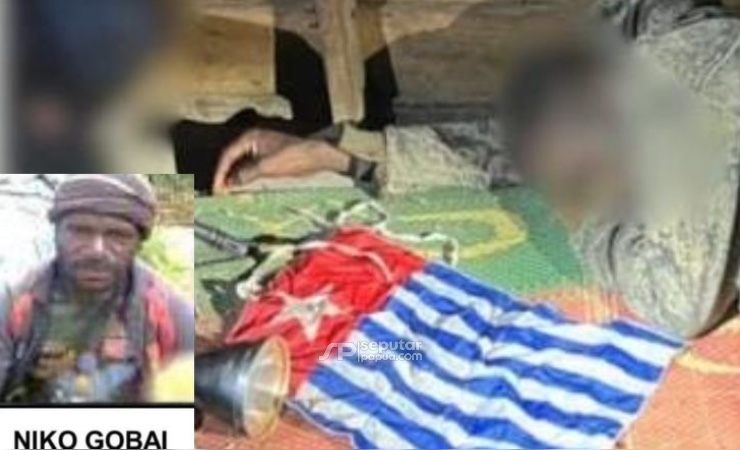
An armed confrontation between Indonesian military personnel and the West Papua National Liberation Army of the Free Papua Movement (TPNPB OPM) member in Paniai Regency on November 28, 2026, left a man identified by the military as Niko Gobai, 38, dead and a local woman wounded by gunfire. The TNI clash in Paniai also prompted an immediate medical response from personnel of the Rajawali VI Task Force, who treated the injured woman during a subsequent security sweep in Waipa village.
The incident took place in the area above Waipa village, Teluk Deya District, in Papua Tengah (Central Papua). It involved personnel from Detachment 5 and Detachment 2 of the Rajawali VI Task Force under the TNI Habema Operations Command. According to the military, the opposing group was affiliated with OPM operating under Kodap IV/Paniai and led by Damianus Magayogi.
Brigadier General Riyanto, Commander of the Habema Operations Command, said the encounter began when military personnel conducting observation encountered several armed individuals whom they considered a threat to their safety. The soldiers subsequently came under fire from higher ground and returned it.
During the exchange, one armed individual was reportedly hit. He was initially carried away by members of his group, who continued firing sporadically as they withdrew. Following further pursuit and examination of the area, TNI personnel found the man and identified him as Niko Gobai, whom the military described as an alleged member of TPNPB OPM and a person on its wanted list.
The incident also resulted in a civilian casualty. During a subsequent search in Waipa, soldiers found a woman with a gunshot wound to her hand. The military said she was suspected of being hit by a stray bullet from the group’s sporadic gunfire. Medical personnel from the task force provided immediate treatment.
The episode has renewed attention on the security challenges facing communities in Papua Tengah, as well as the importance of protecting civilians during armed operations.
How the Armed Encounter Unfolded
According to the initial account released by the Habema Operations Command, the confrontation began when personnel from the Rajawali VI Task Force detected several armed individuals in the area above Waipa village.
The soldiers were conducting an observation when shots were fired at them from higher ground. Riyanto said the personnel responded with return fire directed at TPNPB OPM.
The exchange marked the beginning of the confrontation between the military unit and individuals identified by the TNI as members of TPNPB OPM associated with Kodap IV/Paniai.
During the encounter, one individual was struck by gunfire. According to the military’s account, members of the group carried the injured person away from the initial location while continuing to fire sporadically and without a clear direction.
The soldiers then continued their efforts to locate the individual who had been hit. In a subsequent examination of the area, they found a man who was later identified as Niko Gobai, aged 38.
Riyanto said Gobai was believed to be affiliated with TPNPB OPM and was listed as a wanted individual. He was found dead following the exchange of fire.
The military’s account identifies Gobai as an alleged member of the group, rather than establishing through an independent judicial process his precise position or operational responsibilities within the organization. The available reports do not provide further details about the specific cases underlying his wanted status.
The sequence of events was reported by ANTARA, CNN Indonesia, detikcom, and Papua60Detik on November 28, based on statements from the Habema Operations Command.
TNI Identifies Niko Gobai as a Wanted TPNPB OPM Member
The identification of Niko Gobai became one of the main developments following the confrontation.
According to Riyanto, Gobai was suspected of being part of TPNPB operating under Kodap IV/Paniai, led by Damianus Magayogi. The military also described him as being on its wanted list.
The group is referred to by the TNI as an Armed Extremist Group, or KEB, a designation used by the military for armed elements it associates with the wider OPM network.
It is important, however, to distinguish the military’s identification from an independently established account of the individual’s role. The available reports do not provide a detailed biography of Gobai, the specific allegations against him, or independent confirmation of his position within the organization.
For that reason, the incident is best understood as a reported armed confrontation in which a man identified by the TNI as a wanted suspected member of the group was found dead.
The distinction matters in responsible reporting, particularly in a security environment where information can initially come from one party to an armed encounter. Further investigation and verification remain important to establish the complete circumstances surrounding the incident.
Ammunition and Group Equipment Recovered
Following the confrontation, TNI personnel continued examining the area and reported finding several items believed to be connected with TPNPB OPM.
The materials included ammunition, group insignia or identifying accessories, bows, and arrows. The items were secured for further examination.
Their recovery forms part of the military’s follow-up investigation into the incident. Ammunition and other equipment can provide information relevant to establishing the circumstances of an armed encounter, although the available reports do not specify the quantity, type, or origin of the ammunition recovered.
The military also did not publish a detailed inventory of the items or disclose the results of any forensic examination.
The findings were nevertheless included in the initial operational account released by the Habema Operations Command.
Further examination will be important to clarify the significance of the recovered materials and establish whether they can be linked to specific individuals or activities.
TNI Medical Team Treats an Injured Civilian Woman
Beyond the military encounter, the discovery of an injured civilian became a significant part of the incident’s aftermath.
After the exchange of fire, personnel conducted a sweep of Waipa village and found a woman who had sustained a gunshot wound to her hand. Her identity was still being verified when the initial reports were published.
The TNI suspected that she had been hit by a stray bullet from sporadic gunfire attributed to TPNPB OPM.
Medical personnel from the Rajawali VI Task Force immediately provided treatment. The response was highlighted by Riyanto, who expressed concern about the civilian injury and stressed that anyone wounded during an incident must receive assistance.
“We regret that someone was injured in this incident. Anyone who is wounded must receive medical attention. Every incident must be examined objectively so that the facts and responsibilities can be established clearly,” Riyanto said in a statement reported by ANTARA.
His remarks placed civilian protection at the center of the military’s public response.
The commander also said that military personnel must act selectively, proportionately, professionally, and in accordance with the law while prioritizing the safety of the population.
The assistance provided to the injured woman demonstrates the importance of medical support during security operations, particularly in communities where civilians may be exposed to the consequences of armed exchanges.
The available reports confirm one injured civilian woman receiving treatment from the TNI medical team. Although Kabar Publik used a headline referring to two injured people, its article body describes Niko Gobai and the woman, rather than identifying two separate civilian casualties. Other reports, including ANTARA and CNN Indonesia, also identify one injured civilian woman.
Therefore, the available reports confirm that there is only one civilian injury.
Riyanto Emphasizes Professionalism and Civilian Protection
Following the incident, Riyanto underlined the importance of maintaining professional standards during military operations.
He stated that a firm response to armed threats must be accompanied by a commitment to humanitarian principles. The commander stressed that the military’s responsibility was to protect people’s lives rather than increase the suffering experienced by communities in Papua.
“We must remain firm against armed threats without losing our sense of humanity. The purpose of our presence is to protect the lives of the people, not to create further suffering or injuries for the people of Papua,” he said.
He also emphasized that every incident should be examined objectively so that the facts and responsibilities involved could be established.
This commitment is particularly relevant in areas where civilians live close to locations affected by armed activity. Even when military operations are directed at armed individuals, the possibility of civilian casualties requires constant attention.
The commander’s statement also sets out the standards the military says should guide its personnel: selective action, proportionality, professionalism, legal compliance, and the protection of civilians.
These principles are important not only for operational conduct but also for maintaining public confidence. Communities need assurance that their safety remains a priority, including when security conditions deteriorate.
The Habema Operations Command said it would continue coordinating with relevant parties to address the needs of the injured person and investigate the circumstances surrounding the confrontation.
Security Challenges in Paniai and the Protection of Local Communities
Paniai is part of Papua Tengah, a region where security incidents involving TPNPB OPM have periodically affected the daily lives of residents. The Waipa encounter illustrates how armed confrontations can create risks beyond the immediate parties involved.
For local communities, even a brief exchange of gunfire can generate uncertainty and concern. Residents may face disruption to movement, difficulties accessing services, and anxiety about further incidents.
The injury suffered by the woman in Waipa underscores this wider humanitarian concern. Civilian protection must remain central to security planning, particularly in populated areas and locations where the presence of armed individuals may expose residents to stray gunfire.
At the same time, the government and security institutions face the responsibility of responding to armed threats while maintaining public order and ensuring that ordinary community activities can continue.
Riyanto said the Habema Operations Command would coordinate with relevant institutions as it followed up on the incident and worked to maintain security in the area.
The command’s stated objective is to prevent further disruption and allow residents to continue their daily activities.
A sustainable security environment, however, requires more than military operations. Effective coordination among security institutions, local authorities, and community representatives is also important. Reliable information, access to medical services, and responsive local administration can help reduce the impact of security incidents on residents.
The Importance of Transparent Follow-up
The circumstances surrounding the Waipa confrontation will require further examination, particularly regarding the civilian injury and the evidence recovered at the scene.
The military has said that ammunition, group-related items, and bows and arrows were secured for further investigation. It has also committed to coordinating with relevant parties in handling the injured woman and examining the incident.
Transparent follow-up is essential. It can help establish the sequence of events, clarify the circumstances in which the woman was wounded, and determine the relevance of the materials recovered.
The need for objective examination is consistent with Riyanto’s own statement that every incident should be assessed so that the facts and responsibilities can be established clearly.
For the public, accurate information is equally important. Reports about armed encounters should distinguish confirmed details from allegations, particularly when identifying individuals and attributing responsibility for civilian injuries.
This approach strengthens public understanding and helps prevent unverified claims from complicating an already sensitive security situation.
Conclusion
The confrontation in Waipa village, Paniai, resulted in the death of Niko Gobai, 38, whom the TNI identified as an alleged member of TPNPB OPM associated with Kodap IV/Paniai and a person on its wanted list. The encounter involved personnel from Den 5 and Den 2 of the Rajawali VI Task Force under the Habema Operations Command.
The military’s account states that its personnel came under fire from higher ground before returning fire. One armed individual was reportedly hit and later found dead. Soldiers also recovered ammunition, group-related items, and bows and arrows for further examination.
The incident’s civilian impact remains an equally important part of the story. A woman sustained a gunshot wound to her hand and received immediate medical assistance from the TNI task force. Her case emphasizes the need to protect residents from the consequences of armed confrontations.
Brigadier General Riyanto’s focus on professionalism, legal compliance, and humanitarian responsibility provides an important standard for the operation’s follow-up.
Looking ahead, the priority should be a thorough and objective examination of the incident, continued assistance for the injured civilian, and coordination among relevant institutions to maintain security in Paniai.
The broader measure of success will not simply be the outcome of an armed encounter. It will also be whether residents can live, work, travel, and access public services without fear of further violence. Protecting civilians while addressing armed threats remains essential to building lasting stability in Papua Tengah.
Read Also
TPNPB OPM’s Terror Attack on Rice Boats Threatens Papua Food SupplyPolitics & Security TNI Secures TPNPB OPM’s Firearms in Puncak Jaya, Papua

