
The proposed establishment of Papua Utara (North Papua) Province has entered a significant new stage after the Indonesian House of Representatives (DPR RI) moved to advance its establishment bill for consideration in the 2027 National Legislation Programme (Prolegnas). The initiative, which has gained support from customary leaders, regional administrations and members of parliament, is being presented as an opportunity to improve public services, strengthen Indigenous representation and accelerate development across northern Papua.
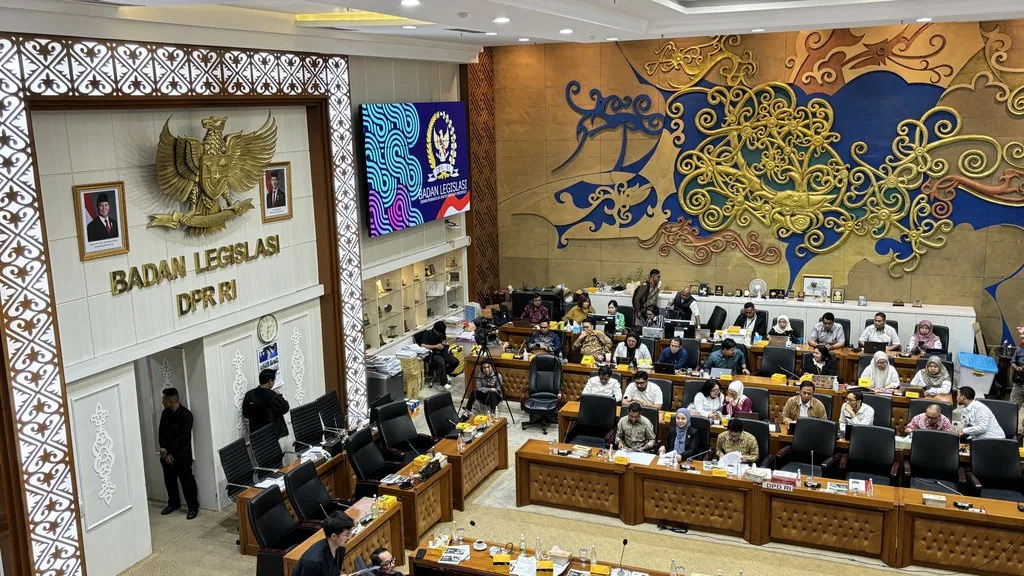
The latest development came during a working meeting of the DPR’s Legislative Body (Badan Legislasi or Baleg) on November 24, when lawmaker Tonny Tesar asked parliament to elevate the proposed bill from an individual legislative proposal to an official Baleg initiative. Baleg Chairman Bob Hasan responded positively, asking participants to agree to include the proposal in the body’s list of legislative initiatives.
The move represents an important step for communities in the Saireri customary territory, comprising Biak Numfor, Supiori, Waropen and the Yapen Islands. Supporters argue that Saireri remains the only one of Papua’s seven customary territories without a corresponding provincial administration under the proposed customary-based development framework.
For Indonesia, the debate is about more than creating another administrative unit. It concerns how government institutions can become more accessible to geographically dispersed communities, how regional development can be distributed more evenly and how the aspirations of Indigenous Papuans can be incorporated into national policymaking.
Nevertheless, the legislative process remains ongoing. The latest parliamentary development should be understood as progress towards consideration in the 2027 Prolegnas, rather than confirmation that the new province has already been legally established.
From a Longstanding Regional Aspiration to National Legislation
The idea of establishing Papua Utara did not emerge suddenly in 2026. It has been discussed for years among customary institutions, regional leaders and communities across the northern coastal and island areas of Papua.
At the centre of the proposal is Saireri, a customary territory whose social, economic and cultural life is closely connected to the sea. Its communities are spread across islands, coastal settlements and areas separated by considerable distances.
For residents, geographical distance can affect access to provincial government offices, healthcare referrals, educational administration and other public services. Transportation between islands also presents practical and financial challenges, making administrative accessibility an important issue in discussions about regional governance.
Supporters believe that a provincial administration based closer to Saireri could improve coordination between local governments and national institutions while providing a stronger focus on the needs of coastal and island communities.
The proposal is also linked to Papua’s broader development framework, which recognises seven customary territories as important cultural and social reference points.
These territories are Mamta or Tabi, Saireri, Domberai, Bomberai, La Pago, Mee Pago and Anim Ha. Supporters of Papua Utara argue that establishing a province for Saireri would complete the intended provincial representation of all seven territories.
Under this concept, the proposed province would become the seventh provincial administration associated with the customary-based development framework.
MRP Approval Provides an Important Institutional Foundation
One of the most important developments occurred on September 22, 2026, when the Papuan People’s Assembly (Majelis Rakyat Papua or MRP) formally approved the proposed establishment of Papua Utara during a plenary session.
The approval was recorded in MRP Decision No. 16/MRP/2026.
The decision followed discussions involving the assembly’s Indigenous Affairs Working Group, Women’s Working Group and Religious Affairs Working Group. Their participation provided an institutional channel for considering the perspectives of different segments of Papuan society.
MRP Chairwoman Nerlince Wamuar has described the proposal as a longstanding aspiration among communities in northern coastal Papua.
The assembly’s approval is significant because the establishment of a new province in Papua involves specific institutional and legal considerations under the Special Autonomy framework.
Article 76(1) of Law No. 2 of 2021 provides the legal framework for regional division and identifies the roles of the MRP and the Papua Provincial House of Representatives (DPRP) in the approval process, as it amended the Special Autonomy Law for Papua.
The MRP subsequently brought the proposal to the national level, seeking further consideration from lawmakers and the Regional Representative Council (DPD RI).
The process demonstrates how regional aspirations can be channelled through established constitutional and legislative institutions.
September Declaration Strengthens Community Support
The institutional process was accompanied by a public declaration of support from customary leaders representing the four regencies of Saireri.
On September 23, 2026, representatives of the Biak, Supiori, Waropen and Yapen customary councils gathered at the Waropen Customary Community Institution’s meeting hall in Abepura, Jayapura City.
The gathering included customary leaders, intellectual figures, women, youth representatives and members of the Saireri Community Communication Forum.
Mananwir of Supiori, Simon Rumkabu, said the aspiration to establish Papua Utara had been pursued by customary communities since 2000.
“This struggle began in 2000 and continues to this day,” Rumkabu said, as reported by Berita Papua.
He explained that customary leaders intended to continue engaging regional government institutions, the provincial legislature and the MRP before taking their aspirations further to the national government.
His remarks reflected the view that the proposed province was not simply a new political initiative but the continuation of a longstanding discussion about regional representation and development.
Karlos Sawaki, chairman of the Waropen Customary Community Institution in Tanah Tabi, also stated that the regents of the four Saireri regencies had expressed support for the proposal.
For these customary representatives, the declaration was intended to consolidate community aspirations and strengthen communication with political representatives in Jakarta.
August and September Advocacy Reaches Jakarta
The momentum behind Papua Utara also grew through a series of engagements with national legislative institutions.
On August 7, 2026, representatives of the Saireri and Mamta Tabi customary communities submitted their support for the proposal during a working visit by members of the DPR’s Legislative Body to Papua.
The submission was intended to ensure that the proposal received formal attention within the national legislative process.
On September 22, the MRP approved the proposed division. The following days saw customary leaders publicly declare their support, while the assembly moved to bring its formal decision to lawmakers in Jakarta.
By late September and early October, representatives of the MRP, regional leaders and members of parliament were engaging with the DPR and DPD to discuss the proposal.
On September 30, the MRP’s approval document was presented to the national legislature. The assembly also pursued discussions with DPD Deputy Speaker Yorrys Raweyai on October 2.
Wamuar said the engagement with the DPD was intended to secure further institutional support for the proposed province.
Raweyai welcomed the aspirations and linked the initiative to more balanced development, better public services and greater opportunities for Indigenous Papuans in political, administrative, legal, social and cultural life.
The involvement of both the DPR and DPD provides additional channels for the proposal to be examined within Indonesia’s national governance system.
Tonny Tesar Brings Regional Aspirations into the Political Process
A key figure in advancing the proposal through parliament is Tonny Tesar, a member of the DPR RI from the NasDem Party faction and a former regent of the Yapen Islands.
Tesar has repeatedly argued that the aspirations of communities in northern Papua deserve serious consideration at the national level.
On October 29, 2026, during a working visit to Waropen, he met with local government representatives and community members to hear their views on the proposed province.
The meeting provided an opportunity to discuss regional expansion alongside other development priorities, including roads, clean water, hospital construction, markets, agriculture, ports and airport connectivity.
Tesar said the visit was intended not only to fulfil his parliamentary responsibilities but also to listen directly to the needs of local communities.
“We hope that the aspiration to establish Papua Utara can be proposed and communicated to the central government. Hopefully, during the discussions and meetings planned for November, this proposal will receive attention as one of the priorities for 2027,” he said, according to NasDem’s October 31 report.
His position is that the proposed provincial administration should be assessed in relation to actual community needs and the readiness of the territory to assume additional governmental responsibilities.
The Waropen meeting also brought forward a discussion about the potential provincial capital. Deputy Regent Yowel Boari expressed hope that Waropen could be considered for the role.
However, he emphasised that the decision should be based on objective considerations, including geographical conditions, infrastructure readiness, human resources and administrative capacity.
The issue of the capital remains part of the broader planning discussion and should not be regarded as settled.
NasDem Formally Proposes the Bill for Prolegnas 2027
The proposal gained further political momentum on November 17, 2026.
During a coordination meeting on the preparation of the 2027 Priority National Legislation Programme at the parliamentary complex in Senayan, Jakarta, the NasDem faction formally proposed the Bill on the Establishment of the Province of Kepulauan Papua Utara for inclusion in the legislative agenda.
The proposal was presented through a factional statement read by Nafa Urbach.
The Papua Utara bill was among 27 proposed bills submitted by the NasDem faction for consideration in the 2027 priority legislative programme.
Tesar welcomed the development, expressing appreciation to Baleg leadership for receiving the aspirations submitted by northern Papua communities, regional leaders and MRP representatives on October 1.
He explained that the proposal had previously been discussed by Baleg in 2022 and had undergone stages of finalisation and consolidation. However, the process was not continued at that time because the government had considered limitations in available funding.
Tesar believes that renewed legislative attention could provide an opportunity to advance the proposal.
He also highlighted the importance of completing the legislative process in time for the proposed province to participate in the stages leading to Indonesia’s 2029 general elections, subject to the applicable legal requirements and electoral timetable.
November 24: Baleg Responds Positively to the Proposal
The most recent development occurred on November 24, during a working meeting involving Baleg, the DPD’s legislative planning body and representatives of the Ministry of Law.
During the meeting, Tesar explained that the Papua Utara proposal had already appeared in the list of submissions for the 2027 Prolegnas. However, it was still recorded as an individual proposal.
He therefore asked Baleg leadership and its members to elevate the bill into an official proposal from the legislative body.
“In the 2027 Prolegnas list, our proposal for the Papua Utara bill has already been included. However, its proposer is still an individual. We propose that the bill on the establishment of Papua Utara Province be included as a Baleg proposal,” Tesar said during the meeting, as reported by Tirto on November 24.
Baleg Chairman Bob Hasan responded by asking participants to agree to include the proposal in Baleg’s list.
“Let’s include it in Baleg so that we can work on it together with the DPD,” Bob said.
The chairman subsequently struck the gavel once, signalling his agreement to include the proposal in Baleg’s submission.
This was an encouraging procedural development. It strengthened the institutional position of the proposal within the legislative planning process rather than leaving it solely as an individual initiative.
However, the meeting did not yet produce a final decision on the entire 2027 Priority Prolegnas list. Further discussions involving Baleg, the government and the DPD were scheduled for November 25.
Consequently, the final inclusion of the Papua Utara bill in the approved 2027 priority legislative programme remains subject to subsequent deliberations and formal decisions.
Seven Customary Territories and the Pursuit of Balanced Development
The proposal for Papua Utara is closely connected to the wider discussion about organising regional development around Papua’s seven customary territories.
The framework recognises that Papua’s communities have distinct geographical, cultural and economic characteristics. Development planning that takes these differences into account may help regional administrations respond more effectively to local needs.
Supporters argue that six customary territories already have corresponding provincial administrations, while Saireri remains without its own province under this model.
For them, the establishment of Papua Utara would provide a more complete administrative arrangement while strengthening recognition of the region’s cultural identity.
This approach is also relevant to Indonesia’s Special Autonomy framework, which seeks to improve the welfare and participation of Indigenous Papuans.
The MRP has highlighted three important considerations accompanying the proposal: protection of customary rights, affirmative support for Indigenous Papuans and transparent management of Special Autonomy funds.
These priorities suggest that the proposed province should not be evaluated solely through the creation of new government offices. Its institutional design should also provide meaningful opportunities for Indigenous communities to participate in policymaking and development programmes.
Economic Opportunities Along Papua’s Northern Coast
Beyond administrative representation, supporters believe that Papua Utara could help unlock the economic potential of Saireri.
The four proposed regencies possess geographical characteristics that create opportunities in fisheries, marine tourism, agriculture, inter-island trade and creative industries.
Biak Numfor and Supiori have important maritime and tourism potential, while the Yapen Islands and Waropen offer opportunities connected to coastal resources, fisheries and agricultural activities.
A more geographically focused provincial administration could potentially improve coordination in developing ports, transportation networks, cold-storage facilities, seafood processing, telecommunications and tourism infrastructure.
These investments could strengthen connections between local producers and wider markets.
The region’s maritime identity also creates opportunities to promote sustainable tourism while preserving customary traditions and the natural environment.
However, geographical potential alone cannot guarantee economic progress. Infrastructure investment, reliable public institutions, skilled workers and predictable government policies will remain necessary.
A new province would therefore need a realistic economic development strategy supported by clear priorities and sustainable financing.
The Importance of Administrative Readiness and Public Accountability
While support for the proposal has grown, its eventual establishment will require careful consideration of administrative, financial and legal requirements.
A new provincial government would need an effective organisational structure, qualified civil servants, sufficient public funding and clear coordination arrangements with existing regional administrations.
Fiscal capacity is particularly important. The government must ensure that the creation of a new province does not result in excessive administrative expenditure at the expense of essential public services.
Education, healthcare, transportation, infrastructure and economic empowerment should remain central to the proposed province’s development agenda.
The selection of a provincial capital will also require transparent evaluation, considering accessibility, infrastructure readiness, geographical suitability and the interests of all four regencies.
Meaningful participation by customary institutions, women, young people and local communities will be equally important.
Ultimately, the value of regional expansion should be measured by improvements in people’s lives rather than by the number of new administrative institutions established.
Conclusion
The growing momentum behind the Papua Utara bill marks an important development in the relationship between regional aspirations and Indonesia’s national legislative process.
The proposal has gradually gained broader institutional attention, starting from the MRP’s formal approval in September, followed by Tonny Tesar’s engagement with regional leaders and the positive response from Baleg on November 24.
The initiative reflects a desire among supporters to strengthen Saireri’s representation within Papua’s seven customary territories while creating opportunities for more balanced development across northern coastal and island communities.
For the Indonesian government and parliament, the next challenge is to ensure that the proposal undergoes a thorough legislative assessment, including its administrative readiness, financial sustainability and potential contribution to public welfare.
If the necessary requirements are met, Papua Utara could become an additional instrument for improving public services, strengthening Indigenous participation and developing the economic potential of northern Papua.
The ultimate measure of success, however, will not be the establishment of a new provincial administration alone. It will be whether kids receive better chances to learn, patients obtain better access to health care, local businesses acquire more customers, and Indigenous communities have a real say in how their area grows.
The proposed Papua Utara Province therefore represents an important opportunity to translate regional aspirations into practical development outcomes within Indonesia’s constitutional and democratic framework.
Read Also
MRP Takes Papua Utara Province Proposal to Jakarta
Papua Utara Push Gains Momentum Toward 2027

