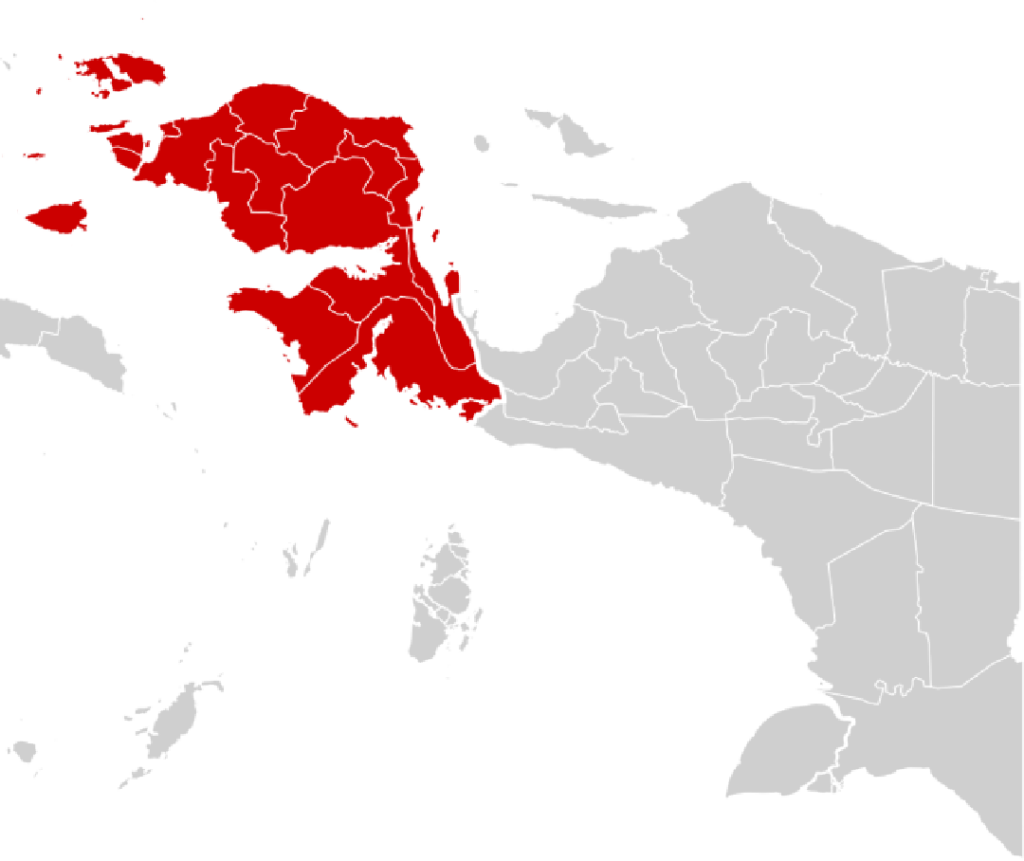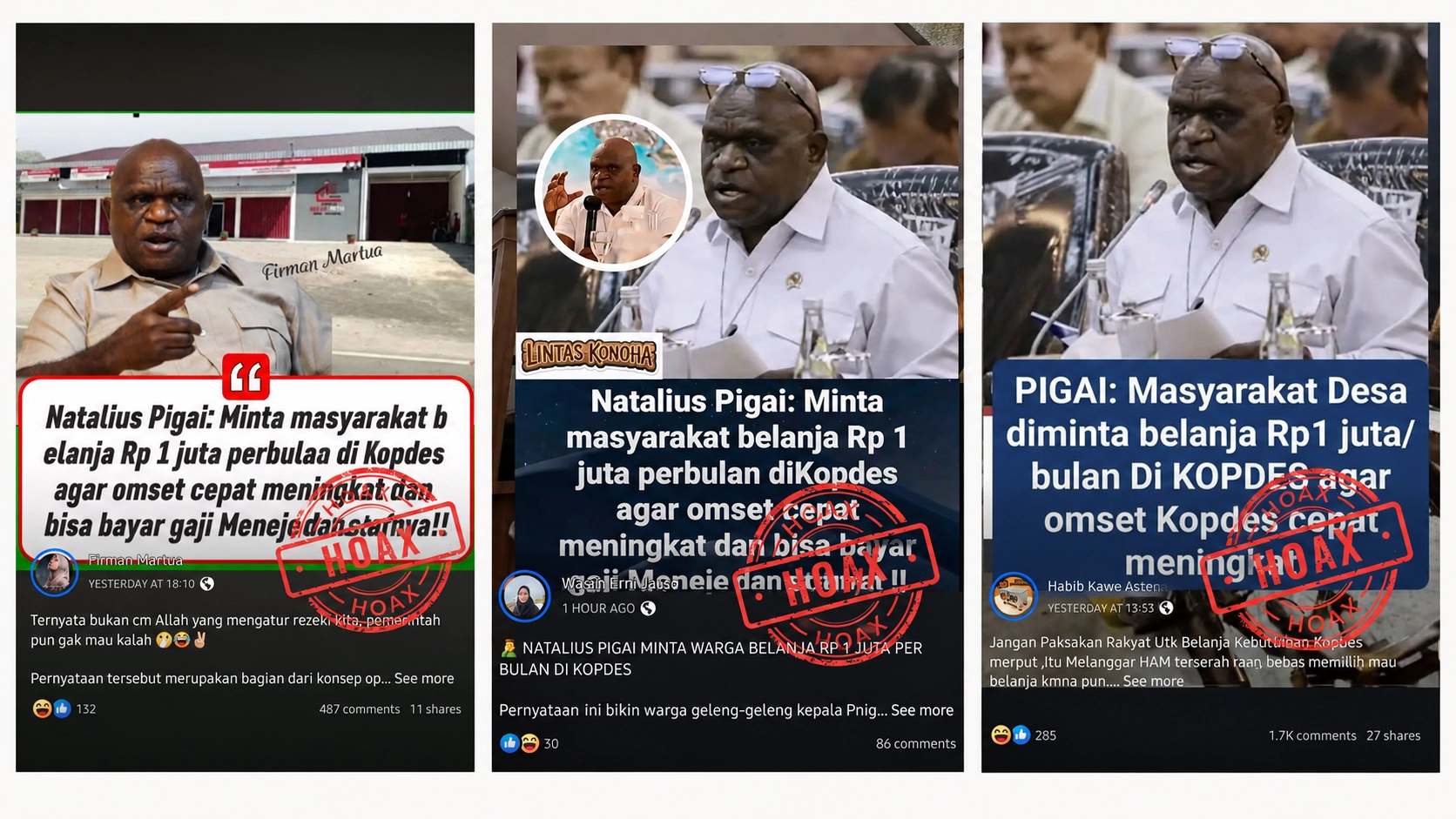
As digital communication becomes increasingly integrated into everyday life, ensuring the accuracy of information has become an important public challenge. The issue is particularly relevant in Papua, where social media and online messaging platforms have become major sources of news and public discussion. In response to this growing trend, Papua’s Communication and Informatics Office (Diskominfo Papua) reported identifying 12 digital hoaxes circulating between January and July 2026, while encouraging residents to remain vigilant and avoid spreading unverified information.
According to provincial officials, the identified misinformation covered a range of public issues that had the potential to create confusion, provoke unnecessary public anxiety, or distort understanding of events affecting Papua. The agency emphasized that responsible information sharing has become increasingly important as digital platforms allow content to spread rapidly across communities.
The initiative forms part of broader efforts by Indonesian authorities to strengthen digital literacy, encourage critical evaluation of online information, and promote responsible use of social media throughout the country.
Papua Strengthens Efforts Against Online Hoaxes
The rapid expansion of internet access and smartphone usage has transformed how information is consumed throughout Papua.
News, public announcements, videos, and commentary now circulate almost instantly through messaging applications and social media platforms, allowing information to reach large audiences within minutes.
While digital technology has expanded access to information, it has also created new challenges associated with misinformation and fabricated content.
Recognizing these developments, Diskominfo Papua has intensified monitoring efforts aimed at identifying misleading information circulating in the province’s digital space.
Officials explained that misinformation can influence public perceptions, generate unnecessary concern, and complicate communication during important public events if inaccurate information spreads unchecked.
The agency therefore encourages citizens to exercise greater caution before forwarding content whose origin or accuracy cannot be verified.
Rather than responding emotionally to sensational online claims, residents are advised to compare information with credible news organizations and official government announcements.
Officials also remind the public that responsible digital participation contributes to healthier online discussions while reducing opportunities for misinformation to circulate widely.
Twelve Hoaxes Identified Between January and July 2026
According to the Papua Provincial Government, 12 separate hoaxes were identified during the period from January through July 2026.
Although the individual topics varied, authorities noted that each case involved information that was determined to be inaccurate, misleading, or presented without proper factual verification.
The findings illustrate that misinformation continues to emerge across multiple digital platforms despite growing public awareness regarding online verification.
Officials stressed that identifying misleading information represents only one component of a broader strategy.
Equally important is educating citizens about practical methods for recognizing questionable content before sharing it with others.
Many hoaxes rely on emotionally charged language, incomplete information, manipulated photographs, or claims lacking identifiable sources.
In some instances, old photographs or unrelated events are presented as recent developments in order to create misleading impressions.
For this reason, Diskominfo encourages the public to pay attention to publication dates, original sources, official statements, and credible media reporting before accepting online claims as factual.
The agency also continues collaborating with relevant institutions to improve public awareness regarding responsible digital communication.
Why Digital Literacy Matters
Officials emphasize that digital literacy involves far more than knowing how to use smartphones or social media applications.
It also includes the ability to evaluate information critically, distinguish verified reporting from unsupported claims, understand the credibility of different information sources, and recognize attempts to manipulate public opinion.
As digital participation continues expanding throughout Papua, these skills become increasingly valuable for people of all ages.
Students rely on online resources for education.
Entrepreneurs promote businesses through digital platforms.
Government agencies communicate public services online.
Communities use messaging applications to exchange information during emergencies and everyday activities.
Because digital communication now influences many aspects of daily life, strengthening information literacy contributes directly to better public decision making.
Officials note that a well informed society is generally better equipped to respond calmly to emerging issues while reducing the spread of rumors and inaccurate narratives.
Digital literacy therefore supports not only individual media consumption but also broader public resilience within an increasingly connected society.
Responsible Information Sharing Supports Social Stability
Provincial authorities also highlighted the broader social implications of responsible online behavior.
Sharing information without verification may unintentionally contribute to confusion, misunderstanding, or unnecessary public concern.
Conversely, verifying information before redistributing it helps strengthen public trust while encouraging healthier digital conversations.
Officials encourage internet users to pause before forwarding messages that contain sensational claims, anonymous sources, or emotionally provocative language.
Simple verification steps, including checking official government websites, comparing multiple reputable news sources, and confirming publication dates, can significantly reduce the spread of misinformation.
These recommendations reflect international best practices in digital literacy promoted by governments, educational institutions, and media organizations worldwide.
For Papua, continued improvements in digital awareness complement broader efforts to expand internet access while encouraging responsible participation within the digital economy.
Building Public Trust Through Verified Information
Papua’s efforts to identify and address online misinformation form part of a broader strategy to strengthen public trust in the digital information ecosystem. As internet access expands and online platforms become increasingly central to daily communication, ensuring that citizens receive accurate and verified information has become an important aspect of good governance.
Officials from the Papua Communication and Informatics Office (Diskominfo Papua) emphasized that combating misinformation is not solely the responsibility of government institutions. Instead, it requires active participation from media organizations, educational institutions, civil society, community leaders, and internet users themselves.
Public trust is built when information is transparent, verifiable, and supported by credible sources.
For that reason, Diskominfo continues encouraging residents to rely on official government announcements, established news organizations, and trusted public institutions when seeking information about developments affecting Papua.
The agency also reminds citizens that forwarding false or misleading content, even unintentionally, can amplify confusion and make it more difficult for communities to distinguish fact from rumor.
In today’s digital environment, every social media user plays a role in shaping the quality of public information.
Simple habits such as reading complete articles rather than headlines alone, checking publication dates, confirming the identity of the original source, and comparing reports across multiple credible outlets can significantly reduce the spread of misinformation.
These practices are increasingly recognized internationally as essential components of responsible digital citizenship.
Digital Literacy Supports Papua’s Development
Digital literacy has become an increasingly important element of Papua’s broader development agenda.
As public services, education, healthcare, commerce, and community communication become more digitally connected, citizens need the skills to navigate information responsibly.
Government officials view digital literacy not only as a technological competency but also as a foundation for informed decision making and constructive public participation.
Educational institutions across Indonesia have likewise expanded efforts to encourage critical thinking, responsible internet use, and media literacy among students.
These initiatives complement government programs designed to improve digital inclusion while minimizing risks associated with misinformation.
For Papua, where digital infrastructure continues expanding alongside improvements in telecommunications and internet access, strengthening digital literacy helps ensure that technological progress is accompanied by greater public resilience.
A digitally informed society is generally better prepared to evaluate information independently, engage in respectful public discussion, and participate constructively in community life.
Officials also note that responsible online behavior contributes to a healthier digital environment where public debate can be based on facts rather than speculation or manipulated narratives.
Such an environment benefits citizens, businesses, educational institutions, and government agencies alike by promoting greater transparency and accountability.
Collaboration Remains Essential
Addressing misinformation requires sustained cooperation among multiple stakeholders.
Government agencies continue monitoring misleading content while providing verified information through official communication channels.
Professional media organizations contribute by maintaining journalistic standards based on fact checking, source verification, and editorial accountability.
Educational institutions play an equally important role by helping students develop critical thinking skills necessary to evaluate online information.
Community organizations, religious leaders, and customary leaders can also contribute by encouraging responsible communication within their respective communities.
Technology companies and social media platforms likewise continue developing mechanisms to reduce the visibility of demonstrably false information while promoting authoritative sources during major public events.
Together, these complementary efforts strengthen society’s overall resilience against misinformation.
Rather than relying solely on content removal, experts increasingly emphasize prevention through education, public awareness, and improved digital literacy.
Papua’s experience illustrates how local governments are incorporating these principles into broader public communication strategies.
Looking Ahead
As digital connectivity continues expanding across Papua, the volume and speed of online information are expected to increase further.
This trend offers significant opportunities for education, business development, public services, and community engagement.
At the same time, it reinforces the importance of maintaining strong information verification practices.
Provincial authorities have indicated that monitoring misinformation and strengthening public awareness will remain ongoing priorities.
Future initiatives are expected to continue emphasizing digital literacy campaigns, cooperation with media organizations, public education programs, and improved access to verified information.
These efforts support Indonesia’s broader vision of developing a digitally connected society that benefits from technological innovation while remaining resilient against misinformation.
Conclusion
The identification of 12 digital hoaxes circulating in Papua between January and July 2026 underscores the growing importance of digital literacy in an increasingly connected society.
By encouraging citizens to verify information before sharing it, the Papua Communication and Informatics Office seeks to strengthen public awareness while reducing the spread of misinformation that could create unnecessary confusion or misunderstanding.
The initiative reflects a broader commitment to building a healthier digital ecosystem where accurate information, responsible communication, and critical thinking support informed public participation.
As Papua continues expanding internet access and digital services, strengthening media literacy will remain an essential component of sustainable social development.
Through cooperation among government institutions, educational organizations, professional media, community leaders, and the public, Papua is continuing efforts to foster a digital environment that values credible information, constructive dialogue, and responsible online engagement.