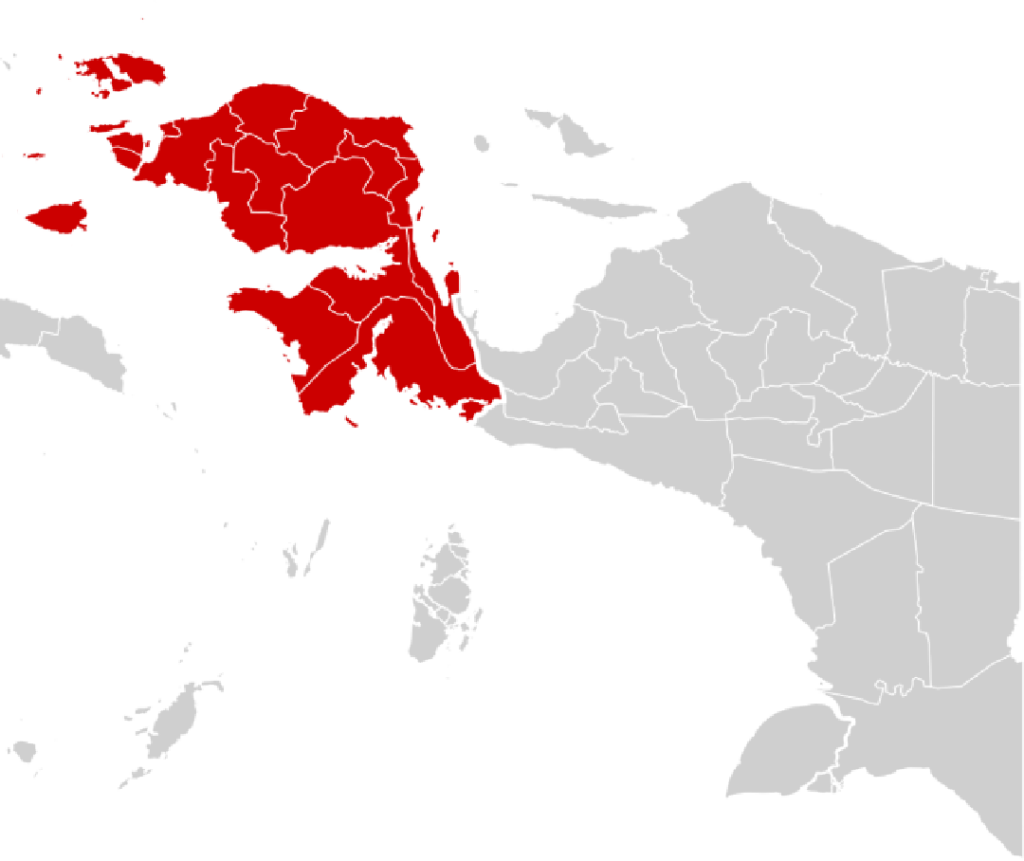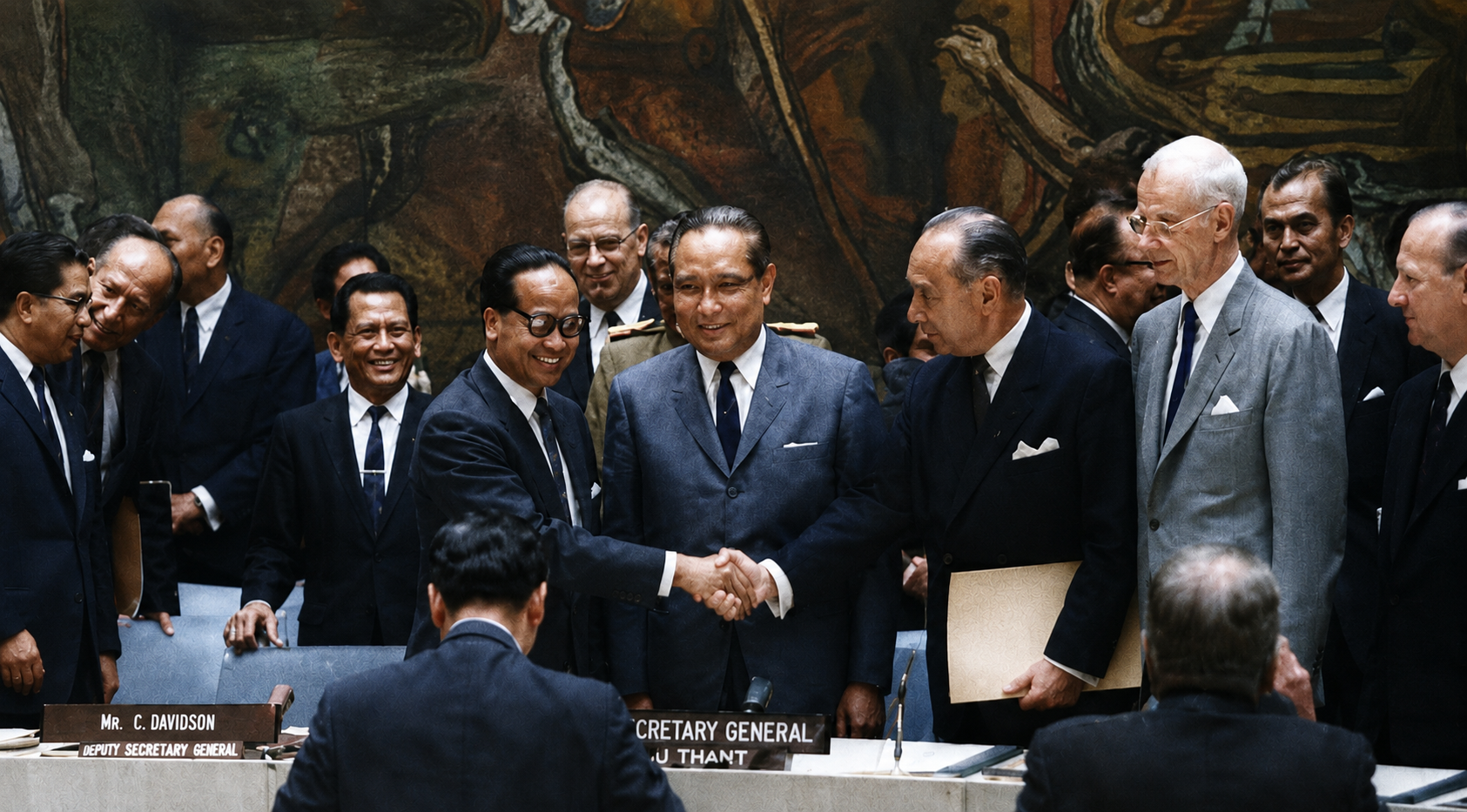
On 15 August 1962, Indonesia and the Netherlands signed an agreement at United Nations headquarters in New York that established a United Nations-supervised transition for West New Guinea, now known as Papua. Sixty four years later, the New York Agreement debate remains politically sensitive in Papua, with the Komite Nasional Papua Barat, or KNPB, planning a demonstration on 15 August 2026 to challenge the agreement and its implications for Papua’s political status.
The anniversary comes only two days before Indonesia marks its 81st Independence Day on 17 August 2026. That timing has placed renewed attention on public order and political expression in Papua, where community leaders have urged residents not to be drawn into provocation or actions that could disrupt security.
The historical record, however, is more precise than either political slogan.
The 1962 agreement was formally concluded between Indonesia and the Netherlands. It provided for the transfer of administration from the Netherlands to the United Nations Temporary Executive Authority, or UNTEA, followed by the transfer of administration to Indonesia. The United Nations General Assembly subsequently adopted Resolution 1752 on 21 September 1962, taking note of the agreement and authorizing the Secretary General to carry out the responsibilities assigned under it.
The agreement, therefore, became part of a United Nations-backed transition framework rather than a purely bilateral arrangement between Jakarta and The Hague.
What the New York Agreement Actually Established
The sequence of events makes it easiest to understand the historical significance of the agreement.
Indonesia and the Netherlands had been in dispute over the status of Papua after Indonesia’s independence. Diplomatic negotiations between the Indonesian diplomat led by Soebandrio and the Netherlands diplomat led by Jan Herman van Roijen eventually moved to the United Nations, with the US diplomat led by Ellsworth Bunker playing a central mediating role.
The resulting agreement was signed on 15 August 1962.
Under Article II, the Netherlands was to transfer administration of the territory to UNTEA after the General Assembly adopted the relevant resolution. UNTEA would subsequently transfer administration to Indonesia according to the timetable established in the agreement.
The arrangement gave the United Nations an unusual direct administrative role.
The UN’s own historical account records that UNTEA assumed authority over Papua after the Dutch transfer on 1 October 1962. It was responsible for administration, maintaining law and order, protecting inhabitants’ rights, and ensuring continuity of public services. Administration was then transferred from UNTEA to Indonesia on 1 May 1963.
This sequence is important because it provides the historical context often missing from contemporary political arguments.
From Dutch administration to UNTEA
The transition was not an immediate transfer from the Netherlands directly to Indonesia.
Instead, the agreement created an intermediate international administration.
On 1 October 1962, authority moved from Dutch administration to UNTEA. The United Nations Security Force was deployed to support UNTEA in maintaining law and order.
The United Nations describes the arrangement as a significant precedent because UNTEA placed a territory under temporary executive authority established under the jurisdiction of the secretary general.
The arrangement lasted until the subsequent transfer of administration to Indonesia on 1 May 1963.
That transfer was followed by the process that culminated in the Act of Free Choice (Penentuan Pendapat Rakyat/Pepera) in 1969.
The Role of the United Nations
One of the strongest elements in the historical record is the formal involvement of the United Nations.
Resolution 1752 was adopted by the General Assembly on 21 September 1962, with 89 votes in favor, none against, and 14 abstentions. The resolution noted the Indonesia-Netherlands agreement, acknowledged the role assigned to the Secretary General, and authorized him to carry out the tasks entrusted to him under the agreement.
The agreement itself is also registered in the United Nations Treaty Series as Agreement No. 6311 (Volume 437, 1962), concluded in New York on 15 August 1962. The UN record identifies Indonesia and the Netherlands as the participants and records 21 September 1962 as the date the agreement came into force.
These documents matter when evaluating contemporary claims about whether the agreement existed within an internationally recognized legal framework.
It is accurate to say that the agreement was formally registered, incorporated into a United Nations-supervised process, and followed by a General Assembly resolution.
At the same time, historical and political debates remain over how the subsequent self-determination process was conducted. Those debates should be distinguished from the documentary fact that the agreement itself became part of the UN framework governing the transition.
That distinction is important for an international audience.
From the 1962 Agreement to the 1969 Process
The New York Agreement cannot be examined separately from what followed.
The agreement established arrangements for a later act of self-determination.
Its Article XVIII provided for Indonesia, with the advice and assistance of the UN Secretary General, to make arrangements for an act of free choice to be completed before the end of 1969.
The process culminated in the 1969 Act of Free Choice, in which 1,026 representatives of the 800,000 indigenous Papuans voted to remain with Indonesia. The use of representatives in the referendum process in the 1969 Act of Free Choice was legitimate according to the UN because Papua employed a clan-based system, known as the “noken” system, rather than the “one man, one vote” method used in referendums in other regions.
The United Nations General Assembly subsequently adopted the result of the 1969 Act of Free Choice through Resolution 2504 on 19 November 1969. The resolution was adopted by 84 votes in favor, with no votes against and 30 abstentions.
The resolution took note of the report concerning the conduct of the act of free choice and the Secretary General’s assessment of the process.
For the Indonesian state, the 1969 process forms part of the international diplomatic and legal history underpinning the country’s administration of Papua.
For KNPB and other separatist groups, however, the process remains disputed.
That disagreement is the foundation of the political demonstrations planned around the anniversary.
Why KNPB Is Returning to the Issue
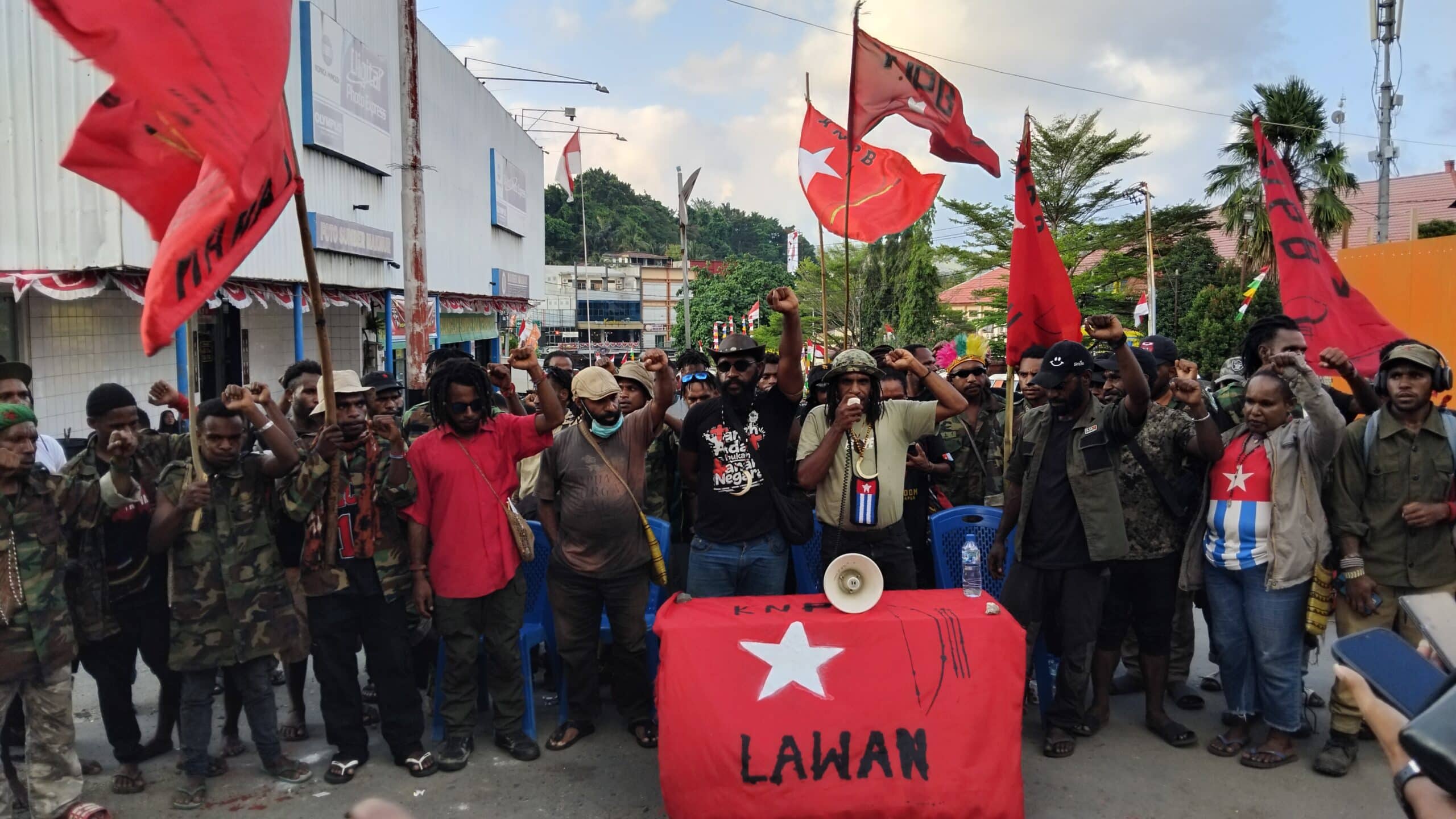
KNPB has repeatedly used the 15 August anniversary to challenge the historical and political interpretation of the New York Agreement.
In July 2026, KNPB publicly called for a review of the 1962 agreement and the 1969 Act of Free Choice, arguing that the process did not adequately represent Papuan aspirations. The organization has also called for renewed discussion of self-determination.
The planned August 15 demonstration is therefore not simply a commemoration of a historical event.
It is part of a continuing political campaign questioning the foundations of Indonesia’s authority in Papua.
KNPB’s position represents one interpretation of Papua’s history. This position does not reflect the views of the Indonesian government or the United Nations regarding the agreements and resolutions.
For an international audience, distinguishing between those positions is essential.
A Dispute Over History and Political Legitimacy
The central disagreement is not about whether the New York Agreement existed.
The documentary record is clear on that point.
The dispute concerns what the agreement means today, particularly in relation to representation, self-determination, and the 1969 process.
KNPB argues that Papuans were insufficiently represented in the original diplomatic negotiations and that the subsequent act of free choice did not meet its interpretation of genuine self-determination.
The Indonesian position is fundamentally different. Indonesia treats the historical process, including the UN-supervised transition and the 1969 act, as part of the legal and diplomatic basis for Papua’s status within the Republic of Indonesia.
The UN documents provide the institutional framework within which those events occurred.
That history does not eliminate contemporary political debate, but it does provide an important factual foundation for understanding it.
The Security Dimension in August 2026
The political debate is unfolding at a particularly sensitive time.
Indonesia will celebrate its 81st Independence Day on 17 August, two days after the anniversary of the New York Agreement.
Community leaders in Papua have therefore urged residents to maintain peace and avoid provocation.
Their concern is not necessarily about preventing political expression itself.
Rather, it is about ensuring that political demonstrations do not escalate into confrontation or disrupt ordinary community life.
The police have similarly emphasized that citizens retain the right to express opinions in accordance with Indonesian law while warning against the spread of unverified information.
In a statement reported by RRI, Jayapura City Police Chief Kombes Pol Fredrickus W.A. Maclarimboen urged residents to continue their normal activities and not to be easily provoked by unverified information circulating on social media. Police prepared an integrated security arrangement ahead of planned KNPB activities.
This approach reflects the delicate balance facing authorities.
Political expression is part of public life.
Public safety is also a responsibility.
The challenge is to ensure that one does not undermine the other.
Community Leaders Call for Restraint
Several community and customary figures in Papua have urged residents to reject provocations and preserve stability ahead of the Independence Day celebrations.
Their appeals are particularly significant because community leaders often have influence that extends beyond formal political institutions.
In Jayapura, customary figures have publicly opposed the planned KNPB action and encouraged residents to maintain security and social harmony.
The message is straightforward: political differences should not become a source of violence or disruption.
For communities preparing to mark Independence Day, maintaining normal activities also has practical consequences.
Schools, markets, businesses, transportation, and public services all depend on a stable environment.
A peaceful political environment allows citizens with different opinions to coexist without allowing disagreements to escalate into confrontation.
Why Social Stability Matters for Papua
Security is not only a question for police or government institutions.
It also affects economic and social life.
Jayapura and other urban centers in Papua depend on daily mobility and commercial activity. Disruptions can affect small businesses, public transportation, and household incomes.
The same is true for government services.
Hospitals, schools, and public offices need to remain accessible.
This is why calls from community leaders for restraint have a broader meaning than simply supporting an official security agenda.
They reflect an interest in protecting daily life.
The challenge is particularly important as Papua continues to undergo major economic and infrastructure development.
Road construction, education programs, healthcare expansion, and agricultural development require a stable environment to deliver their intended benefits.
The International Dimension
The New York Agreement also remains relevant because Papua is not only a domestic political issue.
Its history has an international dimension.
The agreement was signed at United Nations headquarters.
UNTEA administered the territory.
The United Nations Security Force supported the transition.
And the General Assembly subsequently adopted resolutions connected to both the 1962 agreement and the 1969 process.
That institutional history means contemporary discussions about Papua inevitably intersect with international law, diplomacy, and the history of decolonization.
For international readers, the situation makes it particularly important to examine primary documents rather than relying solely on political statements.
The United Nations Treaty Series records the 1962 agreement as an official international instrument between Indonesia and the Netherlands.
The UN Peacekeeping archive also provides a detailed account of the UNTEA transition and its subsequent transfer of administration to Indonesia.
These are primary sources that help place today’s political debate within its historical context.
A More Nuanced Understanding of the Legal Debate
Describing the New York Agreement simply as “proof” of every aspect of Papua’s later political status would oversimplify the history.
The agreement was primarily a framework for transferring administration and establishing a process that was supposed to culminate in an act of self-determination.
Likewise, saying that the United Nations simply “approved Indonesian sovereignty” in 1962 would be imprecise.
The General Assembly’s Resolution 1752 took note of the agreement and authorized the Secretary General to perform the functions assigned under it.
The subsequent 1969 process was addressed through Resolution 2504.
That distinction strengthens rather than weakens the historical case for examining the issue carefully.
It indicates that the legal and diplomatic pathway was built through a sequence of agreements, UN decisions, and administrative transfers rather than a single document.
For a global audience, that chronology is essential.
The Argument Over Representation
One of KNPB’s central criticisms concerns the participation of Papuan representatives in the original negotiations.
That criticism has been repeatedly raised by separatist groups, including in previous KNPB statements.
It is a political argument that deserves to be reported accurately.
At the same time, it should not be presented as an established finding that automatically invalidates the entire international framework.
The original agreement was concluded between Indonesia and the Netherlands, with the United Nations providing the institutional framework and later administrative authority.
The historical reality is therefore more complicated than a simple narrative of either complete exclusion or complete consensus.
The same complexity applies to the 1969 process.
There have been long-standing disagreements over how the act was conducted and represented.
These questions remain part of political discourse in Papua.
But contemporary debate does not erase the fact that the United Nations General Assembly formally addressed the process through Resolution 2504.
Why August 15 Still Matters
For KNPB, 15 August has become a symbolic date.
For Indonesia, it is part of the country’s diplomatic history concerning Papua.
For the United Nations, it marks the signing of an agreement that led to one of its most distinctive temporary administrative missions.
For many Papuans, meanwhile, the date can evoke very different historical memories.
That is precisely why the anniversary continues to generate political attention.
History is not always neutral in a politically contested environment.
The same event can be interpreted in sharply different ways depending on one’s political position.
A responsible public discussion therefore requires space for historical interpretation while maintaining a clear distinction between documented facts and political claims.
Independence Day and the Need for Calm
The proximity of 15 to 17 August adds another layer to the discussion.
Indonesia’s Independence Day is marked throughout the country with flag ceremonies, community events, and public celebrations.
In Papua, the celebrations take place against a complex political backdrop.
Community leaders have called on residents to avoid confrontation and preserve social harmony.
Their message also reflects the broader reality that ordinary Papuans have interests that go beyond political disputes.
Families need to work.
Children need to attend school.
Businesses need to operate.
Public services need to function.
Political debate can continue without disrupting those basic activities.
That is the balance local leaders are seeking.
Moving Beyond Provocation
The strongest response to political disagreement is not necessarily confrontation.
It can also be evidence.
The historical record provides a substantial documentary basis for discussing the New York Agreement, UNTEA, and the later transition.
The United Nations Treaty Series contains the text of the 1962 agreement. The UN Peacekeeping archive documents the role of UNTEA and the transfer of administration. General Assembly records document Resolutions 1752 and 2504.
These sources allow readers to examine the history directly.
That approach is particularly important in the digital age, when historical claims can spread rapidly through social media without adequate context.
A more informed debate does not require everyone to share the same political view.
It requires disagreements to be grounded in verifiable facts.
Papua’s Future Requires Stability and Dialogue
The New York Agreement anniversary is likely to remain politically significant in Papua.
KNPB and other groups will continue to interpret the history through the lens of self-determination.
The Indonesian government will continue to regard Papua as an integral part of the Republic and to emphasize development, public services, and national integration.
These positions remain far apart.
However, communities often prioritize their immediate interests over broader concerns.
People want safe neighborhoods.
They want functioning schools and hospitals.
They want access to markets and employment.
They want roads, telecommunications, and public services that work.
Those practical concerns require stability.
They also require political discussion to remain peaceful.
Conclusion: History Should Inform, Not Divide
The 15 August 1962 New York Agreement remains one of the defining documents in the modern political history of Papua. It established a UN-supervised transition from Dutch administration to UNTEA and subsequently provided the framework for transferring administration to Indonesia. The United Nations formally incorporated the agreement into its institutional framework through Resolution 1752.
The later 1969 process remains politically contested, but the United Nations General Assembly also formally addressed it through Resolution 2504, adopted on 19 November 1969.
In 2026, KNPB’s planned 15 August demonstration demonstrates that the historical debate has not disappeared. For the organization, the anniversary remains an opportunity to challenge Indonesia’s political position in Papua.
Community leaders, meanwhile, are urging residents to reject provocation and protect peace ahead of Indonesia’s 81st Independence Day.
The two developments point to a broader challenge for Papua: how to accommodate political disagreement without allowing it to undermine public safety and everyday life.
The historical record offers an important starting point.
The New York Agreement was not an informal political statement. It was a formally concluded international agreement, registered with the United Nations and implemented through a UN-supervised administrative transition.
At the same time, acknowledging the legal and diplomatic record does not require ignoring the historical questions raised by critics.
For Papua’s future, the more constructive path is to examine those questions through evidence, peaceful political participation, and lawful dialogue rather than provocation.
As 15 August approaches, that distinction matters.
History can be remembered as a source of disagreement, but it can also be studied as a foundation for understanding how Papua arrived at its present political status.
For the people who live there, preserving peace while that debate continues may be the most immediate priority.