Rupiah Sovereignty Expedition Strengthens Financial Inclusion Across Papua
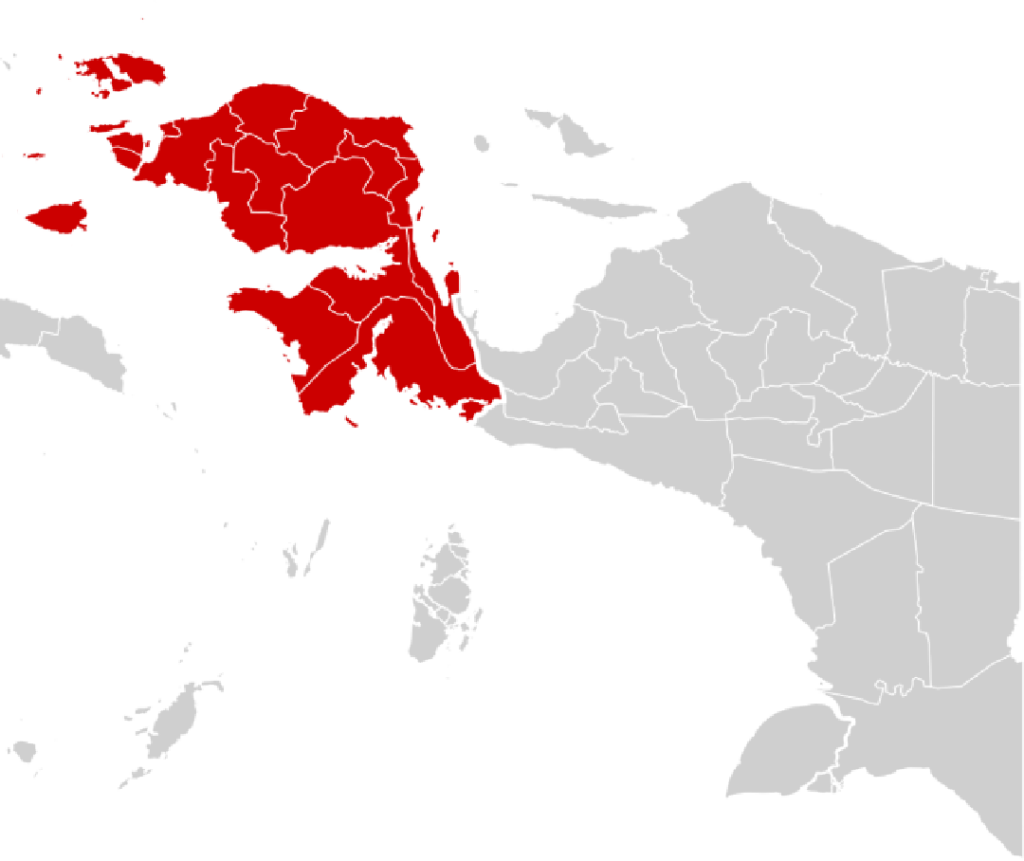
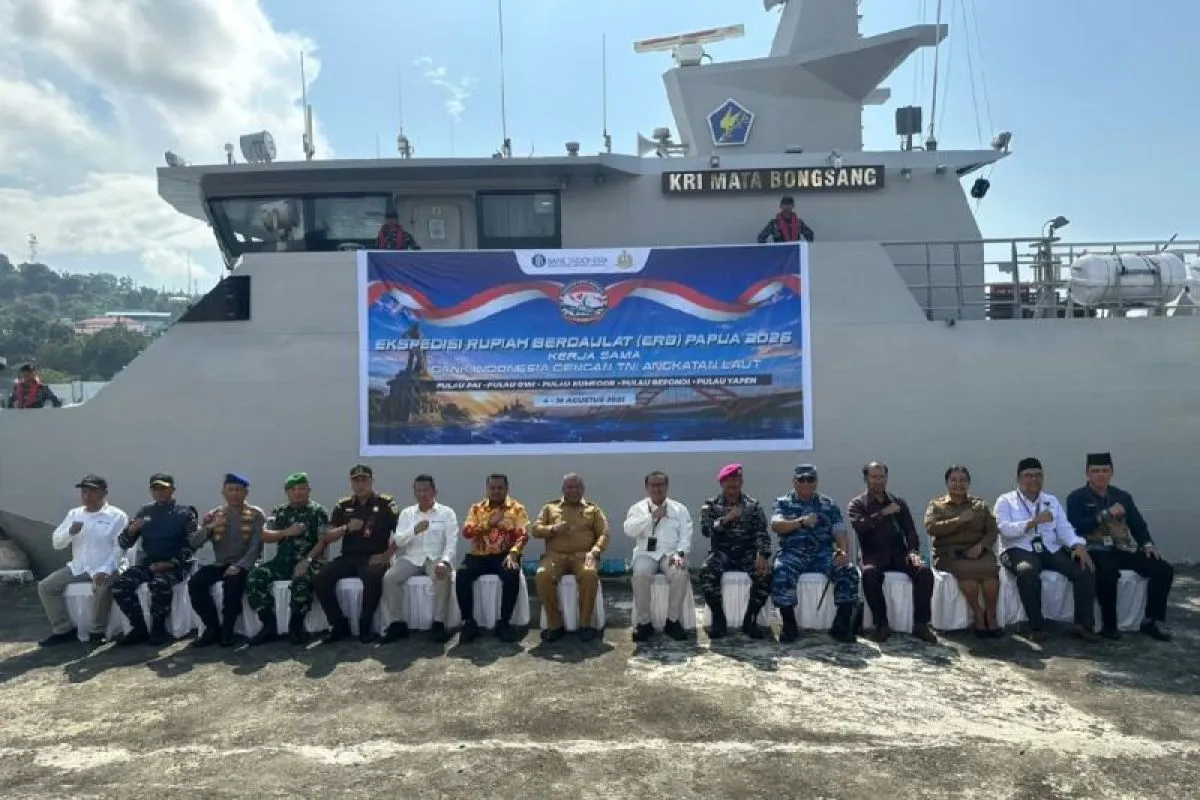
Ensuring that every Indonesian citizen has access to the national currency is more than a financial responsibility. It is also a reflection of equal public service and national connectivity across one of the world’s largest archipelagic nations. This commitment is once again being demonstrated through the Rupiah Sovereignty Expedition, an initiative led by Bank Indonesia in collaboration with the Indonesian Navy (TNI AL) to deliver cash services to Papua’s frontier, outermost, and underdeveloped regions, commonly known as the 3T areas.
For the 2026 expedition, Bank Indonesia’s Papua Representative Office prepared Rp20 billion in cash to serve communities scattered across remote islands and coastal settlements. Beyond distributing fit-for-circulation banknotes, the program seeks to strengthen public confidence in the Rupiah, improve financial inclusion, and ensure that citizens living in geographically isolated areas enjoy equal access to Indonesia’s monetary system.
The expedition illustrates how financial infrastructure extends beyond banking institutions and urban centers. In an archipelago where thousands of islands are separated by vast stretches of ocean and challenging terrain, maintaining the circulation of quality currency requires close cooperation between financial authorities and national maritime institutions.
Rupiah Sovereignty Expedition Reaches Papua’s Most Remote Communities
Papua presents unique logistical challenges unlike those faced in many other parts of Indonesia.
Numerous communities are located on small islands or along remote coastlines where transportation depends heavily on sea routes. Delivering cash to these locations requires careful planning, specialized vessels, and coordination among multiple government agencies.
Recognizing these challenges, Bank Indonesia once again partnered with the Indonesian Navy, whose operational experience and maritime capabilities enable the expedition to safely reach distant communities that commercial financial services cannot easily access.
According to Bank Indonesia, the expedition is designed to ensure the availability of high quality Rupiah banknotes while replacing damaged or unfit currency that has remained in circulation for extended periods.
Residents in remote areas often have limited opportunities to exchange worn banknotes because banking facilities may be located hundreds of kilometers away.
By bringing cash services directly to these communities, the expedition improves access to clean and secure currency while reducing barriers to everyday economic activities.
The initiative also demonstrates that public financial services are intended to reach citizens regardless of geographical distance.
For communities living in Papua’s outermost islands and coastal settlements, access to quality currency supports daily trade, fisheries, small businesses, transportation services, and household transactions.
Financial Inclusion Beyond Urban Centers
Although digital payment systems continue expanding across Indonesia, cash remains the primary means of transaction in many remote regions of Papua.
Limited telecommunications infrastructure, geographical isolation, and uneven banking coverage mean that physical currency continues playing a central role in supporting local economies.
The Rupiah Sovereignty Expedition therefore complements Indonesia’s broader financial inclusion strategy by ensuring that cash services remain available where digital alternatives are not yet fully accessible.
Officials explain that financial inclusion is not simply about opening bank accounts.
It also involves ensuring that communities have reliable access to legal currency, financial education, and trusted monetary services regardless of where they live.
For small traders, fishermen, farmers, teachers, healthcare workers, and local entrepreneurs, the availability of quality banknotes directly supports daily economic activities.
Replacing damaged currency also reduces transaction difficulties while strengthening public confidence in the monetary system.
By serving communities across Papua’s frontier and outermost regions, the expedition helps reduce disparities in access to financial services between urban and remote areas.
This objective aligns with Indonesia’s broader commitment to promoting equitable development across the archipelago.
Cooperation Between Bank Indonesia and the Indonesian Navy
One of the defining characteristics of the Rupiah Sovereignty Expedition is the close partnership between Bank Indonesia and the Indonesian Navy.
Each institution contributes complementary expertise.
Bank Indonesia provides monetary authority, cash management, and currency services.
The Navy contributes maritime logistics, operational planning, navigation, and transportation capabilities required to reach isolated islands safely.
This collaboration reflects Indonesia’s recognition that financial inclusion in an archipelagic nation depends upon cross institutional cooperation.
Transporting billions of rupiah across remote maritime routes requires high levels of security, logistical coordination, and operational discipline.
The Navy’s participation therefore plays an important role in ensuring that the expedition proceeds safely while reaching communities according to schedule.
Beyond operational considerations, the partnership also symbolizes the integration of national institutions in serving public needs.
Rather than limiting services to easily accessible urban centers, the expedition demonstrates a commitment to ensuring that citizens throughout the archipelago receive equal access to essential public services.
Strengthening Appreciation for the Rupiah
The expedition is not solely about delivering banknotes.
It also carries an educational mission aimed at strengthening public appreciation for the Rupiah as Indonesia’s official currency.
Bank Indonesia regularly combines cash distribution activities with public education programs encouraging communities to recognize genuine banknotes, care for currency properly, and understand the importance of using the Rupiah in everyday transactions.
Officials note that maintaining public confidence in the national currency supports broader monetary stability.
Well maintained banknotes improve transaction efficiency, reduce counterfeiting risks, and reinforce trust in Indonesia’s financial system.
For younger generations in remote communities, these educational activities also strengthen understanding of the Rupiah’s role within Indonesia’s national economy.
The expedition therefore combines financial services with broader public awareness, illustrating that monetary inclusion involves both physical access to currency and greater financial literacy.
The Rupiah as a Symbol of National Connectivity
For many Indonesians living in large cities, access to cash and banking services is often taken for granted. In Papua’s frontier, outermost, and underdeveloped regions, however, maintaining the circulation of the national currency requires extraordinary logistical coordination and sustained government commitment.
The Rupiah Sovereignty Expedition therefore represents more than a routine cash distribution program.
It symbolizes the state’s commitment to ensuring that every citizen, regardless of geographical location, enjoys equal access to Indonesia’s financial system.
Officials from Bank Indonesia frequently describe the Rupiah not only as a medium of exchange but also as an important symbol of national sovereignty and economic unity.
Ensuring that quality banknotes circulate in remote islands and coastal communities reinforces public confidence while supporting everyday commercial activity.
For communities in Papua’s maritime frontier, where transportation can depend on weather conditions and long sea voyages, regular access to fit-for-circulation currency contributes directly to smoother economic transactions.
Fishermen selling daily catches, small retailers purchasing supplies, teachers receiving allowances, health workers providing services, and village cooperatives conducting business all depend upon reliable access to cash.
By reaching communities that commercial banking networks cannot always serve efficiently, the expedition helps reduce financial disparities between urban centers and remote regions.
Expanding Financial Services Across Papua’s 3T Regions
Indonesia’s national financial inclusion agenda seeks to ensure that economic development benefits citizens across the archipelago, including those living in geographically isolated areas.
The Rupiah Sovereignty Expedition complements this broader objective by bringing monetary services directly to communities where conventional banking infrastructure remains limited.
Bank Indonesia’s preparation of Rp20 billion for the 2026 expedition reflects both the scale of logistical planning involved and the importance placed on maintaining adequate currency circulation throughout Papua’s 3T regions.
The program also demonstrates how financial inclusion extends beyond banking products alone.
Reliable access to legal tender, financial education, and trusted monetary services forms an essential foundation for local economic development.
Officials emphasize that replacing damaged banknotes helps improve transaction efficiency while reducing the circulation of currency that is no longer suitable for public use.
Educational activities conducted during the expedition further encourage communities to recognize authentic Rupiah banknotes, maintain them properly, and appreciate the importance of using Indonesia’s national currency in everyday transactions.
These initiatives contribute to broader efforts aimed at strengthening financial literacy alongside improved access to public financial services.
Supporting Local Economic Development
The availability of quality currency has practical implications for Papua’s regional economy.
Many communities in remote coastal and island areas continue relying predominantly on cash transactions for agriculture, fisheries, traditional markets, transportation, and small enterprises.
When clean banknotes are readily available, commercial activities become more efficient.
Traders can conduct transactions with greater confidence.
Local markets operate more smoothly.
Households experience fewer difficulties exchanging worn currency.
These seemingly routine improvements collectively strengthen local economic resilience.
The expedition also supports broader government efforts to reduce disparities in public service delivery between urban and remote regions.
Alongside infrastructure development, telecommunications expansion, healthcare improvement, and educational investment, financial services form an important component of inclusive regional development.
Observers note that equal access to financial infrastructure helps strengthen economic participation while encouraging greater integration between frontier communities and Indonesia’s national economy.
Looking Ahead
As Indonesia continues expanding financial inclusion across its vast archipelago, initiatives such as the Rupiah Sovereignty Expedition are expected to remain an important part of Bank Indonesia’s long term strategy.
Future expeditions will likely continue combining currency distribution, financial education, and institutional cooperation to ensure that citizens throughout remote regions receive reliable monetary services.
At the same time, expanding digital financial services, improving telecommunications infrastructure, and strengthening banking access are expected to complement cash based services rather than replace them entirely.
For many remote communities across Papua, physical currency will remain essential for the foreseeable future.
Maintaining the availability of high quality Rupiah banknotes therefore continues to play a vital role in supporting economic activity while reinforcing national financial connectivity.
Conclusion
The Rupiah Sovereignty Expedition demonstrates Indonesia’s commitment to ensuring that financial services reach every corner of the nation, including Papua’s frontier, outermost, and underdeveloped regions.
Through close cooperation between Bank Indonesia and the Indonesian Navy, the 2026 expedition will distribute Rp20 billion in quality currency while strengthening public confidence in the Rupiah and expanding financial inclusion.
Beyond replacing damaged banknotes, the initiative promotes financial literacy, supports local economic activity, and reinforces the principle that equal public services should be available regardless of geographical distance.
For Papua’s remote communities, reliable access to the national currency contributes directly to trade, livelihoods, education, healthcare, and broader regional development.
As Indonesia continues investing in inclusive economic growth, the Rupiah Sovereignty Expedition illustrates how collaboration among national institutions can strengthen both financial resilience and national connectivity across one of the world’s largest island nations.