The Red and White Fisherman Village (Kampung Nelayan Merah Putih, or KNMP) Waryesi programme is opening a new chapter for fishermen in Supiori, Papua, where limited boats, fishing equipment, landing facilities and market access have long made it difficult for coastal families to turn the area’s marine potential into stable income.
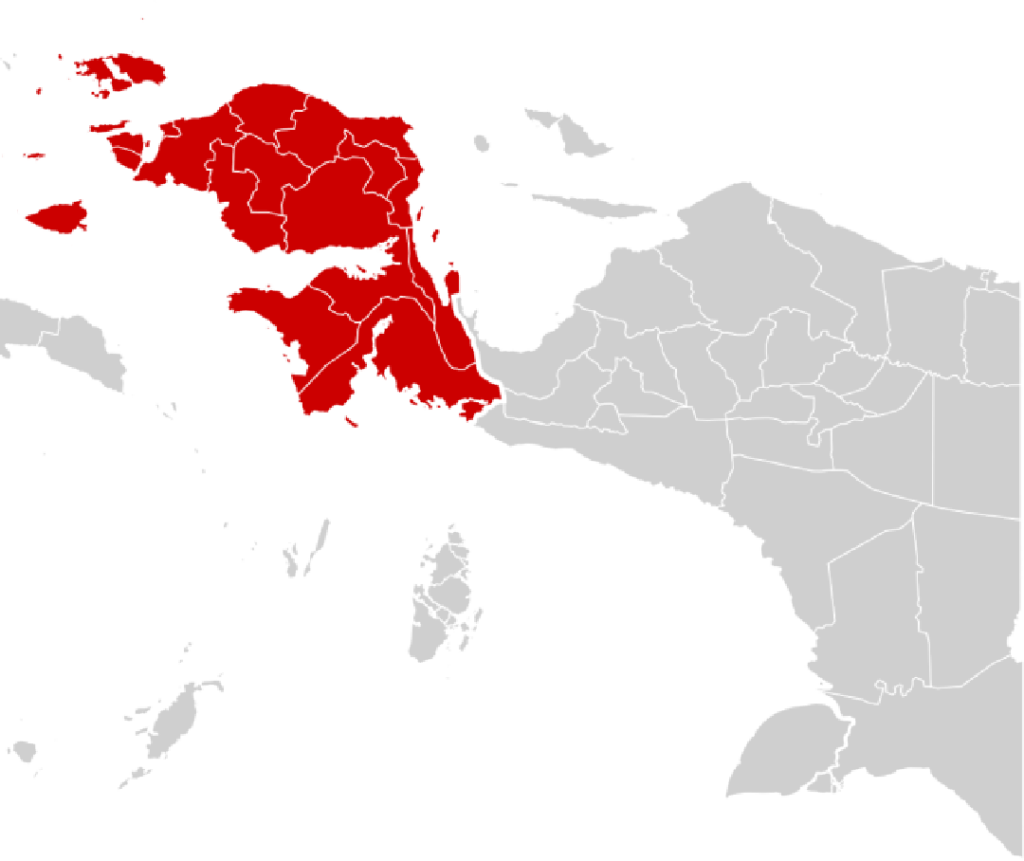
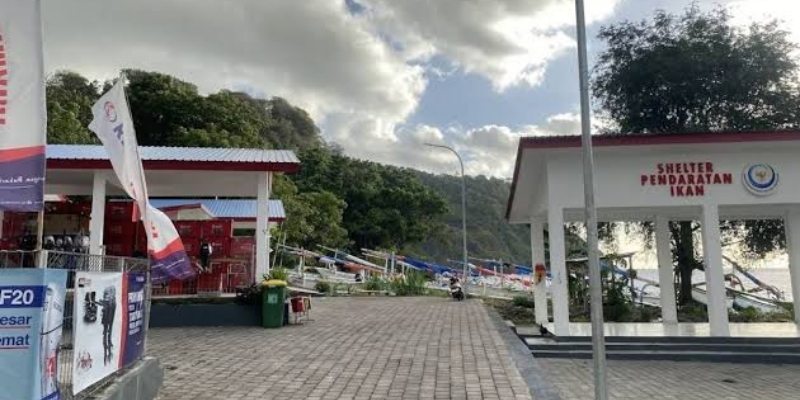
Located in Waryesi Village, East Supiori District, Supiori Regency, KNMP is being developed as an integrated fishing community area designed to strengthen fisheries infrastructure while creating a more sustainable local economy.
The programme has received support from the village government and local residents. During a government visit in June 2026, residents expressed their hopes that the programme would address some of the basic problems facing fishermen, with participation from the regional administration, the Ministry of Marine Affairs and Fisheries, the task force, and the KNMP Acceleration Implementation Team.
For Waryesi’s fishermen, the issue is not simply how to catch more fish.
It is what happens after the boat comes back to shore.
Without adequate landing facilities, storage, ice, transport and reliable buyers, a successful catch can quickly become a difficult economic problem. Fish that can’t be sold in time lose value, forcing fishermen to consume some of their catch.
That reality explains why the KNMP programme is presented as more than just a construction project.
The ambition is to build a functioning economic chain around the fishing community, from the moment fishermen leave the shore until their catch reaches consumers.
Waryesi’s Longstanding Challenges
Waryesi sits in an area where the sea is central to everyday life.
Fishing provides food and income, but the local industry has faced practical limitations that restrict its productivity.
Matias Mansoeben, a representative of Waryesi’s fishermen, described some of those difficulties directly.
He said fishermen still lacked adequate boats, fishing gear and proper landing facilities.
The problem becomes particularly visible once fishermen return from the sea.
A fishing community needs more than vessels and nets. A fishing community also requires a facility for safely landing, hygienically handling, appropriately storing, and transporting catches to buyers.
The shortage of suitable fish-selling facilities in Waryesi has prevented the market from absorbing some catches.
Matias described the situation in simple terms. There are times when fishermen bring home substantial catches but do not have a clear place to sell them.
“Sometimes we bring back a lot, but it does not sell, so in the end we just eat it,” he said, according to the report published by WWB.
For families whose income depends on daily fishing, that can make a significant difference.
The problem is therefore not necessarily a lack of marine resources.
It is a gap in the economic infrastructure surrounding those resources.
From Catching Fish to Building a Business
This gap is where the KNMP concept is intended to make a difference.
The programme is designed to connect several parts of the fisheries economy that are often treated separately.
Fishing requires boats, fuel and equipment. Landing requires appropriate facilities. Fish then needs ice, storage and transportation. Processing can add value, while access to markets determines whether fishermen can actually earn from their production.
The Waryesi programme seeks to bring these elements closer together.
Reports on the development identify fuel, ice, landing facilities, boats, fishing gear, transportation and marketing access as important components of the local fisheries ecosystem.
That approach is particularly relevant for remote coastal communities.
If a fisherman catches more fish but cannot store or sell it, increased production does not necessarily translate into increased income.
Building a landing facility without developing buyers and transportation may only partially solve the economic problem.
The value of an integrated approach is that each part of the chain supports the others.
A Fisherman’s Perspective
For Matias, the arrival of KNMP represents a practical opportunity rather than an abstract government programme.
He said the community welcomed the programme because it could support the local economy and improve the welfare of fishermen.
“We are pleased with this KNMP programme because it can support our economy going forward and help our community become more prosperous,” he said.
That optimism is grounded in the problems fishermen experience every day.
A better landing point can reduce logistical difficulties.
Improved equipment can make fishing operations more productive.
Better access to ice and storage can help preserve catches.
A reliable marketplace can reduce the risk of fish being left unsold.
Together, these improvements could create a more predictable economic environment for coastal families.
The sources, however, do not yet provide measured data showing increased income or fish production resulting from KNMP Waryesi. Those outcomes remain future objectives rather than established results.
Government and Community Meet
The development gained visible momentum during a government visit to Waryesi in June 2026.
Representatives of the local government travelled to the village together with officials from the Ministry of Marine Affairs and Fisheries (KKP), the task force and the team responsible for accelerating KNMP development.
Local residents welcomed the visit and discussed the challenges they face in their daily fishing activities.
The timing was crucial as it facilitated direct discussions about the programme with the individuals expected to use and manage the facilities.
That community involvement is an important part of the KNMP model.
A fishing settlement cannot be transformed simply by constructing buildings.
The KKP has therefore stressed the importance of community institutions and mentoring as part of the wider programme. Local people need to understand how the system operates and have a role in managing the businesses that emerge around it.
The KKP has therefore emphasised community institutions and mentoring as part of the wider programme.
KKP: The Project Is More Than Infrastructure
The KKP has clarified that KNMP goes beyond being just an infrastructure programme.
Doni Ismanto Darwin, Special Staff to the Minister of Marine Affairs and Fisheries for Public Relations and Public Communication, said the purpose was to ensure that construction generates sustainable economic activity and improves community welfare.
That distinction is central to understanding Waryesi.
A new pier or landing facility can improve physical access, but the long-term economic impact depends on what happens around it.
Who manages the facility?
Who buys the fish?
How is the catch stored?
How is it transported?
Can local fishermen access financing and business services?
Can products be processed locally?
Can the community develop stronger connections with regional markets?
These questions determine whether infrastructure becomes an economic asset or simply another public facility.
The KNMP model seeks to answer them by building an economic ecosystem around the fishing village.
From Local Markets to Wider Distribution
One of the programme’s most important ambitions is to strengthen access to markets.
Waryesi fishermen have traditionally faced difficulties finding clear buyers for their catch.
The new approach aims to enhance the connection between fishermen and consumers.
According to the reports, the KNMP concept integrates landing facilities, cold chain infrastructure, processing, logistics and market access. The intended market reach can extend from regional consumers to national markets and potentially to export markets.
This does not mean Waryesi fishermen have already entered national or international markets.
The infrastructure and institutional model aim to facilitate such market connections.
That distinction matters.
Market access is not created simply by constructing a facility. It requires consistent supply, product quality, cold storage, transportation, buyers and commercial relationships.
The KNMP programme is intended to bring these elements closer together.
The Blue Economy Connection
Indonesia’s broader blue economy agenda also connects to the Waryesi project.
The concept of a blue economy seeks to generate economic value from marine resources while maintaining the long-term health of coastal and ocean ecosystems.
For a fishing community like Waryesi, economic growth is inseparable from the health of the sea.
Fish stocks need to remain productive.
Coastal ecosystems need protection.
Fishing activity needs to remain economically viable without undermining the natural resources on which future generations depend.
The KKP aligns its wider blue economy development with KNMP’s community-based approach. The programme is designed to involve community business institutions and provide assistance for economic activities from upstream production to downstream processing and marketing.
This approach could be particularly relevant in Papua, where marine resources are a major part of many coastal communities’ livelihoods.
Why Cold Storage and Handling Matter
For an international audience, one of the less visible challenges facing remote fishing communities is post-harvest handling.
The economic value of fish can fall rapidly when catches cannot be cooled, stored and transported properly.
A fisherman may spend hours at sea and return with a valuable catch. But if there is no ice, no appropriate storage and no buyer waiting at the landing point, the economic value of that effort can diminish quickly.
The KNMP concept addresses this gap by linking fishing infrastructure with post-harvest management.
Better handling can potentially reduce losses and provide fishermen more flexibility over when and where they sell their products.
Again, the Waryesi sources describe the concept as an intended function of the programme rather than as reporting measured reductions in post-harvest losses.
That distinction is important when assessing the project’s current impact.
The Importance of Community Ownership
Another key element is local participation.
The KKP says communities will be involved through business institutions and supported through mentoring.
That means Waryesi residents are expected to play an active role in making the area function economically.
This matters because infrastructure requires long-term maintenance.
A well-managed facility can transform into an economic hub for the community.
A facility without clear management can eventually lose its usefulness.
The challenge for Waryesi will therefore be to develop local institutions capable of operating the facilities, managing commercial relationships and ensuring that benefits reach fishermen.
In this context, community ownership does not imply that fishermen must individually own every facility.
It means that local people need a meaningful role in the economic system being built around them.
More Than Fishing
The potential impact of KNMP also extends beyond fishermen.
An active fishing economy can create demand for transport, ice production, food services, equipment maintenance, fish processing, packaging and trading.
That can create opportunities for other residents.
Young people may discover work in processing or logistics.
Small businesses can provide supplies.
Transport operators can connect the village with nearby markets.
Women can participate in processing and trading activities.
The economic multiplier therefore has the potential to extend beyond the boat and the fisherman.
However, the sources do not yet provide employment figures or detailed projections for these secondary businesses.
The opportunity is therefore best understood as a potential outcome of the integrated model rather than an established result.
A Development Story from the Coast
The Waryesi programme reflects a broader shift in how Indonesia approaches coastal development.
Instead of viewing fishing infrastructure only as a collection of physical facilities, the government is attempting to build integrated economic communities.
That means thinking about the fisherman, the landing site, the cold chain, the market and the local institution as parts of one system.
For remote Papua, that approach has particular significance.
Geographic distance can make logistics expensive and market connections difficult.
A locally integrated fisheries centre can help reduce some of those barriers by concentrating infrastructure and services in the community.
The ultimate test will be whether the system can operate efficiently after construction and initial government support.
What Happens Next?
The next stage for Waryesi will be turning infrastructure into daily economic activity.
Fishermen need to be able to use the facilities.
Markets need to be developed.
Community institutions need to become operational.
Processing and storage systems need to function reliably.
Transportation connections need to be maintained.
And the marine environment itself needs to remain productive.
These are long-term tasks.
The government has framed KNMP as a programme designed to provide sustainable economic benefits rather than a one-time construction project. Doni Ismanto’s statement captures that distinction: the objective is not simply to build, but to ensure that the resulting infrastructure generates sustainable economic activity for local communities.
For Waryesi, that means the real measure of success will come after the buildings and facilities are in place.
Conclusion
The development of KNMP Waryesi represents an important opportunity for Supiori’s coastal economy.
For years, local fishermen have faced a combination of practical obstacles, from limited boats and fishing gear to inadequate landing facilities and weak access to markets. Their difficulties do not end when they return from the sea. Without appropriate handling, storage, transportation and buyers, valuable catches can remain unsold or generate only limited income.
The Kampung Nelayan Merah Putih programme is intended to address these gaps through an integrated approach.
Its potential lies not only in new infrastructure but also in the economic connections that infrastructure can create.
A functioning landing facility can connect fishermen to storage.
Storage can connect catches to transportation.
Transportation can connect products to markets.
And stronger markets can potentially turn marine resources into more stable household income.
The programme also reflects the government’s wider blue economy approach, in which economic activity and environmental sustainability are expected to develop together.
Waryesi faces a substantial opportunity, but the work extends beyond construction.
The facilities must be managed effectively. Fishermen need continued assistance. Markets need to be developed. Local institutions must develop the capacity to manage the economic system, and we must protect the marine resources themselves.
If those elements come together, KNMP Waryesi could become more than a fishing infrastructure project.
It could become a local economic hub where fishermen gain better access to markets, families gain new income opportunities and young people see a future connected to the sea without being trapped by the limitations that have historically constrained the local fishing economy.
That is the larger promise of Waryesi.
Not simply a new place to land fish, but a stronger bridge between Papua’s marine resources and the prosperity of the communities that depend on them.
Read Also
From Uncertain Waters to Steady Income: How a Fishing Village in Papua Is Quietly Transforming Lives
Papua’s Red and White Fishermen’s Village: A Coastal Development Project Bringing New Hope to Maritime Communities