
For people living in Papua’s coastal and island communities, travelling between towns is often more than just a matter of convenience. Sea transport connects families, workers, traders and students to essential services and economic opportunities. When fares rise or sailing schedules become uncertain, the effects can reach well beyond the passengers themselves.
The Papua Provincial Government is responding with a new subsidy programme for sea transport in Papua, allocating more than Rp4 billion from its regional budget to make passenger journeys between Jayapura, Biak and Serui more affordable. Under the agreement with shipping operator PT Belibis Papua Mandiri, subsidised tickets are expected to cost Rp250,000 per passenger per sailing.
The first services are scheduled to begin on November 18, 2026, with the initial programme prioritising the Jayapura-Biak and Jayapura-Serui routes in both directions. The provincial government says the intervention is intended to maintain transport connectivity, support public mobility and help reduce economic pressures associated with high transport expenses.
The policy comes ahead of the Christmas and New Year holiday period, when demand for travel traditionally increases. It also forms part of a wider effort to improve connections between communities across Papua’s coastal and island areas.
Although the immediate subsidy applies to passenger fares, the government expects more reliable and affordable sea transport to support broader economic activity, including the movement of people involved in trade and local distribution.
From Planning to Implementation: How the Programme Developed
July 2026: The government begins assessing its financial capacity.
The initiative was preceded by planning discussions earlier in 2026.
In July, the Papua Provincial Government was already considering subsidised shipping services for the Jayapura-Biak and Jayapura-Serui routes. The administration was still evaluating its financial capacity at that point before deciding on the right budget and number of vessels.
Muflih Musaad, Head of the Papua Regional Development Planning, Research and Innovation Agency (Bapperida), said the government needed to calculate its available financial resources before deciding how the programme could be implemented.
He explained that the proposed service was expected to increase sailing frequency on two routes that play an important role in regional mobility.
“We hope that in the future, services between Jayapura and Serui as well as Jayapura and Biak can operate two to three times a week, making access for the public easier, faster and more affordable,” Musaad said, as reported by RRI in July.
The planning phase also reflected a broader economic consideration. Better sea connections were expected to help reduce logistics costs and facilitate the movement of goods and services, particularly in coastal and island communities.
At the time, however, the programme’s final budget and operational arrangements had not yet been established.
November 9-10: The government moves towards a formal agreement
The initiative advanced in November as the provincial government prepared to introduce the subsidy before the end of the year.
On November 9, Papua’s Transportation Office Head Mathius H. Wally explained to Cenderawasih Pos that the government was preparing two separate forms of support for sea travel.
The first was a regular, scheduled subsidy financed through the provincial budget. The second was a free-ticket programme being prepared in cooperation with Indonesia’s Ministry of Transportation for the Christmas and New Year periods.
The two arrangements have different purposes and implementation mechanisms.
Under the regular subsidy, the provincial government does not directly charter or lease vessels. Instead, it purchases scheduled sailing services from an operating shipping company through an electronic purchasing mechanism known as e-purchasing.
The approach allows the government to support existing maritime services rather than wait for a new fleet to be procured.
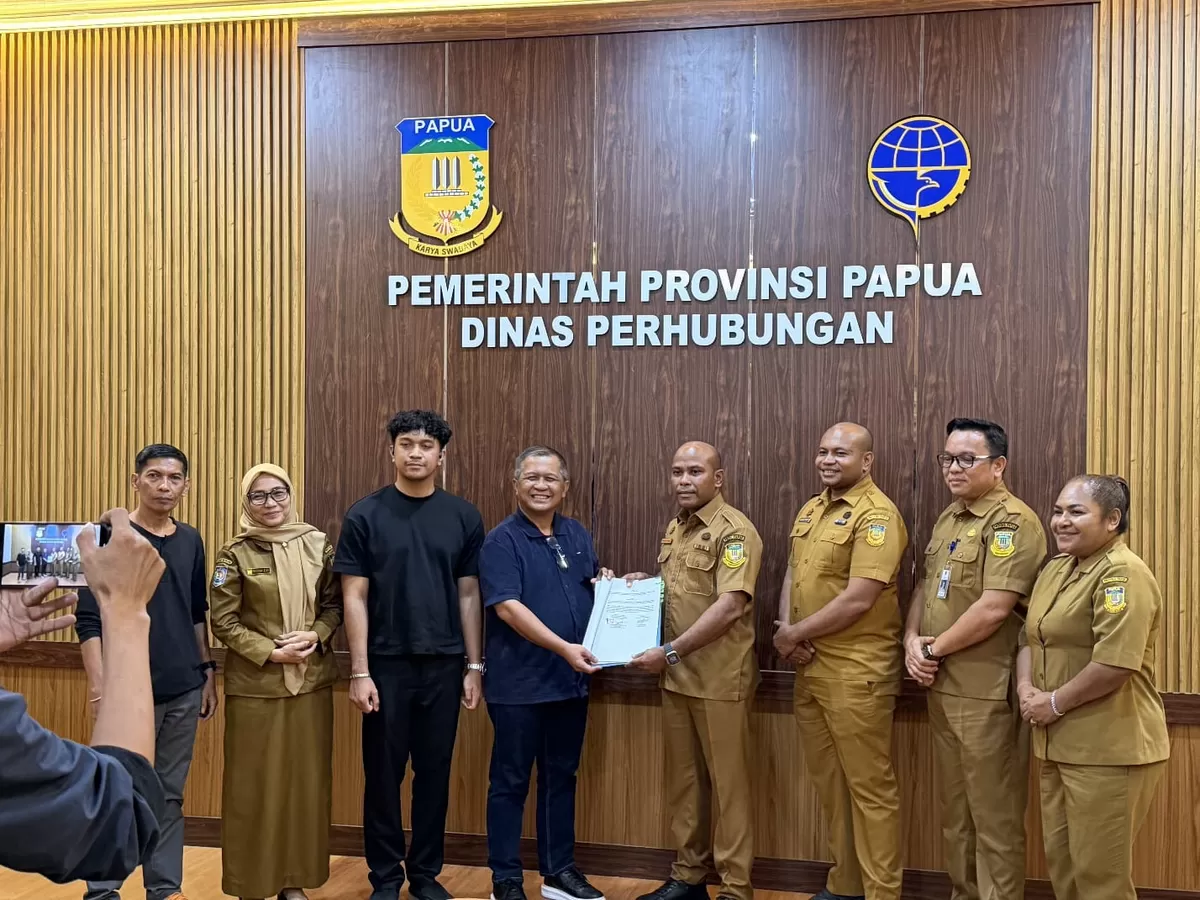
On Tuesday evening, November 10, the Papua Provincial Transportation Office formalised its cooperation with PT Belibis Papua Mandiri through a contract signing at its office in Jayapura.
The agreement marked the transition from budget planning to the implementation stage.
November 11: The Rp4 billion allocation is confirmed
The following day, the provincial government publicly detailed the programme and its financial allocation.
ANTARA reported that more than Rp4 billion had been prepared through the Papua Provincial Budget, or APBD, to support the subsidised maritime services.
Mathius H. Wally said the subsidy would reduce passenger fares to approximately Rp250,000 per person on the supported sailings.
“This subsidy is funded through the regional budget and will reduce shipping costs or fares so that they can become affordable at Rp250,000 per subsidised passenger per sailing,” Wally said, according to ANTARA.
He explained that the final amount spent would depend on the number of voyages actually completed during the contract period, which runs until December 31, 2026.
The government therefore intends to link expenditure to services delivered rather than simply treating the entire budget ceiling as an amount automatically spent.
Wally said the programme was being introduced in response to the increased demand for sea transport at the end of the year.
“The demand for sea transport is currently increasing as we approach the end of the year. The first trip is planned for November 18, after which a regular schedule will be prepared for the public,” he said.
The first routes were selected because of their high passenger occupancy and the limited time available to implement the programme within the 2026 budget year.
Two Priority Routes Connect Key Island Communities
Jayapura-Biak: Supporting movement between the provincial capital and Biak
The Jayapura-Biak route is one of the initial priorities of the programme.
Jayapura serves as the provincial capital and an important centre for government administration, services and commerce. Biak, meanwhile, is a major island community with its economic and social connections to other parts of Papua.
For residents travelling between the two locations, sea transport can provide an important alternative to air travel.
A lower passenger fare could help families manage travel expenses, particularly during periods of increased demand. It may also make journeys more accessible to people travelling for work, education, family responsibilities and other essential activities.
The government’s decision to include the route reflects its intention to maintain links between major population centres and island communities.
Jayapura-Serui: Improving access to the Yapen Islands
The second priority route connects Jayapura with Serui, the main urban centre of the Yapen Islands Regency.
For communities in island and coastal areas, maritime transport is closely connected to everyday life. Residents rely on sea connections to reach administrative services, markets, education facilities and healthcare providers.
More affordable scheduled services could help reduce the financial burden of travelling to Jayapura and returning home.
The route also has economic significance. Traders and small business operators depend on reliable connections to access supplies, customers and commercial services.
Although the passenger subsidy does not directly reimburse freight charges, improved sailing availability may support wider economic activity by making it easier for people involved in commerce to travel.
The government has indicated that other routes could be considered for expansion in 2027, depending on future budget allocations and operational capacity.
How the Rp250,000 Ticket Subsidy Works
The programme is designed to make passenger travel more affordable through government support for each subsidised sailing.
Rather than requiring the public to wait for a new government-owned vessel, the Transportation Office has entered into an agreement with PT Belibis Papua Mandiri, a company already operating maritime services in the region.
Under the arrangement, the provincial government purchases sailing services from the operator, allowing supported journeys to be offered at a reduced fare.
According to Jubi, the programme is open to residents holding a Papua identity card, or KTP Papua. Eligible passengers can purchase tickets directly through the PT Belibis Papua Mandiri ticket counter at the port, without additional special requirements.
The arrangement is intended to make access straightforward for residents who want to use the subsidised service.
The Rp250,000 figure refers to the subsidised passenger fare per sailing. It should not be interpreted as a universal fare for every vessel or route operating in Papua, since the policy applies to the journeys covered by the agreement.
The contract’s implementation period also matters. It runs until December 31, 2026, meaning that the government will assess the actual number of voyages delivered during the remaining weeks of the year.
This arrangement provides a practical way to quickly introduce the programme while allowing the provincial administration to assess passenger demand and the service’s operational performance.
PT Belibis Papua Mandiri Prepares Three Vessels
The shipping operator has confirmed that it is preparing vessels and operational arrangements to support the programme.
PT Belibis Papua Mandiri Managing Director H. Misbahuddin, also referred to as Haji Misba in some local reports, said the company was ready to provide the services required under the agreement.
The three vessels identified for the programme are KM Cantika Lestari 77, KM Cantika Lestari 88 and Express Bahari 99.
Misbahuddin said the company had prepared its fleet, safety arrangements, passenger services, sailing schedules and operational documentation.
“In principle, we have prepared the vessels, safety arrangements, services and schedules. We are ready to serve the people of Papua through the planned routes,” he said, according to Jubi.
The operator’s readiness is an important part of the programme because affordability alone cannot guarantee effective transport services.
Passengers also need reliable schedules, vessels that meet safety requirements and clear information about ticket availability.
The provincial government and operator will therefore need to ensure that the planned voyages are delivered consistently throughout the remaining contract period.
A new vessel planned for January 2027
The cooperation is also expected to continue developing beyond the initial 2026 programme.
Misbahuddin said the company and the provincial government planned to bring in a new vessel, Express Belibis 9, in January 2027.
The proposed addition is intended to improve service quality and sailing speed.
If the plan proceeds as expected, the new vessel could provide additional capacity for maritime transport services in Papua.
However, the arrival and operational deployment of Express Belibis 9 remain future plans rather than part of the vessels already confirmed for the initial subsidy programme.
Supporting Economic Activity and Efforts to Control Inflation
Why maritime connectivity is relevant for local prices
The Papua Provincial Government has presented the subsidy as part of its effort to strengthen connectivity and ease economic pressures.
In an island and coastal region, transport expenses can influence the price of goods by affecting how easily traders and suppliers move between locations.
When passenger and transport services are limited, people involved in commercial activities may face additional travel expenses, delays and uncertainty.
These challenges can affect the availability of goods and the costs associated with distributing them.
More regular maritime connections could help improve the movement of traders, workers and other economic participants. Over time, better connectivity may also support supply chains and make regional markets easier to reach.
This is relevant to inflation because transport and distribution costs can contribute to the final prices paid by consumers.
However, the passenger fare subsidy should not be confused with a direct subsidy for freight or commodity prices.
The government has announced support for passenger tickets on selected routes. It has not stated that all cargo transport costs, food distribution charges or retail prices will automatically be reduced through the programme.
The potential contribution to inflation control is therefore indirect. It depends on whether more accessible and reliable sea transport supports smoother economic activity and distribution.
Other factors, including fuel prices, weather conditions, supply availability, storage facilities and market demand, will continue to influence local prices.
A wider development benefit for island communities
Beyond its immediate impact on fares, the programme reflects the importance of transport infrastructure in regional development.
Affordable travel can help residents reach education and healthcare services, maintain family relationships and participate in economic activities outside their home communities.
For traders, reliable access to transport links can make it easier to conduct business between Jayapura, Biak and Serui.
For workers and students, a more affordable journey can reduce the cost of maintaining connections with institutions and services in other parts of the province.
The policy also recognises that development in an archipelagic province cannot rely solely on road infrastructure. Maritime routes remain essential to connecting communities separated by water.
The provincial government’s decision to prioritise the two routes is therefore part of a broader effort to improve access across Papua’s coastal and island areas.
Subsidised Services and Free Nataru Tickets Are Different Programmes
Another important element of the government’s transport policy is its preparation for the Christmas 2026 and New Year 2027 holiday period.
The provincial government is working with the Ministry of Transportation on a separate free-ticket programme for selected periods when passenger demand is expected to increase.
Transportation Office Head Mathius Wally has clarified that the two initiatives have different mechanisms.
The regular provincial subsidy is intended to maintain scheduled sea transport services at more affordable fares. Passengers still pay the subsidised ticket prices.
The free-ticket programme, by contrast, is intended to assist eligible passengers during a particular period, especially around the Christmas and New Year holidays.
This distinction is important for residents planning their journeys. A passenger using the regular subsidised service should not assume that the ticket is free simply because the government is also preparing a separate free-ticket scheme.
The two programmes are designed to complement one another by addressing different travel needs.
Together, they are intended to help the government respond to increased mobility during the end-of-year period while maintaining access to scheduled maritime transport.
Looking Ahead: Expanding Papua’s Maritime Connectivity
The initial programme is limited to the routes between Jayapura and Biak and Jayapura and Serui. However, the provincial government has indicated that the subsidy could be expanded to other routes in 2027.
Wally said the administration remained open to developing additional subsidised services as part of its efforts to improve access for coastal and island communities.
Any expansion will depend on budget availability, passenger demand, operational readiness and the ability of shipping companies to provide safe and reliable services.
The introduction of Express Belibis 9 could also form part of the next phase of service development, subject to the vessel’s arrival and operational preparation.
For the current programme, the immediate priorities are straightforward: begin the first voyages on schedule, maintain the agreed fares, ensure safety and publish clear information for passengers.
The government will also need to assess whether the number of voyages is sufficient to meet demand and whether the subsidy is reaching the communities it is intended to serve.
Conclusion
The Papua Sea transport subsidy represents a practical intervention in a region where maritime connections are essential to daily life and economic activity.
With more than Rp4 billion allocated through the provincial budget, the government is seeking to reduce passenger fares to Rp250,000 on the Jayapura-Biak and Jayapura-Serui routes. The agreement with PT Belibis Papua Mandiri, signed on November 10, provides the operational basis for the first services scheduled to begin on November 18.
The programme also forms part of a wider effort to prepare for increased travel during the Christmas and New Year period, while the separate free-ticket initiative with the Ministry of Transportation addresses seasonal passenger needs.
Its contribution to inflation control will depend on how effectively improved connectivity supports economic activity and distribution. The passenger subsidy itself does not directly reduce freight charges or guarantee lower retail prices, but more accessible transport can help address some of the logistical pressures faced by island communities.
The next stage will be to ensure that the promised services operate safely, regularly and transparently. If the initial routes demonstrate sustained demand and operational effectiveness, the experience could provide a basis for expanding subsidised maritime services to other parts of Papua.
For residents of coastal and island communities, the most meaningful measure of success will be simple: a journey that is more affordable, a service that arrives as scheduled and a stronger connection to the economic and public services on which everyday life depends.
Read Also
Belibis 9 Express Ship to Boost Papua’s Island Connectivity
Papua Tengah Launches Subsidized Flights to Remote Areas

