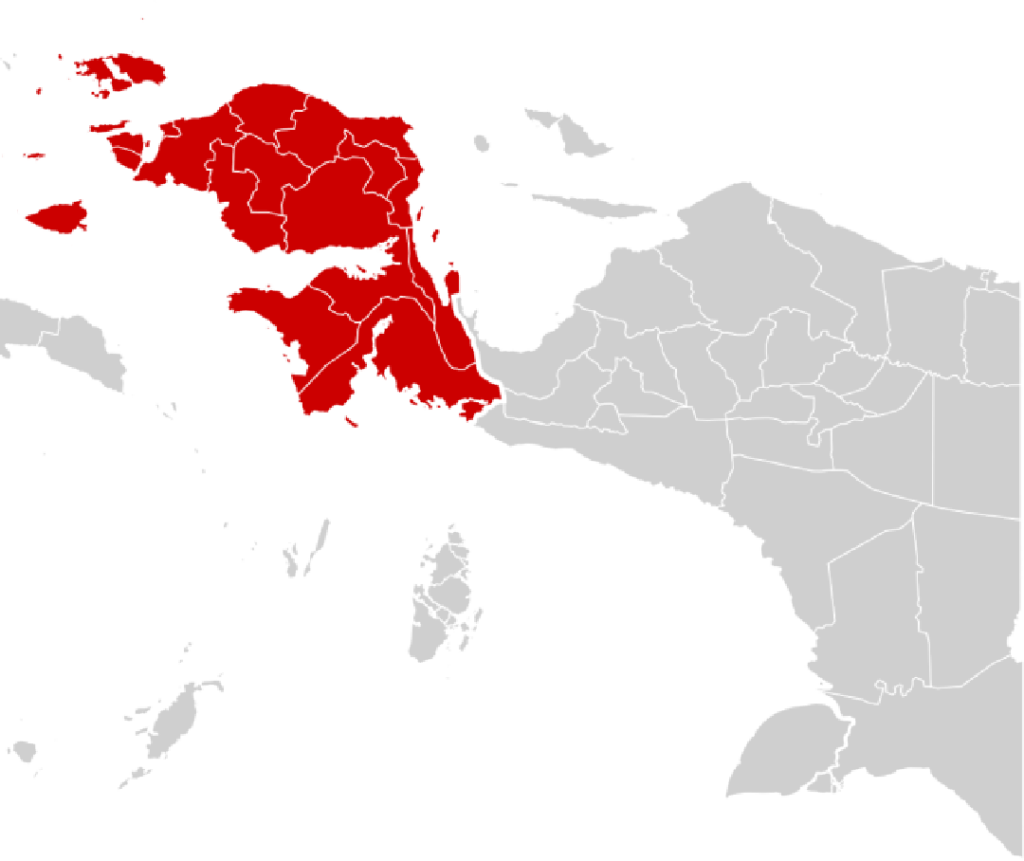
On the edge of Papua Selatan’s (South Papua) vast wetlands, excavators continue working under the heat of Merauke’s dry seasacon.
Recently, the Wanam area in Merauke has become one of the most discussed locations in Indonesia’s national food security agenda. Supporters describe it as a long-term answer to future food uncertainty. Critics, meanwhile, question the environmental and social consequences of large-scale agricultural expansion in Papua.
The debate intensified again this week after the documentary Pesta Babi spread widely online and reignited public criticism surrounding the government’s food estate policy in Papua.
But on Wednesday, May 20, political researcher Bawono Kumoro publicly defended the continuation of the National Strategic Project, known in Indonesia as PSN, in Wanam District.
“The strategic food estate project in Papua should not be stopped,” Bawono said in comments published by JPNN and RRI on May 20. “Indonesia must proactively address global food threats and bolster national resilience from this point forward,” he asserted.
For Bawono, the issue is not simply about one project in Papua.
He believes Indonesia is entering a period where geopolitical instability, disrupted shipping routes, fertilizer shortages, and international commodity competition could threaten long-term food availability if the country continues depending too heavily on imports.
Why Wanam Matters to Indonesia’s Food Strategy
Merauke Has Long Been Seen as Agricultural Frontier
The idea of turning Merauke into a major food production area is not new.
For years, policymakers in Jakarta have viewed Papua Selatan as one of Indonesia’s largest untapped agricultural regions because of its expansive flat land and relatively low population density.
Under the current National Strategic Project framework, Wanam District has become one of the focal points for rice field expansion and food estate development.
Government planners hope the area can gradually strengthen Indonesia’s domestic rice production while supporting national food reserves.
According to Bawono, the urgency behind the project has increased because the global food situation is becoming less predictable.
“What happens internationally today directly affects food prices and supply chains inside Indonesia,” he said on May 20.
Indonesia Still Depends on Rice Imports
Although Indonesia remains one of the world’s largest rice producers, the country still imports rice periodically to stabilize reserves and maintain domestic supply.
Imports often come from countries such as Thailand, Vietnam, India, and Pakistan.
That dependence has increasingly worried Indonesian policymakers over the past several years.
When exporting countries tighten supply or restrict shipments, Indonesia immediately feels the impact through price fluctuations and market pressure.
Indonesian economic observers frequently cite India’s export restrictions in previous years as a case study when discussing the significance of food self-sufficiency.
Bawono argued that Indonesia cannot continue relying indefinitely on foreign markets for basic food commodities.
“We need long-term domestic production capacity,” he said during remarks quoted by RRI on May 20.
Global Conflict Reshaped Food Security Concerns
Ukraine War Disrupted Grain and Fertilizer Distribution
Since Russia launched its invasion of Ukraine in 2022, food markets around the world have experienced repeated disruption.
Ukraine had previously been one of the world’s major wheat exporters, while Russia remained a dominant supplier of fertilizer and agricultural inputs.
The war affected shipping routes, pushed fertilizer prices upward, and created volatility in international commodity markets.
Indonesia, like many countries in Asia and Africa, felt the consequences through rising production costs and fluctuating food prices.
According to Bawono, those disruptions explain why Indonesia must strengthen domestic agricultural resilience before future crises become worse.
“The Russia-Ukraine war has shown how fragile global food distribution can become,” he said.
Middle East Instability Adds More Pressure
Beyond Eastern Europe, conflict and instability in the Middle East have also contributed to uncertainty involving global logistics and commodity distribution.
Shipping disruptions and geopolitical tensions affecting international maritime routes continue creating concern among food-importing nations.
Indonesia, with a population exceeding 280 million, increasingly views food availability as a national security issue as much as an economic one.
That broader geopolitical backdrop partly explains why the Wanam project is now being discussed not only as regional development but also as part of Indonesia’s strategic resilience planning.
“Pesta Babi” Documentary Triggered New Debate
Film Brought Food Estate Project Into Public Spotlight
Public discussion surrounding the Wanam project intensified after the documentary Pesta Babi circulated online and generated controversy regarding Papua development policies.
The film reportedly criticized aspects of food estate expansion and broader state policies involving land management in Papua.
Clips from the documentary spread quickly across social media platforms, triggering debate among activists, students, and political observers.
Some critics argued that large-scale agricultural projects in Papua should be examined more carefully because of environmental and Indigenous concerns.
Others defended the projects as necessary for Indonesia’s long-term food security strategy.
Bawono Says Debate Should Remain Balanced
Responding to the controversy, Bawono said criticism and public discussion are legitimate parts of democracy.
However, he also contended that one should evaluate national strategic projects within the context of Indonesia’s broader long-term needs.
“The debate should remain objective and balanced,” he said in comments quoted by SindoNews and JPNN on May 20.
According to him, Indonesia faces growing global uncertainty involving food distribution and cannot afford to delay agricultural preparedness because of polarized political narratives.
Papua Increasingly Linked to National Economic Planning
Papua Selatan Emerging as Strategic Region
The Wanam project also reflects how Papua’s role within Indonesia’s national planning is gradually changing.
Political conflict and security issues often dominated discussions about Papua for decades.
Now, economic resilience, food production, infrastructure, and connectivity are becoming increasingly central themes in government planning.
Officials now frequently describe Papua Selatan, particularly Merauke Regency, as a future strategic agricultural zone.
Road construction, irrigation planning, logistics development, and transportation access continue expanding alongside food estate projects in the region.
Welfare and Sustainability Remain Important Questions
Even among supporters of the project, questions remain regarding sustainability and local participation.
Several academics and observers continue emphasizing that agricultural expansion in Papua must involve Indigenous communities and protect environmental balance.
Government officials have repeatedly stated that welfare improvement for local residents remains one of the project’s priorities.
Those discussions are expected to continue as development moves forward in Wanam and surrounding areas.
Food Self-Sufficiency Becoming a National Priority
Indonesia Wants Stronger Domestic Capacity
Food self-sufficiency has become one of Indonesia’s major policy priorities under current national development planning.
The government continues encouraging expansion of domestic rice production while reducing vulnerability to external supply shocks.
Therefore, stakeholders increasingly view projects like Wanam as strategic investments rather than short-term agricultural programs.
According to Bawono, countries that fail to strengthen domestic food production could face greater vulnerability during future global crises.
“We must prepare from now on, not after shortages happen,” he said on May 20.
Papua Considered Part of Long-Term National Vision
Officials believe Papua’s agricultural potential could eventually contribute significantly to Indonesia’s long term food reserves if development projects are managed effectively.
Several ministries continue describing food estate development in Papua Selatan as part of a broader national vision involving economic resilience and regional equality.
For local communities, however, the long-term success of the project will likely depend on whether development can deliver both economic opportunity and social trust.
In Papua, the urgency of building stronger local food production has become increasingly visible recently as several regions continue facing recurring distribution challenges.
Food supplies entering remote areas often depend on sea transportation, yet shipments are frequently delayed by high waves and extreme weather conditions, especially during seasonal storms in eastern Indonesia.
At the same time, land infrastructure across many parts of Papua remains only partially connected, making interregional logistics expensive and slow.
Security disturbances involving armed groups linked to the Free Papua Movement (OPM) have periodically disrupted transportation routes and commodity movement in several highland areas.
In these circumstances, isolated districts often rely on air transport as an alternative for delivering rice and other staple goods. However, aviation logistics costs in Papua are among the highest in Indonesia, contributing directly to higher food prices and inflation pressures for local communities.
Supporters of the Wanam project argue that expanding rice production inside Papua itself could gradually reduce those vulnerabilities by shortening supply chains and strengthening regional food availability closer to consumers.
Conclusion
The renewed debate surrounding the Wanam food estate project showed how closely food security, geopolitics, and development policy have become connected in Indonesia.
For political researcher Bawono Kumoro, the issue extends beyond the controversy triggered by the documentary Pesta Babi.
In his view, Indonesia is entering an era where wars, export restrictions, fertilizer shortages, and geopolitical instability could increasingly threaten countries dependent on imported food supplies.
That concern explains why he believes the strategic food estate project in Papua Selatan should continue despite criticism and political debate.
Whether the project ultimately succeeds may depend not only on production targets, but also on how effectively Indonesia balances national food ambitions with sustainability, public trust, and the welfare of communities living in Papua itself.