For a long time, many small food businesses in Papua worked within a familiar circle.
They sold to neighbors, to nearby towns, and sometimes to passing buyers who already knew what to expect. Growth was possible, but it moved slowly, often limited by distance and trust, which hindered their ability to reach broader markets and attract new customers.
That is why the recent progress, where 128 local products secured certification under Indonesia’s halal system, feels different. The Papua halal certification Small Medium Enterprises (SMEs)’ effort is not just about meeting a requirement. That’s a milestone that allows many business owners to get their products out of their immediate environment and into more markets so they can compete at a larger scale and land more customers.”
A Step That Changes How Products Are Seen
Certification does not change how a product tastes.
But it changes how it is received.
For buyers outside Papua, especially those working with larger distribution networks, certification often becomes the first thing they look for. Without it, products are harder to place on shelves or enter formal supply chains.
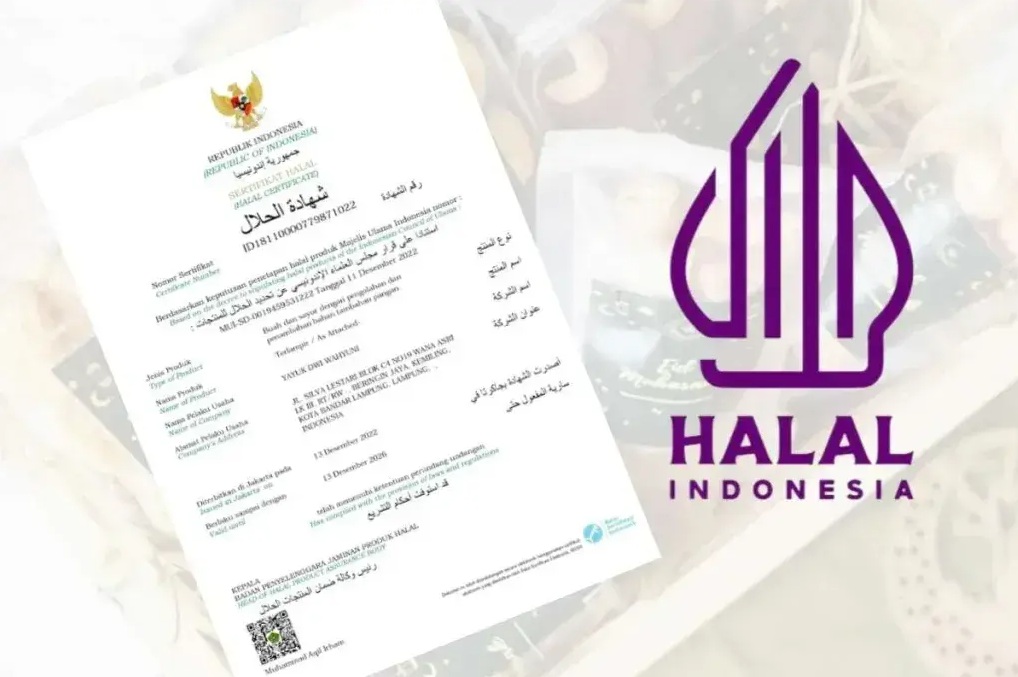
With certification from Badan Penyelenggara Jaminan Produk Halal (Halal Product Assurance Organizing Agency, or BJPH), that initial barrier becomes easier to cross.
It is a small document on paper.
But it carries weight.
Businesses That Have Been Waiting for This Moment
Most of the businesses involved are not new.
They have been producing food for years, sometimes decades, using methods passed down or adapted along the way.
What they lacked was not skill.
It was recognition.
Without formal certification, their products stayed within limited circles, even when quality was not the issue, which hindered their ability to reach a broader market and gain the recognition they deserved.
This is where the recent development begins to matter.
It gives something official to what was already there, providing recognition and credibility to the products that were previously only known within limited circles.
The Work Behind Certification
Getting certified is not immediate.
There are checks, adjustments, and sometimes small changes in how products are prepared or packaged.
For small businesses, the process can be a challenge.
The process involves time, cost, and understanding.
That is where support becomes important.
Institutions like Bank Indonesia have been involved in guiding SMEs, not only through certification but also through improving production and presentation, which helps these businesses navigate challenges related to time, cost, and understanding of the process.
It is practical work.
Often unnoticed.
But necessary.
What It Means for the Local Economy
When people talk about 128 certified products, the number sounds straightforward.
But behind it are many individual stories.
Each product represents a business.
Each business supports a family.
Often more than one.
In Papua, where large industries are limited in some areas, small enterprises fill that gap.
They keep money moving locally.
They create opportunities where formal jobs are not always available.
Certification strengthens their position, making them more competitive and more visible, which in turn helps them attract more clients and secure better contracts in the local economy.
Entering a Wider Market
The shift is not immediate, but it is noticeable.
With certification, products have a chance to reach larger markets.
Retailers.
Distributors.
Even potential export channels.
These opportunities do not guarantee success.
But they make it possible.
Trust That Travels
One of the less visible aspects of certification is trust.
Buyers who have never visited Papua rely on standards.
They cannot see the production process directly.
So they depend on certification as a form of assurance.
It tells them the product meets certain requirements.
That reduces hesitation.
And in business, reducing hesitation often leads to decisions.
The Challenges That Do Not Disappear
Progress does not remove all obstacles.
Papua’s geography still shapes how businesses operate.
Transport remains costly.
Infrastructure varies.
Reaching markets outside the region takes effort.
There is also the question of scale.
Many SMEs are not yet ready to produce in large volumes.
Expanding requires investment, coordination, and time.
Certification opens the door.
But stepping through it fully is another process that involves navigating regulatory requirements, building partnerships, and ensuring sustainable practices.
Internal Link Perspective
Many reports of national media have shown how local industries in Papua are gradually becoming more structured.
From fisheries to agriculture, small-scale producers are beginning to adapt to broader market expectations.
The growth of halal-certified SMEs fits into that pattern.
It reflects a shift toward formality and integration.
A Change That Feels Gradual
Nothing about this development feels sudden.
There is no single moment where everything changes.
Instead, it is a series of small adjustments.
Better packaging.
More consistent production.
Clearer standards.
These changes accumulate.
Over time, they reshape how businesses operate.
Looking Ahead
So, what depends on continuity?
More companies in the certification process.
More robust links to markets.
Continued support from institutions.
If they continue, the impact will be more than the current number.
It may affect the image of small businesses in Papua in Indonesia and abroad and may even increase investment, expand access to markets, and improve the reputation for quality and compliance with halal standards.
Conclusion
Efforts of SMEs in halal certification in Papua do not change everything in one day.
But in Papua, where growth often takes time, it marks a clear direction.
Toward wider markets.
Toward stronger standards.
We envision a future where geography alone does not limit small businesses.
For many of those involved, that shift is already beginning.
Quietly, but steadily.