A different reason is attracting the attention of Mimika Regency, in a region that often finds itself the subject of discussions on infrastructure gaps, social problems, and uneven development.
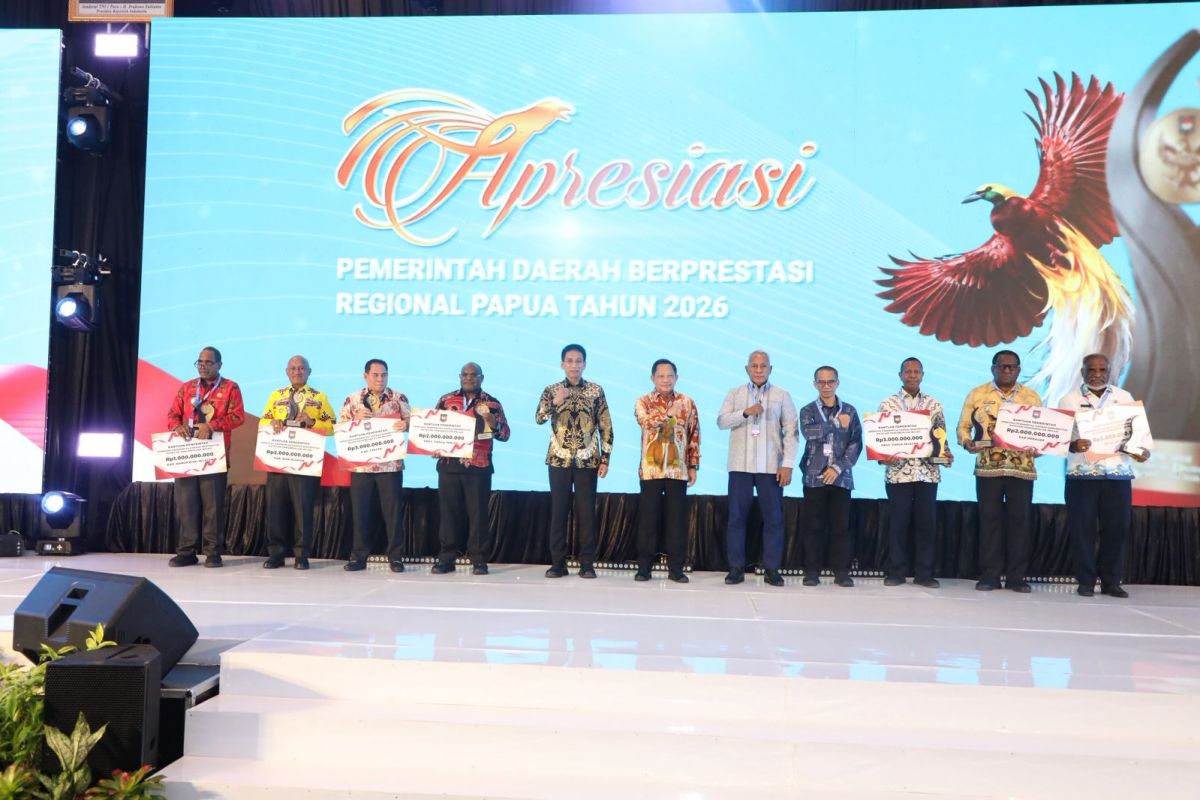
The local government has become one of Papua’s best-performing developments after winning two major awards at the 2026 Papua Regional Government Achievement Awards, an event held by Indonesia’s Ministry of Home Affairs to recognize the best local administrations across the six provinces of Papua.
The awards, announced on 22 June 2026, recognized Mimika as the Best Regional Government in Development Performance and the Best Regional Government in Creative Financial Management, with the total prize being six billion rupiah. Mimika’s achievement puts it in front of other regions in Papua in the area of governance and shows the increasing efforts being made to transform economic resources into real improvements in public welfare.
Recognition is relevant for many observers, as it represents progress in areas that matter for everyday life, such as poverty reduction, the prevention of stunting, public services, and fiscal management.
Most importantly, it indicates that the measure of development success in Papua is not just economic growth figures but how well local governments are improving living conditions for their communities.
Recognition for Tangible Development Results
The awards were given during the Regional Appreciation Event for Outstanding Local Governments in Papua 2026, which was attended by officials from the Ministry of Home Affairs, governors, regents, mayors, and stakeholders in regional development.
The ministry’s assessment showed that Mimika has a good performance in the implementation of development programs and efficient management of public finances.
The evaluation was based on several indicators, including economic development, poverty alleviation, public welfare, fiscal innovation, and governance quality.
Although many regions are constrained by financial and administrative issues, Mimika was acknowledged for reaching tangible outcomes in tackling social problems that have long plagued Papua communities.
Poverty Reduction Becomes Key Indicator
One key driver of Mimika’s success was progress in poverty reduction. Local authorities have implemented several programs to expand economic opportunities, improve access to basic services, and support community empowerment initiatives. Poverty reduction, officials say, does not only require direct assistance programs but also the creation of opportunities for people to participate in economic activities and benefit from local development. The regency’s strategy has included support for small businesses, community-based economic programs, infrastructure development, and social assistance targeted to vulnerable households. Observers say the integrated approach has helped create a stronger foundation for long-term welfare improvement.
Addressing Stunting Through Multi-Sector Collaboration
The evaluation process also identified efforts in Mimika to reduce stunting among children.
Stunting remains a major public health problem across Indonesia because it impacts the physical growth, cognitive development, and future productivity of children.
Access to health services can be difficult because of geographical conditions in Papua, where reducing stunting is a priority for national and local governments.
Investing in the Next Generation
Mimika’s approach emphasizes collaboration between health institutions, local communities, and government agencies, as well as schools, officials involved in the assessment said.
To address the root causes of stunting, we have strengthened nutrition programs, maternal health services, health education campaigns, and community outreach initiatives.
It’s not just about better health outcomes now but also about ensuring that the following generations have better chances to succeed.
Development experts frequently stress that investment in child health is one of the most effective long-term strategies for building human capital.
Mimika’s progress in reducing stunting was deemed an especially significant achievement for that reason.
Creative Financial Management Earns National Attention
The second award acknowledged Mimika’s performance in financial governance.
Effective management of public finance continues to be one of the greatest challenges for local governments across Indonesia.
Budget allocations have to balance between infrastructure development, public service, social welfare programs, and economic growth initiatives.
In many places, administrative inefficiency can hinder the implementation of development projects.
But Mimika was praised for what evaluators called innovative and accountable financial management practices.
Turning Revenue into Public Benefits
Mimika is home to one of the largest mining operations in Indonesia and generates significant economic activity.
But development specialists often say that it is not only revenue that guarantees the well-being of the public.
The big challenge is how to make sure that the resources that are available are transformed into programs that benefit local communities.
The assessment from the Ministry of Home Affairs shows that Mimika has improved in this sector by enhancing planning mechanisms, increasing budget execution, and improving the alignment of spending priorities with development goals.
The regency gained the reputation of being Papua’s leading model of innovative financial governance with this approach.
Ministry of Home Affairs Praises Regional Innovation
At the award ceremony, the Ministry of Home Affairs officials stressed the involvement of regional governments in Indonesia’s larger development agenda.
Successful local governments are those that can translate national priorities into practical programs to improve people’s lives, the ministry said.
The awards were intended not merely as recognition but also as encouragement for other regions to strengthen governance, accountability, and service delivery.
In Papua, the development challenges are quite different in each district, so it is increasingly important to share the positive experiences.
A Model for Other Regions
The ministry hoped that Mimika’s achievement could serve as an inspiration for other administrations in Papua.
The challenges that confront regional leaders vary in terms of their circumstances and priorities, but many are similar, including poverty, access to healthcare, quality of education, and economic diversification.
Successful programs provide useful lessons for neighboring districts seeking to enhance their development outcomes.
Community Leaders Welcome the Achievement
The awards were also well received by community representatives and local leaders.
Several people expressed that the recognition awarded signifies tangible results from development work.
Among those offering congratulations was Piet Nawipa, head of the Mee Tribal Council. He publicly lauded the achievement while stressing that awards should ultimately bring greater dividends to the common man.
“Recognition means nothing unless it translates into better welfare, stronger public services, and better opportunities for local communities,” he said.
His comments reflected a commonly held view among Papuans that the success of development should be measured by its impact on people’s daily lives.
Expectations for Continued Progress
Community leaders welcomed the awards but also called on the government to sustain the momentum.
They stressed that challenges remain and that sustained commitment is required to ensure that development gains are shared by all segments of society.
We expect that successful programs will continue to grow in rural areas and communities that still face obstacles to economic opportunity.
Why Mimika’s Achievement Matters Beyond One Regency
Mimika’s success is significant beyond administrative boundaries.
Governments across Papua are looking increasingly for effective approaches to accelerate development while respecting local conditions and community needs.
Recently, policymakers have focused on enhancing the quality of governance, strengthening public services, and boosting regional competitiveness.
Mimika’s story shows how development planning, financial management, and community-based programs can work together and make a difference.
Supporting Papua’s Long-Term Development Goals
The achievement is also in line with efforts to improve human development indicators across Papua.
National and regional development frameworks continue to focus on reduction of poverty, prevention of stunting, improvements in education, and promotion of economic participation.
Successful local governments can accelerate the achievement of those goals.
Mimika’s track record of concrete progress is feeding a rising narrative that good governance can deliver real results, even in tough places.
Looking Ahead
Winning awards is not the end of the road.
Local officials know that continuing to perform will require constant innovation, transparency, and working with communities.
Development needs are continuing to evolve, and expectations of residents are becoming more sophisticated.
The challenge now is to ensure that the policies and programs that underlie the awards continue to deliver long-term benefits.
As Papua enters a new stage of regional development, the lessons learned from successful districts like Mimika may become more relevant for policymakers across the island.
Conclusion
Mimika Regency’s position as the best local government in Papua for development and creative financial management is not just an administrative achievement. The awards celebrate concrete progress in reducing poverty, preventing stunting, and ensuring accountable governance. However, as Mimika’s experience demonstrates, effective leadership, sound fiscal management, and community-oriented policies can bring about measurable improvements in the welfare of the public. The achievement offers a concrete example of how success in development can be turned into tangible benefits for local communities for other parts of Papua.