
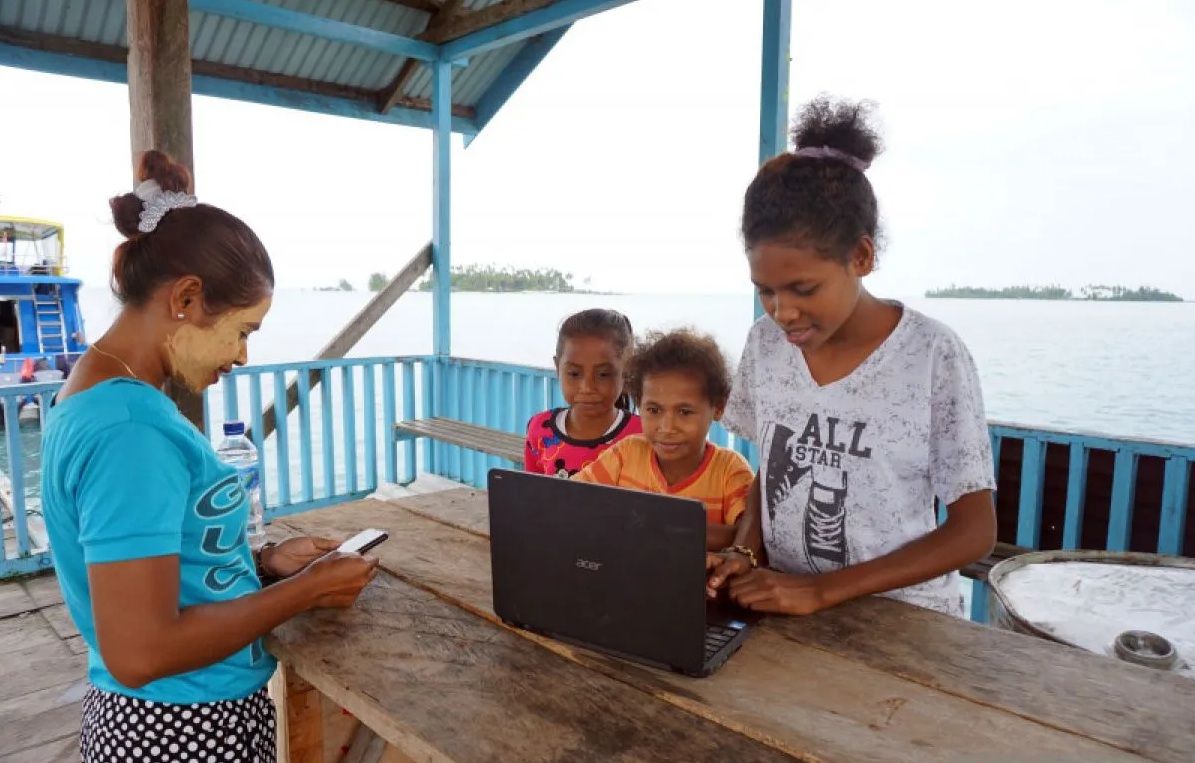
Expanding reliable internet access has become an increasingly important part of development in Indonesia’s easternmost regions. In Papua Pegunungan (Highland Papua), the provincial government is moving to address the digital divide through the installation of satellite-based internet infrastructure at 67 locations across eight regencies. The initiative, supported by additional regional infrastructure funding, reflects an effort to bring digital services closer to communities, schools, and healthcare facilities that have long faced geographical barriers to connectivity.
The program is particularly significant in Papua Pegunungan, where mountainous terrain, scattered settlements, and difficult transportation routes make conventional telecommunications infrastructure expensive and challenging to develop. By using satellite technology, the provincial administration hopes to provide more practical access to internet services while strengthening the foundations for education, healthcare delivery, public administration, and local economic development.
According to information published by ANTARA on November 24, 2026, the initiative is being implemented through the Papua Pegunungan Provincial Office of Communication, Informatics, Encryption, and Statistics. The allocation covers 67 installation points distributed across the province’s eight regencies, with Starlink equipment forming a central component of the program.
A Strategic Investment in Digital Connectivity
The initiative is part of the provincial government’s broader effort to strengthen public infrastructure and improve access to essential services. Although road construction, electricity, and healthcare facilities remain important development priorities, digital connectivity is increasingly recognized as another fundamental requirement for improving the quality of life in remote communities.
For residents in isolated settlements, access to the internet can mean more than the ability to communicate. It can provide opportunities to access educational materials, obtain health information, communicate with government institutions, and connect local businesses with wider markets.
In this context, the 67-point internet expansion program represents an important step towards reducing the geographical disadvantages experienced by communities across Papua Pegunungan.
The program also demonstrates how satellite-based technology can complement conventional telecommunications infrastructure in areas where mountainous landscapes and dispersed populations create substantial deployment challenges.
Rp5 Billion in Additional Infrastructure Funding
The funding arrangement was explained by Oktovianus R. Lembang, Acting Head of the Informatics Applications Division at the Papua Pegunungan Provincial Office of Communication, Informatics, Encryption, and Statistics.
Speaking to ANTARA in Wamena on Monday, November 23, 2026, Lembang said the provincial government had received an additional allocation of Rp5 billion through the 2026 revised regional budget, known as APBD Perubahan, under the Infrastructure Additional Allocation scheme.
Of that amount, approximately Rp2.4 billion was designated for providing internet access to communities at 67 locations across the eight regencies.
The allocation is intended to support the procurement and installation of satellite internet facilities, together with the equipment required to operate and distribute the connection.
According to Lembang, the infrastructure package includes Starlink equipment, MikroTik networking devices, server racks, supporting mounting equipment, and wireless access points.
These components are important because establishing an internet connection requires more than installing a satellite receiver. Supporting network equipment is necessary to distribute connectivity to users and ensure that the service can be accessed through local devices.
The investment therefore focuses not only on providing satellite connections but also on establishing the supporting infrastructure required to make those connections useful to communities.
Eight Regencies Included in the Programme
One of the program’s defining features is its geographical distribution. The provincial administration has arranged the 67 installation locations across all eight regencies of Papua Pegunungan.
The initial distribution plan allocated eight locations to seven regencies, while Jayawijaya was assigned 12 locations. However, the allocation was subsequently revised after the provincial government received a larger number of proposals from communities in Jayawijaya.
Following the revision of the relevant administrative decision, Jayawijaya received 18 installation locations.
The remaining distribution was maintained as follows: Yahukimo, Nduga, and Pegunungan Bintang each received six locations, while Lanny Jaya, Tolikara, Yalimo, and Mamberamo Tengah each retained eight locations.
This distribution reflects the government’s effort to accommodate local requirements while ensuring that the program reaches different parts of the province.
The adjustment in Jayawijaya also illustrates the importance of incorporating community proposals into infrastructure planning. Rather than relying exclusively on an initial administrative allocation, the government revised the distribution to respond to the number of requests received from local residents.
Such an approach can help ensure that public investment is more closely aligned with actual demand.
Schools and Healthcare Facilities Among the Beneficiaries
The program is intended to serve several categories of users, particularly communities, schools, and community health centers, locally known as puskesmas.
For educational institutions, improved internet access could provide teachers and students with greater opportunities to use digital learning materials, access online educational resources, and communicate with other institutions.
In remote areas, where access to books, specialized learning materials, and educational support may be limited, internet connectivity can serve as an additional channel for expanding educational opportunities.
Healthcare facilities could also benefit from more reliable digital communication. Internet access can support administrative coordination, the exchange of health information, and communication with other healthcare institutions.
For communities, the availability of internet services can improve access to government information, facilitate communication, and create opportunities to participate in the increasingly digital economy.
Nevertheless, the effectiveness of these facilities will depend on how well they are integrated into everyday activities. Connectivity must be accompanied by adequate equipment, digital literacy, and institutional capacity if it is to produce meaningful improvements in public services.
Government to Cover Initial Internet Costs
Another important aspect of the program concerns operational financing.
Lembang explained that the provincial government would cover the costs associated with the internet facilities for the first four months following installation.
The coverage period includes November and December 2026, followed by January and February 2027.
After this initial period, the communities, healthcare centers, and schools using the facilities will be responsible for covering the subsequent internet service costs.
This arrangement provides an initial period during which beneficiaries can begin using the infrastructure without immediately assuming the full operational expenses.
At the same time, the transition to locally funded subscriptions raises an important issue concerning long-term sustainability.
Schools and healthcare facilities in remote communities may have different financial capacities. Therefore, maintaining access after February 2027 will require careful planning, particularly to prevent operational costs from becoming an obstacle to continued service.
The provincial government and beneficiary institutions will need to establish clear arrangements for financing, maintenance, and technical support.
Mobile Internet Services to Reach More Communities
The fixed installation program is also complemented by a separate initiative involving mobile internet services.
A report published by Suara Papua on November 24, 2026, highlighted the provincial government’s preparation of mobile internet services as part of its efforts to broaden digital access.
The mobile approach is relevant to the geographical realities of Papua Pegunungan, where some settlements are difficult to reach and permanent telecommunications infrastructure may not always be immediately available.
Mobile internet services can potentially provide temporary connectivity to communities that have not yet benefited from permanent installations. They can also support public activities and improve access to digital information in locations where fixed facilities remain limited.
Taken together, the two approaches offer different but complementary possibilities. The 67-point installation program establishes designated access locations, while mobile services can provide greater flexibility in reaching communities beyond those locations.
For the initiative to achieve its full potential, however, the government will need to ensure that mobile connectivity is delivered consistently and reaches communities with the greatest unmet needs.
Digital Infrastructure as an Economic Development Tool
Beyond education and healthcare, improved connectivity has implications for the regional economy.
Small businesses, agricultural producers, and local entrepreneurs can use internet services to access market information, communicate with suppliers and customers, promote products, and explore opportunities beyond their immediate surroundings.
For Papua Pegunungan, where agriculture and local trading activities play important roles in community livelihoods, digital access could gradually help improve the flow of economic information.
Connectivity may also support tourism promotion, allowing local destinations and cultural activities to reach a wider audience. Digital platforms can help communicate information about accommodation, transportation, local products, and regional attractions.
However, the economic benefits will not emerge automatically. Internet access must be accompanied by practical training, affordable devices, reliable electricity, and opportunities for local entrepreneurs to develop digital skills.
The government’s investment should therefore be viewed as an initial foundation upon which broader digital economic initiatives can be developed.
Building a More Inclusive Digital Future
The expansion of internet access across Papua Pegunungan reflects a wider development challenge facing remote regions of Indonesia: ensuring that geographical isolation does not prevent communities from participating in the digital transformation.
Satellite technology provides an opportunity to address some of the infrastructure limitations associated with mountainous and sparsely populated areas. Nevertheless, long-term success will depend on the quality of implementation and the government’s ability to maintain the facilities after installation.
Monitoring service reliability, ensuring transparent procurement, providing technical assistance, and evaluating actual usage will be important measures of program performance.
The distribution of 67 locations is a measurable starting point. The more important question will be whether those locations deliver consistent and affordable connectivity that improves people’s daily lives.
Conclusion
Papua Pegunungan’s decision to strengthen internet access across 67 locations represents a constructive investment in the province’s development priorities. Through approximately Rp2.4 billion in additional infrastructure funding, the provincial government is seeking to connect communities, educational institutions, and healthcare facilities across eight regencies using satellite-based technology and supporting network equipment.
The combination of fixed internet installations and preparations for mobile internet services demonstrates an effort to respond to the province’s geographical challenges through practical technological solutions.
Looking ahead, the success of this initiative should be measured not simply by the number of installed devices but by the opportunities created for residents. Better educational access, stronger healthcare coordination, more responsive public services, and wider economic participation should become the real indicators of progress.
If accompanied by sustainable financing, reliable maintenance, and digital literacy programs, the initiative could become an important foundation for a more connected and inclusive Papua Pegunungan, reinforcing the role of infrastructure development in Indonesia’s broader commitment to equitable national development.
Read Also
Papua Expands Internet Access Through Starlink
Papua Expands Digital Connectivity Through Starlink Initiative

