
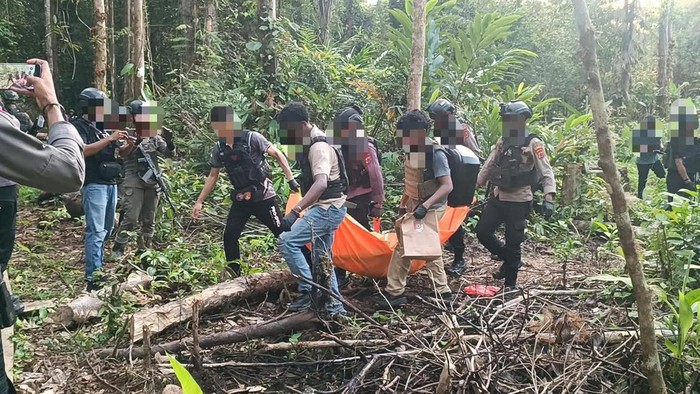
The Yahukimo civilian killing of a wood saw operator has renewed concern over the security of ordinary residents working in remote parts of Papua. The victim, identified by the initials JW, also known as U, was 42 years old and was found dead near the work camp where he lived in Kampung Key-Key, Yahukimo Regency. Indonesian authorities are investigating suspected involvement by an armed group identified by police as the Kodap XVI Yahukimo faction of the Armed Criminal Group, commonly referred to as KKB, especially the West Papua National Liberation Army (TPNPB), from the Free Papua Movement (OPM). Investigators have stressed, however, that responsibility has not yet been conclusively established.
The incident was reported on November 13, 2026, when a local resident heard gunfire coming from the direction of the victim’s camp. What followed was a sequence of events involving local residents, police officers, and personnel from the Damai Cartenz 2026 security operation. The victim’s body was subsequently taken to Dekai Regional General Hospital for medical examination, while investigators began collecting evidence and witness statements.
The case has drawn attention not only because of the violent circumstances surrounding the death, but also because the victim was a civilian worker whose occupation involved operating a wood-cutting machine. His death has raised questions about the safety of people carrying out ordinary economic activities in areas where armed violence remains a security concern.
Gunshots alert residents to the incident
According to accounts provided by the Damai Cartenz 2026 Public Relations Deputy, AKBP Andria, the incident came to light when a resident who was working in a garden heard three gunshots from the direction of the victim’s camp at approximately noon local time on November 13.
Concerned by the sounds, the resident returned to the village to inform others. Knowing that JW was living alone at the camp, the witness then went to check on him, accompanied by two other residents.
When they arrived, they found the operator lying outside the camp building. He had died, and visible injuries were found on his body.
The discovery prompted the residents to report the incident to the authorities. According to information published by Liputan6, police received the report at around 3 p.m. local time and mobilized a joint team comprising personnel from the Damai Cartenz 2026 Operation and Yahukimo Police.
The initial response was complicated by another security incident along the route to the location.
Security personnel report an armed exchange
As the joint team travelled towards the scene, officers reportedly heard gunfire and became involved in an exchange of fire with an armed group suspected by authorities of being associated with TPNPB OPM.
The personnel continued towards the location after the situation was considered safe. Their immediate tasks included securing the area, examining the scene, documenting physical evidence, and seeking information from residents who might have witnessed or heard the incident.
The response illustrates the security challenges that can confront law enforcement personnel when investigating serious crimes in areas where armed groups are suspected of operating. Officers must secure the location while also preserving evidence and ensuring that witnesses can provide information to investigators.
According to reports by Kumparan and Liputan6, the joint team conducted a search of the surrounding area and collected items that could help establish what happened. One item reported as having been secured was a torn pair of black shorts.
The victim’s body was then evacuated to RSUD Dekai for medical examination and a post-mortem assessment. The investigation continued after the evacuation, with police seeking to establish the sequence of events and identify those responsible.
Medical examination reveals serious injuries
The medical examination provided investigators with further information about the circumstances of JW’s death.
AKBP Andria said the examination identified open wounds, bruises, and abrasions across several parts of the victim’s body, including his head, face, chest, hands, thighs, and legs. Medical findings also recorded fractures to the nose, left arm, thigh, and both lower limbs. Serious injuries were reported to the head, face, and right side of the chest.
The findings were reported by several Indonesian media outlets, including detikSulsel, Liputan6, and Okezone. They indicate that the victim suffered extensive physical injuries before his body was examined at the hospital.
The medical findings are an important part of the investigation because they provide evidence that can be assessed alongside witness accounts, the condition of the scene, and other physical material. Investigators will need to establish how the injuries occurred and whether they are consistent with the suspected sequence of events.
Police have not publicly established a complete account of the attack or identified an individual perpetrator. The distinction matters: although the circumstances have led authorities to investigate possible involvement by an armed group, the final determination must be based on evidence gathered through the criminal investigation.
Police investigate suspected involvement of Kodap XVI Yahukimo
AKBP Andria said initial information pointed towards the Kodap XVI Yahukimo faction of the TPNPB OPM as a possible group involved in the incident. He emphasized that the allegation remained under investigation.
“Based on preliminary information, suspicion points to the armed criminal group Kodap XVI Yahukimo. However, we are still examining the situation through the investigation process,” Andria said in a statement on November 15.
He added that investigators were continuing to collect witness testimony and physical evidence to clarify the circumstances, identify the perpetrators, and bring those responsible before the law.
The statement reflects the position of the authorities at the time the reports were published. It does not constitute a final finding of responsibility, and the investigation remains necessary to establish the facts.
The case has been registered by Yahukimo Police under Police Report Number LP/B/61/XI/2026/SPKT/POLRES YAHUKIMO/POLDA PAPUA, dated November 13, 2026, according to Liputan6.
Investigators have listed a primary suspected offense under Article 459 in conjunction with Article 20(c) of Law No. 1 of 2023, which pertains to the Criminal Code. The subsidiary allegation refers to Article 458(1) in conjunction with Article 20(c) of the same law. These are the legal provisions cited in the initial handling of the case, not a court determination or conviction.
Damai Cartenz’s operation pledges evidence-based investigation
The Head of the Damai Cartenz 2026 Operation, Police Inspector General Faizal Ramadhani, described the death of the civilian as a serious matter for the joint security operation and Yahukimo Police.
He said the authorities would continue examining information and collecting evidence to establish who was responsible.
“We will continue to examine every piece of information and gather evidence to identify the parties responsible for this incident,” Faizal said, as quoted by Okezone on November 15.
His statement underlined the importance of an investigation based on verifiable facts rather than assumptions. The authorities have a responsibility to identify the perpetrators, establish the circumstances of the death, and ensure that the case proceeds through the legal system.
The response also involved several stages: receiving the public report, deploying personnel, securing the location, conducting a scene examination, evacuating the victim, and collecting witness statements. These steps are essential to building a case that can withstand legal scrutiny.
For the victim’s family and the wider community, the priority is a credible account of what happened and accountability for anyone found responsible.
Civilian safety remains a central concern in Yahukimo
The death of a worker at his camp highlights the vulnerability of civilians who live or work in locations far from major population centers. People engaged in activities such as farming, forestry, transport, and small-scale commerce depend on a basic level of security to carry out their daily responsibilities.
In remote areas, a sudden outbreak of violence can have consequences beyond the immediate victims. Residents may become reluctant to travel, workers may reconsider assignments, and businesses may face uncertainty over the safety of their personnel and operations.
The incident in Kampung Key-Key is a reminder that security is not simply a matter of protecting government facilities or responding to armed confrontations. It also concerns the ability of ordinary people to work, earn a living, and move around their communities without fear of violence.
For local authorities, the situation means that law enforcement responses need to be accompanied by attention to civilian protection. Communication with village residents, timely reporting of suspicious activity, and coordination between local communities and security personnel can contribute to early warning and safer responses when incidents occur.
At the same time, security measures must remain consistent with the law. Protecting civilians requires professional conduct, respect for human rights, and careful distinction between individuals suspected of involvement in violence and the wider population.
The wider impact of armed violence on local livelihoods
Yahukimo is part of Papua Pegunungan, a province where geographical conditions make transportation, public services, and economic activity particularly challenging in many areas. In such circumstances, confidence in local security can influence whether workers and businesses are willing to operate beyond established urban centers.
The killing of a wood saw operator therefore carries implications beyond the criminal investigation itself. It raises concerns about the safety of workers who depend on remote camps and work sites for their livelihoods.
When civilians become victims of armed violence, the effects can extend to families, employers, and communities. Work may be interrupted, relatives may face uncertainty, and residents may become more cautious about activities that require travel or temporary residence outside their villages.
Because of these effects, it is important for the authorities to fully investigate the case. Establishing responsibility is not only a matter of criminal justice for one victim. It is also part of restoring public confidence that serious acts of violence will be investigated and addressed.
The government and security authorities face the task of maintaining public safety while ensuring that economic and social activities can continue. This requires coordination between police, local administrations, community representatives, and other relevant institutions.
Accountability and protection must guide the next steps
The immediate priority remains the investigation into JW’s death. Police need to establish the full chronology, assess the medical findings, examine physical evidence, and verify witness accounts. Any conclusion about the perpetrators must follow from that process.
The reported exchange of fire during the security team’s journey to the scene also requires careful documentation. Establishing the circumstances of that encounter may help investigators understand the security conditions surrounding the response and determine whether it is connected to the incident at the camp.
Authorities should also ensure that relevant witnesses can provide information safely and that the victim’s family receives appropriate information about the investigation. Clear communication can help prevent speculation and reduce the risk of unverified accounts spreading through local communities.
The case demonstrates why civilian protection and professional law enforcement must remain central to the government’s response to armed violence in Papua. Effective security operations should be measured not only by their ability to confront armed threats but also by their contribution to protecting residents and upholding the rule of law.
Conclusion
The death of JW, a 42-year-old wood saw operator found near his work camp in Kampung Key-Key, is a tragic reminder of the risks civilians can face in areas affected by armed violence. The sequence reported by authorities began with gunfire heard by a local resident, followed by the discovery of the victim’s body, a police response, an armed exchange on the route to the scene, and a forensic examination at RSUD Dekai.
Initial information has led investigators to examine possible involvement by TPNPB OPM Kodap XVI Yahukimo. However, the authorities have made clear that the allegation remains under investigation and that evidence is needed to establish individual responsibility.
The case now requires a thorough and transparent legal process. Identifying those responsible, protecting witnesses, and ensuring that the victim’s family receives justice should remain the priorities.
More broadly, the incident reinforces the importance of protecting civilians in Papua. Workers, farmers, traders, and other residents should be able to carry out their daily activities without becoming targets of violence. A sustained commitment to public security, professional law enforcement, and respect for the law will be essential to building safer communities and supporting lasting stability in Yahukimo and across Papua Pegunungan.
Read Also
TPNPB OPM Attacks Workers on the Tambrauw Road Project in Papua Barat Daya
Ilaga Stabbing: TPNPB-OPM Claims Responsibility

