
Unemployment in Papua Barat (West Papua) has declined, with new official figures showing that the province’s open unemployment rate fell to 4.29 per cent in August 2026, down from 4.55 per cent a year earlier. The improvement came as the number of residents in work increased by 7,013 to 295,336, offering a positive indication of movement in the province’s labor market.
The figures, released by Statistics Indonesia (Badan Pusat Statistik, or BPS) in Manokwari on November 5, 2026, also showed that the number of unemployed people fell by 532 to 13,223. The results suggest that more residents were absorbed into employment over the 12-month period, while labor force participation edged upwards.
Yet the data tell a more complex story than the headline decline alone. Informal work still accounts for nearly two-thirds of employment in Papua Barat, and the share of formal employment remains considerably smaller. The figures also reveal differences between urban and rural areas, as well as between male and female workers.
For the provincial government, the latest BPS release provides an important measure of progress while identifying challenges that will shape the next stage of employment policy. The central task is not only to bring more people into work but also to expand access to stable employment, improve skills, and create opportunities that match the needs of the local economy.
BPS Reports a Decline in Unemployment
The latest figures compare labor market conditions in August 2026 with the same month in 2025. BPS Head of Papua Barat Province, Merry, presented the data during an official statistics release in Manokwari on November 5.
The open unemployment rate, known in Indonesia as Tingkat Pengangguran Terbuka (TPT), declined from 4.55 per cent in August 2025 to 4.29 per cent in August 2026. This represents a reduction of 0.26 percentage points.
At the same time, the number of unemployed residents fell from the previous year’s level by 532 people, reaching 13,223. The increase in the number of people working was more substantial, with 7,013 additional residents recorded in employment.
“With the increase in the number of employed residents, unemployment in Papua Barat also decreased by 532 people to 13,223,” Merry said, as quoted by ANTARA on November 5.
The figures provide a snapshot of the province’s labor market at a particular point in time. They indicate that employment expanded over the year, although they do not, by themselves, establish which government programs or economic activities were responsible for the change.
The distinction matters when assessing the results. A falling unemployment rate is a positive labor market indicator, but understanding its causes requires more detailed information about hiring, business activity, investment, and the sectors creating jobs.
A Growing Working-Age Population
The employment figures need to be considered alongside the size of Papua Barat’s working-age population.
In August 2026, the province had 441,337 residents of working age, an increase of 6,998 compared with August 2025. Of that total, 308,559 people were classified as part of the labor force, while 132,778 were outside it.
The TPAK, or labor force participation rate, reached 69.91 percent in August 2026, up from 69.55 percent a year earlier. The increase of 0.36 percentage points indicates that a slightly larger share of the working-age population was participating in the labor market.
This measure is important because unemployment statistics do not capture every person who is without a job. Someone not working or actively participating in the labor market may be classified as outside the labor force rather than unemployed.
The combination of a higher participation rate, an increase in the number of employed residents, and a decline in unemployment therefore provides a broader picture of labor market movement in the province.
However, the participation rate remains below the 71.25 percent recorded in August 2024, according to the BPS figures reported by ANTARA. This longer comparison suggests that participation has not yet returned to that earlier level.
Informal Work Remains the Main Source of Employment
One of the most significant findings in the latest report concerns the structure of employment.
In August 2026, 188,293 people in Papua Barat worked in the informal sector, representing 63.76 percent of the total employed population. This was an increase from 182,204 people, or 63.19 percent, in August 2025.
The number of informal workers therefore rose by 6,089 over the year. BPS attributed the increase mainly to a rise in the number of people working on their account.
By comparison, formal employment accounted for 36.24 percent of the workforce, equivalent to 107,043 people. From August 2025, the number of formal workers rose by 924, or about 0.87 percent, to 106,119.
The figures indicate that the expansion of employment was concentrated largely in informal work. This can include people running their own small businesses or working in other arrangements outside formal employment relationships.
Informal activities are an important part of local economies, particularly where agriculture, small-scale trade, and self-employment provide livelihoods. They can offer opportunities for people who may face barriers to entering formal employment.
At the same time, informal workers may have less predictable earnings and more limited access to employment-related protections. The distinction between the two categories is therefore important when evaluating the quality of job creation.
The relatively small increase in formal employment suggests that expanding the number of jobs is only one part of the challenge. Strengthening the business environment, supporting local enterprises, and improving workers’ qualifications will also matter if more residents are to access formal employment.
Agriculture Continues to Employ the Largest Share of Workers
Agriculture remains the leading employment sector in Papua Barat, accounting for 41.93 percent of the province’s employed population in August 2026.
Government administration ranked second, representing 14.09 per cent, followed by wholesale and retail trade at 10.39 per cent.
The distribution reflects the importance of agriculture and public services in the provincial economy. It also indicates the role that trade plays in supporting economic activity and connecting producers with consumers.
Agriculture’s position is particularly relevant for a province with communities whose livelihoods are linked to land-based production and rural economic activities. Improvements in agricultural productivity, access to markets, and the development of local processing industries could create opportunities beyond primary production.
However, the BPS figures do not provide a detailed breakdown of employment growth by individual sector. It is therefore not possible to conclude from the available data which industries accounted for the additional 7,013 workers.
For policymakers, the sectoral picture nevertheless offers a useful basis for considering future employment priorities. Strengthening agriculture, improving market access, and supporting small businesses could help broaden economic opportunities, while investment in skills and training may allow workers to move into a wider range of occupations.
Full-Time Employment Shows an Improvement
Another important indicator in the BPS report is the number of people working full-time.
BPS classifies full-time workers as those working at least 35 hours per week. In Papua Barat, their share increased from 57.92 per cent in August 2025 to 62.71 per cent in August 2026.
The number of full-time workers reached 185,199. Meanwhile, the underemployment rate declined from 9.74 per cent to 9.42 per cent.
These changes suggest that a greater proportion of employed residents were working at least 35 hours per week, while the share of workers seeking or available for additional working hours declined.
This is relevant because employment statistics are not only about whether a person has a job. Working hours also influence household income and the extent to which employment provides a reliable livelihood.
The improvement in full-time employment is encouraging, although it does not automatically indicate higher wages or better working conditions. Those outcomes require additional data on earnings, contracts, social protection, and job security.
Differences Between Urban and Rural Labour Markets
The provincial unemployment rate also conceals differences between urban and rural communities.
In August 2026, the open unemployment rate in urban areas stood at 6.44 per cent, compared with 3.08 per cent in rural areas.
The gap suggests that unemployment was more concentrated in urban labor markets. One possible area for further investigation is whether the types of jobs available in towns and cities match the qualifications and expectations of jobseekers. However, the available BPS report does not establish the reasons behind the difference.
Gender figures also show different trends. The unemployment rate among men declined from 4.94 per cent in August 2025 to 4.47 per cent in August 2026. For women, however, it edged up slightly from 3.96 per cent to 3.98 per cent.
Although the change among women was small, it points to the importance of examining employment opportunities by gender rather than relying solely on the overall provincial rate.
When assessing women’s participation in the labor market, relevant considerations include access to suitable work, training opportunities, and the availability of jobs across different sectors.
Education and Skills Remain Important Challenges
The education profile of Papua Barat’s workforce provides another perspective on the province’s employment conditions.
In August 2026, senior high school graduates accounted for 28.52 percent of employed residents. Workers with primary school education or below represented 32.07 per cent, while those with higher education, including diploma qualifications and above, accounted for 17.26 per cent.
Junior high school graduates represented 13.02 per cent, and vocational high school graduates accounted for 9.13 per cent.
The figures indicate that a substantial share of the workforce has relatively limited formal educational qualifications. This does not mean that workers without higher education lack practical skills, but it highlights the importance of training and opportunities to develop competencies relevant to changing labor market needs.
Vocational education, technical training, and programs that connect jobseekers with employers could help address some of these gaps. Such initiatives are particularly relevant when local industries require specific capabilities that may not be fully covered by general education.
For young people entering the labor market, access to relevant training and reliable information about vacancies can make a difference in the transition from education to employment.
Job Fairs and the Search for Better Employment Opportunities
The employment figures also come amid efforts to connect jobseekers with employers in Papua Barat.
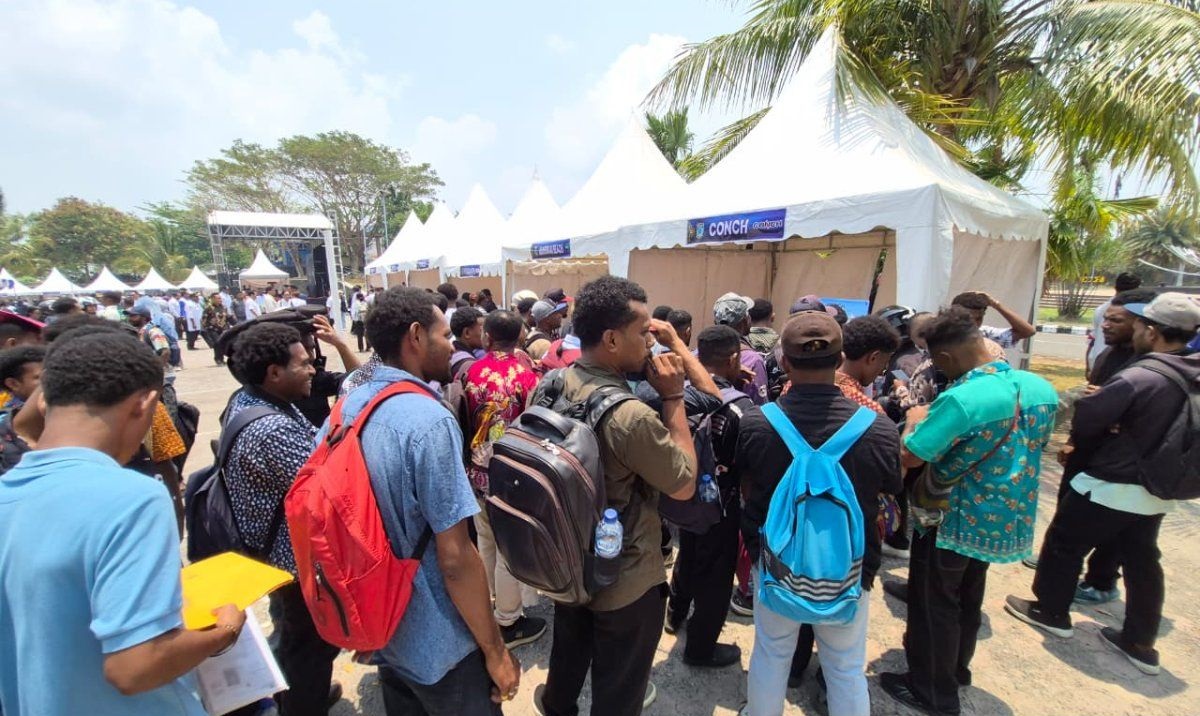
One example was the 2026 job fair organized by the provincial government in Manokwari on September 16. An ANTARA photograph accompanying the November 5 report showed jobseekers waiting to be interviewed during the event.
The job fair was one avenue through which employers and people seeking employment could meet directly. Such events can help jobseekers learn about available vacancies, submit applications, and take part in recruitment processes.
A separate report published by ANTARA on September 22 said that approximately 4,000 jobseekers had taken advantage of the 2026 Job Fair in Manokwari, while another report that day said the provincial government had facilitated 643 vacancies.
These figures provide additional context about employment initiatives in the province. However, they should not be interpreted as proof that the job fair caused the decline in unemployment recorded by BPS. The available reports do not establish how many participants were ultimately hired or how many of the 7,013 additional employed residents obtained their jobs through the event.
A more complete assessment would require follow-up information on recruitment outcomes, the duration of employment, and whether successful applicants entered formal or informal work.
Conclusion
The decline in Papua Barat’s unemployment rate to 4.29 percent is a positive development in the province’s labor market. BPS recorded 7,013 additional employed residents over the year to August 2026, while the number of unemployed people fell by 532. Labor force participation also increased, and the share of full-time workers rose.
Yet the figures point to work that remains unfinished. Informal employment still accounts for 63.76 percent of the workforce, formal employment has grown only modestly, and unemployment remains higher in urban areas than in rural communities. The slight increase in the female unemployment rate also deserves attention.
The next phase of employment policy will need to focus on the quality as well as the quantity of jobs. Stronger links between education and industry, vocational training, support for local businesses, and better access to employment information could help residents compete for a wider range of opportunities.
For Papua Barat, the latest figures offer a useful measure of progress, but sustained improvement will depend on whether economic growth can translate into stable work and better livelihoods. The real test will be whether more residents can secure jobs that provide reliable income, opportunities to develop their skills, and a stronger foundation for their families.
Read Also
Papua Tengah Funds Job Protection for 24,691 Workers
Papua Tengah Invests Rp6.3 Billion in Indigenous Papuan Job Training

