
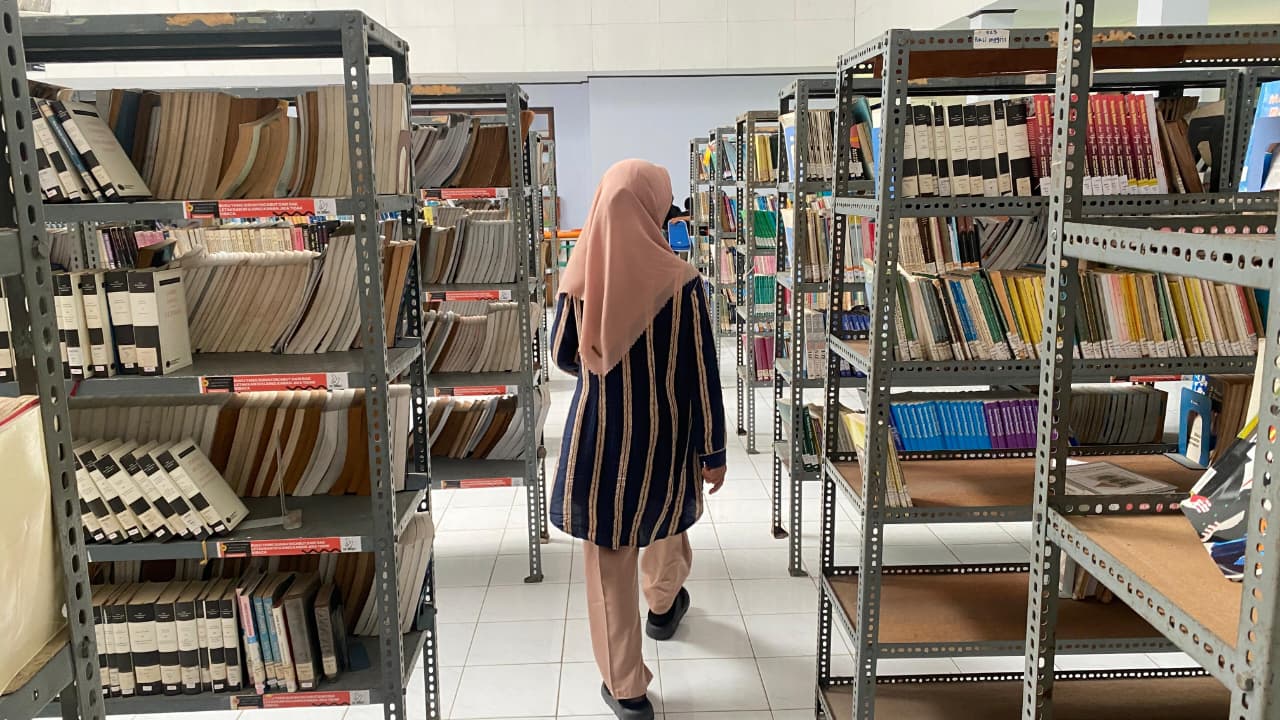
More than 500 historical publications preserved at Cenderawasih University (Uncen) are offering researchers an unusual window into Papua’s social, cultural, and political past. Known as the Van Baal Collection, the archive brings together rare books, journals, and periodicals associated with Dutch anthropologist and former governor of New Guinea, Jan van Baal. Its presence in Jayapura represents an important opportunity to strengthen historical research and preserve Papua’s cultural heritage for future generations.
The collection is housed in a dedicated section of the Uncen Library in Abepura, Jayapura. Although many of its publications date from the 1960s and 1970s, their contents document cultural practices, social structures, and historical developments that reach further back into Papua’s past. Much of the material is written in Dutch, making it a valuable but challenging resource for contemporary researchers.
The collection’s significance was highlighted in a report published by Cenderawasih Pos on October 31, 2026. Fatmawati, a senior librarian at Uncen, said the university held approximately 500 specialized titles related to Papua’s history. She explained that the library had proposed digitizing the material, but the process had been delayed by limitations in specialized equipment and the time required to translate the publications.
The story is not simply about preserving old books. It concerns how Papua’s historical records can be protected, critically examined, and made more accessible to the people whose communities and cultural traditions they describe. It also raises a broader question for Indonesia: how can public institutions, universities, and regional governments work together to ensure that the historical heritage of Papua remains available to future generations?
A Rare Collection with a Remarkable History
The Van Baal Collection has a history that connects Papua with the Netherlands and the development of modern academic research on the region.
Jan van Baal was a Dutch administrator and anthropologist who served as governor of Netherlands New Guinea from 1953 to 1958. He was also associated with Leiden University and became known for his work on the anthropology and ethnology of communities in Papua.
According to Cenderawasih Pos, the collection now held by Uncen originated from Van Baal’s personal library. Yohanes G. Aribowo, a first expert librarian at the university, explained that the books were initially taken to the Netherlands when Van Baal returned there after completing his service in Papua.
Years later, communication and contacts between the university and parties connected to the collection led to an agreement to bring the library materials back to Papua for educational purposes. The transfer meant that historical publications once held outside the region could again be consulted in the place whose history they helped document.
The precise date of the collection’s return is not specified in the report. Nevertheless, its presence at Uncen represents an important development for local academic institutions. Rather than remaining solely in private or overseas collections, the materials are now held within a university library in Papua, where they can support research and education.
The collection is particularly relevant because Papua’s history has been documented through different sources, including oral traditions, administrative records, missionary accounts, ethnographic studies, and academic publications. Bringing these materials together in a local institution creates opportunities for researchers to compare different perspectives and develop a more comprehensive understanding of the region.
Who Was Jan van Baal?
Understanding the collection also requires examining the career of the man whose name it carries.
Van Baal was born on November 25, 1909, in Scheveningen, the Netherlands, and died on August 9, 1992, in Doorn. He studied Indology at Leiden University, an academic discipline closely associated with the study of the Dutch East Indies and colonial administration.
His early career brought him to Papua, then administered by the Netherlands as New Guinea. He initially worked in Merauke before serving as head of the Population Affairs Office, known as the Bevolkingszaken, in Hollandia, the city now known as Jayapura.
As described in a 2023 profile published by Jubi, the office received ethnographic and cultural reports from district administrators across the territory. These reports documented the customs, social organization, and cultural characteristics of different communities.
Such information was used by the Dutch administration in developing policies and planning for the territory. This administrative background is important when assessing the historical value of Van Baal’s records: they were produced within a colonial system and should therefore be read with an understanding of the political circumstances in which they were created.
In 1953, Van Baal became governor of Netherlands New Guinea, succeeding S.L.J. van Waardenburg. He held the position until 1958. During his administration, the governor’s office was moved from Hollandia Binnen to Hollandia Haven, in the area now associated with Dok II in Jayapura.
After leaving Papua in 1958, he returned to the Netherlands and continued his academic career. His experience as an administrator and researcher placed him at the intersection of colonial governance and the development of European anthropology concerning Papua.

His Academic Work and the Study of Papua’s Cultures
Van Baal’s academic contributions extended beyond his administrative career. One of the works highlighted in Jubi’s profile is Dema, a substantial study of the Marind-Anim people of southern New Guinea.
Published in 1966, the 1,035-page book was written by Van Baal together with Catholic priest J. Verschuren. It examined aspects of Marind-Anim society and became one of the publications associated with the historical study of communities in what is now Papua Selatan (South Papua) province.
The work illustrates the importance of ethnographic research in documenting cultural practices, beliefs, and social structures. It also demonstrates why older academic publications remain relevant to researchers seeking to understand how communities were described and interpreted in earlier periods.
Van Baal was also associated with the concept of erring acculturation, discussed in his later academic work. The concept concerns cultural change that loses direction or produces outcomes different from those intended during contact between cultures.
Indonesian writer and former journalist Manuel Kaisiepo later drew on this idea in discussing the risks of misguided modernization. As reported by Jubi, the argument warned that development and cultural contact could weaken a community’s cultural foundations when changes were pursued without sufficient understanding of local values.
This discussion remains relevant to Papua today. Development brings opportunities in education, infrastructure, public services, and economic activity, but it also raises questions about how communities can maintain their languages, traditions, and cultural knowledge while adapting to changing circumstances.
The value of Van Baal’s work, therefore, lies not in treating every historical interpretation as definitive, but in making the records available for critical academic examination.
Uncen Library: Protecting a Fragile Historical Archive
The collection’s return to Papua has not removed the challenges associated with preserving it. On the contrary, the age and physical condition of the publications have made conservation an increasingly urgent responsibility.
Fatmawati explained that the collection includes rare books, magazines, and scientific journals, many of which remain in Dutch. Translating them requires time and specialized language skills. The library has also faced difficulties in obtaining the equipment needed to digitize the material.
The problem is particularly serious because old paper can become fragile through age and environmental exposure. Pages may deteriorate, bindings may weaken, and handling can cause further damage. Once an original document is lost, replacing it may be impossible, especially if no other copy exists.
Yohanes G. Aribowo explained that the library therefore applies special access procedures to protect the collection. Unlike ordinary library books, which visitors can generally browse independently, Van Baal materials are made available under the supervision of library staff.
He stressed that the restrictions were not intended to prevent public access. Rather, they were introduced as a protective measure to prevent rare materials from deteriorating or disappearing.
The library’s approach reflects a difficult balance between two responsibilities: making historical knowledge available and ensuring that the physical sources survive for future generations.
Digital Preservation and Translation Are the Next Priorities
The most pressing challenge is establishing a reliable digital archive.
According to Cenderawasih Pos, Uncen has already digitized thousands of student theses and academic research papers. Digital copies provide a safeguard when physical documents become damaged and allow users to consult materials without repeatedly handling the originals.
However, the Van Baal Collection has not yet benefited from the same level of digital protection. The lack of specialized scanning equipment and the technical requirements of handling fragile publications have delayed the process.
A comprehensive digitization program would help address this vulnerability. High-resolution scanning, professional archival storage, and appropriate cataloging could protect the contents while making them more accessible to researchers.
Translation is equally important. Since much of the collection is written in Dutch, its usefulness to Indonesian students, local researchers, and the wider public remains limited without language support.
Cooperation between Uncen, Indonesian universities, Dutch academic institutions, and language specialists could help address this challenge. A carefully managed program could prioritize the most fragile and historically significant documents before gradually expanding to the wider collection.
Such work would also benefit from clear documentation standards, including publication details, authorship, dates, subject classifications, and notes about the historical context in which each document was produced.
Importantly, digitization should not replace the preservation of original materials. The physical books remain historical objects in their own right, and digital copies should function as an additional layer of protection and access.
Government and Regional Institutions Have a Role in Cultural Preservation
The preservation of Papua’s historical heritage is not solely a responsibility of librarians or academic researchers. It is also connected to Indonesia’s broader efforts to strengthen education, cultural development, and the protection of local heritage.
The Van Baal Collection offers a practical example of how universities can contribute to those goals. By housing historical materials in Papua, Uncen provides a local academic resource that can support research into the region’s cultural and social development.
The university’s work also reflects the importance of maintaining historical resources within the communities and regions they document. When local institutions have access to relevant archives, students and researchers are better positioned to examine their history rather than relying exclusively on publications held overseas.
National and regional government institutions could support these efforts through funding for conservation equipment, specialist training, archival infrastructure, and translation programs. Partnerships with museums, libraries, and cultural organizations could also help connect academic research with public education.
The provincial and district governments in Papua have an important role in supporting cultural literacy and encouraging younger generations to learn about local traditions. This could include school programs, public exhibitions, cultural documentation projects, and research partnerships with universities.
Such initiatives should also recognize the importance of Indigenous knowledge. Written colonial-era records represent only one category of historical evidence. Oral histories, customary knowledge, local languages, traditional practices, and accounts passed down through generations are equally important to understanding Papua’s cultural heritage.
Bringing these sources together would create a richer and more balanced historical record. It would also help ensure that local communities are not merely subjects of historical research but active participants in documenting and interpreting their heritage.
Reading Colonial-Era Records with Historical Context
The Van Baal Collection offers valuable information, but its historical origins require careful consideration.
The publications were produced during a period when Papua was administered under Dutch colonial rule. Administrative reports and ethnographic descriptions from that era often reflected the priorities, terminology, and assumptions of the institutions that produced them.
For contemporary researchers, the findings mean the documents should not be treated as neutral or complete accounts of Papua’s past. Their observations need to be compared with other historical evidence, including Indigenous oral traditions, Indonesian archival records, and modern academic research.
This approach does not diminish the collection’s value. On the contrary, critical examination can make the materials more useful by identifying their strengths, limitations, and historical context.
It can also encourage a more comprehensive understanding of Papua’s past, one that recognizes the perspectives of local communities alongside the records created by outside administrators and researchers.
For international scholars, the archive may offer opportunities to examine the history of anthropology, colonial administration, and cultural change in the wider Pacific region. For Indonesian researchers, it can provide additional material for studying Papua’s historical experience and the development of its diverse societies.
Making Papua’s Cultural Heritage Accessible to Future Generations
The long-term significance of the Van Baal Collection will depend on what happens next. Preserving more than 500 historical titles is an important achievement, but keeping them safe and making their contents accessible requires sustained investment.
The immediate priorities are clear: protect the fragile originals, secure specialized digitization equipment, develop translation capacity, and expand academic cooperation. These steps would allow the archive to serve a wider range of readers while reducing the risks associated with handling old publications.
There is also an opportunity to introduce the collection to younger audiences. Digital exhibitions, educational materials, and public discussions could help connect historical research with contemporary questions about identity, language, and cultural continuity.
For Papua, the preservation of historical knowledge is closely linked to the future of its cultural diversity. Development and modernization need not come at the expense of local traditions. With appropriate institutional support and meaningful community participation, both can advance together.
Conclusion
The Van Baal Collection at Cenderawasih University represents an important historical resource, bringing more than 500 publications associated with Jan van Baal and the study of Papua’s past back into the region’s academic environment. Its value extends beyond the biography of a former colonial governor and anthropologist. The archive offers opportunities to examine Papua’s social history, cultural diversity, and changing relationship with the wider world. However, fragile documents, Dutch-language materials, and limited digitization facilities present urgent challenges. Cooperation between the Indonesian government, regional administrations, universities, cultural institutions, and Indigenous communities could help secure this heritage for the future. By combining professional conservation with translation, digital access, and community-based historical research, Indonesia can strengthen the preservation of Papua’s cultural wealth while ensuring that future generations have greater opportunities to understand and appreciate their history.
Read Also
Festival Kali Maro IV Celebrates Papua’s Heritage
Papua and Japan Preserve World War II Heritage

