
A plan to build 2,200 homes in Papua Pegunungan (Highland Papua) province is moving towards a locally driven implementation model, following discussions between central government ministries and regional leaders on how the programme can be delivered transparently and in accordance with national regulations.
The proposed allocation comprises 2,000 homes for the wider community and another 200 designated for customary leaders, or kepala suku. The initiative reflects an effort by President Prabowo Subianto to expand access to adequate housing while giving regional governments a greater role in development programmes within their territories.
The discussions gained momentum after Papua Pegunungan Governor John Tabo and the province’s regents raised the issue with the central government, seeking greater authority for local administrations to manage housing construction for residents and customary leaders.
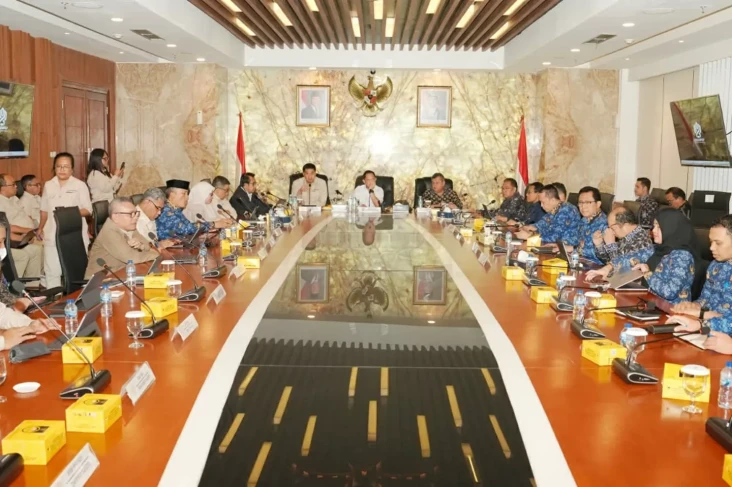
On October 28, 2026, Home Affairs Minister Muhammad Tito Karnavian met with officials from the Ministry of Housing and Settlement Areas, the Ministry of Finance and the Financial and Development Supervisory Agency (BPKP) in Jakarta to discuss the implementation mechanism. The following day, Tito said the government was seeking a way to accommodate the regional administrations’ request while ensuring that the programme could be completed properly.
Housing Minister Maruarar Sirait welcomed the prospect of giving local governments greater responsibility, describing regional involvement as an important way to accelerate development across Indonesia.
The proposal is significant for a province where geography, infrastructure constraints and the distribution of settlements make public service delivery particularly demanding. If implemented effectively, the programme could provide more than just new buildings. It could support household security, improve living conditions and create opportunities for local participation in the construction economy.
However, the 2,200 homes remain a government plan under discussion. The next stage will require clear administrative arrangements, funding certainty, appropriate land preparation, technical standards and effective oversight.
How the 2,200-Home Plan Took Shape
Regional leaders seek a greater role
The latest discussions followed an earlier meeting between Tito Karnavian, Papua Pegunungan Governor John Tabo and regents from across the province.
During that meeting, regional leaders conveyed their aspiration for local governments to take responsibility for implementing housing construction, particularly homes intended for residents and customary leaders.
Their request reflected a desire for regional administrations to have a more direct role in projects that affect their communities. Local governments are closer to the people who will benefit from the programme and are better positioned to understand local settlement conditions, community priorities and the practical challenges of construction.
According to Tito, the regional leaders wanted the programme to be carried out by the local administrations and asked the central government to place its trust in them.
“They want the housing programme, particularly for residents there and customary leaders, to be implemented by them. “They are asking for trust,” Tito stated in a written statement reported by ANTARA on October 29.
The request was not simply about transferring responsibility. It also raised questions about how public funding, procurement, construction supervision and accountability would operate if regional administrations took the lead.
For the central government, the task was therefore to find a framework that would allow local authorities to participate without weakening the safeguards required for a publicly funded programme.
The meeting brings ministries and oversight institutions together
The follow-up meeting took place on Wednesday, October 28, at the Sjahruddin Rasul Meeting Room at BPKP headquarters in Jakarta.
Tito met representatives of the Ministry of Housing and Settlement Areas, the Ministry of Finance and BPKP to examine the arrangements needed for regional governments to carry out the proposed housing programme.
The meeting was a direct response to the earlier discussions with Governor John Tabo and the regents of Papua Pegunungan.
The involvement of several national institutions was important because the proposal touches on different areas of government responsibility. The housing ministry is responsible for housing policy and technical considerations, the Ministry of Finance has a role in public funding arrangements, while BPKP provides oversight and supports accountability in government programmes.
The Home Affairs Ministry, meanwhile, has a supervisory role in relation to regional administrations and their implementation of government policies.
Tito said the central government was looking for a mechanism that would accommodate regional aspirations while ensuring that all stages of implementation complied with applicable regulations.
“We are finding a way to ensure that the process obeys the applicable rules while also making sure that the programme can genuinely be implemented and completed properly,” he said.
His statement underlined a central condition of the proposed cooperation: greater authority for regional governments must be accompanied by the capacity to deliver the project responsibly.
The talks focused on who would build it and how to meet the programme’s goals.
The housing minister confirms the proposed allocation
On Thursday, October 29, Housing and Settlement Areas Minister Maruarar Sirait provided further details about the proposal.
He said the government was considering allowing Papua Pegunungan’s regional administrations to take the lead in carrying out the housing construction.
The planned allocation totals 2,200 units. Of these, 2,000 are intended for the general population, while 200 are designated for customary leaders.
“The number is 2,000 for the community and 200 for customary leaders. Yes, the total is 2,200 units,” Maruarar said, as quoted by Liputan6.
The minister also said he would submit an official letter to President Prabowo Subianto, with copies to the Minister of State Secretary, the Minister of Finance, the Minister of Home Affairs and BPKP, outlining the proposed implementation arrangement.
This step is important because the programme requires coordination across several institutions before the proposed division of responsibilities can be formally established.
Maruarar expressed appreciation for the regional administrations’ willingness to take on the construction work. He emphasised the need to empower local governments with opportunities and trust to drive development in their respective areas.
His position reflects a broader policy principle: national development programmes can be more responsive when local administrations are actively involved in planning and implementing them.
Why Local Government Involvement Matters
Papua Pegunungan faces geographical and logistical challenges that can make housing construction more complicated than in many other parts of Indonesia.
The province includes highland settlements, mountainous terrain and communities separated by difficult transport routes. In some locations, moving construction materials, equipment and workers requires careful planning and can increase costs.
These conditions make local knowledge particularly important. Regional administrations understand the characteristics of their districts, the location of settlements and the social considerations that need to be addressed before construction begins.
Local participation can also improve communication with residents and customary institutions. This is relevant in Papua, where land ownership, customary rights and community relationships are important considerations in development planning.
A locally managed programme could help identify suitable sites, coordinate with community representatives and adapt construction arrangements to local conditions.
However, decentralised implementation also requires strong administrative capacity. Regional governments need qualified technical personnel, transparent procurement procedures, reliable contractors and effective systems for monitoring construction quality.
The central government’s insistence on regulatory compliance is therefore not merely an administrative formality. Ensuring the correct use of public resources and the construction of high-quality homes is crucial.
The Proposed Allocation: 2,000 Homes for Residents and 200 for Customary Leaders
The division of the proposed 2,200 units into two categories reflects an effort to address different community needs.
The 2,000 homes allocated for the general population form the largest part of the plan. Their eventual distribution will need to be based on clear eligibility criteria and an assessment of housing needs.
The government has not yet provided a detailed public breakdown of the intended beneficiaries by district, household category or construction location in the reports cited. Those details will be important for ensuring that the programme reaches the people most in need.
The additional 200 homes designated for customary leaders recognise the role that traditional institutions play in Papua’s social structure.
Customary leaders often serve as important intermediaries between communities, local administrations and other institutions. They can help communicate development priorities, facilitate dialogue and encourage community participation.
The government may intend to recognise the role of customary leaders in local society by providing them with housing support. Nevertheless, the selection process should be transparent and based on clearly defined criteria to maintain public confidence and ensure fair implementation.
The distinction between the two allocations also makes it important for the government to explain the programme’s objectives, eligibility requirements and distribution procedures before construction begins.
Central Government Support and Regional Responsibility
The housing proposal is part of a wider effort to improve living conditions and expand access to housing across Indonesia.
The administration of President Prabowo Subianto has placed housing among its development priorities. According to Maruarar, the government significantly increased its home renovation programme in 2026.
He reported that the number of homes targeted for renovation had risen to 400,000 in 2026, compared with 45,000 in the previous year.
The government has also continued to promote access to home ownership through subsidised housing finance, including the Housing Financing Liquidity Facility, known as the FLPP.
These national programmes provide a broader policy context for the Papua Pegunungan proposal. While the 2,200-home plan has its regional implementation discussions, it forms part of the government’s wider effort to address housing needs through construction, renovation and financing support.
For Papua Pegunungan, the proposed arrangement also offers an opportunity to strengthen cooperation between national and regional institutions.
The central government can provide policy direction, technical guidance, funding arrangements and oversight. Regional administrations, in turn, can contribute local knowledge, coordinate with communities and manage implementation on the ground.
Such cooperation becomes especially important in provinces where geographical conditions and local circumstances necessitate adapting development programmes to meet specific needs.
What Must Happen Before Construction Begins?
The announcement of the 2,200-unit plan is an important development, but several practical steps will determine whether it becomes a successful housing programme.
First, the implementation mechanism must be formally agreed upon. Maruarar’s plan to submit an official report to the president and relevant ministries is part of this process. Clearly establishing the responsibilities of the central government, provincial administration, and district governments is essential.
Second, funding arrangements must be confirmed. A reliable budget framework, clear disbursement procedures, and financial reporting that relevant institutions can monitor are essential for a programme of this size.
Third, the government will need to identify suitable construction locations and establish transparent beneficiary criteria. Proper consultation and adherence to applicable regulations should address land availability and customary considerations.
Fourth, technical standards must reflect local conditions. Housing design, construction materials, transport arrangements and maintenance requirements should be appropriate for the highland environment.
Finally, monitoring must continue throughout the construction process. Public oversight, quality inspections and clear reporting mechanisms will help prevent delays, poor workmanship and misuse of funds.
These measures will be essential if the government wants the programme to deliver lasting benefits rather than simply meet numerical targets.
Housing as Part of Papua Pegunungan’s Wider Development
Adequate housing closely links to other aspects of social and economic development.
A secure home can improve household stability and provide a better environment for children to study, families to maintain their health and residents to pursue economic activities.
Housing construction can also create demand for local labour, transport services, building materials and small businesses. If regional authorities can involve qualified local contractors and workers, the programme may generate economic benefits beyond the completed houses.
The government’s wider policy of encouraging the use of local products and strengthening small and medium-sized enterprises could also be relevant to the housing sector.
However, the extent of local economic participation in the Papua Pegunungan project has not yet been specified. It will depend on procurement arrangements, the availability of suitable local suppliers and the technical requirements of construction.
There is also an opportunity to connect housing development with improvements in basic infrastructure. Roads, clean water, sanitation, electricity and access to public services are important factors in determining whether new housing can support a good quality of life.
A completed house is only one part of a functioning settlement. The broader objective should be to ensure that residents can live in safe, accessible and adequately serviced communities.
Conclusion
The proposed construction of 2,200 homes in Papua Pegunungan marks a significant opportunity for cooperation between Indonesia’s central government and regional administrations.
The plan includes 2,000 homes for the general population and 200 for customary leaders, and discussions have begun on how local governments can take a leading role while remaining accountable to national regulations.
The positions expressed by Home Affairs Minister Tito Karnavian and Housing Minister Maruarar Sirait point to a shared approach: regional administrations should be trusted to participate directly in development, but that responsibility must be supported by sound governance, financial transparency and effective supervision.
For Governor John Tabo and the regents of Papua Pegunungan, the next challenge will be translating their request for greater implementation authority into a practical delivery system. For the central government, it will be ensuring that institutional coordination and oversight remain strong throughout the process.
Ultimately, the announcement of 2,200 units alone will not measure the programme’s success. It will depend on whether the homes are built, whether the intended beneficiaries receive them fairly and whether the settlements provide the conditions needed for families to live safely and productively.
If the planning and implementation stages are managed effectively, the initiative could become a meaningful contribution to housing access and regional development in Papua Pegunungan, while demonstrating how national priorities and local leadership can work together to improve public welfare.
Read Also
Papua Housing Program Targets 22,379 Home UpgradesSupiori Housing Project Marks New Chapter in Papua

