
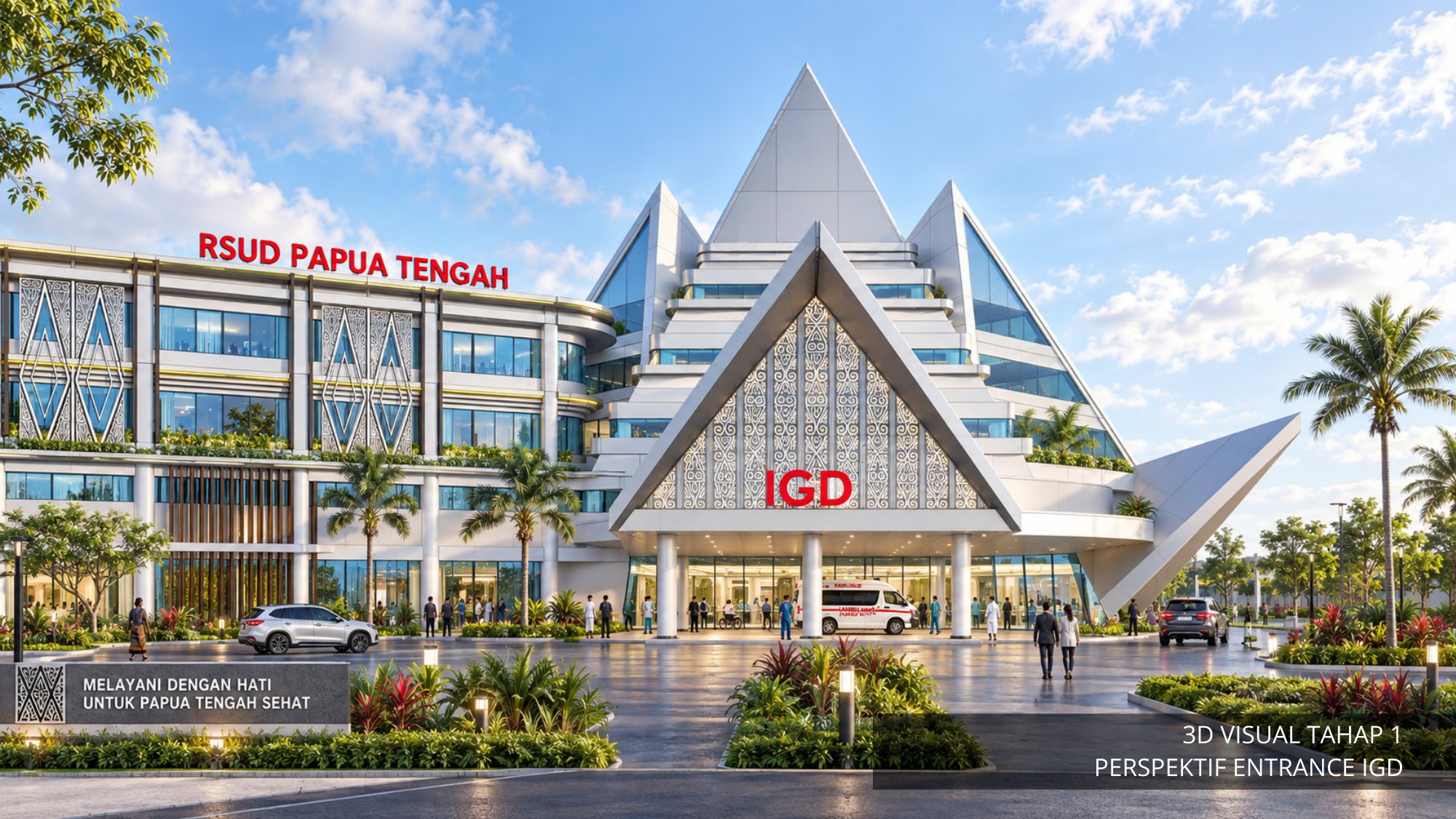
The Papua Tengah provincial government is targeting 2027 to begin construction of a new provincial hospital designed to strengthen healthcare services and reduce the burden on patients who need advanced medical treatment. The proposed hospital is expected to become a referral center for communities across the province, but officials are still completing the technical studies and planning documents required before construction can proceed.
The Papua Tengah Hospital Project reflects a broader effort to improve access to essential public services in a region where geography, transport connections, and the distribution of medical facilities can complicate access to treatment. For patients living far from major health centers, the ability to obtain specialist care closer to home can affect not only medical outcomes but also household expenses and the time families spend arranging treatment.
According to reports by Jubi, Nabire.net, and Radio Republik Indonesia (RRI), the provincial administration has been preparing the proposed Regional General Hospital, known in Indonesia as a Rumah Sakit Umum Daerah (RSUD), with construction targeted to begin in 2027. The project remains in its planning phase, with the feasibility study serving as a key basis for decisions on the location, capacity, and future services of the facility.
The government’s challenge is to turn the proposal into a functioning healthcare institution that meets local needs. That requires more than constructing buildings. The hospital will also need appropriate medical equipment, qualified personnel, dependable operating funds, and a clear role within the existing healthcare network.
A Provincial Hospital Takes Shape in the Planning Stage
Why the Project Matters
The proposed hospital is intended to strengthen the referral system in Papua Tengah, one of Indonesia’s provinces in the western half of New Guinea. Its provincial administration is seeking to improve the availability of healthcare services for residents across the region, including those who may need more specialized treatment than local facilities can provide.
In his opening remarks at a feasibility-study presentation in Nabire on September 7, 2026, Papua Tengah Health Office head Dr. Agus Chan said the planned hospital should be more than a physical construction project.
“The presence of the Papua Tengah Provincial Hospital is expected not only to be a physical development in the form of a hospital building but also a representative, accessible, safe, and sustainable referral healthcare center,” he said, according to RRI. He added that the facility should provide services suited to the needs of the population.
The statement sets out the intended purpose of the project: to establish a hospital capable of supporting a more organized referral system and responding to the region’s healthcare requirements.
For residents, the value of a provincial referral hospital will ultimately depend on which services it can provide and how effectively it connects with existing facilities. A new hospital could help manage cases requiring more advanced care, but it will need to complement, rather than replace, health centers and district hospitals that provide essential services closer to communities.
The planning process is therefore intended to determine what kind of hospital Papua Tengah needs, how large it should be, and which services should receive priority.
The Proposed Location in Nabire
One of the central issues in the preparation process is the selection of an appropriate site. Reports published in September identified Wadio village in Nabire Barat district, Nabire regency, as the proposed location under consideration. The site is being assessed through a formal feasibility study, meaning that the final decision depends on the outcome of the review rather than on the preliminary proposal alone.
On September 7, the provincial Health Office presented an initial feasibility study report at Hotel Mahavira 2 in Nabire. The meeting brought together representatives from government agencies and local stakeholders to discuss the proposed location and the issues that need to be resolved before the project advances.
Participants included representatives from the National Land Agency, public works authorities, the environmental agency, provincial and regency planning bodies, local security officials, the Nabire Barat district administration, and representatives of nearby villages.
Their involvement reflects the range of factors that must be considered before a major healthcare facility can be built. Land ownership and legal status need to be clarified. The site must also be assessed for accessibility, environmental implications, basic infrastructure, and consistency with spatial planning.
These considerations are particularly important for a hospital, which must remain accessible to patients and emergency vehicles while meeting technical and environmental requirements. Selecting a suitable site at the beginning can help reduce the risk of later disputes, construction delays, or costly changes to the project.
Feasibility Studies Will Determine the Hospital’s Design
From Preliminary Assessment to a Final Decision
The September 7 presentation was an early stage in the feasibility-study process, not a final approval to build. Agus explained that the assessment would proceed through preliminary, interim, and final reports. Only after the final assessment would officials be able to determine whether the proposed location was suitable for the hospital.
“If the final study concludes that the location is feasible, the document will determine the hospital’s capacity, number of beds, and priority healthcare facilities,” he said, as reported by RRI.
This sequence is significant because it links construction decisions to evidence about the site and the needs of the population. The number of beds, clinical services, and supporting facilities should be based on projected demand and the hospital’s intended role in the regional healthcare network.
The feasibility study is also expected to inform the project’s financial requirements. Establishing a hospital involves both initial investment and recurring expenditure. Construction, medical equipment, and supporting infrastructure are only part of the cost. Staffing, maintenance, supplies, and the continued operation of clinical services also require sustainable funding.
Planning those costs before construction begins can help the provincial government assess what it can finance and how the hospital will be operated once completed.
Environmental and Masterplan Documents
The feasibility study is not the only document being prepared. The provincial government is also working on an environmental impact assessment, known as AMDAL in Indonesia, a masterplan and a basic design for the proposed hospital.
In a later report, RRI quoted Malik, a program and planning official at the Papua Tengah Health Office, explaining that the three principal planning documents were the feasibility study, AMDAL, and master plan. The basic design would complement these documents. The government expected the documents to be completed by the end of the 2026 budget year, creating a basis for construction to begin in early 2027.
The environmental assessment is intended to identify potential effects associated with the project and inform measures to address them. The masterplan, meanwhile, should establish how the hospital’s facilities will be arranged and developed, while the basic design will provide a more detailed foundation for construction planning.
These documents aim to minimize uncertainty before committing public funds to the physical works. They should also help ensure that the hospital’s design is consistent with its clinical purpose and the conditions of the selected location.
The end-of-2026 target remains a planning milestone, however, rather than confirmation that all approvals have already been secured. Construction can begin only when the necessary studies, design work, land arrangements, approvals, and funding are sufficiently ready.
Community Participation Is Part of the Process
Local community representatives have participated in the planning discussions, emphasizing the value of considering residents’ perspectives when proposing a major public facility.
Aten Kobogau, a local community figure and customary leader, said customary representatives and two village heads in the SP3 area were prepared to support and facilitate the development process, according to RRI’s reporting on the September 7 meeting.
Community participation can help government planners understand local conditions that may not be fully captured by technical documents. Residents can provide information about access routes, settlement patterns, and practical concerns surrounding the proposed development. Their involvement can also help officials communicate the purpose of the project and identify issues that need to be addressed before construction.
Support from local leaders is valuable, but it does not remove the need for formal procedures. Land status, environmental requirements, and other legal obligations still need to be resolved through the appropriate processes. Meaningful consultation should allow questions and concerns to be considered before final decisions are made.
This process presents the provincial government with an opportunity to foster cooperation between public institutions and the communities the hospital aims to serve.
Improving Access to Healthcare Across Papua Tengah
The proposed hospital is part of a wider effort to strengthen healthcare provision in Papua Tengah. A provincial referral facility could help organize the treatment of patients who need services beyond those available at their nearest health center or district hospital.
However, the benefits will depend on how the new facility works with the existing system. Patients need functioning primary healthcare services, reliable referral arrangements, and clear information about where to seek treatment. A hospital alone cannot resolve every barrier to healthcare access, particularly for people who live far from major population centers.
Transport and emergency referral arrangements will therefore remain important. The government will also need to consider whether patients from other regencies can reach the facility safely and efficiently and how local hospitals and health centers will coordinate with it.
Medical staffing will be another decisive factor. A referral hospital requires qualified clinicians, nurses, laboratory personnel, technicians, and other health workers. Recruiting and retaining them, especially in specialized roles, can be as important as providing modern buildings and equipment.
The project’s planning phase offers an opportunity to anticipate these requirements rather than treat them as issues to be addressed after construction. A clear operational model could ensure the hospital is ready to deliver services upon opening.
A Projected Opening in 2028
Separate reporting in September indicated that the provincial government hoped the hospital could become functional and begin operating in 2028, following the targeted start of construction in 2027. That timeline remains a projection and will depend on the progress of planning, funding, and construction.
A staged construction approach has also been discussed. According to RRI, the feasibility study will help determine the hospital’s scale and facilities, with development planned in phases of approximately two to three stages.
A phased approach could allow the government to prioritize essential services while developing additional capacity in line with available resources and future demand. However, the technical planning process should determine the specific stages rather than assuming them in advance.
The period between the targeted construction start and proposed opening will also need to include preparations for staffing, equipment procurement, service protocols, and hospital management. These operational requirements are critical because a completed building does not automatically translate into a functioning medical service.
Clear milestones and regular public updates would help residents understand the project’s progress and distinguish between planning commitments, construction achievements, and readiness to receive patients.
Conclusion
The Papua Tengah provincial hospital project offers an opportunity to strengthen healthcare access and improve the organization of referral services across the province. The government’s target to begin construction in 2027 reflects an effort to move the initiative forward, while the ongoing feasibility study and supporting documents are intended to establish a sound foundation for the investment.
The next stage will require the completion of technical assessments, confirmation of the site, appropriate environmental and land procedures, reliable financing and a realistic plan for staffing and operations. Community participation will also remain important in ensuring that the project responds to local needs.
If these preparations are completed and the construction and operational targets are met, the hospital could become a significant addition to Papua Tengah’s healthcare network. Its success, however, should ultimately be measured by whether patients can obtain the care they need more reliably, whether referral services function effectively, and whether the facility can sustain high-quality treatment over time.
For residents of Papua Tengah, the most meaningful milestone will not simply be the opening of a new hospital building. It will be the point at which the facility begins delivering dependable medical services, helping families access appropriate treatment and supporting a stronger, more equitable healthcare system across the province.
Read Also
ITB Brings Digital Health Access to Papua’s Yapsi
Papua Tengah Trains 40 Health Workers in Primary Care

