
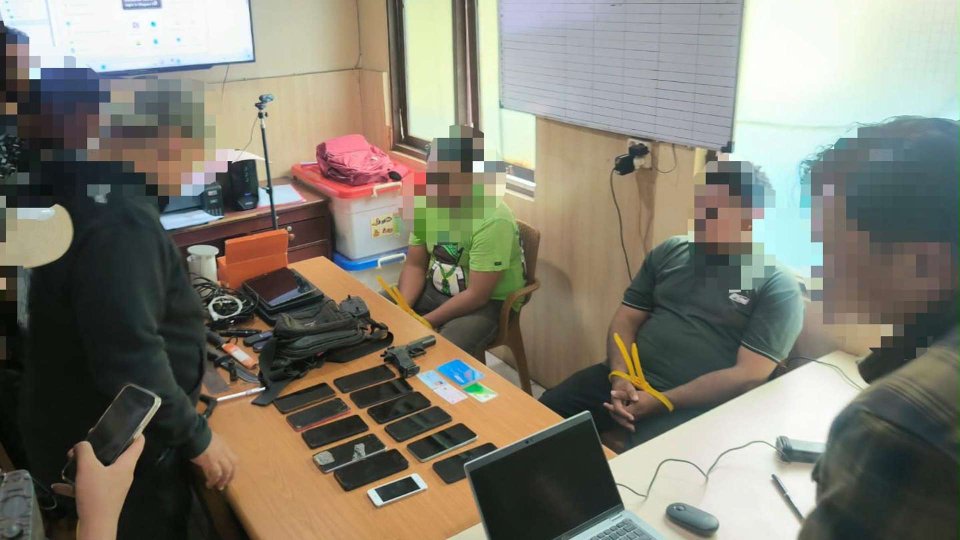
The investigation into an alleged illegal firearms and ammunition network in Papua has widened after Indonesian police detained two men in Jayapura, bringing the number of people involved in various stages of the case to 19 since March 2026. The latest arrests, carried out by the Damai Cartenz Task Force and Papua Regional Police, are part of an effort to trace the people suspected of facilitating the movement and sale of ammunition to armed groups in the region.
The two men, identified by their initials RS, 37, and SW, 33, were detained at Perumnas III in Waena, Heram District, at around 10.30 a.m. local time on Thursday, October 15. Police said the arrests followed further investigation into a case first recorded in March. RS has been named a suspect over his alleged role as an intermediary in ammunition distribution, while SW remained a witness as investigators examined his possible involvement.
The case is significant because illegal ammunition supplies can sustain armed violence long after individual transactions have taken place. Investigators are now seeking to establish how the people already identified in the case were connected, whether additional intermediaries were involved, and where the ammunition and firearms originated.
The latest arrests don’t prove that every detainee played the same role or that every allegation is true. Police have described the investigation as ongoing, and the legal status of each individual remains important.
Two Men Detained in Waena
An Investigation that Began in March
According to the National News Agency ANTARA, the latest arrests were based on Police Report Number LP/A/1/III/SPKT.DITKRIMUM/POLDA PAPUA, dated March 13, 2026. The joint team consisted of personnel from the Damai Cartenz Operation Task Force, also known as Satgas ODC, and Papua Regional Police.
The October operation followed an earlier arrest on October 6, when a man identified as H, also known by the initials IHB, was detained in Padang Bulan, Heram District. Police said the subsequent detention of RS and SW formed part of the continuing effort to develop the case and identify connections within the suspected distribution network.
Following their detention, RS and SW were taken to Papua Regional Police headquarters in Jayapura for questioning. Investigators were examining their suspected involvement in the distribution of illegal firearms and ammunition, including possible links to individuals who had already been detained.
The sequence illustrates how a firearms investigation can develop over several months. Rather than ending with an initial arrest, investigators may use information gathered from interviews, seized items, and earlier case files to identify other people suspected of facilitating transactions.
In this case, police said RS was believed to have acted as an intermediary in the distribution and sale of ammunition. He was also reportedly on a wanted list in connection with the case before his detention. SW, by contrast, remained a witness at the time of the report, and investigators were still examining his possible role.
That distinction is central to an accurate account of the investigation. Being detained for questioning does not automatically make a person a criminal suspect, and the allegations against RS must still be established through the applicable legal process.
Investigators Examine Links to Earlier Suspects
Police also said RS and SW were suspected of having connections as intermediaries within a network associated with a man identified as SP, who had been detained earlier in the investigation. Authorities have not publicly established every link between the individuals in the latest arrests and those previously processed.
The investigative task is therefore broader than determining what the two men may have done individually. Police are seeking to understand how transactions were arranged, how people involved communicated, and whether the network extended beyond the individuals already identified.
Such inquiries can help authorities distinguish between a direct supplier, a buyer, a financier, a broker, and someone who may have had only limited contact with the people under investigation. Each role carries different factual and legal questions, which must be assessed through evidence rather than assumptions.
The authorities have not announced a final conclusion about the full structure of the alleged network. Further examination of communications, documents, and other seized property may help establish the nature of the relationships among those being investigated.
Evidence Seized During the Operation
Ammunition, Electronic Devices and Other Items
ANTARA reported that the October 15 operation resulted in the seizure of one round of 9-millimeter ammunition, one airsoft gun, four bladed weapons, two laptops, 13 mobile phones, and a motorcycle. The items were reported as evidence collected during the detention of RS and SW.
The presence of electronic devices may be relevant to the investigation because communications and stored information can sometimes help investigators establish contact between individuals, reconstruct timelines, or identify possible links to other transactions. However, the seizure of a phone or computer does not, by itself, demonstrate that its owner participated in illegal activity. The relevance of each item must be determined through examination and the legal process.
Likewise, the recovered ammunition and airsoft gun should not be treated as proof that the two men possessed an operational firearm for use in an attack. Police have reported the items seized, but the precise connection of each item to the suspected distribution network remains a matter for investigators to establish.
The distinction is important when reporting weapons-related cases. Firearms, ammunition, airsoft guns, and bladed weapons are different categories of objects, and their legal status and evidentiary significance may differ. An accurate account should not imply that a fully functional firearm was recovered during the latest operation when the principal report lists an airsoft gun and a single round of 9-millimetre ammunition.
Investigators may also need to establish ownership, possession, and the circumstances in which the items were found. The evidentiary value of each object will depend on the results of those inquiries and its connection to the allegations being examined.
Nineteen People Involved in the Case Since March
Different Stages of legal proceedings
The October arrests form part of a wider investigation that has been under way since March 2026.
Damai Cartenz Public Relations Task Force head Commissioner Yusuf Sutejo said that 19 people had been arrested in connection with the firearms and ammunition network since March. He also outlined the stages reached by the cases involving those individuals.
According to Yusuf, 13 people had reached Stage II, the stage at which suspects and evidence are handed over to prosecutors. Two others had reached Stage I, when case files are submitted to prosecutors for review. Four people remained under investigation.
These figures indicate that the case has moved beyond the initial arrests, although they should not be confused with convictions. The handover of a case file or of a suspect and evidence to prosecutors represents a stage in the legal process, not a final judicial finding of guilt.
The figures also cover different stages of handling and should not be interpreted as meaning that all 19 individuals have been convicted or even that every person faces identical allegations. Each case must proceed according to its own evidence and procedural requirements.
For investigators, the challenge is to build a clear account of the alleged network while ensuring that the evidence against each individual can withstand legal scrutiny. This includes determining whether a person acted as a buyer, supplier, intermediary, or financier and whether the available evidence supports the allegation.
For the public, transparent communication about these stages can help prevent confusion between an arrest, a suspect designation, a prosecution, and a conviction. Such distinctions are particularly important in cases involving serious allegations that can affect public perceptions of security in Papua.
A Wider Investigation into Alleged Arms Transactions
Earlier Arrests in March
The latest developments follow a separate public announcement in March, when the Damai Cartenz Task Force and Papua Regional Police reported uncovering a suspected firearms and ammunition transaction network operating in Jayapura City and Jayapura Regency.
In a report published on March 15, Kumparan said eight people had been detained in connection with the earlier operation. Five had been named suspects at the time, while three others remained witnesses as their roles were examined. Authorities said the suspected supply chain was linked to armed groups operating in the Yalimo and Yahukimo areas.
The five suspects identified in that report included SP, 38, who was alleged to have sought out and purchased homemade firearms and ammunition. OB, 22, also known as Bakuru, was reported to have helped finance purchases, with an amount of approximately Rp122 million cited in connection with the alleged transactions. YP, 35, was described as a suspected contributor of around Rp13 million for ammunition purchases.
Two other individuals, MKM, 39, and DK, 35, were described in the report as allegedly helping connect buyers and sellers or acting as intermediaries in firearms and ammunition transactions. These roles were allegations reported during the investigation, rather than findings of guilt established by a court.
The March operation also resulted in the reported seizure of a homemade long-barrel firearm, 298 rounds of ammunition of various calibers, five firearm magazines, mobile phones, a bag, and identity documents believed to be connected to the suspected transactions.
Those items belong to the earlier operation and should not be confused with the smaller inventory reported in the October 15 arrests. Taken together, however, the reports show why investigators have continued to examine possible connections among people suspected of buying, financing, arranging, or distributing firearms and ammunition.
The March case also provides context for the authorities’ stated concern about supplies potentially reaching armed groups in Yalimo and Yahukimo. The available reports do not establish that every person detained in the wider investigation was directly involved in supplying those groups, so the links must continue to be assessed on a case-by-case basis.
Tracing the Network Beyond Individual Transactions
The broader objective of the investigation is to establish how the alleged supply chain operated and whether further individuals or sources of weapons and ammunition can be identified.
Commissioner Yusuf said the latest arrests were part of the continuing development of a case that had been handled for several months. The authorities’ reported focus on intermediaries suggests that investigators are seeking to understand not only the movement of physical items but also the relationships that may have enabled transactions.
That work can be complex. A suspected distribution network may involve separate people who source goods, provide money, arrange contact, or facilitate transport. Investigators must determine which connections are supported by evidence and which remain unconfirmed.
The process also requires careful handling of information. Communications or documents recovered during an investigation may provide leads, but those leads must be verified and assessed alongside other evidence. A contact between two individuals, for example, does not automatically establish that they participated in an illegal transaction.
The authorities have not publicly provided a complete account of the alleged network’s full reach, the total volume of ammunition involved across all transactions, or the final source of every item. Those questions remain matters for further investigation.
Why Illegal Ammunition Matters for Civilian Security
The alleged distribution network has implications beyond the individuals facing investigation. Where ammunition reaches armed groups involved in violence, it can contribute to the capacity to sustain attacks and prolong insecurity. Preventing illegal supplies is therefore one element of broader efforts to protect residents and maintain public order.
For communities in Papua, security is closely connected to daily life. People need to travel, attend school, access health services, and carry out economic activities without fear of violence. Businesses and public institutions also depend on conditions in which workers and supplies can move reliably.
Investigations into suspected illegal arms transactions can contribute to those objectives when they are based on evidence, coordinated across agencies, and conducted in accordance with the law. They can also help clarify whether criminal intermediaries are facilitating the movement of weapons or ammunition between locations.
At the same time, a single investigation should not be treated as a measure of the entire security situation across Papua. The October arrests are a specific development in Jayapura, while the alleged supply links mentioned in earlier reporting concern a wider geographic area. Assessing overall security requires broader and sustained evidence.
The police investigation also highlights the importance of distinguishing between alleged members of armed groups, people suspected of facilitating illegal transactions, and residents who have no involvement in such activity. Clear reporting helps avoid unfairly casting suspicion on communities because of the actions alleged against particular individuals.
Legal Process and the Next Phase
The immediate next step is further examination of the evidence collected during the October operation and the connections between RS, SW, and the individuals previously identified in the case.
Police have already assigned different legal statuses to the two men. RS has been named a suspect, while SW remained a witness at the time of reporting. Investigators may continue to assess whether additional evidence supports further action, but no conclusion about SW’s guilt should be drawn from his detention alone.
The wider case also remains at several procedural stages. The 13 people whose cases had reached Stage II had been handed over to prosecutors with the evidence, while two others had reached Stage I and four remained under investigation. The eventual outcomes will depend on the evidence and subsequent legal proceedings.
For the public, the value of the investigation will ultimately lie in whether it establishes the facts, identifies those legally responsible, and helps prevent further illegal weapons transactions. A thorough process can strengthen confidence in law enforcement by showing that allegations are assessed individually and that the legal status of each person is respected.
Conclusion
The detention of RS and SW in Waena on October 15 marks another step in the Indonesian authorities’ investigation into an alleged illegal firearms and ammunition distribution network in Papua. The case, which dates back to March 2026, has involved 19 people at different stages of legal handling, according to Damai Cartenz spokesperson Commissioner Yusuf Sutejo.
The earlier arrests and seizures reported in March provide context for the continuing inquiry, while the latest operation has added further individuals and evidence for investigators to examine. Yet the legal distinctions remain important: RS has been named a suspect, SW was still a witness when reported, and the allegations against the individuals involved must be tested through the appropriate process.
The broader security objective is to prevent illegal weapons and ammunition from contributing to violence and to protect communities across Papua. Achieving that objective requires more than arrests. It requires reliable evidence, careful investigation, coordination among law enforcement agencies, and a legal process that distinguishes proven facts from allegations.
As the inquiry continues, the most important measure will be whether investigators can establish the network’s actual structure, bring substantiated cases through the courts, and reduce the risks associated with illegal weapons distribution. For Jayapura and the wider region, a transparent, evidence-based investigation is essential both to public safety and to confidence in the rule of law.
Read Also
Papua Illegal Arms Network: 17 Suspects Detained Since March 2026
Papua Arms Trafficking: Police Arrest Suspects in Two Cases

