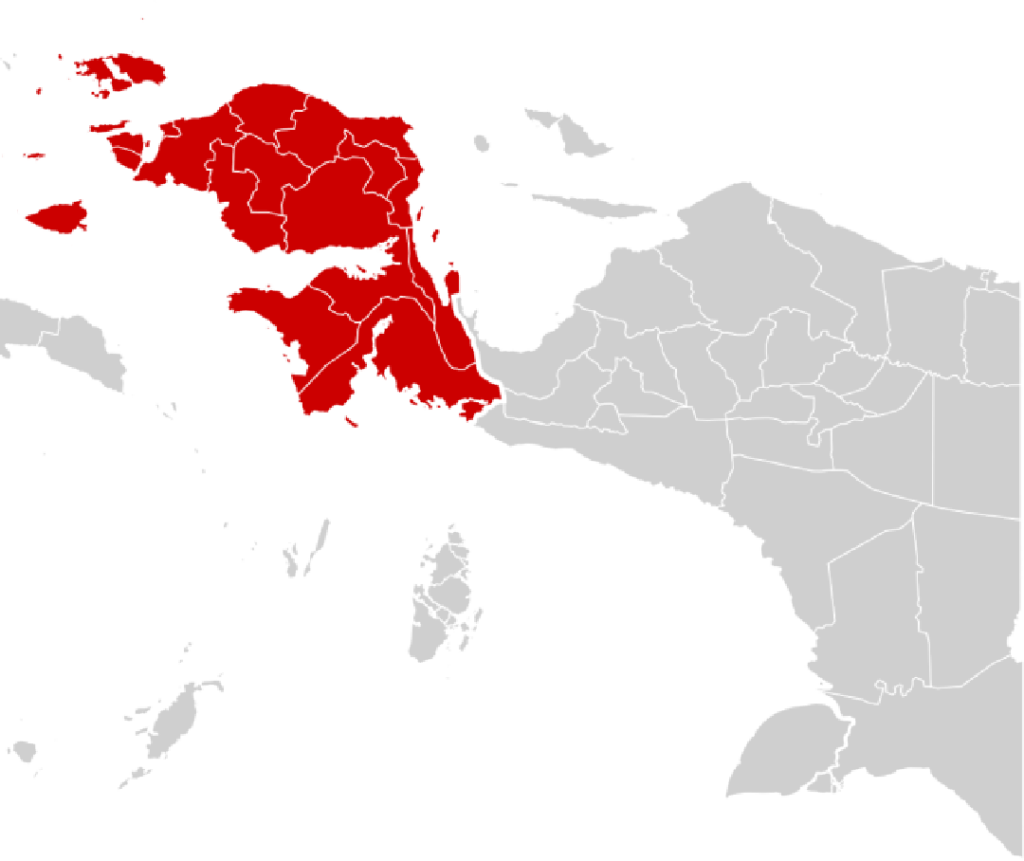
Four members of the armed group known as the West Papua National Liberation Army from the Free Papua Movement (TPNPB OPM) in Puncak Jaya, Papua Tengah (Central Papua), have surrendered their firearms and declared their intention to return to Indonesia’s national framework, in a development that authorities say offers an opening for reintegration and a return to civilian life.
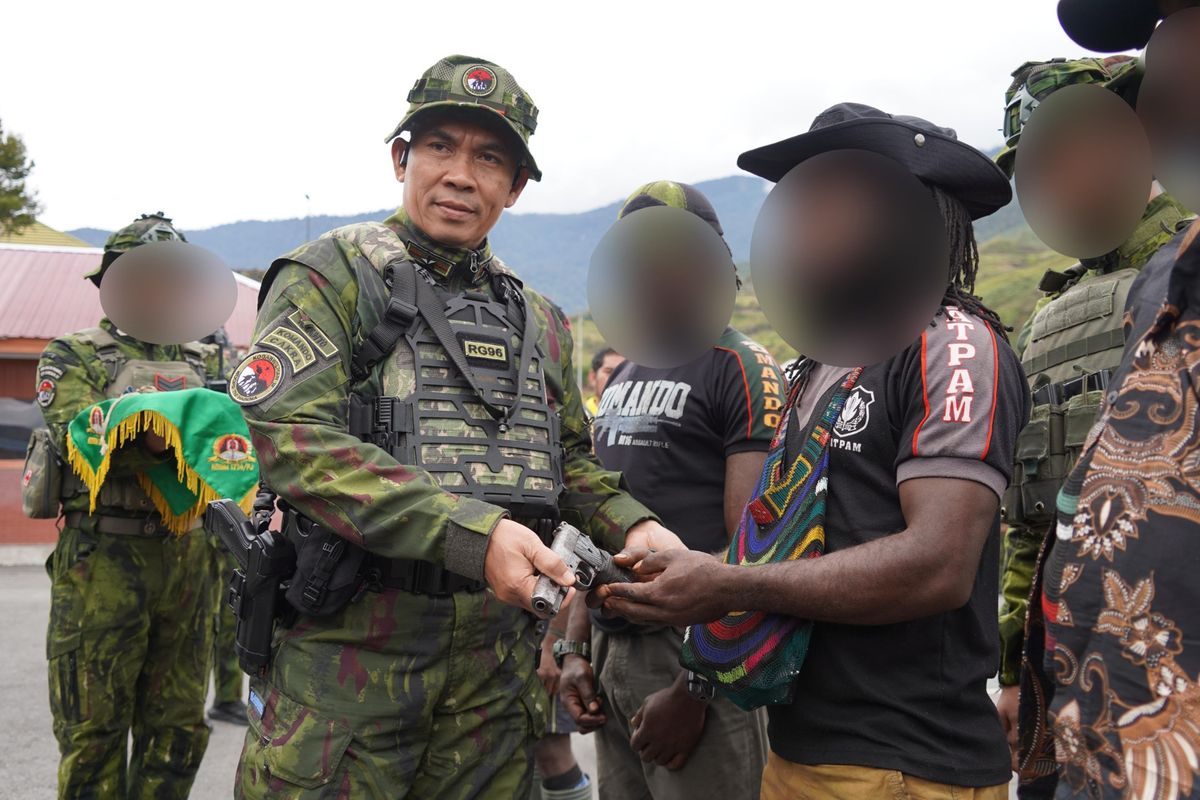
The four, identified as Bongkar Tabuni, Lipar Tabuni, Bejo Tabuni, and Kopitua Tabuni, handed over four firearms during a national reintegration ceremony at the headquarters of the 1714/Puncak Jaya Military District Command in Mulia on Saturday, September 26, 2026. They also recited a pledge and kissed the Indonesian national flag, the red and white, as symbols of their stated commitment to return to life with their families and communities.
Local government representatives, customary and religious leaders, community figures, and security personnel attended the event. Brigadier General Riyanto, commander of the Habema Joint Operations Command, received the weapons in person. The ceremony marked a significant public step in the four men’s stated decision to leave armed activity, although their longer-term reintegration will depend on what follows the formal event.
Who Returned and What They Handed Over
The four men were reported to have been associated with two OPM regional commands. Bongkar Tabuni and Lipar Tabuni were identified as members of Kodap X/Tolikara, while Bejo Tabuni and Kopitua Tabuni were linked to Kodap XXVIII/Yambi. Kopitua was reported to hold the position of field coordinator, or Danops Wil, within the Yambi command.
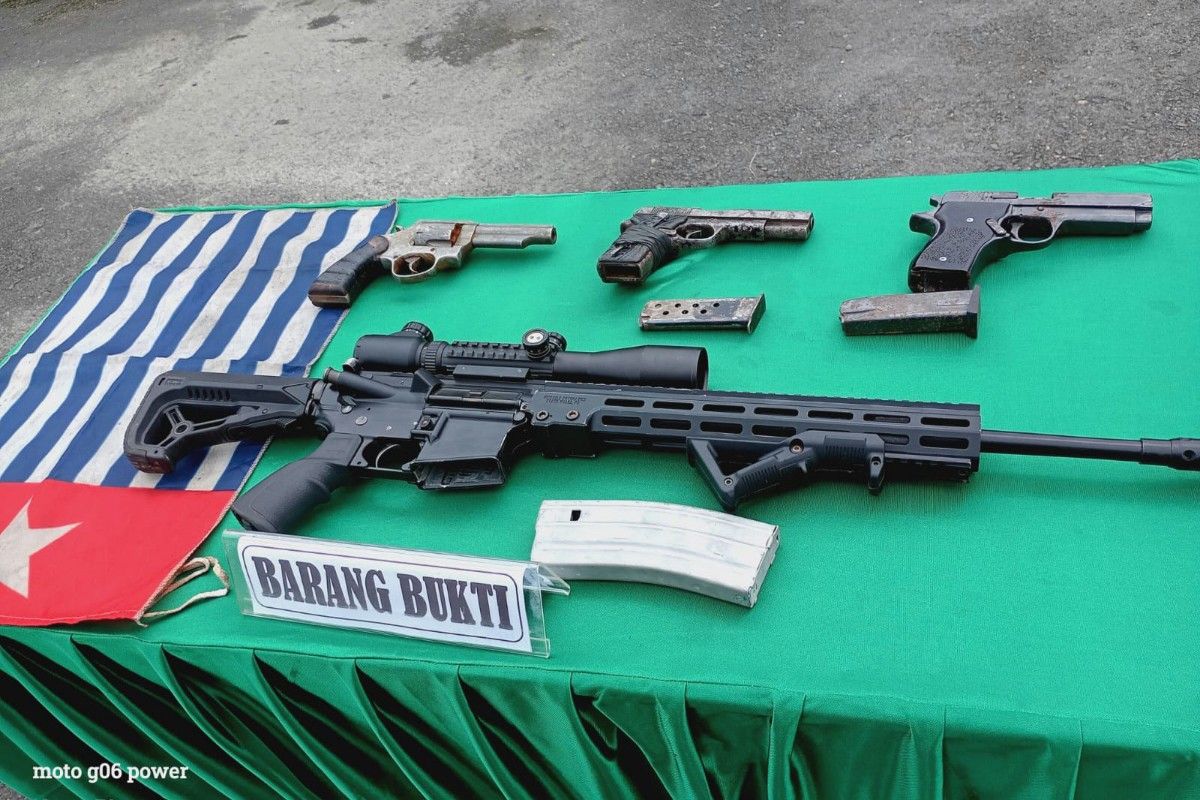
The weapons surrendered during the ceremony included an AR-15 rifle chambered in 5.56 mm, a 9 mm revolver, a Sig Arms Trailside pistol chambered in .22 LR, and a 9 mm Combat pistol. Reports said Bejo Tabuni handed over three firearms: the AR-15, revolver, and Trailside pistol. Lipar Tabuni handed over the combat pistol.
The four weapons were subsequently secured and were to be handled in accordance with applicable procedures. Their surrender is a tangible part of the announcement, distinct from the pledge itself: it places specific firearms under the control of authorities and provides a documented element of the transition away from armed activity.
The Chronology of the Reintegration Ceremony
The ceremony took place on Saturday at the 1714/Puncak Jaya Military District Command compound in Mulia. The location brought the four men together with representatives of the state and community institutions involved in the event. Reports describe the ceremony as a national reintegration process, rather than simply a weapons handover.
The four participants publicly expressed their commitment to return to life among their families and the wider community. They recited an oath and kissed the red and white flag, a symbolic act associated with their declaration of allegiance to Indonesia. They then handed over the four firearms to Riyanto, who accepted them on behalf of the Habema command.
The sequence connected a personal declaration with a practical security measure. The pledge communicated the participants’ stated intention; the transfer of weapons demonstrated that they were surrendering the firearms they had held. The public presence of local officials and community leaders also placed the event within a broader social setting, where acceptance and support may become important to the next stage.
The Role of Local and Community Figures
The attendance of customary leaders, religious figures, and community representatives reflected the importance of social relationships in reintegration. A ceremony alone cannot complete the transition to civilian life. It can require the involvement of families, village networks, and local institutions that will encounter the individuals after the event.
The available reports do not provide detailed accounts of the four men’s personal motivations or describe specific arrangements for housing, employment, or ongoing support. Those details should not be assumed. However, the ceremony’s stated focus on returning to families and communities makes the role of local acceptance a central consideration for what happens next.
Riyanto: Courage Can Mean Putting Down a Weapon
Riyanto welcomed the four men’s decision and praised their willingness to leave armed activity. In comments reported by ANTARA, he said he appreciated their courage in choosing to return to Indonesia and to a future with their families and communities.
“Courage is not only when someone is able to carry a weapon but also when they dare to put it down and choose a better life,” Riyanto said, according to a report carried by Papua Inside. He added that the day was not about who had won or lost, but about choosing a future.
His remarks framed the event as an opportunity for a change in direction rather than a military victory. He also described the surrender as the beginning, not the end, of reintegration. The next phase, he said, should involve helping the four men return to their families, regain a place in their communities, and live in a normal and dignified way.
Riyanto encouraged them to take part in everyday community life, including building their villages, farming, working, and worshipping. His statement connected the decision to leave armed activity with ordinary responsibilities and the future of children in Papua. The message was that a lasting return would be measured not only by the weapons surrendered but also by the ability to rebuild civilian routines.
What the Development May Mean for Puncak Jaya
The four men’s decision has potential significance beyond the ceremony itself. In areas affected by armed activity, the movement of individuals away from armed groups can create opportunities for local dialogue, reduce the number of people carrying weapons, and open a path toward civilian participation. However, this single event cannot establish the extent of any wider security effect.
The four men’s stated return should therefore be understood as a specific development involving these individuals, rather than proof that armed conflict has ended or that all residents share one political view. Puncak Jaya’s longer-term security and social conditions will depend on multiple factors, including the conduct of armed actors, the protection of civilians, local governance, and the ability of communities to resolve tensions peacefully.
For the Indonesian government, the ceremony provides an occasion to demonstrate a reintegration approach that includes security institutions and community representatives. Its practical value will depend on follow-through. Support that helps the four men establish stable civilian lives could make their stated decision more sustainable, while transparent procedures can help ensure that the weapons are accounted for and the transition is handled responsibly.
The event also illustrates why local leaders matter. Customary and religious figures can help create channels of communication and support, while local government institutions may be positioned to identify practical needs. The reports do not specify a detailed reintegration package, so it remains unclear what concrete assistance will be offered or how progress will be assessed.
Leaving Violence Behind and Addressing Its Consequences
The decision to surrender firearms can be understood as a move away from armed confrontation, but it does not by itself resolve the underlying issues that shape Papua’s security environment. Sustainable peace requires attention to civilian safety, trust between communities and institutions, and the conditions that allow people to pursue livelihoods without fear.
The event’s emphasis on returning to family, work, farming, and worship offers a civilian frame for the next stage. Reintegration ultimately occurs outside official ceremonies, making those everyday activities crucial. The four men will need to navigate relationships, responsibilities, and community expectations after publicly declaring their return.
The involvement of local figures may help that process, but acceptance cannot be presumed. It develops through time, conduct, and practical support. A credible approach would also respect the rights and safety of the wider community, including people who may have been affected by past violence.
For residents, the most meaningful outcome would be a safer environment in which public life and economic activity can continue. For authorities, the challenge is to translate a symbolic declaration into a process with clear responsibilities and sustained engagement. The event is an encouraging opening in that limited sense, while its broader implications remain to be seen.
Conclusion
The surrender of four firearms by Bongkar Tabuni, Lipar Tabuni, Bejo Tabuni, and Kopitua Tabuni in Puncak Jaya marks a public commitment by the four men to leave armed activity and return to civilian life within Indonesia. Their pledge at the September 26 ceremony, witnessed by military, government, and community representatives, gives the decision a formal and visible character.
Riyanto’s remarks placed the emphasis on the future: family, work, community life, and the possibility of rebuilding. Yet the longer-term importance of the event will depend on what follows the ceremony, including the handling of the surrendered weapons, the reception the men receive from their communities, and the support available as they resume civilian routines.
The development can be seen as one example of a path away from violence. It does not prove that separatist sentiment has vanished or that conflict has ended in Papua. But it does show that these four individuals have publicly chosen to surrender their weapons and pursue a different course. Whether that choice becomes a durable contribution to peace will be determined by the next steps taken by the individuals, their communities, and the institutions involved.
Read Also
Humanitarian Approach Brings Six TPNPB OPM Members Back to Indonesia
37 Former OPM Members Pledge Loyalty to Indonesian Government
Humanitarian Approach Leads 17 Former TPNPB OPM Members in Intan Jaya to Pledge Loyalty to Indonesia