For the families of three agricultural officials killed in Papua Pegunungan, the loss of a parent has brought a difficult question that extends far beyond the immediate tragedy: how can their children continue their education and how can their families rebuild their lives?
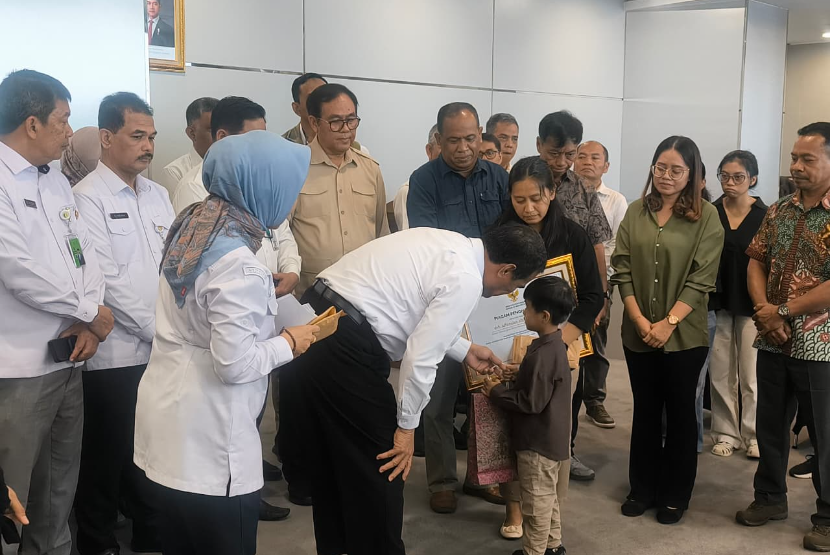
On September 22, Agriculture Minister Andi Amran Sulaiman responded with a package of support that combined financial assistance, education funding and employment opportunities. Four children of the victims are to receive scholarships worth Rp50 million each, while three children have been given opportunities to work at state food company Perum Bulog. The government also provided Rp300 million in total assistance to each victim’s family, according to reports from Republika and Kontan.
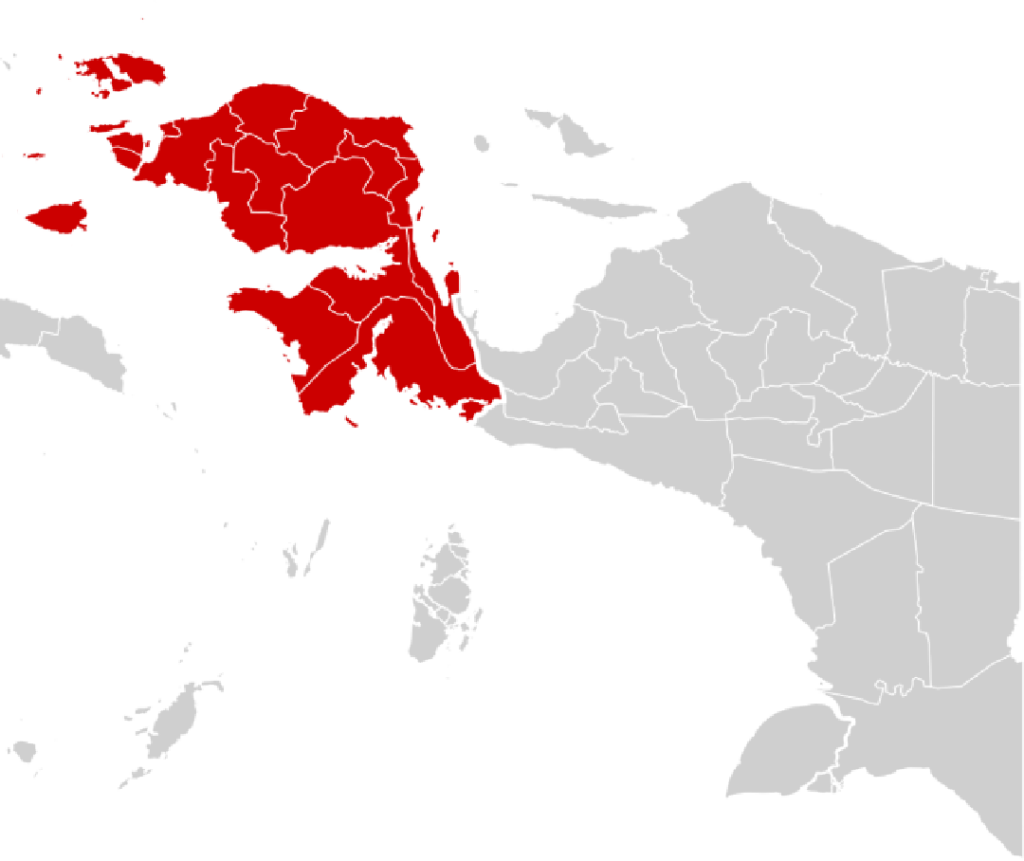
The assistance followed the September 9 attack in Muliama District, Jayawijaya, where three employees of the Jayawijaya Agriculture Office were killed while returning from an official assignment involving agricultural and livestock assistance.
For Amran, the response was not simply financial. It was also an effort to ensure that the families left behind could continue their lives and that the children’s education would not be interrupted by the loss of their parents.
From a Government Mission to a National Tragedy
The events began on September 9, when agricultural officials from Jayawijaya were carrying out field duties in Papua Pegunungan.
The team was involved in government assistance activities for communities, including livestock support and work related to agricultural development. West Papua Voice’s earlier reporting described the mission as involving food assistance, livestock support and activities connected with rice field development.
The officials were travelling through Muliama while returning toward Wamena when the group came under armed attack.
Three employees died.
They were Aprida Rapi, 49, Alfonsius Albinus Mehan, 35, and Wili Mbuik, 25.
The three represented different generations and professional backgrounds, but they shared one important characteristic: they were government employees working directly with communities.
Aprida was head of the Livestock and Animal Health Division at the Jayawijaya Agriculture Office. Alfonsius was a veterinarian who had spent almost nine years working in Papua. Wili was a young agricultural official and civil servant candidate whose professional career had only recently entered a new stage.
Their work placed them on the front line of agricultural development, where government programmes depend on officials travelling to villages and assisting communities directly.
The Three Victims
Aprida Rapi had spent years working in agriculture and livestock services. According to earlier West Papua Voice reporting, she was travelling with colleagues to deliver livestock assistance and inspect a rice field development programme when the attack occurred. She was fatally shot during the incident.
Alfonsius Albinus Mehan came from Sikka, East Nusa Tenggara. He had worked in Papua for almost nine years and was serving as a veterinarian. His responsibilities were closely connected with livestock health, agricultural support and rural livelihoods.
His family described him as hardworking and helpful. His mother, Maria, recalled him as a good son who continued to care about other people even while working far from his hometown.
Wili Mbuik came from Rote Ndao, East Nusa Tenggara. She had studied agribusiness at Nusa Cendana University in Kupang before working in Jayawijaya’s agricultural administration.
Her appointment as a civil servant candidate represented a significant moment for her family. Earlier reporting by West Papua Voice noted that she had been working in Jayawijaya since 2023 before receiving her formal CPNS appointment in 2026.
Her story is particularly poignant because she was still at the beginning of her public service career when she was killed.
The Security Investigation
Indonesian authorities have been investigating the attack and have provisionally linked it to an armed group associated with the West Papua National Liberation Army from the Free Papua Movement (TPNPB OPM) of War Region Command (Kodap) III Ndugama.
Earlier reports from West Papua Voice said investigators had identified suspected individuals connected to the case, while the wider investigation remained ongoing.
The attribution remains a matter for law enforcement investigation and legal proceedings.
This distinction is important in reporting a conflict related incident. The deaths of the three officials are established, but the final legal responsibility of individual perpetrators must be determined through evidence and due process.
The attack nevertheless had an immediate impact beyond the three victims.
It raised concerns over the ability of government workers to travel safely into remote communities, particularly when their work involves agriculture, livestock, food assistance and other development programmes.
The issue is especially important in Papua Pegunungan, where geography already makes public service delivery challenging.
Amran’s Response Comes Two Weeks Later
Two weeks after the Muliama attack, the families travelled to Jakarta for a meeting at the Ministry of Agriculture.
On Tuesday, September 22, Amran met the families at the ministry’s headquarters and personally handed over assistance.
Kontan reported that each of the three families received Rp300 million in assistance. Amran said the support was intended to provide moral and practical assistance, particularly to ensure that the children left behind could continue their education.
The minister said the assistance was provided directly rather than in instalments.
“Directly we hand it over, not gradually. This is for you, keep it as savings for school,” Amran said, according to Kontan.
The message was straightforward.
The government wanted the assistance to become a practical resource for the children rather than simply a short term payment following a tragedy.
Rp50 Million Scholarship for Each Child
Education became one of the central elements of the government’s response.
Four children of the victims will receive scholarships worth Rp50 million each.
Republika reported that Amran asked the children to continue their education and use the assistance as an education fund.
The minister expressed hope that the children could pursue higher education despite losing their parents while those parents were carrying out government duties.
“We hope the children left behind will attain higher education and pray for their parents who died while carrying out their duties,” Amran said, according to Republika.
The scholarship therefore carries a significance beyond its monetary value.
For a family suddenly deprived of one income source, education can become vulnerable to financial pressures. By setting aside a specific amount for schooling, the government is seeking to protect the children’s longer term prospects.
The approach also reflects the wider role of education in maintaining social mobility for families affected by sudden loss.
Three Children Offered Jobs at Bulog
The second major element of the response concerns employment.
Amran confirmed that three children of the deceased employees had been accepted for employment at Perum Bulog, Indonesia’s state owned food logistics company.
According to Republika, the employment opportunity was facilitated with support from Bulog’s president director.
Amran expressed appreciation to the Bulog leadership for helping provide the opportunity.
“Thank you to the president director as well. There are three children left behind who have completed [the process], we employ them. They are accepted to work at Bulog,” Amran said, according to Republika.
This part of the government’s response addresses a different problem from the scholarships.
While the scholarship protects educational continuity, employment can provide longer term household income.
For families who have lost a working parent, the ability of an adult child to enter the workforce can eventually become an important source of financial stability.
It also maintains a connection with the broader food and agricultural sector in which the victims worked.
From Agricultural Service to Food Security
The government’s description of the three victims as “food heroes” reflects the nature of their final assignment.
Amran said the employees died while delivering food to remote communities in Jayawijaya, Papua Pegunungan.
“Those are our food heroes who died while delivering food to the most remote and isolated areas of Jayawijaya, Papua Pegunungan,” Amran said, according to Republika.
The statement places their deaths within the context of Indonesia’s wider food security agenda.
Agricultural officials are not simply administrative workers. Their duties can require them to travel to communities, distribute assistance, support livestock production, inspect agricultural programmes and provide technical services.
In remote regions, that work is particularly dependent on physical access.
A government programme can exist on paper, but its practical value depends on personnel being able to reach the communities intended to benefit.
The Muliama incident therefore exposed the human risks behind the delivery of agricultural programmes.
Why the Support Matters for Papua’s Development
The assistance announced by Amran also has a wider development dimension.
Papua Pegunungan faces geographical challenges that make public service delivery more demanding. Agricultural workers, teachers, medical personnel and other civil servants often have to travel beyond major administrative centres to reach communities.
When insecurity affects those movements, the consequences can extend beyond individual victims.
A livestock programme can be delayed. Agricultural assistance can become more difficult to deliver. Field inspections can be postponed. Communities may have less contact with government extension services.
Protecting civilian government workers therefore becomes part of protecting development itself.
The government’s decision to provide scholarships and employment opportunities does not resolve that security challenge. But it addresses one immediate consequence: the welfare of families left behind.
Recognition as Well as Assistance
The support was accompanied by recognition of the three deceased officials.
Amran presented appreciation to the families and described the victims as food heroes who died while carrying out their responsibilities.
This recognition matters because the circumstances of their deaths were directly connected to public service.
They were not travelling for a private activity.
They were conducting agricultural duties intended to support communities.
Aprida was an experienced agriculture official. Alfonsius had spent almost nine years working in Papua as a veterinarian. Wili was a young government worker beginning her career. Their professional stories were different, but their final assignment brought them together.
For their families, government recognition cannot replace the people they lost.
But it can affirm that their service is remembered.
A Government Response That Looks Beyond Compensation
The package announced by Amran combines three different forms of support.
The first is immediate financial assistance.
The second is educational support for the children.
The third is employment access for three children through Bulog.
Taken together, the measures address immediate needs while also looking toward the future.
The distinction is important.
A one time payment can help a family manage immediate expenses. A scholarship can protect education. A job can provide a sustainable income source.
That combination gives the response a longer horizon.
It also places responsibility on institutions beyond the Ministry of Agriculture. Bulog’s involvement demonstrates how state owned enterprises can become part of a broader government response when public servants die while performing official duties.
Protecting the People Behind Development
The Muliama tragedy also raises a broader question for Indonesia’s development agenda in Papua: how can government programmes continue to reach remote communities while protecting the people responsible for delivering them?
There is no simple answer.
Security institutions must investigate attacks and protect civilians. Government agencies need to assess risks before sending personnel into difficult areas. Local authorities and communities can contribute to communication and early information.
At the same time, development cannot simply stop whenever security conditions become difficult.
Agricultural support remains important for food security. Health services remain necessary. Education cannot be postponed indefinitely.
This is why security and development need to move together.
The government response to the three families addresses the consequences of the Muliama attack, while the broader challenge remains preventing similar incidents from disrupting public service delivery.
The Human Stories Behind the Numbers
The figures announced on September 22 are easy to summarise: Rp300 million per family, Rp50 million scholarships for four children and employment opportunities for three children at Bulog.
But behind those figures are individual families.
Alfonsius spent almost nine years serving communities in Papua before his life ended in Muliama. His family in Sikka lost a son who had built a professional life far from home.
Wili had only recently entered the civil service career she had worked toward. Her family in Rote Ndao had celebrated that achievement before receiving the news of her death.
Aprida, at 49, had accumulated years of experience in agricultural and livestock administration and was leading the livestock and animal health division when she was killed.
Their different backgrounds make the story more than a single security statistic.
It is also a story about public service, families separated by distance and the human cost of violence.
Conclusion
The support announced by Agriculture Minister Andi Amran Sulaiman on September 22 represents a government response to a tragedy that affected three families and disrupted agricultural services in Papua Pegunungan.
Each family received Rp300 million in assistance. Four children received scholarships worth Rp50 million each, while three children were given employment opportunities at Perum Bulog. Amran also asked the children to continue their education and use the scholarship assistance as a foundation for their future.
The response followed the September 9 killing of Aprida Rapi, Alfonsius Albinus Mehan and Wili Mbuik in Muliama while they were carrying out government agricultural duties. Indonesian authorities have investigated the attack and provisionally linked it to an armed group associated with TPNPB OPM Kodap III Ndugama, while individual responsibility remains subject to the legal process.
The government’s assistance cannot undo the loss.
What it can do is help ensure that the children’s education continues, that affected families have a source of economic support, and that the public service of the three deceased officials is formally remembered.
The wider lesson is equally important.
Development in Papua depends on people. Roads, agricultural programmes, food assistance and public services ultimately require civil servants and field workers willing to travel into communities and perform their duties.
Protecting those workers is therefore not only a security responsibility. It is a development responsibility.
The scholarships and Bulog employment opportunities give the families a path forward. The next challenge for the state is to ensure that the conditions in which public servants work become safer, so that other families do not have to receive the same kind of assistance after losing loved ones.
For Papua Pegunungan, the strongest tribute to Aprida Rapi, Alfonsius Albinus Mehan and Wili Mbuik will ultimately be measured not only by how they are remembered, but by whether the communities they served can continue receiving the agricultural, food and public services they were working to deliver.
Read Also
Three Jayawijaya Civil Servants Killed by TPNPB OPM in Muliama
Aprida Rapi: A Civil Servant Killed by TPNPB OPM di Jayawijaya
Alfonsius: 9 Years Serving Papua, Killed by TPNPB OPM in Jayawijaya
Wili Mbuik: Young Civil Servant Killed by TPNPB OPM in Jayawijaya