
The Papua High Prosecutor’s Office project oversight has entered a critical phase in 2026, with prosecutors monitoring 18 strategic national and regional development projects worth approximately Rp9.06 trillion across Papua, Papua Tengah (Central Papua), Papua Selatan (South Papua), and Papua Pegunungan (Highland Papua).
The initiative aims to ensure that major infrastructure projects adhere to contract requirements, stay on schedule, and utilize state funds as intended. At the same time, the prosecution service says its oversight is intended to reduce the risk of irregularities and corruption before they undermine development outcomes.
The scale of the program is significant. Rp9.06 trillion represents a substantial public investment in a region where infrastructure is closely tied to government capacity, public services, connectivity, and economic development.
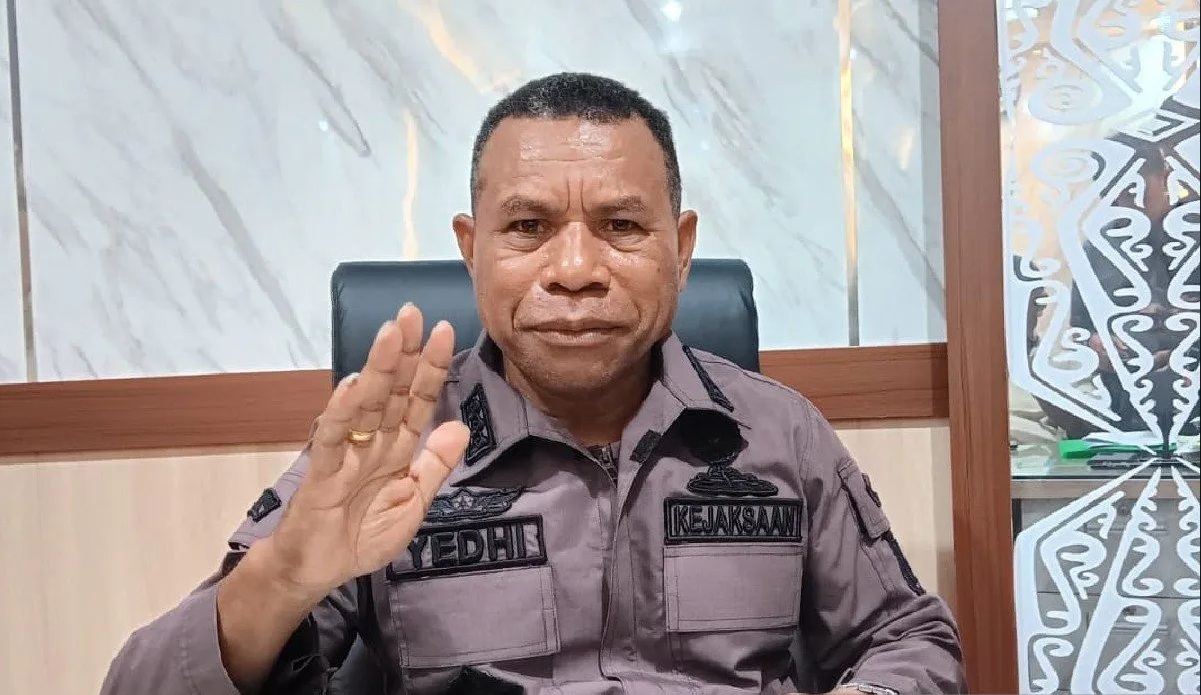
According to Papua High Prosecutor’s Office Intelligence Assistant Yedivia Rum, strategic development security is among the most prominent responsibilities currently handled by the intelligence division. The projects are considered important because of both their large budgets and their role in supporting government administration and services to the public.
The approach reflects a broader shift toward preventive oversight. Rather than waiting until a project has failed or an alleged corruption case has already emerged, prosecutors are monitoring implementation while construction is still underway.
Why Rp9.06 Trillion Matters for Papua
Large infrastructure projects have a particular importance in Papua.
The region’s geography creates considerable logistical challenges. Communities are spread across mountains, forests, islands, and large distances. Building government offices and public facilities is therefore not simply a construction exercise. It is part of establishing the institutional infrastructure needed to deliver government services.
When a new government office is completed, for example, its value is not limited to the physical building. It can provide a permanent base for public administration, improve coordination between agencies, and allow residents to access government services closer to where they live.
This explains why the authorities describe the 18 projects as strategically important.
The Papua High Prosecutor’s Office said the projects are spread across four provinces within its current working area: Papua, Papua Tengah, Papua Selatan, and Papua Pegunungan.
The geographical spread also means that oversight cannot be reduced to a single construction site.
Each project has its own contractor, schedule, technical requirements, local conditions, and administrative structure. Effective monitoring therefore requires prosecutors to understand both the contractual framework and the realities of implementation on the ground.
Preventing Problems Before They Become Cases
The most important feature of the program is its preventive character.
According to prosecutor’s office officials, oversight is intended to ensure that construction proceeds according to the terms of the contract, including the agreed timetable and use of government funds.
This oversight is different from conventional criminal investigation.
An investigation generally begins after authorities receive information or evidence indicating that a violation may have occurred. Preventive oversight seeks to identify risks while a project is still being implemented.
For taxpayers and communities, the distinction matters.
If a construction project is delayed for years, poorly designed, or subject to financial irregularities, resolving the problem after completion can be costly. By contrast, identifying administrative or contractual risks early provides government agencies an opportunity to address them before they become more serious.
This does not mean every project under supervision is suspected of corruption.
The fact that prosecutors are watching should not be taken as proof that something wrong has happened. Rather, it indicates that the government considers the projects sufficiently important and financially significant to warrant closer monitoring.
That distinction is essential to maintaining a fair and evidence-based understanding of the program.
Papua Tengah Becomes a Major Focus
Among the projects under supervision is the construction of the Papua Tengah DPR office and Majelis Rakyat Papua, or MRP office.
Yedivia Rum specifically identified these projects as part of the strategic development activities being monitored by the Papua High Prosecutor’s Office. The construction of the Papua Tengah Governor’s Office is also among the regional projects receiving attention.
The projects carry particular institutional significance because Papua Tengah is one of Indonesia’s newer provinces.
The establishment of a new provincial administration requires more than a governor and a government structure. It requires permanent infrastructure capable of supporting legislative institutions, representative bodies, and executive administration.
The development of the DPR and MRP buildings is therefore connected to the broader process of institutional consolidation in Papua Tengah.
The same applies to the governor’s office.
A functioning provincial administration requires an institutional center to coordinate government programs across districts. Buildings alone do not create effective governance, but adequate facilities can provide an important foundation for it.
That makes proper project management particularly important.
The New Provinces Need Reliable Infrastructure
The four provinces within the prosecutor’s working area have emerged from Indonesia’s recent regional reorganization of Papua.
The creation of new provinces was intended, among other objectives, to bring government administration and public services closer to communities.
That objective depends heavily on infrastructure.
Government offices, roads, housing, health facilities, schools, and supporting infrastructure create the physical framework through which public policy becomes visible at the local level.
The construction of provincial government buildings is therefore part of a much wider development process.
For Papua Tengah, the challenge is especially relevant because the province is still developing its institutional identity and administrative capacity.
A well-managed construction program can help accelerate that process. A poorly managed one could instead create additional financial and administrative burdens.
This is why oversight of major public projects has implications beyond accounting.
It is also about whether the infrastructure being built today can support the public institutions that Papua’s communities will depend on for years to come.
What Prosecutorial Oversight Actually Covers
The Papua High Prosecutor’s Office has made clear that its monitoring includes project implementation and compliance with contractual requirements.
Yedivia Rum said the office is monitoring whether projects proceed according to contract, both in terms of time and the use of state funds. He also emphasized the need to ensure construction is completed on schedule.
That creates several practical areas of attention.
Project schedules must be realistic and followed. Payments should correspond with verified work. Public money must be used for the purposes specified in project documents. Construction must comply with technical requirements.
Where problems emerge, government institutions can take corrective measures before they develop into more serious disputes or losses.
For large projects, even small administrative weaknesses can have significant consequences.
A delay in one stage can affect subsequent work. Changes in specifications can increase costs. Poor documentation can make accountability difficult. Weak supervision can create opportunities for contractors or officials to exploit gaps in the system.
Preventive monitoring seeks to reduce those risks.
Oversight Can Strengthen Public Confidence
There is also a public trust dimension.
Infrastructure projects funded through state budgets ultimately belong to the public. Communities therefore have a legitimate interest in knowing whether public money is being used efficiently.
When major projects are subject to transparent oversight, citizens have greater reason to expect that government expenditure will produce tangible results.
This is particularly important in Papua, where development spending is frequently connected to broader discussions about the effectiveness of public institutions and the delivery of services.
The prosecutor’s role can help strengthen accountability, provided oversight remains professional and evidence-based.
That means monitoring should focus on compliance and performance rather than creating unnecessary administrative obstacles for legitimate projects.
The objective should be simple: ensure that money allocated for development produces the infrastructure and services for which it was intended.
Preventive Supervision Does Not Replace Audits
It is also important to understand the limits of prosecutorial oversight.
The prosecutor’s office is not the only institution responsible for monitoring government spending.
Auditors, ministries, local inspectorates, and project owners all have their responsibilities. Contractors and consultants are also accountable under their contracts and applicable regulations.
The prosecution service’s involvement adds another layer, particularly from a legal and risk prevention perspective.
This institutional division is healthy when each agency operates according to its mandate.
It means financial management can be reviewed through auditing mechanisms while legal risks can be identified and addressed through the appropriate law enforcement framework.
For a Rp9.06 trillion portfolio, multiple layers of accountability are especially important.
The Economic Stakes Go Beyond Construction
The success of these projects could have wider economic effects.
Construction itself generates demand for labor, materials, transportation, and local services. Once completed, government facilities can support public administration and create longer-term economic activity around new centers of government.
For local businesses, the establishment of government institutions can generate demand for accommodation, food services, transportation, and other supporting services.
More importantly, better government infrastructure can improve administrative efficiency.
When agencies have suitable facilities and can coordinate effectively, public programs can potentially be implemented more efficiently.
That can influence sectors such as education, health, licensing, investment, and social protection.
Infrastructure therefore acts as an enabling platform.
The economic value of a government building is not simply its construction cost. Its longer-term value depends on what the institution operating inside it can accomplish.
The Risk of Cost Overruns and Delays
The emphasis on schedule and budget discipline is particularly relevant to large public construction.
Infrastructure projects are inherently vulnerable to delays. Weather, difficult terrain, transportation limitations, changes in design, supply disruptions, and contractor capacity can all affect implementation.
Papua presents additional logistical challenges because materials and equipment may need to travel considerable distances.
These realities should be distinguished from misconduct.
A delay does not automatically indicate corruption, and a budget adjustment does not necessarily demonstrate misuse of funds. Projects need to be assessed against contracts, technical standards, approved changes, and documented circumstances.
This is where professional oversight becomes valuable.
The prosecutor’s role is to identify risks and determine when an issue is merely administrative, when corrective action is needed, and when evidence may indicate a legal violation.
That distinction protects both public finances and legitimate contractors.
Protecting Development from Corruption Risks
At the heart of the program is a simple principle: development spending should reach its intended purpose.
The Papua High Prosecutor’s Office has explicitly linked its supervision to preventing potential irregularities and corruption in the management of public budgets.
This preventive approach is consistent with the broader importance of integrity in infrastructure development.
Corruption in public construction can have consequences that extend well beyond financial losses.
If inferior materials are used, buildings may deteriorate more quickly. If contractors are selected without proper standards, projects may underperform. If payments are made for incomplete work, public money may be wasted.
Ultimately, the burden falls on the communities.
A road that deteriorates early can increase transportation expenses. A poorly constructed public building can require additional government spending. A delayed facility can postpone the delivery of services.
This is why financial integrity and development quality are closely connected.
The Challenge of Measuring Public Benefit
The next stage should involve not only determining whether projects are completed but also whether they deliver the benefits expected by communities.
Completion is an important milestone, but it is not the final measure of success.
A government office should be functional. A public facility should be accessible. Infrastructure should be maintained. Services should reach the people who need them.
This process is where project oversight can be connected with broader performance evaluation.
For Papua’s development agenda, the ultimate question should be whether public investment improves administrative capacity and people’s access to services.
The Rp9.06 trillion figure is impressive, but its real value will be determined by what that investment produces.
Accountability and Development Should Reinforce Each Other
Strong oversight should not be viewed as an obstacle to development.
When properly designed, it can actually strengthen development by reducing uncertainty and protecting legitimate projects from financial and legal problems.
Contractors that meet their obligations benefit from a clearer environment. Government agencies gain greater confidence that projects are progressing properly. Communities receive greater assurance that public money is being monitored.
In this sense, law enforcement institutions can contribute to development without becoming project managers.
Their role is to help ensure that the rules are followed and that potential legal risks are addressed appropriately.
The same principle applies across Papua’s other major development programs.
As investment in infrastructure, food security, electricity, transportation, and government services expands, accountability mechanisms will become increasingly important.
Papua’s Infrastructure Agenda Needs Long-Term Discipline
The 18 projects under supervision should therefore be viewed as part of a larger development trajectory.
Papua is receiving significant public investment to improve connectivity, institutional capacity, and public services. Those investments can create substantial benefits if implemented effectively.
But large budgets also require strong governance.
The combination of project management, financial controls, technical supervision, and legal oversight provides a stronger safeguard than any one mechanism alone.
The prosecutor’s involvement is particularly relevant where projects have large budgets and strategic importance.
As Yedivia Rum explained, the projects being monitored were selected because of their financial scale and their importance to government administration and public services.
That provides the basic rationale for the program.
A Model for Responsible Public Spending
The Papua experience could also offer a useful model for other developing regions.
Large-scale infrastructure programs frequently face the same tension: governments need to build quickly, but they must also maintain accountability.
Moving too slowly can delay development. Moving too quickly without adequate controls can create waste and legal problems.
The answer is not necessarily more bureaucracy.
It is better coordination, clear contracts, reliable monitoring, and early identification of risks.
In Papua, where geography already creates significant implementation challenges, that discipline can make the difference between infrastructure that merely gets built and infrastructure that continues to provide value for decades.
Conclusion
The Papua High Prosecutor’s Office’s decision to oversee 18 strategic projects worth approximately Rp9.06 trillion represents an important effort to connect public investment with accountability.
The projects span Papua, Papua Tengah, Papua Selatan, and Papua Pegunungan, with major government infrastructure in Papua Tengah among those receiving specific attention.
The central objective is not simply to monitor construction.
It is to ensure that projects comply with contracts, remain on schedule, use public funds properly, and avoid potential irregularities and corruption. Papua Chief Prosecutor Jefferdian has emphasized that the supervision is intended to ensure development proceeds according to applicable requirements while preventing potential misuse of state funds.
For Papua’s communities, the significance is ultimately practical.
Every rupiah allocated to infrastructure represents an expectation that government investment will produce something useful: a functioning institution, better public services, improved connectivity, or stronger foundations for economic activity.
The Papua Tengah DPR and MRP buildings, the provincial governor’s office, and other strategic facilities all contribute to strengthening the region’s administrative infrastructure.
The real test, however, will come when the projects are completed and begin serving the public.
If oversight succeeds in preventing waste, keeping projects on schedule, and ensuring that public funds are used for their intended purposes, the Rp9.06 trillion investment can generate benefits that extend far beyond the construction sites.
For Indonesia, the situation is also a test of whether major development spending can be accompanied by stronger institutional accountability.
For Papua, it is an opportunity to ensure that infrastructure investment becomes lasting public value.
The goal should be straightforward: every project completed, every rupiah accounted for, and every facility ultimately delivering benefits to the people it was built to serve.

