
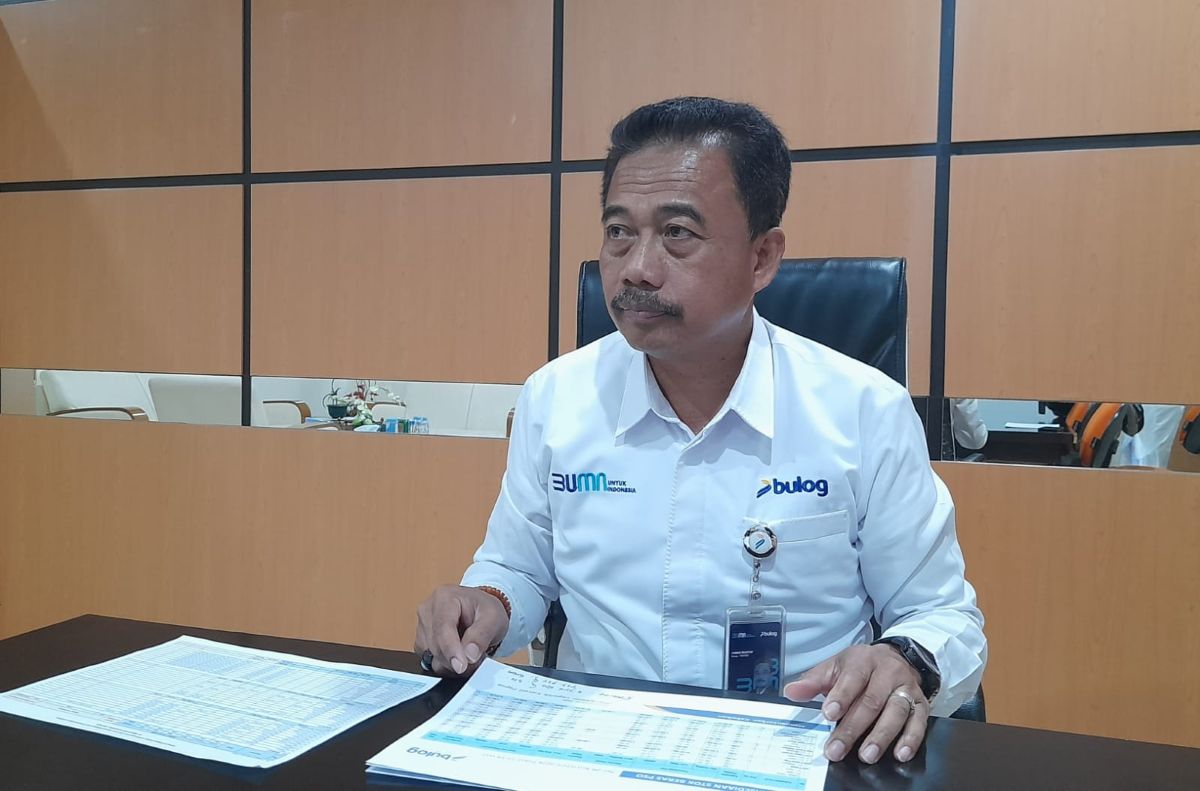
Rice supply is often more than an economic statistic in Papua. It is closely tied to household welfare, transport networks, market prices and the government’s ability to reach communities spread across a vast and difficult geography. As 2026 enters its final months, Papua rice stocks are being maintained at a level that Bulog says is sufficient to support the region through the end of the year.
The state logistics agency reported that it currently has 38,811 tonnes of rice allocated across its network in Tanah Papua. Of that amount, 18,611 tonnes are already stored in Bulog warehouses, while another 20,200 tonnes are still being transported or are undergoing unloading at ports. The supplies serve six provinces: Papua, Papua Tengah (Central Papua), Papua Pegunungan (Highland Papua), Papua Selatan (South Papua), Papua Barat (West Papua) and Papua Barat Daya (Southwest Papua).
Bulog’s position offers a measure of reassurance for consumers and local authorities. Yet the numbers also reveal the particular challenge of maintaining food security in Papua. Having enough rice on paper is only one part of the equation. The supplies must also move efficiently from ports and warehouses to markets and communities, while new shipments arrive before existing stocks become depleted.
For a region where distance and geography can complicate distribution, maintaining a strategic reserve is therefore an important element of economic and social stability.
Bulog Maintains a Large Rice Buffer
The latest assessment was disclosed by Ahmad Mustari, head of the Bulog regional office for Papua and Papua Barat. According to his statement reported by ANTARA on August 28, the total stock of 38,811 tonnes includes rice coming from Surabaya and Makassar, two major logistical sources for the region.
The figure combines rice already available locally with supplies still moving through the distribution chain. Of the total, 18,611 tonnes were in warehouses operated by 10 Bulog branches, while 20,200 tonnes remained in transit or were being unloaded at ports.
A separate report by Parapara TV two days earlier described the position in similar terms. On August 24, Mustari said approximately 19,000 tonnes were already available throughout Bulog’s working area, with another roughly 20,000 tonnes either in transit or at ports waiting to enter the distribution network. He said the supply position was sufficient to ensure rice availability through the end of 2026.
The difference between the figures reported on August 24 and August 28 reflects the movement of rice through the logistics system. Rather than representing a static stockpile, the reserve is continuously being replenished and distributed.
That distinction is important when assessing food security.
Stocks Are Spread Across Six Provinces
The geographical distribution of the rice reserve is another significant feature of the current strategy.
ANTARA reported that Bulog’s warehouses in Tanah Papua held 2,608 tonnes in Jayapura, 1,987 tonnes in Biak, 1,175 tonnes in Serui, 1,633 tonnes in Wamena, 2,807 tonnes in Nabire and 1,237 tonnes in Timika. Additional stocks included 1,372 tonnes in Merauke, 1,853 tonnes in Manokwari, 876 tonnes in Fakfak, 2,451 tonnes in Sorong and 609 tonnes in Teminabuan.
These locations form a network rather than a single central reserve.
That matters in Papua because the region’s population is distributed across a wide area, with communities separated by mountains, forests, rivers and long maritime distances. A supply disruption in one location does not necessarily affect another in the same way.
Maintaining stocks in multiple branches can therefore provide greater flexibility. If transportation is temporarily disrupted in one area, supplies already stored closer to consumers can potentially provide a buffer.
It also reduces excessive dependence on a single warehouse or port.
Rice Reserves Serve More Than One Purpose
Bulog’s rice stocks are not intended solely for ordinary commercial sales.
According to Mustari, the supplies will be used for the government’s Stabilisation of Food Supply and Prices, or SPHP, programme; food assistance; and potential emergency responses, including natural disasters.
This initiative provides the stock a broader public policy function.
During normal conditions, rice can be distributed through the SPHP mechanism to help maintain market stability. When vulnerable households require assistance, part of the reserve can be directed towards food aid. In the event of a disaster, government stocks can become an emergency resource.
Parapara TV reported that Bulog was continuing to distribute rice assistance for the July to September 2026 allocation while also maintaining SPHP distributions. Mustari stressed that the price stabilisation programme would continue despite the ongoing food assistance programme.
This parallel operation is significant because food assistance and market stabilisation address different needs.
Food assistance is aimed at supporting eligible households, while SPHP is intended to help stabilise supply and prices more broadly. Keeping both channels functioning requires careful stock management.
Protecting Consumers from Price Pressure
For households, food security is not simply about whether rice exists somewhere in the supply chain. The price at which it reaches consumers matters just as much.
Bulog has emphasised that its stocks must be managed carefully because the agency needs to continue releasing rice through the SPHP programme to support price stability.
This creates a delicate balance.
If stocks are released too slowly, market pressures could become stronger. If they are distributed too aggressively without sufficient replenishment, reserves could fall more quickly than anticipated.
The current figure of 38,811 tonnes gives Bulog a substantial buffer, but maintaining that buffer will depend on continued shipments from outside Papua, local distribution and the pace of government programmes.
In this sense, rice reserves are part of Papua’s wider economic infrastructure.
Stable food prices help households plan their spending and can reduce pressure on family budgets. For local retailers, traders and food businesses, more predictable supply can also make daily operations easier.
Weather Adds Another Layer of Risk
Despite the reassuring stock position, Bulog has acknowledged that weather conditions could affect the broader food system.
Mustari said unstable rainfall and drought in some areas could affect agricultural production.
That warning is important because government reserves provide a buffer, but they cannot eliminate the effects of a weaker harvest.
Bulog’s role, according to Mustari, is to absorb farmers’ production according to actual availability and harvest conditions in the field, while the technical assessment and management of agricultural impacts fall within the responsibilities of agricultural authorities.
This division of responsibilities emphasises the necessity of coordination.
Food security cannot depend on logistics agencies alone. It requires agricultural production, transportation, market management and government assistance programmes to work together.
For Papua, the issue becomes particularly relevant when weather conditions change quickly across different parts of the region.
The Geography Behind Papua’s Food Security Challenge
The current reserve also illustrates why food logistics are especially important in Tanah Papua.
Rice supplies entering the region can originate from hundreds or even thousands of kilometres away. ANTARA reported that much of Bulog’s rice comes from Surabaya and Makassar.
The rice must then move through ports and regional distribution networks before reaching warehouses and consumers.
This creates a chain in which every stage matters.
A delay at a port can affect warehouse inventories. A transportation disruption can affect retail availability. Poor weather can complicate maritime or land transportation. Remote communities can face higher distribution costs than urban centres.
The existence of 20,200 tonnes still in transit or being unloaded demonstrates that food security in Papua is an active logistical process. Supplies must continue moving even when warehouses already contain substantial stocks.
Decentralised Warehousing Provides Resilience
The distribution of stocks across Jayapura, Biak, Serui, Wamena, Nabire, Timika, Merauke, Manokwari, Fakfak, Sorong and Teminabuan provides an important layer of resilience.
The system allows rice to be positioned closer to different population centres rather than relying entirely on a single regional warehouse.
This is particularly relevant during emergencies.
If a natural disaster interrupts access to a particular area, rice stored elsewhere may not immediately solve the problem. But having multiple stock points increases the possibility that alternative supplies can be mobilised.
Bulog specifically identifies natural disasters as one of the situations in which the reserve may be used.
The approach therefore connects food policy with disaster preparedness.
Food Security as Part of Papua’s Development
The significance of the rice reserve extends beyond food markets.
Affordable and reliable access to staple foods contributes to household stability. Families facing less uncertainty over basic food costs have more room to allocate income towards education, healthcare, transportation and other needs.
For Papua’s development agenda, such access matters.
Economic development is not sustainable if communities remain vulnerable to sudden disruptions in essential food supplies. Similarly, infrastructure investment becomes more effective when accompanied by systems that ensure people can access basic necessities.
Therefore, we can view the government’s rice reserve strategy as a crucial part of a broader effort to enhance social and economic resilience throughout Papua.
These initiatives may appear separate from food policy, but they are connected by a common objective: creating conditions in which communities can participate more effectively in economic development.
Food security provides part of that foundation.
The Role of Local Farmers
There is also a longer-term question about the relationship between government reserves and local agricultural production.
Bulog says it continues to absorb farmers’ output according to production and harvest conditions.
That creates an opportunity to strengthen the link between local farmers and government food programmes.
A more productive local agricultural sector could complement rice brought in from other parts of Indonesia. Over time, stronger local production could also reduce some of the region’s exposure to external logistics disruptions.
However, such an objective cannot be achieved simply by increasing production targets.
Farmers need access to markets, agricultural inputs, transportation, storage and technical support. Weather resilience is also becoming increasingly important as rainfall patterns become less predictable.
The immediate priority remains ensuring supply. The longer-term objective should be building a food system capable of producing, storing and distributing more food locally.
What to Watch Before the End of 2026
Bulog’s assurance provides a positive outlook for the remainder of the year, but food security will still require close monitoring.
The most important indicators will include the pace at which existing stocks are distributed, the arrival of rice currently in transit, developments in local agricultural production and movements in retail prices.
Weather will also remain an important variable.
Parapara TV reported Bulog’s assessment that unstable rainfall and drought in some areas could affect agricultural output.
That means the current reserve should be understood as a buffer, not a reason for policymakers to become complacent.
The 20,200 tonnes currently in transit or being unloaded are particularly important because replenishment is what allows the supply system to continue operating after existing stocks have been distributed.
Conclusion
The latest data from Bulog indicates that Papua’s rice stocks are in a relatively strong position as they head towards the end of 2026. A total of 38,811 tonnes is currently counted across the Tanah Papua network, including 18,611 tonnes already stored in Bulog warehouses and 20,200 tonnes still in transit or being unloaded at ports.
The reserve is distributed across six provinces and is intended to support several government functions, including SPHP price stabilisation, food assistance and emergency response.
For the public, the immediate message is reassuring. Bulog has said there is no need for communities to worry about rice availability and that stabilisation efforts will continue until the end of the year.
But the broader picture is more complex.
Papua’s food security depends on a continuous chain involving imports from other Indonesian regions, ports, warehouses, roads and other transport links, local markets, government assistance and agricultural production.
The 38,811-tonne reserve provides a meaningful cushion against disruption. The real test will be whether we maintain that cushion as we continue distributing rice and whether incoming supplies arrive on schedule.
Looking beyond 2026, strengthening local agricultural production alongside strategic government reserves could make Papua’s food system more resilient. For now, the combination of substantial stocks, ongoing replenishment and continued price stabilisation gives the region a solid foundation for navigating the remaining months of the year.

