
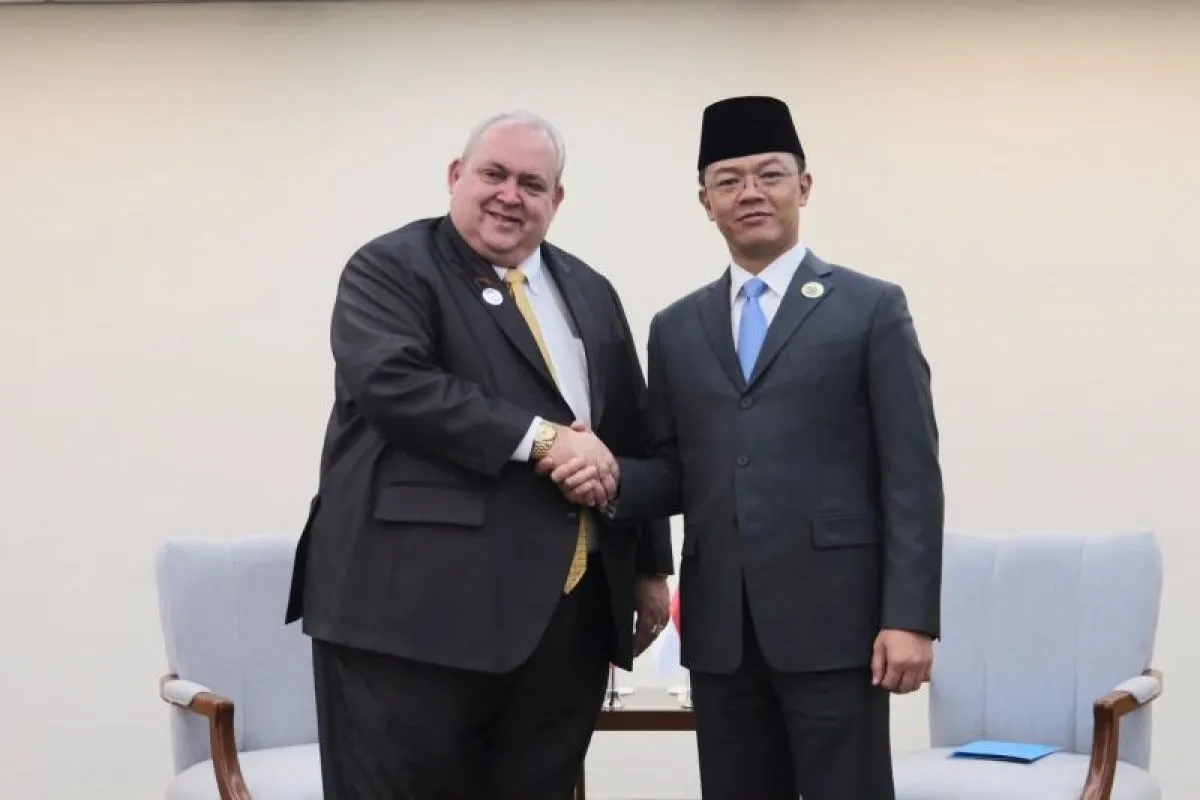
A landmark agreement for Indonesia and Papua New Guinea (PNG) to host a Joint Ministerial Commission (JMC) in Jakarta in early September 2026 is an important step in the expanding strategic partnership between the two neighboring countries. The plan was announced after a bilateral meeting between Indonesia’s Foreign Minister Sugiono and Papua New Guinea Foreign Minister Justin Tkatchenko. It shows both governments’ commitment to expanding cooperation in political, economic, security and socio-cultural sectors, while enhancing stability in the Pacific region.
For Indonesia, the proposed ministerial meeting is not a routine diplomatic engagement. This is part of Jakarta’s broader effort to improve partnerships with Pacific countries through constructive dialogue, practical cooperation and mutually beneficial development initiatives. Indonesia shares a land border with Papua New Guinea and views its bilateral relationship with Port Moresby as the basis for peace, cross-border prosperity and long-term connectivity in the region.
The announcement has also drawn attention as it comes amid deepening regional cooperation across the Pacific with countries looking to boost collaboration on economic resilience, sustainable development, maritime security, climate challenges, and people-to-people exchanges.
Joint Ministerial Commission Elevates Bilateral Cooperation
The Joint Ministerial Commission to be held will be the highest structured bilateral consultation mechanism between Indonesia and Papua New Guinea. It will enable ministers and senior officials from both governments to evaluate existing cooperation while identifying new opportunities for collaboration.
Official statements issued after the meeting of the foreign ministers said the two governments agreed that the commission should be a regular platform to review progress on a wide range of areas including trade, investment, border management, education, health, agriculture, transportation, fisheries and technical cooperation.
Instead of only diplomatic talks, the commission is expected to come up with practical results through policy coordination, institutional cooperation and implementation of mutually agreed programmes.
Diplomatic observers note that formal ministerial mechanisms such as the JMC are playing an increasingly important role in modern international relations as they provide continuity beyond individual political administrations and help to strengthen long-term institutional partnerships.
Such mechanisms also help coordinate on issues requiring sustained bilateral engagement for neighboring countries with vast land and maritime borders.
Papua Occupies a Strategic Position in Bilateral Relations
The strengthening of Indonesia–Papua New Guinea relations carries particular significance for Papua, whose eastern provinces directly border PNG.
Communities living along the international boundary have maintained historical, cultural, and family connections for generations. As a result, cooperation between Jakarta and Port Moresby has practical implications extending beyond diplomatic relations, influencing border trade, public services, transportation, education, healthcare, and community interaction.
Government officials from both countries have consistently emphasized that well-managed border cooperation contributes to improving the welfare of communities residing in frontier regions.
Infrastructure development, legal cross-border trade, health cooperation, educational exchanges, and improved connectivity are expected to enhance economic opportunities while strengthening social ties between neighboring populations.
Development specialists frequently observe that border regions possess unique economic potential when supported by efficient transportation networks, coordinated customs procedures, and effective bilateral cooperation.
For Papua, closer collaboration with Papua New Guinea may contribute to expanding commercial activities while supporting broader regional development initiatives undertaken by both governments.
Expanding Economic and Trade Cooperation
Economic cooperation is expected to become one of the central themes of the upcoming Joint Ministerial Commission.
Indonesia and Papua New Guinea have steadily expanded commercial relations over recent years, with both governments seeking to increase bilateral trade, encourage investment, improve logistics, and facilitate business cooperation.
Officials have indicated that future discussions may include opportunities to strengthen agricultural cooperation, fisheries, renewable energy, tourism, digital connectivity, manufacturing, infrastructure development, and small business partnerships.
Business communities in both countries have expressed growing interest in expanding market access through improved transportation links and more efficient cross-border procedures.
Economic analysts note that stronger bilateral trade can generate significant multiplier effects by stimulating investment, creating employment opportunities, improving supply chains, and encouraging private sector collaboration.
For Papua’s eastern regions, enhanced economic integration with neighboring Papua New Guinea could contribute to developing frontier economies while complementing Indonesia’s broader efforts to accelerate regional development.
Strengthening Border Management and Regional Security
Another important priority expected to feature prominently during the Joint Ministerial Commission is border management and regional security cooperation.
Indonesia and Papua New Guinea share responsibility for managing one of Southeast Asia’s most geographically challenging international borders, characterized by dense forests, mountainous terrain, and remote communities.
Maintaining secure yet accessible borders requires continuous cooperation between law enforcement agencies, immigration authorities, customs officials, border security personnel, and regional governments.
Both countries have repeatedly reaffirmed their commitment to preventing transnational crimes such as illegal trafficking, smuggling, narcotics distribution, wildlife crime, and other cross-border criminal activities through coordinated law enforcement and information sharing.
Security cooperation also contributes to maintaining a stable environment that supports legitimate trade, tourism, humanitarian activities, and economic development along the border.
Regional security experts frequently emphasize that effective border management combines law enforcement with community engagement, infrastructure development, and sustained diplomatic communication.
For Indonesia and Papua New Guinea, strengthening institutional cooperation helps build mutual trust while reducing potential misunderstandings along the international frontier.
Diplomacy Beyond Bilateral Relations
The significance of the planned Joint Ministerial Commission extends beyond the bilateral relationship itself.
Indonesia has increasingly expanded its engagement with Pacific countries through dialogue, development cooperation, educational scholarships, disaster management initiatives, climate resilience programs, and economic partnerships.
Papua New Guinea, meanwhile, remains one of Indonesia’s closest partners in the Pacific because of their shared geography, historical interaction, and common interest in maintaining regional peace and prosperity.
International relations specialists note that stronger Indonesia–Papua New Guinea cooperation contributes positively to the broader architecture of regional diplomacy by encouraging dialogue, confidence building, and practical cooperation among neighboring states.
The ministerial commission therefore represents not only an opportunity to deepen bilateral ties but also an important contribution to strengthening constructive engagement throughout the Pacific region.
Strengthening People-to-People Connectivity
While the Joint Ministerial Commission (JMC) will address strategic policy issues, both Indonesia and Papua New Guinea have emphasized that stronger bilateral relations ultimately depend on closer connections between their people. Officials from both countries have repeatedly highlighted the importance of expanding cooperation in education, healthcare, culture, youth exchanges, sports, tourism, and professional training as part of a broader effort to build lasting mutual understanding.
For communities living along the shared border, cooperation is already part of everyday life. Families, customary communities, and local traders have maintained social and cultural ties across the border for generations. Through the JMC framework, both governments aim to strengthen these longstanding relationships by improving legal cross border mobility, expanding educational opportunities, and encouraging greater collaboration between local institutions.
Education is expected to remain an important area of cooperation. Indonesia has consistently offered scholarship opportunities and professional training programs for students and government officials from Pacific countries, including Papua New Guinea. These initiatives not only strengthen institutional capacity but also foster long term friendships between future leaders of both nations.
Similarly, cooperation in healthcare, disaster response, agriculture, fisheries, and technical training has become increasingly important as both countries seek practical solutions to common development challenges faced by border communities.
Development experts frequently observe that sustainable diplomacy extends beyond government meetings. Strong partnerships are often built through continuous interaction among universities, research institutions, businesses, civil society organizations, and local communities. Expanding these people-to-people connections is therefore expected to become one of the enduring outcomes of the Joint Ministerial Commission.
Indonesia’s Pacific Engagement Continues to Expand
The agreement to convene the Joint Ministerial Commission also reflects Indonesia’s broader commitment to strengthening engagement with Pacific countries through constructive diplomacy and mutually beneficial cooperation.
As an Indo-Pacific nation with historical, geographical, and cultural connections to the Pacific region, Indonesia has steadily expanded partnerships covering economic development, climate resilience, maritime cooperation, education, health, disaster management, and regional connectivity.
Papua New Guinea occupies a particularly significant place within this strategy because it is Indonesia’s immediate neighbor in the Pacific. The relationship therefore carries strategic importance not only for bilateral cooperation but also for wider regional stability.
Foreign policy analysts note that modern diplomacy increasingly emphasizes practical cooperation rather than purely political dialogue. Infrastructure development, trade facilitation, educational exchanges, investment promotion, and technical assistance have become important instruments for strengthening regional partnerships.
The planned ministerial meeting demonstrates both governments’ intention to maintain regular communication while translating diplomatic commitments into concrete programs that deliver measurable benefits for citizens in both countries.
For Indonesia, strengthening relations with Papua New Guinea also complements its broader objective of promoting peace, stability, and sustainable development throughout the Pacific.
Supporting Development in Papua’s Border Regions
One of the most significant implications of closer Indonesia–Papua New Guinea cooperation concerns the development of border areas in Papua.
Over the past several years, Indonesia has accelerated investment in roads, border facilities, healthcare services, schools, telecommunications, ports, and public infrastructure throughout Papua’s frontier regions. These investments seek to improve public services while encouraging economic activity and legal cross border commerce.
The Joint Ministerial Commission provides an opportunity for both governments to coordinate complementary development policies that benefit communities living on both sides of the international border.
Improved customs procedures, transportation connectivity, trade facilitation, health cooperation, and coordinated border management can contribute to stronger local economies while expanding opportunities for businesses, farmers, fishermen, and small enterprises.
Regional development specialists frequently emphasize that border areas should be viewed not merely as security zones but also as gateways for economic cooperation and regional integration.
By strengthening institutional coordination through the Joint Ministerial Commission, Indonesia and Papua New Guinea can further transform their shared border into an area of cooperation that supports prosperity, stability, and sustainable development.
Looking Ahead
The inaugural Joint Ministerial Commission, scheduled to take place in Jakarta in early September 2026, is expected to establish a structured roadmap for future Indonesia–Papua New Guinea cooperation. Officials from both countries anticipate that the meeting will produce concrete initiatives covering trade, investment, border management, education, healthcare, fisheries, transportation, tourism, and institutional collaboration. Regular ministerial consultations are also expected to strengthen policy coordination and provide a stable mechanism for addressing emerging regional opportunities and shared challenges.
Conclusion
The decision by Indonesia and Papua New Guinea to convene a Joint Ministerial Commission represents a significant milestone in the continuing evolution of bilateral relations between the two neighboring countries. By creating a high level institutional framework for regular dialogue, both governments have demonstrated their shared commitment to strengthening cooperation across diplomacy, economic development, border management, education, healthcare, and people-to-people exchanges. For Papua, which shares a direct land border with Papua New Guinea, deeper bilateral cooperation offers opportunities to improve regional connectivity, stimulate local economic growth, and enhance public services for frontier communities. More broadly, the initiative reflects Indonesia’s continued engagement with the Pacific through constructive diplomacy, practical cooperation, and a shared commitment to regional peace, stability, and sustainable development.

