
Indonesia has unveiled a huge new gold and mineral prospect in Papua that could alter the long term economic outlook for the region and further cement Papua’s significance in Indonesia’s broader natural resource sector.
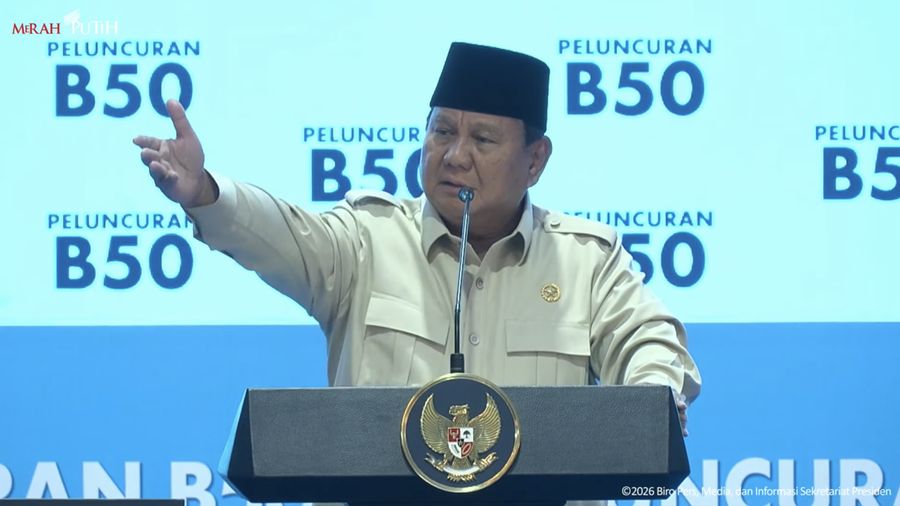
President Prabowo Subianto announced in a national address that an expedition team from Indonesia’s National Research and Innovation Agency (BRIN) had discovered a promising new gold deposit in Papua. Preliminary scientific findings indicate that the discovery could be one of Indonesia’s important future mineral assets, but further geological studies and technical evaluations are needed before commercial development decisions can be made,” the President said.
The announcement has garnered attention, not only for the scale of the reported find, but also because it arrives at a time when global demand for strategic minerals continues to grow, fueled by industrial growth, technological development, and the global energy transition.
The discovery renews hope for Papua that the abundance of natural resources can help to boost sustainable economic growth and open up wider opportunities for local communities if managed transparently, responsibly and inclusively.
Scientific Exploration Reveals Promising Mineral Potential
President Prabowo said the finding was the result of scientific exploration by BRIN researchers, which, according to him, was in line with previous geological studies conducted by academic researchers, including research from the Bandung Institute of Technology (ITB).
However, government officials stressed that the results so far should be viewed as the outcome of geological exploration, not as immediate confirmation of commercially recoverable reserves.
Before a discovery can be commercially produced for the mining industry, it must pass through a number of phases.
As a consequence of the recognition of mineralization, additional exploration, drilling, laboratory testing, feasibility studies, environmental assessments and regulatory evaluations need to be undertaken to determine the quantity, quality, economic feasibility and environmental impact of any potential future mining operation.
Mining experts say the scientific process can take several years before investment decisions are made.
This approach helps ensure that mineral development is based on sound geologic evidence, sound environmental planning, and sound economic evaluation.
The Indonesian authorities have highlighted scientific research as the cornerstone of future development, highlighting the need to manage the country’s resources on the basis of evidence rather than speculative expectations.
A Strategic Asset for Indonesia’s Future Economy
Indonesia is a long-standing producer of several key mineral commodities including nickel, tin, copper and gold and is one of the world’s top producers of these commodities.
The new evidence, therefore, strengthens Papua’s strategic position in Indonesia’s overall effort to increase national resource security and speed up industrial development.
Gold remains one of the world’s most strategically important commodities, economic observers say.
Gold’s function as an investment asset and monetary reserve persists, but it is also vital for electronics, aerospace technology, medical equipment, telecommunications, and advanced manufacturing.
The broader mineral potential delineated in the exploration may also prove to be important as global industries seek for secure sources of strategic raw materials.
As governments around the world scramble to secure resilient mineral supply chains, discoveries underpinned by rigorous scientific research are receiving heightened international attention.
For Indonesia, improving domestic knowledge of its geological resources also underpins long term planning for industrial development, downstream processing and investment.
Opportunities for Papua’s Communities
While large finds of minerals often attract attention because of their commercial value, government officials have said the true test of long term success is whether they help improve public welfare.
The future development of resource projects, following comprehensive technical, environmental and regulatory evaluation, could create opportunities in multiple sectors of the Papua economy.
Potential benefits from increased economic activity associated with responsible mineral development include construction activities, transportation services, engineering, environmental management, vocational education, logistics, manufacturing support, hospitality, and local business development.
The chance to reinforce human resource capacity is equally vital.
Economic planners increasingly stress that sustainable mining relies on more than natural resources. It needs skilled local workers, professional training, technological innovation and educational investment.
Vocational training, partnerships with universities, engineering scholarships, technical certification and workforce development can help indigenous Papuans to play a greater role in future economic activities.
Development specialists often point out that natural resource projects create the most long-term benefits when local communities are fully involved throughout planning, employment, entrepreneurship and value creation.
This is in line with broader government efforts to improve education, health, infrastructure, digital connectivity and economic inclusion in Papua.
Responsible Resource Development Remains Essential
Any future mineral development should be guided by good governance, environmental sustainability, legal certainty and community participation, government officials have repeatedly said.
International experience indicates that successful mining industries are based on transparent regulation, responsible environmental management, investor confidence and constructive engagement with local communities.
But environmental impact assessments, biodiversity protection, responsible water management, land rehabilitation, occupational safety and compliance with national regulations are still key components of modern mining practices.
At the same time, meaningful consultation with indigenous communities and regional governments will continue to play an important role in future planning processes.
Development experts generally agree that responsible management of natural resources is most effective when economic growth is matched by commitment to the environment and social inclusion.
For Papua, this balance will be of particular importance considering the globally recognized ecological richness and cultural diversity of the region.
Indonesia is committed to ensuring any future resource development will contribute to long term prosperity while maintaining Papua’s unique environmental and cultural legacy by combining scientific research, principles of sustainable development and community participation.
Strategic Minerals and the Importance of National Resilience
The announcement of a major new gold and mineral discovery has also underscored Papua’s increasing strategic importance in the global economy.
As countries invest in advanced manufacturing, digital technologies, renewable energy systems, aerospace industries and critical infrastructure, the global demand for mineral resources is increasing. Gold is an important financial asset and industrial commodity, but discoveries of large mineral deposits attract broader international interest because of their long-term economic value.
Economists point out that areas with lots of natural resources are often the center of fierce business rivalry between local and foreign investors. The reality offers huge opportunities for economic growth, but also requires governments to work harder at governance, regulatory certainty, investment security and public accountability to ensure that development benefits local communities, while protecting national interests.
The scientific findings published by BRIN in Indonesia emphasize the need for Papua natural resources to be managed with careful planning, transparent institutions and long term development policies that focus on national prosperity and regional stability.
Stability Remains Essential for Sustainable Investment
“Development specialists agree that a stable and predictable environment is essential for serious investment projects.
Large scale mining operations often require long investment cycles, significant infrastructure development, environmental management programs, workforce training and long term partnerships with local governments and surrounding communities.
Thus, public security and legal certainty are an important precondition for attracting responsible investment that can provide sustainable economic benefits.
Government officials have repeatedly stated that economic development, environmental protection and public security should be complementary to each other, not competitive.
“We expect infrastructure development, education and healthcare expansion, transport improvements, digital connectivity and investment promotion to work best when there is a peaceful environment for communities, businesses, researchers and public institutions to operate safely.
Security experts also see that areas rich in strategic natural resources can be exposed to misinformation campaigns, criminal activity, illegal mining and other kinds of disruptions which erode investor confidence and stall development projects.
This is why enhancing governance, law enforcement and public communication remains an important element of Indonesia’s broader approach to ensuring that Papua’s natural wealth underpins long term prosperity rather than instability.
Ensuring Papua’s Natural Wealth Benefits Local Communities
Officials have emphasized that the goal of future resource development is not just to increase mineral production but to improve the quality of life for the people of Papua.
With subsequent exploration confirming commercial viability and projects proceeding under Indonesian law, responsible mining investment could generate significant multiplier effects across the regional economy.
Development could also lead to increased demand for transportation services, construction, engineering, environmental consulting, vocational education, hospitality, logistics, local procurement, financial services and small and medium enterprises, in addition to direct jobs.
For Indigenous Papuan communities, maintaining a focus on expanding economic opportunities through education, technical training, entrepreneurship and workforce participation will be critical to ensuring development brings inclusive and sustainable benefits.
Economists often say that resource rich regions achieve the most success when revenues are accompanied by sustained investment in human capital.
To turn natural resource wealth into broader social development, schools, vocational institutions, health facilities, digital infrastructure, transport networks and public services need to be improved.
Indonesia’s ongoing investments in roads, airports, telecommunications, food security, healthcare and education across Papua provide an important foundation to support this long term transformation.
Responsible Mining and Environmental Stewardship
Papua is known internationally not only for its mineral potential but also for its extraordinary ecological diversity.
Environmental assets of global significance are its tropical forests, river systems, mountainous landscapes and rich biodiversity.
For this reason, experts stress that future mining activities must be accompanied by rigorous environmental safeguards and compliance with national regulations.
Nowadays mining practices are more and more taking into account environmental impact, biodiversity conservation, water resource management, mine rehabilitation, emissions reduction, waste management and ongoing surveillance throughout the life cycle of mining operations.
Equally important is meaningful engagement with local communities to ensure that development planning reflects social, cultural and environmental considerations, as well as economic objectives.
Balancing economic growth with environmental protection is an international benchmark for responsible resource governance.
Officials have reaffirmed that scientific research, environmental sustainability, legal compliance and community participation will remain fundamental values guiding any future development of newly identified mineral resources.
Looking Ahead
Indonesia will conduct further geological exploration and technical assessment to assess the entire potential of a new gold and mineral prospect discovered in Papua. Further research might show commercial viability and the next stages would involve feasibility studies, environmental impact assessments, obtaining regulatory approvals and engaging with local communities before any production could take place. Along the way, policymakers have underlined the need for resource development to contribute to inclusive economic growth, environmental sustainability and long term prosperity for Papua, while bolstering Indonesia’s strategic position in the global minerals sector.
Conclusion
The announcement of a major new gold and mineral find in Papua marks an important step forward in Indonesia’s efforts to understand and responsibly develop its natural resource potential. The results are still subject to further scientific validation and technical assessment, but they open up promising avenues for boosting regional economic development, building up infrastructure, creating skilled employment and improving community welfare. These opportunities will come to fruition through transparent governance, responsible environmental management, meaningful participation of Indigenous Papuan communities, and sustained efforts to maintain a stable investment climate. Papua has the potential to be an increasingly important contributor to Indonesia’s long term economic resilience by integrating scientific innovation, good governance and inclusive development, while ensuring the benefits of its natural resources are shared broadly and sustainably.

