The real test of Papua’s development challenge is not the grand announcements in Jakarta but whether public services can reach villages separated by rivers, mountains, forests and vast stretches of ocean.
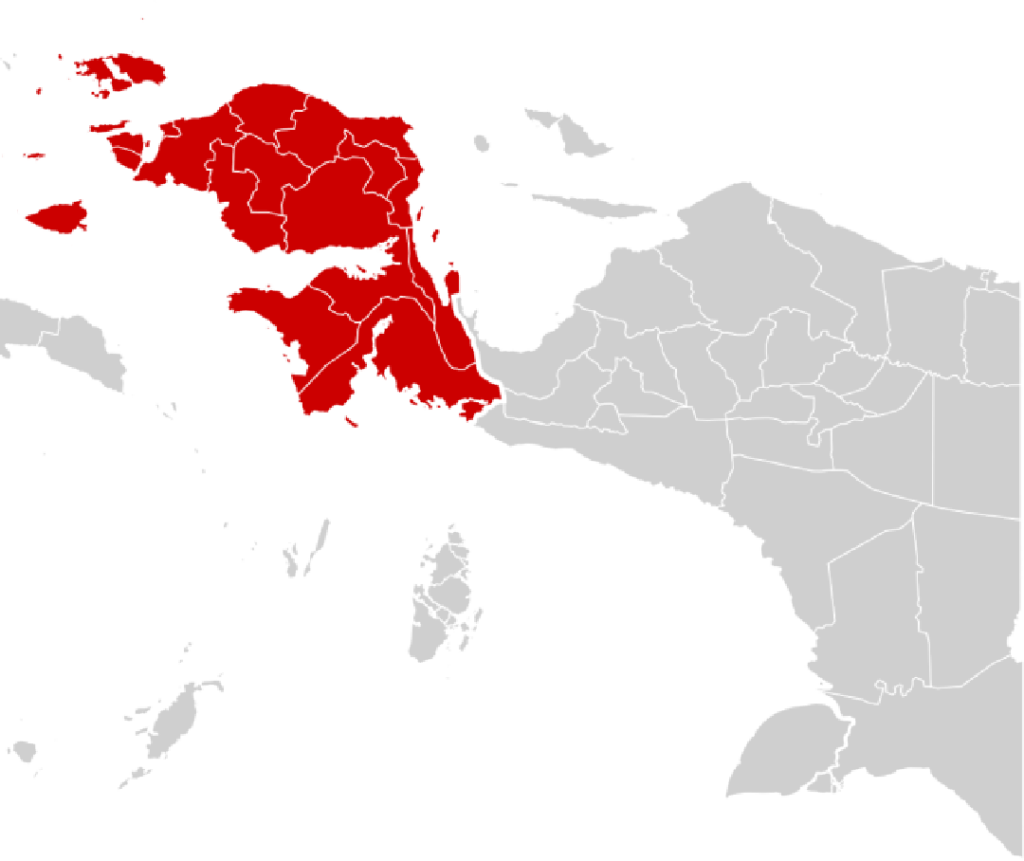
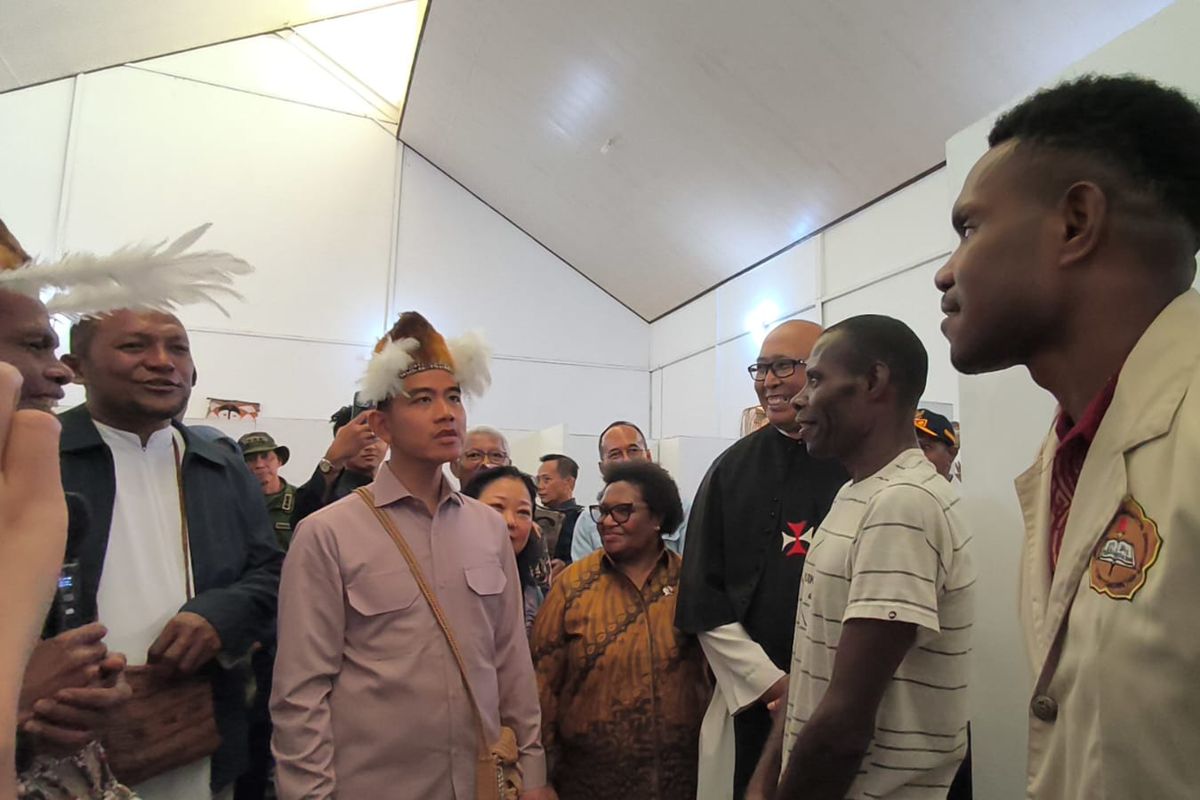
The reality was reflected in the working visit of Vice President Gibran Rakabuming Raka to eastern Indonesia on June 18-21, 2026, where he visited Nusa Tenggara Timur (East Nusa Tenggara), Gorontalo, Papua Selatan (South Papua), and Papua Barat (West Papua).
In Papua, the vice president focused on two flagship government programmes that are said to be crucial to improving welfare in remote areas, namely the Free Nutritious Meals Programme (MBG) and the Red and White Village Cooperatives (KDMP). His itinerary was filled with visits to agricultural projects, meetings with local communities, the opening of the 14th National Pesparawi Festival in Manokwari, and visits to development projects aimed at strengthening healthcare, education and local economic opportunities.
For many residents, the visit was more than just a routine government inspection. The visit was viewed as a sign that Papua remained a strategic priority in Indonesia’s long-term development agenda.
“Papua is a priority for the government,” Gibran told community leaders and residents during the visit. “Development is no longer Java-based.
The statement echoed across a region where connectivity, public services and economic opportunities have historically been more problematic than in western parts of Indonesia.
Bringing Government Programmes to Papua’s Most Remote Communities
One of the most closely watched stops on the vice president’s visit was Asmat Regency in Papua Selatan, a region known internationally for its rich Indigenous culture but also for logistical challenges that make public service delivery difficult.
In Asmat, Gibran monitored the preparations for the implementation of the government’s Free Nutritious Meals Programme to improve children’s nutrition and support human capital development throughout Indonesia.
The vice president said a one-size-fits-all approach won’t work and that local adaptation is necessary.
Gibran told the officials who accompanied the visit, “The programme should consider Papua’s special geographical condition and social structure.”
He advocated for collaboration with churches, local communities, schools and community kitchens so that the programme could effectively reach children in remote villages.
Nutrition as a Foundation for Human Development
“Nutrition is directly related to educational achievement and future economic productivity,” stressed Gibran while speaking during discussions in Asmat.
“Providing children with healthy meals is not only a social assistance measure but also an investment in the future,” the government says.
Local officials welcomed the approach, saying transportation barriers often make distribution of food difficult in many areas of Papua.
The vice president’s focus on implementation details was part of a broader effort to ensure that national programmes are adaptable to local realities rather than based solely on centralised planning.
His visit also included discussions on how to strengthen village-level economic institutions through the Red and White Village Cooperative programme designed to expand economic opportunities in rural communities.
A Commitment to Healthcare in Asmat
Beyond nutrition, healthcare infrastructure was another major theme of the visit.
In meetings with local stakeholders, Gibran announced plans to support the construction of a Type C Regional Hospital in Asmat, a project that is expected to improve access to healthcare services in one of Papua’s most remote regions.
Local leaders long advocating for more robust healthcare facilities closer to their communities hailed the announcement.
Specialist treatment may only be available far away, usually in larger urban centres, making it difficult for residents to receive timely medical attention.
The new hospital is expected to relieve those barriers and strengthen regional healthcare capacity.
Listening to Voices From Eastern Indonesia
Having completed his Papua itinerary, Gibran said he would convey local communities’ concerns and aspirations straight to Jakarta.
Much of the talk was about practical matters. About transportation and access to healthcare and education and economic opportunities, officials travelling with the trip said.
The vice president’s approach reflected a general government effort to marry national development planning with direct observations from the field.
Supporting Agricultural Growth in Papua Barat
After carrying out activities in Papua Selatan, Gibran continued his visit to Manokwari and Manokwari Selatan (South Manokwari) in Papua Barat.
Much of this part of the trip was agriculture and especially government efforts to increase cocoa production.
The vice president visited agricultural locations in South Manokwari, where he personally planted the best cocoa seedlings and met with farmers participating in rehabilitation programmes.
The initiative is part of a wider effort to boost Papua’s agricultural sector and add value to local commodities.
Reviving Papua’s Cocoa Industry
Papua has enormous agricultural potential, and Indonesia is still one of the biggest producers of cocoa in the world.
Government officials are of the opinion that productivity can be improved by rehabilitating ageing plantations and improving farming practices and providing local communities with more income opportunities.
During the visit, Gibran stressed the importance of downstream development and value creation.
Agriculture should not be just about production but about creating sustainable economic opportunities for farmers, he said.
The vice president’s focus on the development of cocoa is part of the broader attempt to diversify Papua’s economy from traditional sectors.
Peace and Development Go Hand in Hand
Another significant moment was the opening of the 14th National Pesparawi Festival in Manokwari.
The event gathered participants from all over Indonesia and showed Papua as a place of cultural and religious diversity meetings.
Gibran told the participants that sustainable development requires a peaceful environment.
He told the participants that economic growth, investment, education and public services flourishing were all dependent on stability and social harmony.
That message was echoed by local religious and community leaders, who saw the festival as a celebration of unity in Indonesia’s diverse social fabric.
Papua’s Progress Recognised
The vice president also expressed his appreciation for the progress made in Papua Barat in recent years.
He said infrastructure, public services and community participation were better and called on the central and regional governments to continue working together.
For local residents who participated in the event, the recognition had a symbolic significance, as it celebrated achievements that were often ignored in the national discourse about Papua.
Ribka Haluk Highlights Special Autonomy Achievements
For parts of the visit, the vice president was accompanied by one of Papua’s most prominent public officials, Deputy Minister of Home Affairs Ribka Haluk.
Ribka said the visit was an opportunity to show the concrete results of the Papua Special Autonomy framework.
“The gains in education, healthcare, infrastructure and community empowerment are a reflection on how government programmes are being converted into tangible gains,” she said.
She said that direct visits by national leaders help strengthen coordination and speed up implementation at the local level.
Showing Progress Through Action
The visit gave national officials a chance to see conditions firsthand rather than rely on reports and statistics.
This interaction gives Papua’s regional governments the chance to communicate local priorities and make certain that development programmes are responsive to community needs.
Students Join the Journey
One of the unique things in the vice president’s trip was the involvement of five students from five universities from across Indonesia. They are Keletus Sakaro, from Sanata Dharma University; Daffa Ulhaq, from the University of Indonesia; Nolan Christopher Adam, from Pelita Harapan University; Rapid Bena Matin, from Jenderal Soedirman University; and Salsabila Maulida, from the Indonesian Institute of Arts and Culture (ISBI).
Students went along with government officials to see how public programmes worked elsewhere.
They participated as a gesture to increase the understanding of development issues in eastern Indonesia by younger Indonesians.
Participants were exposed to issues that often receive limited attention outside Papua, as they witnessed conditions firsthand.
The project also created opportunities for dialogue between students, local communities and policymakers.
Learning Beyond the Classroom
The trip was a hands-on lesson in governance and public policy for many of the participants.
The lessons learned from observing the operation of nutrition programmes, health programmes, agricultural projects and village cooperatives in remote areas are not wholly transferrable through academic study alone.
Why Papua Remains Central to Indonesia’s Future
The significance of the visit extends beyond the specific projects reviewed on the four-day trip.
Papua plays a strategic role in the long-term vision of Indonesia’s equitable national development.
The region has much potential, with rich natural resources, a young population and expanding infrastructure networks.
But that potential will only be unlocked through sustained investment in human capital, health care, education, agriculture and local economic institutions.
That focus on nutrition programmes, village cooperatives, health care facilities, and agricultural modernisation suggests an integrated approach to addressing those challenges.
Conclusion
The working visit of Vice President Gibran Rakabuming Raka to Papua in June 2026 delivered a clear message on Indonesia’s development priorities. The visit showcased a wide-ranging effort to bridge regional divides and expand opportunities in eastern Indonesia, ranging from assessing Free Nutritious Meals programmes in Asmat to backing cocoa rehabilitation in Manokwari Selatan and fostering community empowerment through village cooperatives. So was his repeated assurance that Papua is still a national priority. For many of the residents who met the vice president during the trip, the visit wasn’t just about reviewing government programmes. It was a reminder that the future of Indonesia’s development agenda is increasingly tied to ensuring that progress reaches communities far beyond the country’s traditional hubs of growth.