
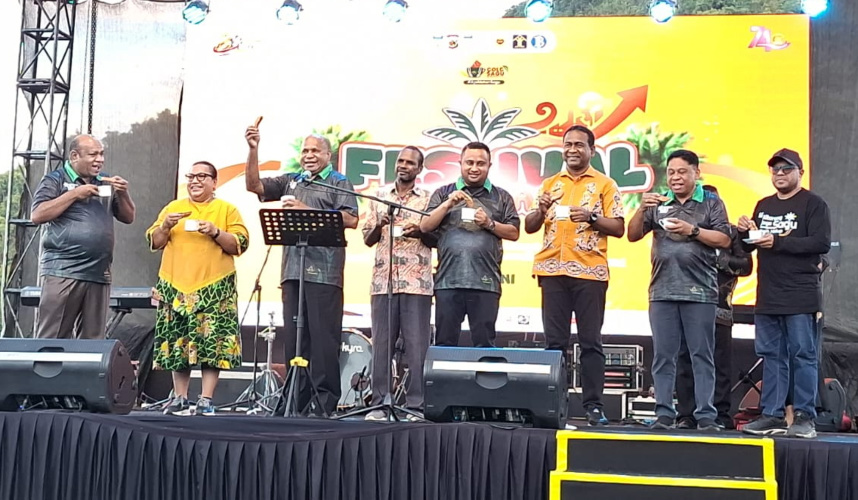
As visitors gathered around traditional cooking demonstrations, the smell of roasted fish wafted through the festival grounds in Sorong. Nearby, women from Indigenous communities laid out carefully local ingredients that have sustained generations of Papuans long before modern supply chains reached the island.
Hundreds of miles away in Jayapura, a similar scene unfolded under towering sago trees. The Festival Colo Sagu 2026 brought together community leaders, cultural activists, government officials, and local residents to celebrate the annual event, which has become one of the most important platforms for Papua to promote traditional food, environmental conservation, and indigenous identity.
The Papuan Food Festival in Sorong, Papua Barat Daya (Southwest Papua), along with the Festival Colo Sagu 2026 in Jayapura, Papua, signaled a bigger movement brewing in Papua. Much of the global discussion of food security has focused on imports, industrial agriculture, and international supply chains, but many Papuans are looking inwards and rediscovering local food systems that have sustained communities for centuries.
And at the heart of that movement is sago.
For many Indigenous Papuans, sago is more than just a staple. It is a cultural icon, a livelihood, and an ecological resource intimately tied to the conservation of Papua’s forests.
The festivals across June 2026 show how local governments, community organizations, Indigenous leaders, and everyday people are working together to keep traditional food systems alive in a rapidly changing world.
Sago at the Center of Papua’s Food Future
When Governor Mathius Fakhiri officially opened Festival Colo Sagu 2026 in Jayapura on June 19, his message focused on an issue gaining more and more importance across Indonesia: food resilience.
Fakhiri said before representatives of the community and festival participants that sago is one of the strengths of Papua.
Papua has natural resources that can support food security but still maintain ecological balance, he said at the event. “Sago is not just a food tradition; it is a pillar of food security and one of the driving forces of Papua’s future development.”
Many of those in attendance, who believe in strengthening local food systems to lessen dependence on outside sources and protect Indigenous ways, found his remarks to be relevant.
“Development of Papua should not be detached from its cultural identity,” the governor said. He said the push to preserve the knowledge and traditions that have helped Indigenous communities thrive for generations must be matched with economic progress.
This approach has gained in relevance recently as climate change, population growth, and swings in global food markets raise issues about long-term food security in the Pacific region.
More Than a Festival
To those who are not familiar with Papua, Festival Colo Sagu might seem like a food-oriented cultural event.
But participants say it is about something much bigger.
The event was filled with discussions on forest conservation, Indigenous rights, sustainable land management, and community empowerment.
Local leaders emphasized time and again that protecting sago forests is the same as protecting the very basis of Indigenous life.
For many Papuan communities, sago ecosystems are a source of food, building materials, traditional medicines, and economic activities.
As a result, the conservation of sago has become more integrated into larger environmental campaigns.
Cultural activists taking part said that younger generations are becoming less familiar with traditional food processing techniques.
For example, events like Festival Colo Sagu fulfill an educational role through the transmission of knowledge from the elders to the young.
Traditional demonstrations showcased how sago was harvested, processed, and transformed into various foods that remain popular throughout Papua.
The event attracted great interest from students and young families who attended.
To many observers, that exchange between generations may be as valuable as the festival itself.
A Call to Protect Papua’s Forests
Environmental conservation was the most dominant theme at Festival Colo Sagu 2026.
Organizers said the event was a rally to protect the future of the forests of Papua.
The link between sago and forest conservation is particularly relevant, as much of Papua is covered by some of the world’s most biodiverse tropical forests.
Unlike many agricultural commodities, sago does not require clearing of large areas of land and grows naturally in wetland ecosystems.
Thus, sago cultivation is often considered by conservationists to be compatible with sustainable management of the environment.
The festival participants stressed repeatedly the importance of that balance.
Several speakers warned that the loss of sago forests would affect not only biodiversity but would also undermine local food systems that have fed communities for centuries.
The message was clear: safeguarding forests and boosting food security are mutually reinforcing rather than conflicting priorities.
Community Leaders Back Local Food Sovereignty
Law enforcement and community representatives at the festival likewise voiced support for local food resilience.
Jayapura City Police Chief Kombes Pol Fredrikus W.A. Maclarimboen emphasized the need to protect Papua’s cultural heritage through traditional food.
“Local food security starts with appreciation for local resources,” he said.
He encouraged communities to continue to use and protect the traditional food sources that have long been the backbone of Indigenous livelihoods.
His comments reflected an emerging recognition that food system resilience is not just an agricultural issue.
Instead, it’s about education, culture, environmental stewardship, and community participation.
Strengthening local food traditions, leaders say, will help Papua reduce its vulnerability to external shocks while still preserving its cultural identity.
Sorong Showcases the Diversity of Papuan Cuisine
While Festival Colo Sagu showcased the significance of sago, the Papuan Food Festival 2026 in Sorong on June 18 provided a broader celebration of Papua’s culinary diversity.
The event brought together Indigenous communities from various regions, each showcasing their distinct food traditions and methods of preparation.
Visitors were served dishes rarely seen outside the local community.
Traditional bamboo cooking methods, Indigenous recipes from the Moi people, and ceremonial food practices were some of the attractions that received attention throughout the festival.
The event is a way to preserve cultural heritage and create economic opportunities in the area, organizers said.
For many participants, food is a strong form of identity expression.
Within each recipe is a story of migration, adaptation to the environment, social relationships, and Indigenous knowledge systems passed down through generations.
The festival was therefore not only a culinary event but also a cultural archive.

Indigenous Knowledge and Modern Challenges
A common theme at both festivals was the need to combine traditional knowledge with modern-day development issues.
There is a growing recognition among policymakers across Papua that Indigenous knowledge can provide solutions from food security through to environmental management.
One excellent example is the traditional cultivation of sago.
Long before notions of sustainability entered policy debates, indigenous Papuan communities had ways of managing sago ecosystems without degrading the surrounding environment.
Researchers and development practitioners interested in locally grounded approaches to resilience continue to consider those practices appealing.
In both festivals participants argued for development strategies to acknowledge the value of such knowledge instead of viewing it as a relic of the past.
Rather, traditional practices can complement modern innovations and strengthen community-based development.
Supporting Local Economies
The economic dimension of the festivals was equally important.
Small-scale food producers, Indigenous entrepreneurs, and community groups used the events to promote local products and grow market opportunities.
For many women entrepreneurs, especially Indigenous mothers known locally as Mama Papua, the festivals were an opportunity to display products made from sago and other traditional ingredients.
“Local food industries play a role in creating jobs and generating income,” regional government representatives said.
Officials hope to increase demand for traditional products and strengthen community livelihoods while encouraging sustainable resource management.
The approach is in line with broader efforts across Papua to encourage economic growth that is still grounded in local culture and resources.
Instead of depending solely on outside products, many communities are investigating how to generate value from assets already present in their regions.
Food Security in a Changing Climate
Debates surrounding both festivals also reflected increasing awareness of climate-related risks.
Extreme weather events and environmental change are increasingly disrupting food systems, raising concerns among governments across the Pacific.
In this context traditional crops such as sago are receiving renewed attention.
Because sago is well adapted to the ecological conditions of Papua, it is considered by many experts an important part of long-term food resilience.
Participants contended that bolstering local food systems can enable communities to better withstand future uncertainties.
The strategy does not mean to reject modernization or external trade.
Instead, it focuses on diversification and resilience.
With strong local food foundations, communities may be better able to respond to future challenges.
Preserving Culture Through Food
Perhaps most striking about both festivals was the way food became a vehicle for cultural preservation.
Visitors not only ate traditional dishes, but they also learned the stories behind them.
They learned the stories behind them.
Elders talked about how certain foods are linked to ceremonies, relationships in the community, and stewardship of the environment.
The young people listened and asked questions and, often, were experiencing traditional practices for the first time.
These interactions highlighted the reason why many Papuans view food as inseparable from culture.
Protecting traditional foods is protecting languages, customs, and collective memory.
Such efforts are even more important in an age of rapid globalization.
Looking Ahead
The success of the Festival Colo Sagu 2026 and the Papuan Food Festival in Sorong is an indication that interest in local food systems throughout Papua is still developing.
There is a growing convergence among government institutions, Indigenous communities, civil society organizations, and cultural leaders on the desire to build food resilience and protect cultural heritage.
And the collective message is simple but compelling.
Papua’s food security future might not only depend on what comes from outside the island. It also may hinge on protecting what has flourished in its forests, rivers, and Indigenous communities for generations.
Conclusion
The Papuan Food Festival in Sorong and the Festival Colo Sagu 2026 in Jayapura are not only about agricultural production, as seen in food security in Papua. It is intrinsically linked to culture, environmental preservation, and indigenous knowledge. The festivals also served to reaffirm the importance of maintaining sago forests, protecting local culinary traditions, and strengthening food systems based on local wisdom. Papua faces the challenges of modernization and climate change, and the growing movement to protect traditional foods may be critical to cultural survival and to building a more resilient and sustainable future.

