The classrooms looked different.
Some had new roofs. Others had fresh paint and repaired floors. In several schools visited by government officials in eastern Indonesia during late May, broken windows and damaged walls that had become familiar for years had disappeared.
Students continued attending lessons as usual.
Construction workers were still visible nearby.
For Indonesian officials traveling through Papua and West Papua in recent weeks, those scenes represented something larger than infrastructure projects.
Education, they argued, cannot improve if schools themselves continue falling apart.
School revitalization has now become one of Indonesia’s largest education programs, with Papua increasingly placed near the center of implementation as policymakers try to reduce long standing gaps between eastern regions and other parts of the country.
Papua Receives Growing Attention Within National Education Plans
Education Minister Says Papua Cannot Be Left Behind
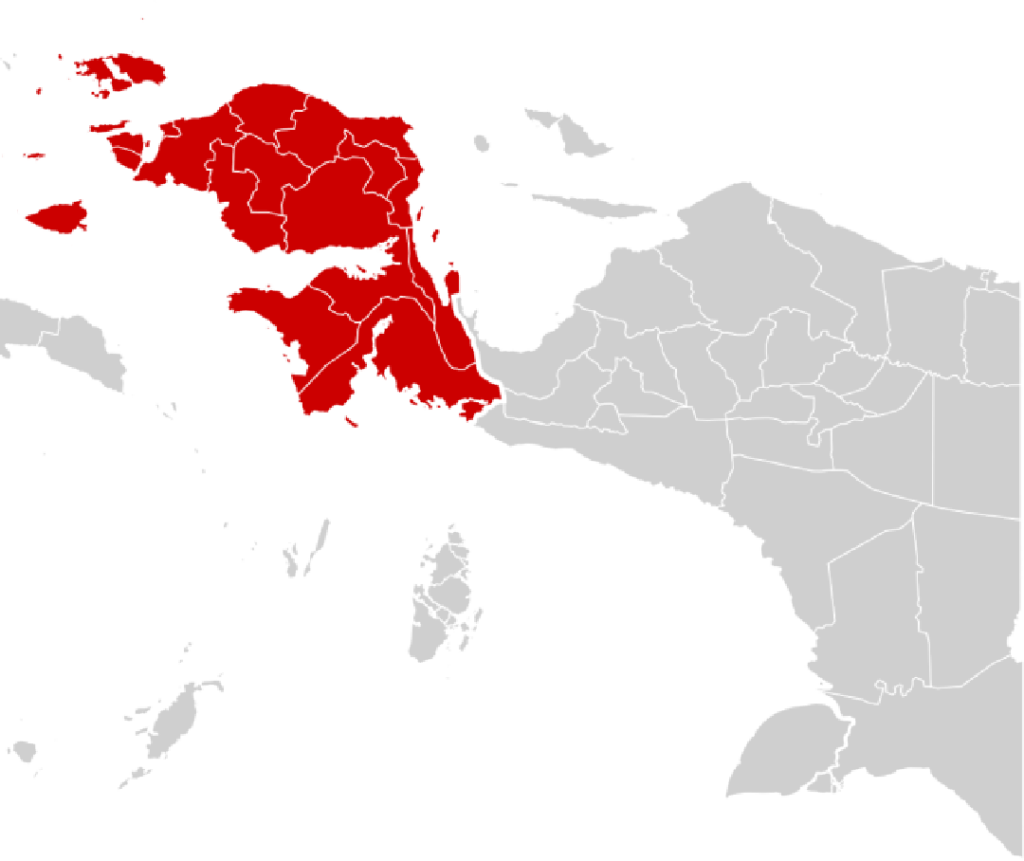
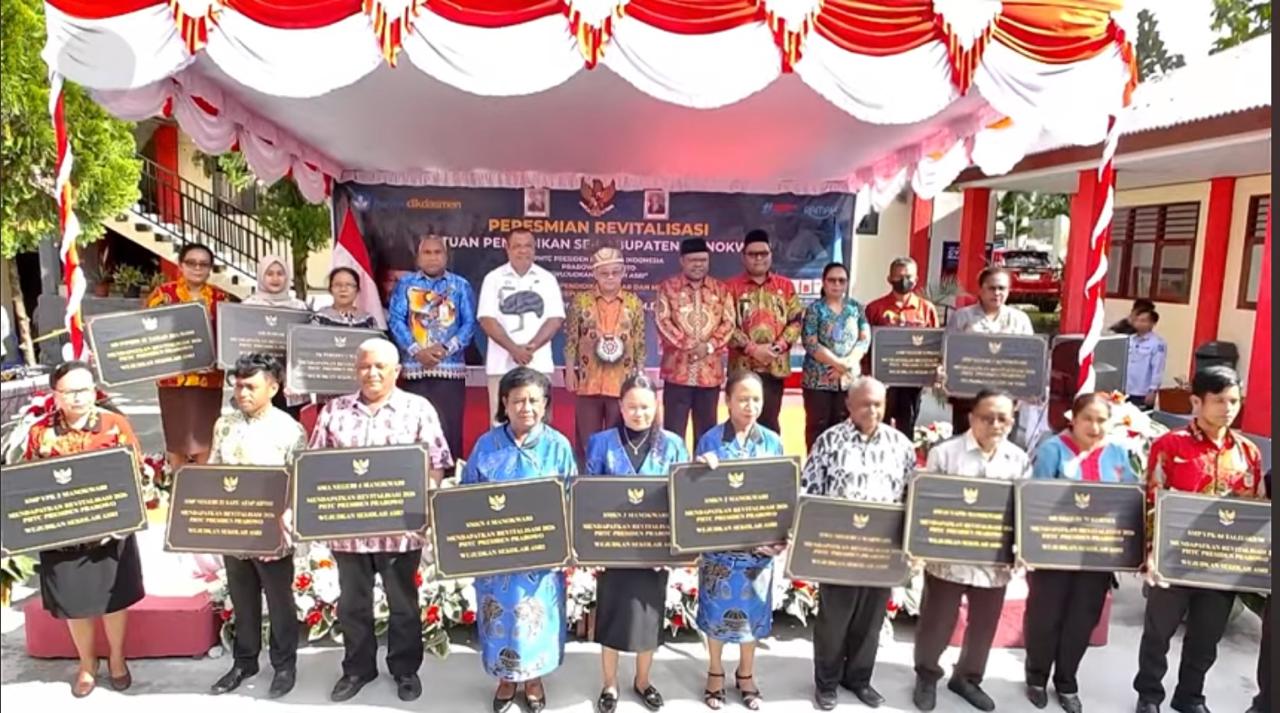
During a series of visits to Manokwari, Papua Barat Daya (Southwest Papua) Province on May 26, 2026, Education Minister Abdul Mu’ti repeatedly returned to the same message.
Papua, he said, should not remain behind while other regions continue moving forward.
“Quality education must be enjoyed by all Indonesian children, including those in Papua,” the minister said during activities connected with revitalization programs in Sorong.
Officials accompanying the visits explained that the program extends far beyond repairing classrooms.
Laboratories, dormitories, sanitation systems, internet access, teacher facilities, and learning spaces increasingly form part of revitalization packages.
Government data shows nearly 100,000 schools nationally have become targets within broader revitalization plans.
Several schools in Papua have been included among priority locations.
Visits to Papua Barat Daya Highlight Uneven Access
The minister’s visit to Papua Barat Daya drew attention because education gaps remain visible across many remote regions.
In several districts, geographical conditions continue creating logistical challenges.
Travel between communities often depends on difficult roads, sea routes, or expensive transportation.
Officials said revitalization programs increasingly account for these realities.
That means infrastructure development cannot simply replicate approaches used in larger cities.
Officials Say Revitalization Means More Than Construction
Inside schools receiving attention from policymakers, conversations rarely focused only on buildings.
Education officials repeatedly argued that construction projects alone will not change outcomes.
Several officials emphasized that schools require functioning ecosystems.
Teachers.
Learning materials.
Technology.
Dormitories.
Safe environments.
Support systems.
One education official involved during revitalization discussions said improved buildings become meaningless if students still struggle accessing teachers or learning resources.
That argument increasingly shapes government messaging surrounding education programs in Papua.
Indigenous Communities Become Central Discussion
Government officials increasingly frame school revitalization as part of broader human capital investment for indigenous Papuans.
Several policymakers argued educational inequality eventually influences employment opportunities, income levels, and economic participation.
For families living in remote regions, school access itself often remains difficult.
Some students travel long distances.
Others stay away from parents while attending school.
Several communities continue depending heavily on dormitory systems.
Because of these realities, education planners increasingly discuss facilities beyond classrooms themselves.
Central and Regional Governments Attempt Closer Coordination
On May 29, officials again emphasized that education improvement cannot rely solely on Jakarta.
Regional governments across Papua have increasingly become involved in determining school priorities and implementation.
Several provincial officials argued local administrations understand geographical conditions better than central planners alone.
That coordination has become increasingly important because educational challenges vary widely between coastal cities, mountain districts, islands, and remote settlements.
Government officials frequently describe this approach as necessary because Papua’s geography itself creates unequal conditions.
Previous Revitalization Programs Continue Expanding
According to official government figures, 89 schools in West Papua underwent revitalization during 2025.
Officials described the number not as a final achievement but part of a continuing process.
Education planners indicated additional schools may enter revitalization programs during 2026 as budgets and implementation expand.
Several schools visited recently still showed ongoing construction activities while classes continued operating nearby.
Why School Infrastructure Matters Beyond Education
Education discussions in Papua rarely stay inside classrooms.
Parents often connect schools with future employment opportunities.
Local governments connect education with economic competitiveness.
Officials discuss schools when talking about poverty reduction, workforce preparation, and regional development.
That partly explains why education projects increasingly receive political attention.
For students themselves, however, the changes may appear simpler.
Better classrooms.
Functioning toilets.
Reliable electricity.
Less rain leaking through roofs.
Those practical differences often shape daily experiences more than policy discussions.
Challenges Remain Despite Larger Investments
Government officials themselves acknowledge that revitalization alone will not solve educational problems.
Teacher distribution remains uneven.
Maintenance costs remain high.
Remote logistics continue increasing expenses.
Some regions remain difficult to reach.
Several education officials admitted these problems during recent discussions.
Still, policymakers argue delaying investment creates larger consequences.
For many communities, they say, improving educational infrastructure has already taken too long.
Conclusion
By the afternoon, schools visited by officials gradually returned to routine.
Students went home.
Teachers continued classes.
Construction workers resumed activity around unfinished buildings.
The official speeches ended.
What remained were classrooms slowly changing shape across a region where educational access has long become part of broader development conversations.
Whether school revitalization eventually transforms educational outcomes will take years to measure.
But across Papua, the physical signs of change have already started appearing.