
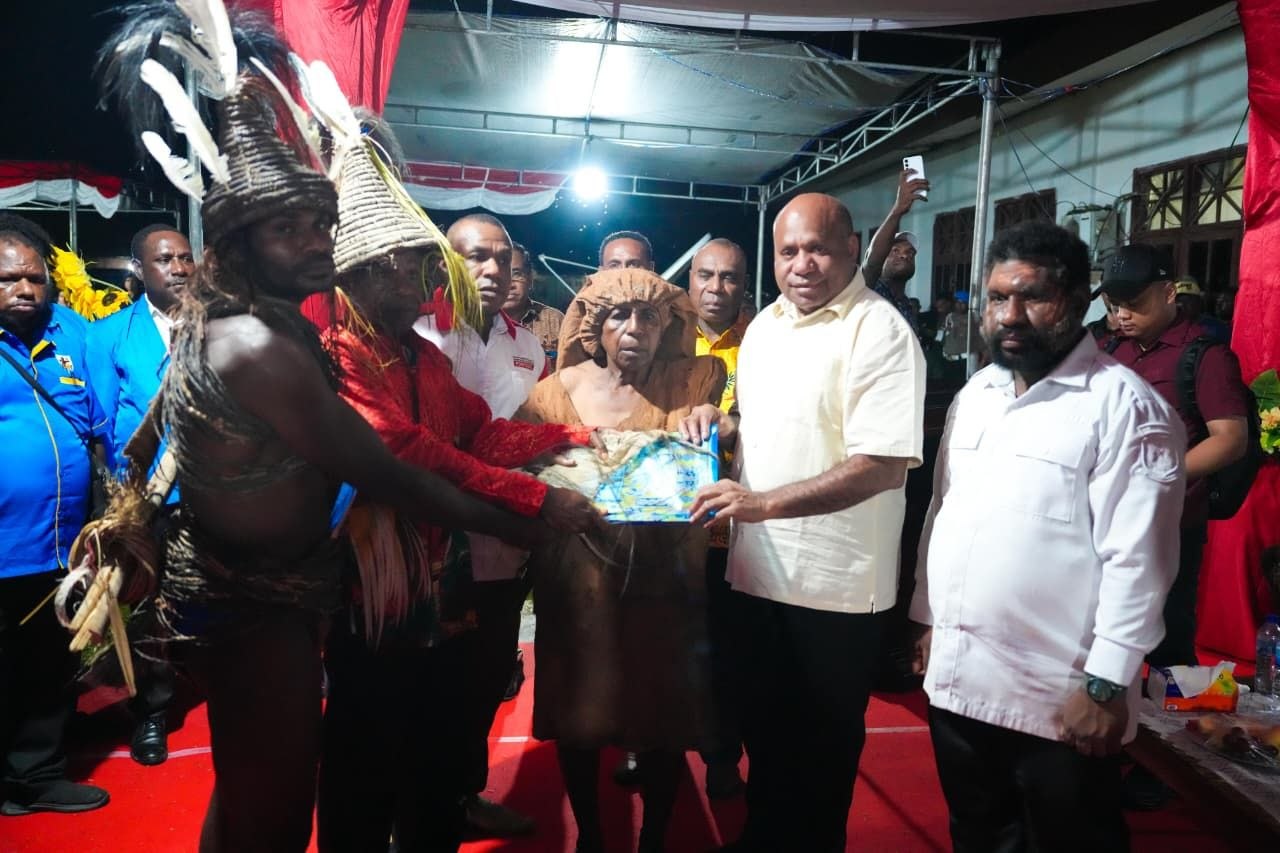
When Governor Mathius D. Fakhiri arrived in Mamberamo Raya Regency on May 16, 2026, the visit quickly revealed how isolation still shapes daily life across one of Papua’s most remote regions.
In several districts, residents continue traveling almost entirely by river.
Long wooden boats remain the main transportation lifeline connecting villages with Kasonaweja, the regency capital. During bad weather, strong currents along the Mamberamo River can delay transportation for hours and sometimes become dangerous for passengers carrying food supplies, fuel, school materials, or medical needs.
Standing during a visit to Bagusa Trimuris Health Center in District Mamberamo Hilir on Saturday, May 16, Fakhiri openly acknowledged the problem.
“We have discussed building an alternative road so people will not continue depending on river transportation,” he said during the visit. “The river current here is very strong, and the risk of river accidents is quite high.”
The statement became part of a broader development push now being accelerated by the Papua provincial government to reduce isolation in Mamberamo Raya through road construction, aviation access, internet expansion, and electricity distribution.
A Regency Still Cut Off by Geography
Mamberamo Raya remains one of the most geographically difficult regions in Papua.
Large sections of the regency are covered by forests, swamp areas, and river systems that complicate transportation and infrastructure development. In many villages, rivers function as highways, cargo routes, and public transportation corridors at the same time.
Residents often spend long hours traveling by boat simply to access schools, health clinics, or government offices.
Local officials have repeatedly said transportation limitations affect nearly every aspect of public life, from healthcare and education to economic activity and logistics distribution.
That reality was visible throughout Fakhiri’s May 16 working visit.
Besides inspecting the health center in Trimuris, the governor also reviewed educational facilities and public service conditions in several areas still facing major infrastructure limitations.
Road Project Seen as Critical Step
Trimuris to Kasonaweja Route Prioritized
One of the most important announcements during the visit involved the provincial government’s plan to develop an alternative land route connecting Trimuris and Kasonaweja.
According to statements released by the Papua provincial government on May 16, the road project is intended to reduce dependence on river transportation and improve connectivity for remote communities.
Fakhiri said the issue had already been discussed internally by the provincial administration.
“We are discussing how to create an alternative road from Trimuris to Kasonaweja so the community no longer depends entirely on river routes,” he said during the visit.
Provincial officials believe the project could eventually improve mobility for residents while lowering logistics costs in several districts.
River Transport Still Carries Serious Risks
The governor specifically highlighted transportation safety concerns in Mamberamo Raya.
According to him, strong river currents continue creating risks for residents traveling between districts.
“River accident risks are high because the current is strong,” Fakhiri said during remarks quoted by regional media on May 16.
For many communities, however, there are currently few alternatives.
Several residents interviewed by regional outlets during previous transportation incidents in Mamberamo Raya described how river travel remains expensive, slow, and weather-dependent.
That situation partly explains why road access has become one of the region’s most requested infrastructure priorities.
Flights and Ports Also Become Development Priorities
Aviation Access Needed for Remote Areas
Besides roads, the Papua provincial government is also focusing on aviation connectivity in isolated districts.
During discussions surrounding the May 16 visit, officials confirmed plans involving airport access and transportation infrastructure intended to support mobility in remote regions.
In Papua, aviation remains essential because many communities cannot yet be reached efficiently by land transportation.
Small aircraft are often used to transport passengers, medicine, food supplies, and government logistics into isolated districts.
Provincial officials said improving aviation access could help shorten travel times and support public services in areas difficult to reach by river.
Coastal Connectivity Also Discussed
Fakhiri also mentioned plans involving transit ports to strengthen mobility for coastal communities in Mamberamo Raya.
According to statements from the provincial government, the administration is preparing supporting infrastructure for transportation routes in coastal areas.
Officials believe stronger connectivity could eventually improve local trade and reduce price disparities between isolated districts and urban centers in Papua.
Internet Access Begins Reaching Interior Areas
Papua Government Delivers Starlink and Solar Panels
Another major focus during the governor’s visit involved digital connectivity.
On Friday, May 16, the Papua provincial government officially handed over 24 Starlink internet units and 24 solar panel systems for remote areas in Mamberamo Raya.
The program was formalized through a grant agreement signed between Mamberamo Raya Regent Robby Wilson Rumansara and Governor Mathius Fakhiri during an event in Kasonaweja.
According to Papua Communications and Information Office head Jeri Agus Yudianto, the internet devices were designed specifically for isolated regions with limited electricity access.
“Each Starlink device has been equipped with an access point to expand internet coverage,” Jeri said on May 16. “Because electricity remains limited in several areas, solar panels were also prepared using simpler and portable technology suitable for difficult transportation regions.”
Digital Connectivity Seen as Public Service Tool
Provincial officials said internet access is expected to support education, healthcare, village administration, and communication services in remote districts.
For many villages in Mamberamo Raya, digital access remains inconsistent or entirely unavailable.
Teachers and healthcare workers operating in interior districts have previously described difficulties sending reports, accessing information, or communicating with government offices because of weak connectivity.
The provincial government said expanding internet access has become part of a broader effort to reduce information isolation in Papua.
Electricity Expansion Targets Remote Villages
Dozens of Villages Await Power Access
The Papua provincial government is also preparing electricity expansion programs for remote communities in Mamberamo Raya.
Regional reports published in May 2026 stated the government is targeting electricity distribution for 47 villages across the regency.
Electricity access remains uneven in many parts of interior Papua, where some communities still rely on generators operating only during limited evening hours.
Fakhiri previously emphasized that electricity access is directly connected to economic activity and quality of life in remote regions.
“Adequate electricity availability not only supports basic community needs but also encourages economic activity,” he said during infrastructure discussions earlier this year.
Development Challenges Remain Enormous
Despite the ambitious plans, provincial authorities acknowledge that opening isolated regions in Papua remains extremely difficult and expensive.
Road construction through swamp areas and forests requires large logistical support. Weather conditions often slow infrastructure projects.
Budget efficiency concerns have also affected development planning in several regions.
Local reports published in May 2026 noted that connectivity limitations and budget constraints continue becoming major obstacles for development in Mamberamo Raya.
Still, provincial officials insist infrastructure expansion cannot be delayed indefinitely if regional inequality is expected to decline.
Conclusion
The programs announced during Governor Mathius Fakhiri’s May 16-17 visits to Mamberamo Raya Regency reflected growing efforts by the Papua provincial government to reduce isolation in one of the region’s most difficult geographical areas.
Through alternative road construction between Trimuris and Kasonaweja, expanded aviation access, internet connectivity programs using Starlink technology, and electricity distribution targeting remote villages, provincial authorities are attempting to improve mobility and public services for communities that have long depended almost entirely on river transportation.
The process will likely move gradually and continue facing logistical obstacles.
But for many residents in Mamberamo Raya, even modest improvements in roads, communication access, and electricity could significantly change everyday life in districts that for years remained disconnected from broader economic and public service networks in Papua.

