
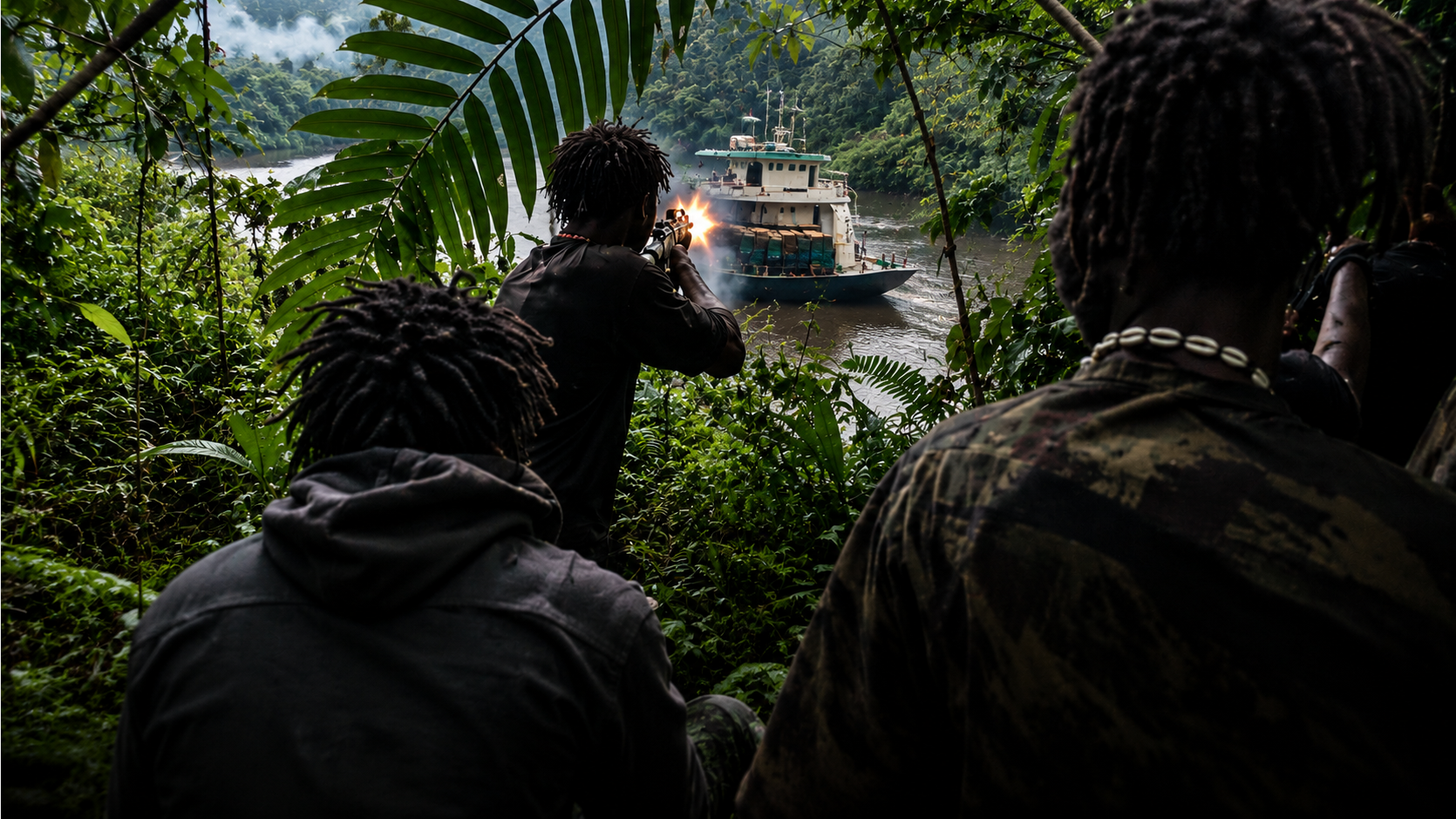
On May 4, 2026, the boat left early, long before the sun fully rose above the forests surrounding Yahukimo, Papua Pegunungan (Papua Highland) Province.
Like many cargo boats traveling toward Dekai, it carried ordinary things that rarely attract headlines. Rice sacks stacked near the engine room. Cooking oil containers tied carefully with rope. Instant noodles, fuel, and other supplies meant for communities in Papua’s interior.
For people living in remote highland districts, those boats are part of everyday survival.
Then the shooting started.
According to Indonesian military officials, armed members of the West Papua National Liberation Army (TPNPB) Free Papua Movement (OPM), a separatist group, opened fire on the vessel while it was moving through a river route near Kali (River) Braza. No passengers were killed, but the incident immediately sent anxiety through transportation workers and residents who rely heavily on logistics deliveries into Dekai District.
The attack was brief. The fear it created was not.
A River Journey That Turned Dangerous
In Papua, river travel often feels routine until suddenly it is not.
Boat operators working routes into Dekai already understand the risks. Engines can fail. Rainstorms arrive without warning. Communication signals disappear for hours in some areas.
But armed attacks create a different kind of fear.
Military authorities said the logistics vessel was targeted while transporting civilian goods toward Dekai, the administrative center of Yahukimo Regency. Officials identified the attackers as members of the TPNPB OPM armed separatist network operating in the region.
Major General TNI Frits Wilem Rizard Pelamonia, commander of the XVIV/Mandala Trikora Military Command, said the shooting directly threatened supply distribution for local communities.
“The boat was carrying logistics for the community,” he said while discussing the incident with reporters.
That detail mattered.
The target was not a military convoy.
It was a civilian supply route.
Why Boats Matter So Much in Papua
Roads Still Do Not Reach Everywhere
Outside Papua, people often imagine transportation as something predictable.
Trucks.
Highways.
Delivery schedules.
In large parts of Papua, especially in the highlands and remote river regions, the reality looks very different.
Some villages remain accessible only by small aircraft or long river journeys through thick rainforest. In certain districts, rivers still function as the fastest and most affordable way to move goods.
That is why attacks on logistics boats create immediate concern.
When one route becomes unsafe, food prices can rise quickly in isolated areas. Fuel deliveries slow down. Small traders hesitate to travel.
And communities already dealing with high living costs become even more vulnerable.
Dekai Depends on Outside Supplies
The town of Dekai depends heavily on supplies arriving from outside regions.
Everything from rice and medicine to construction materials often travels through difficult transportation routes before reaching local markets.
Residents there understand how fragile those supply chains can become.
One delayed shipment can affect prices for days.
That reality explains why the latest attack drew such serious attention from security officials.
The Government Wants to Secure Kali Braza
A New Security Post Is Being Planned
Following the attack, Indonesian military authorities confirmed plans to establish a security post in Kali Braza.
Officials believe the area has become strategically important because it sits along transportation corridors frequently used by logistics boats traveling toward Dekai.
Major General Lucky Avianto said the security post is intended to help protect civilian transportation and reduce the risk of future attacks along the river route.
For authorities, the issue is no longer only about armed confrontation.
It is also about ensuring communities continue receiving food and daily necessities without disruption.
Security and Civilian Life Are Closely Connected
In Papua’s remote regions, security problems quickly become economic problems.
If transportation slows, markets react almost immediately.
Boat operators may refuse dangerous routes.
Prices increase.
Families already living with limited income face heavier pressure.
That connection between security and daily survival is one reason the military now views river protection as increasingly important.
Conflict in Papua Often Reaches Ordinary People First
Civilians Usually Feel the Consequences
When violence happens in Papua, the effects rarely stop at the location of the incident itself.
A shooting on a river route can create fear among transport workers across multiple districts. Traders become cautious. Villagers worry whether supplies will arrive on time.
For residents living far from major cities, uncertainty spreads quickly.
The attack near Kali Braza reminded many people how fragile transportation networks still are in Papua’s interior.
Transport Workers Continue Operating Despite Risks
Boat crews in Papua rarely receive much public attention.
Yet they continue traveling through difficult terrain every week carrying supplies into isolated communities.
Some routes require hours or days of navigation through rivers surrounded by dense forest. Mechanical problems can become dangerous because assistance is often far away.
Now, some operators worry security threats may become another permanent risk.
One local transportation worker in Yahukimo reportedly described the situation simply: “People still need food, so the boats still have to move.”
The Attack Comes During Broader Development Efforts
The Indonesian government continues pushing infrastructure and development programs across Papua, including transportation projects, healthcare expansion, and economic assistance for remote communities.
Officials often describe stability as essential for those programs to succeed.
In areas where violence disrupts transportation, development becomes slower and more expensive.
That is why attacks on civilian logistics routes create broader concern beyond immediate security issues.
Authorities fear repeated incidents could discourage transportation activity and complicate efforts to improve economic conditions in remote Papua.
Papua’s Geography Still Shapes Everything
Dense Forest and Rivers Create Challenges
Papua’s terrain remains one of the most difficult operational environments in Indonesia.
Mountains separate communities. Rivers become highways. Dense forests make monitoring movement complicated for both civilians and security forces.
Armed groups are often able to move through isolated areas quickly while avoiding direct detection.
That geographical reality continues shaping security strategies across the region.
River Corridors Remain Sensitive
Security officials say transportation routes around Kali Braza are particularly sensitive because they connect communities dependent on regular supply movement.
Protecting those routes has therefore become a growing priority.
Authorities believe stronger monitoring and permanent security presence may reduce the possibility of future attacks on civilian logistics transport.
Conclusion
The shooting attack on a logistics boat near Kali Braza lasted only moments.
But in places like Dekai, where daily life depends heavily on fragile transportation routes, moments like that can leave lasting anxiety behind.
For Indonesian authorities, the incident reinforced concerns about protecting supply lines in Papua’s remote interior.
For local residents, though, the issue feels much more immediate.
They are thinking about whether food prices will rise.
Whether deliveries will arrive safely.
And whether the next boat traveling upriver will make it through without gunfire waiting somewhere along the riverbank.

