On May 1, 2026, at the crossing in Skouw, Jayapura, most days pass without much tension.
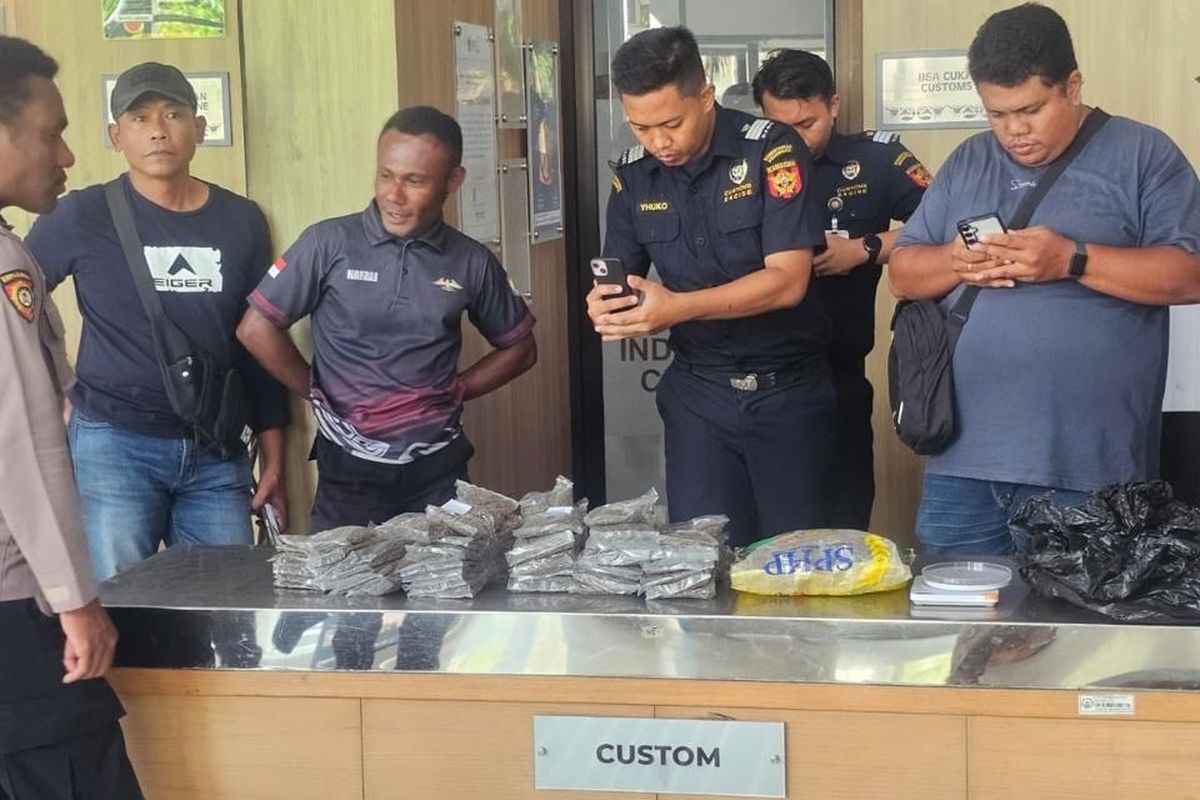
People move back and forth, some carrying goods, others visiting relatives across the border. It looks routine, almost predictable. That is why what happened this week stood out. Officers stopped a suspicious movement and uncovered 2.1 kilograms of dried cannabis coming from Papua New Guinea.
The Papua border drug smuggling 2026 case was handled quickly. There was no scene, no disruption. But it left a question hanging in the background: how often does something like this pass unnoticed?
The Moment of Discovery
From what officers described, the interception came during a routine inspection.
Nothing unusual at first glance.
Then something felt off.
The package was checked more carefully, and inside it, the dried cannabis was found, weighing around 2.1 kilograms. It was enough to confirm that this was not a small, personal attempt.
The person involved was detained, and the case was handed over for further investigation.
At the checkpoint, activity resumed not long after.
But the discovery lingered.
A Border That Is Not Easy to Watch
More Than One Way Across
The Skouw post is one of the official gates between Indonesia and Papua New Guinea.
It is monitored.
Documented.
Structured.
But it is not the only way to cross.
Beyond the checkpoints, the border stretches over 820 kilometers through jungle and hills, where movement is more difficult to track. Local routes exist, some of which have been used for generations.
That is where enforcement becomes more complicated.
Daily Life Blurs the Line
For communities living near the border, crossing is part of daily life.
People trade.
They visit family.
They move goods in small quantities.
That reality makes it harder to separate normal activity from illegal movement.
Officers have to read situations carefully, often based on small details.
Why a Small Seizure Still Matters
Part of a Larger Pattern
On its own, 2.1 kilograms may not seem significant.
But cases like this are rarely isolated.
They tend to point to wider networks, routes that have been used more than once.
Authorities often treat each interception as a clue rather than a conclusion.
Concerns About Funding Channels
Security officials have also raised concerns about how illegal trade can intersect with broader instability.
In Papua, there have been indications that narcotics circulation may contribute, directly or indirectly, to funding sources for groups linked to Free Papua Movement (OPM).
This connection is not always visible in each case.
But it influences how seriously these incidents are treated.
What Officers Face on the Ground
Routine Work That Requires Focus
At a place like Skouw, most of the work is routine.
Checking documents.
Inspecting goods.
Observing movement.
But routine does not mean simple.
It requires attention.
Small inconsistencies can be the only sign that something is wrong.
Coordination Between Agencies
Border control involves several agencies working together.
Customs officers.
Immigration.
Security personnel.
Each has a role, but their effectiveness depends on coordination.
When something unusual is detected, the response has to be immediate.
That is what happened in this case.
Papua’s Position and Its Challenges
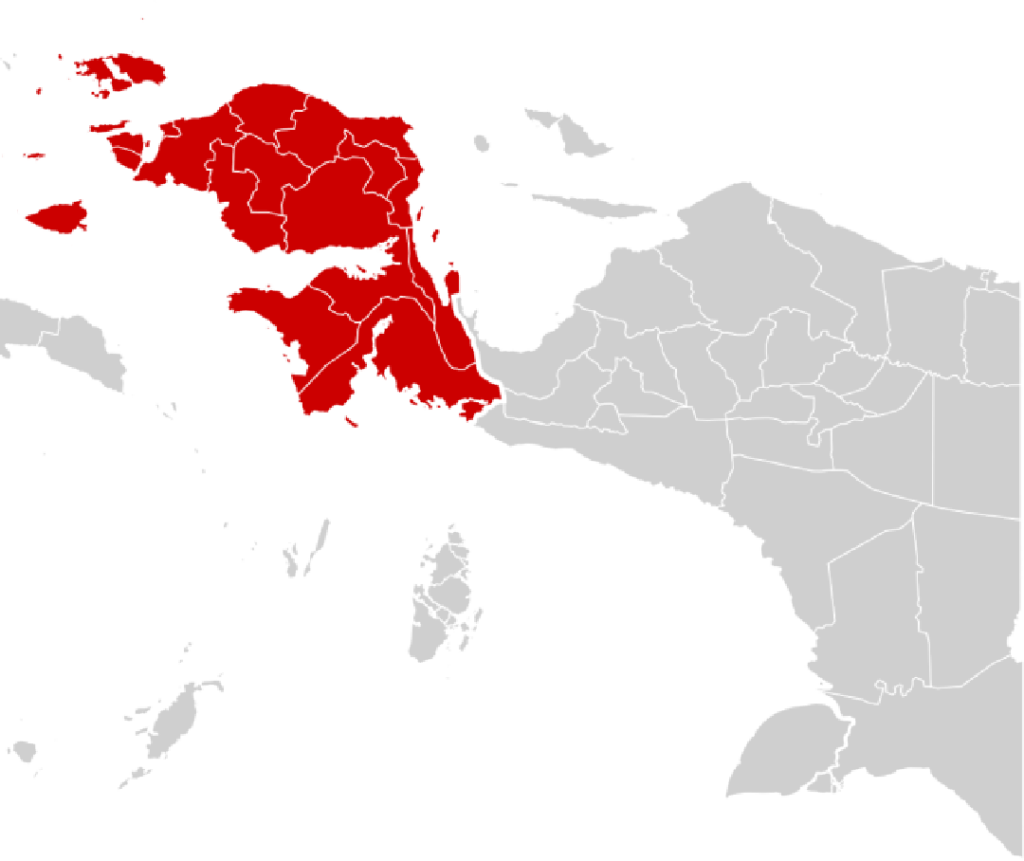
Papua sits at the edge of Indonesia, close to international routes.
That location brings both opportunity and risk.
Trade flows through.
So do people.
And sometimes, illegal goods.
Managing that balance is not straightforward.
It requires infrastructure but also constant attention.
Development and Security Moving Together
In recent years, the government has expanded infrastructure in Papua.
Better roads.
Improved border facilities.
Stronger connectivity.
These changes support economic activity.
At the same time, they require stronger monitoring systems.
Development and security tend to move together.
One cannot be separated from the other.
The Role of Local Awareness
Communities near the border are often the first to notice unusual activity.
Their awareness can make a difference.
Cooperation between residents and authorities is part of maintaining stability.
This is not always visible, but it is important.
What Happens Next
The case will continue through legal processes.
Investigations may look beyond the individual involved.
Where the cannabis came from.
Where it was going.
Whether others are connected.
These questions take time.
Conclusion
The Papua border drug smuggling 2026 case at Skouw was resolved quickly.
But it points to something larger.
In Papua, the border is active, not static.
It is a place where daily life continues, but where risks remain.
What happened this week was one interception.
There may be others.
That is why attention at places like Skouw does not relax.
Even when everything looks routine.